A new global research volume is challenging one of tourism’s most comfortable assumptions: that sustainability alone is enough.
In A Research Agenda for Just Tourism Futures, editors Raymond Rastegar of Griffith Institute for Tourism, Griffith University, and Siamak Seyfi of the University of Oulu argue that tourism research has, until now, largely sidestepped a deeper and more uncomfortable question:
“What does justice actually mean in tourism—and who gets to decide?”
For decades, tourism scholarship has focused on growth, development, and, more recently, sustainability. But according to the editors, these frameworks often leave the very inequalities they claim to address intact. Issues such as labour exploitation, environmental degradation, gender inequity, and the marginalisation of Indigenous communities are frequently treated as side effects, rather than structural features of the global tourism system.
This new volume positions itself squarely in that gap.
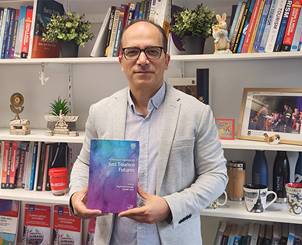
Rather than treating justice as a policy “checkbox” or a measurable outcome, the book reframes it as an ongoing, contested process—one shaped by power, history, and competing ways of knowing. It asks difficult questions:
“Can tourism be disentangled from extractive economic systems? Can it operate outside colonial and patriarchal structures? Whose voices are included—or excluded—when defining what “just tourism” looks like?
Drawing on contributions from scholars across the global North and South, the collection explores how justice plays out across a wide range of contexts—from gendered tourism spaces in Iran to overtourism in Spain, from climate justice in national parks to political resistance in urban destinations. The breadth of topics reflects a deliberate attempt to move beyond one-size-fits-all solutions and instead foreground local realities, lived experiences, and diverse epistemologies.
The urgency of this shift is underscored by what the editors describe as a growing “polycrisis”: climate breakdown, biodiversity loss, social fragmentation, and geopolitical instability. Tourism, they argue, is deeply entangled in all of these challenges—both as a contributor and as a potential site of transformation.
What makes the book distinctive is not just its critique, but its call to action. It urges researchers, policymakers, and industry leaders to rethink the foundational assumptions of tourism itself. That includes confronting entrenched systems of inequality—capitalism, coloniality, and patriarchy—and embracing more plural, inclusive approaches to knowledge and governance.
Importantly, the book also highlights a significant blind spot in existing research: the lack of engagement with subaltern and Indigenous perspectives. By centring these voices, the volume pushes the field toward a more grounded and context-sensitive understanding of justice—one that acknowledges conflict, disagreement, and the messy realities of social change.
Early endorsements suggest the book is already being recognised as a pivotal intervention. Scholars describe it as “timely,” “ambitious,” and “urgently needed,” offering a roadmap for transforming tourism into a more equitable and regenerative force.
At its core, A Research Agenda for Just Tourism Futures is less about providing definitive answers and more about opening up new lines of inquiry. It challenges the field to move beyond technocratic fixes and instead engage with the deeper political and ethical dimensions of tourism.
As global travel continues to rebound and expand, that challenge may be arriving just in time.
For more information about climate justice research, visit the Climate Justice and Tourism website.