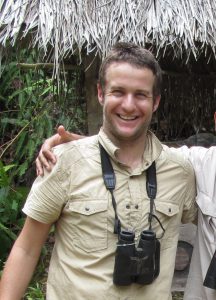
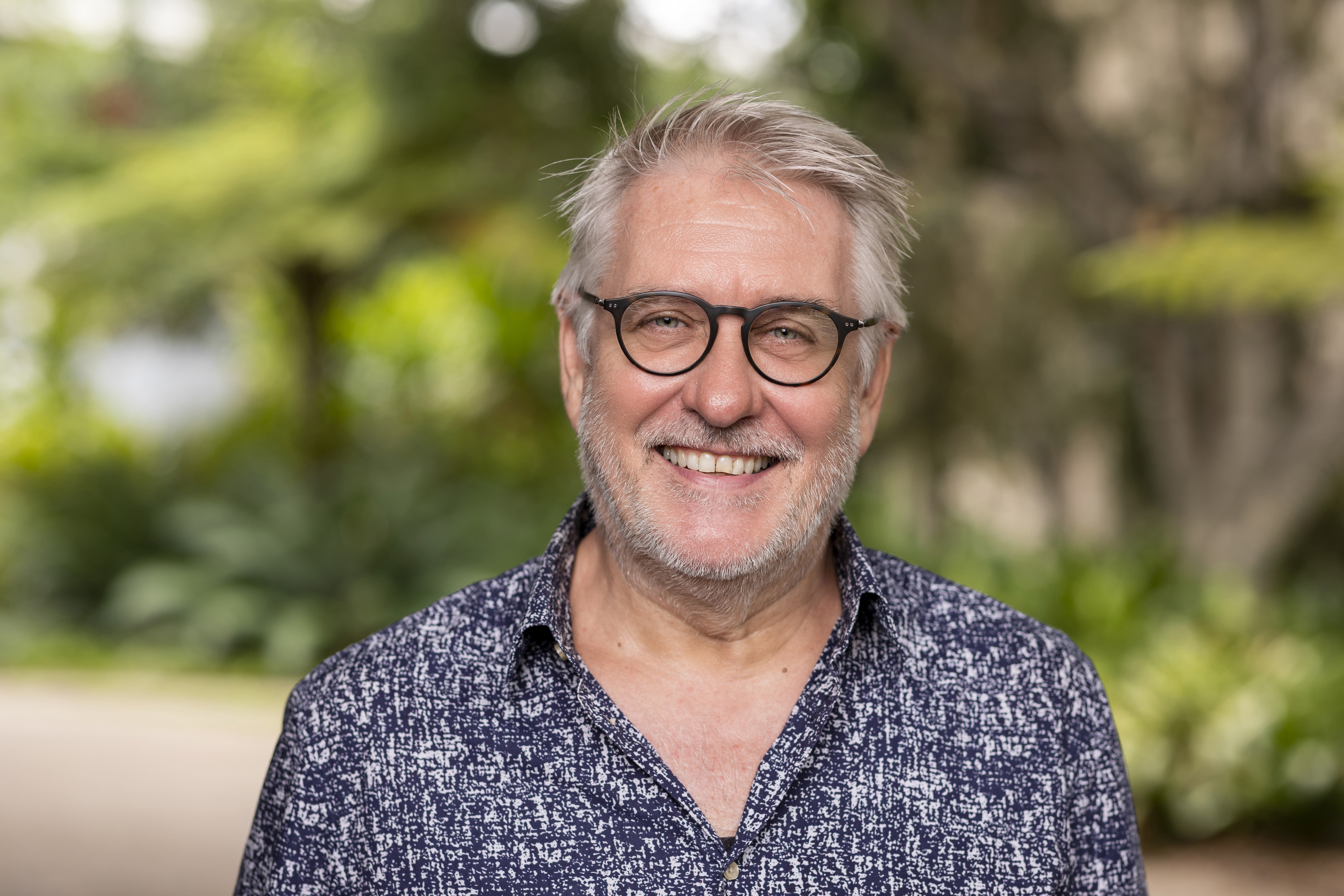
He was the event’s keynote speaker and talked about the importance of cultural integrity.
“As Aboriginal and Torres Strait Islander peoples who have been fortunate enough to gain qualifications and work in the health space, we have a responsibility to ensure we work from a position of cultural integrity,” Clinton said.
“This requires actually going and learning culture and applying it in the work we do, so we are actively participating as members of the oldest ongoing cultures on earth — not just saying it.”
“I started Marumali Consultations out of frustration of working within other peoples’ boxes,” he said.
“I could see our wellbeing needed to be attended to differently and that there was limited room or respect for lore and culture in the way the majority of organisations were approaching social and emotional wellbeing work with our mob.”
Alongside Marumali Consultations, Clinton also developed a non-alcoholic craft beer, Sobah, which he said is “unashamedly smashing stereotypes” while the business helps support healing work.
“I truly believe Aboriginal enterprise is a process of self-determination,” he said.
“It frees us from having to work to the confines of western constructs and allows us the space to work in ways that are conducive to our ways of knowing and being.”
Clinton said he was “humbled” to be recognised as the Allied Health Professional of the Year, which is awarded to an Indigenous Allied Heath Australia full member graduate who has worked in the relevant field for at least five years.
It recognises the recipient’s commitment, dedication and contribution to improving the health and wellbeing of Aboriginal and Torres Strait Islander individuals, families and/or communities within their profession.
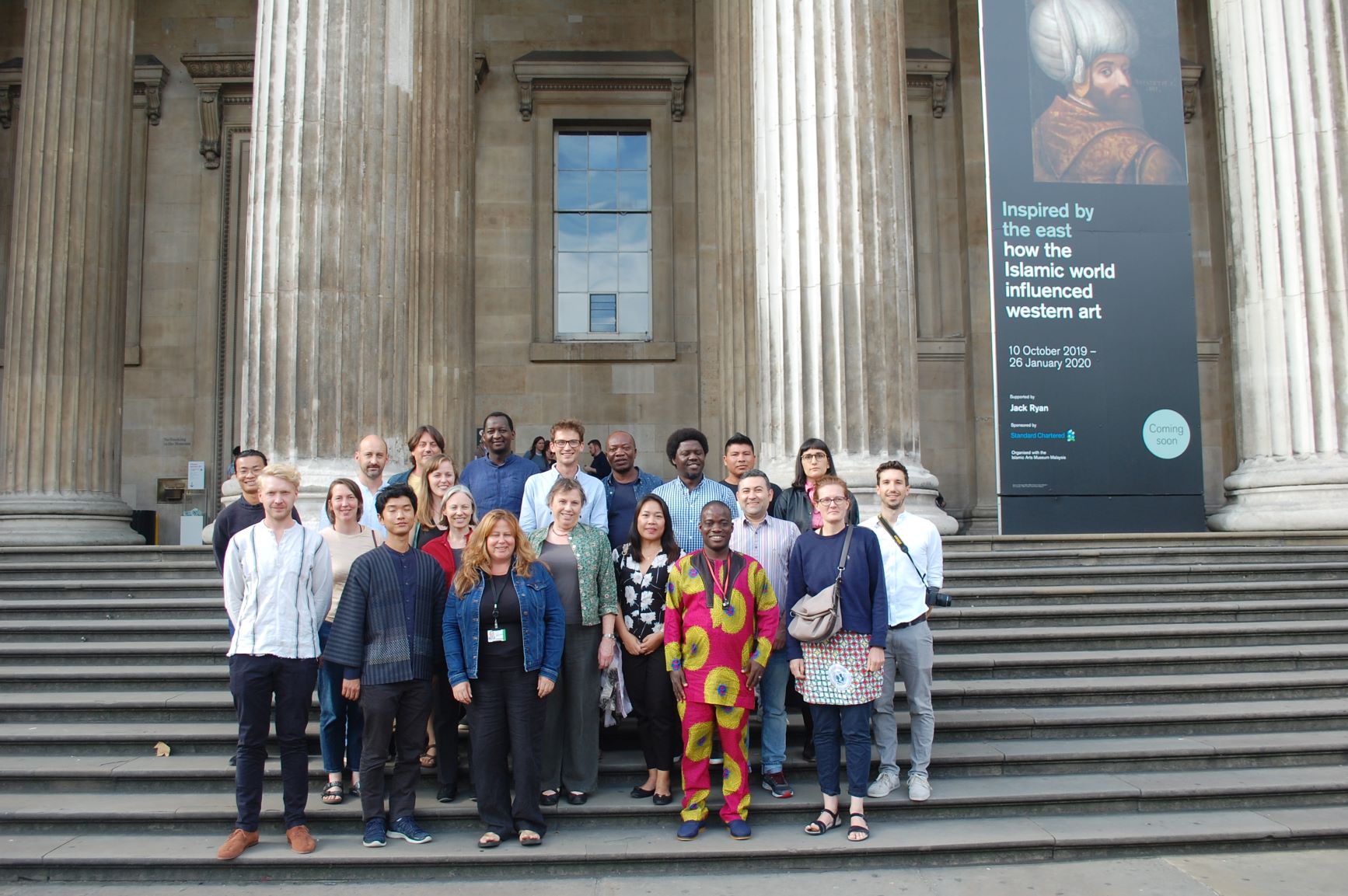
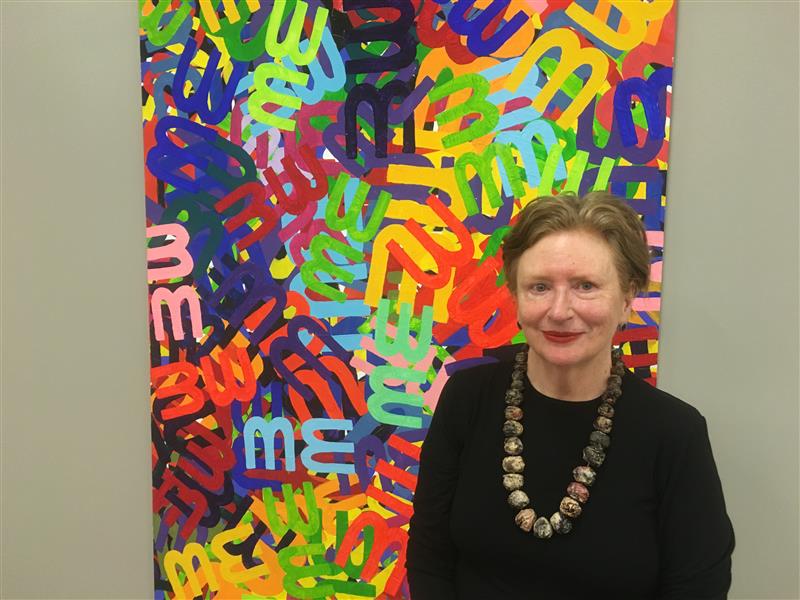
Dr Catherine Grant was one of 16 researchers from around the world selected to join the inaugural Endangered Material Knowledge Program.
Music researcher Dr Catherine Grant recently spent a week behind the scenes at the British Museum as part of a new program to document endangered cultural practices.
Dr Grant is one of 16 researchers from around the world selected to participate in the inaugural Endangered Material Knowledge Program (EMKP) at the British Museum. The diverse projects cover a range of traditional practices in danger of dying out, from glass bead-making in Nigeria to shell money in Vanuatu and traditional beekeeping in Kenya.
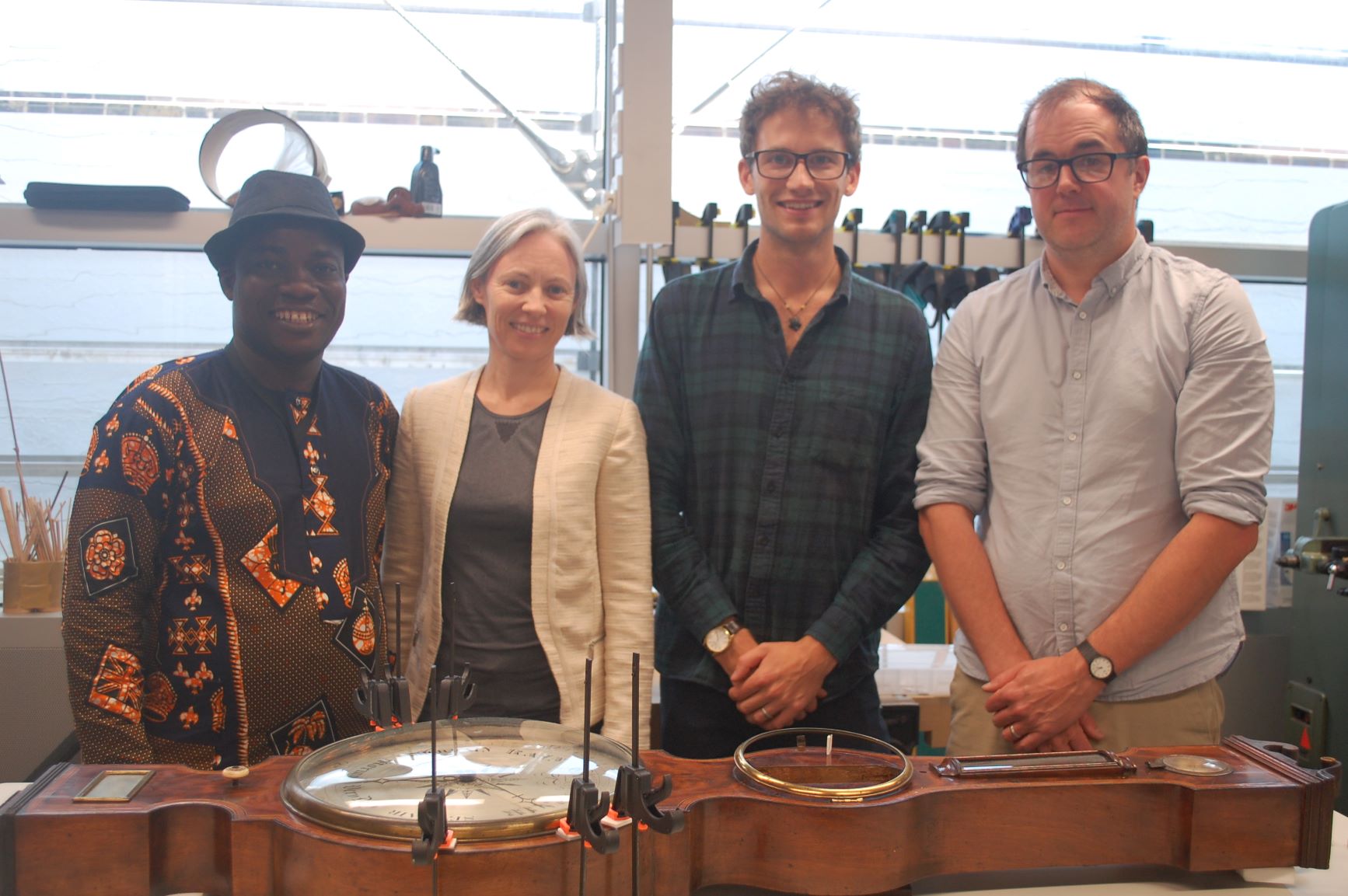
Researchers spent a week at the world-renowned institution, working with conservators, curators and the broadcast team.
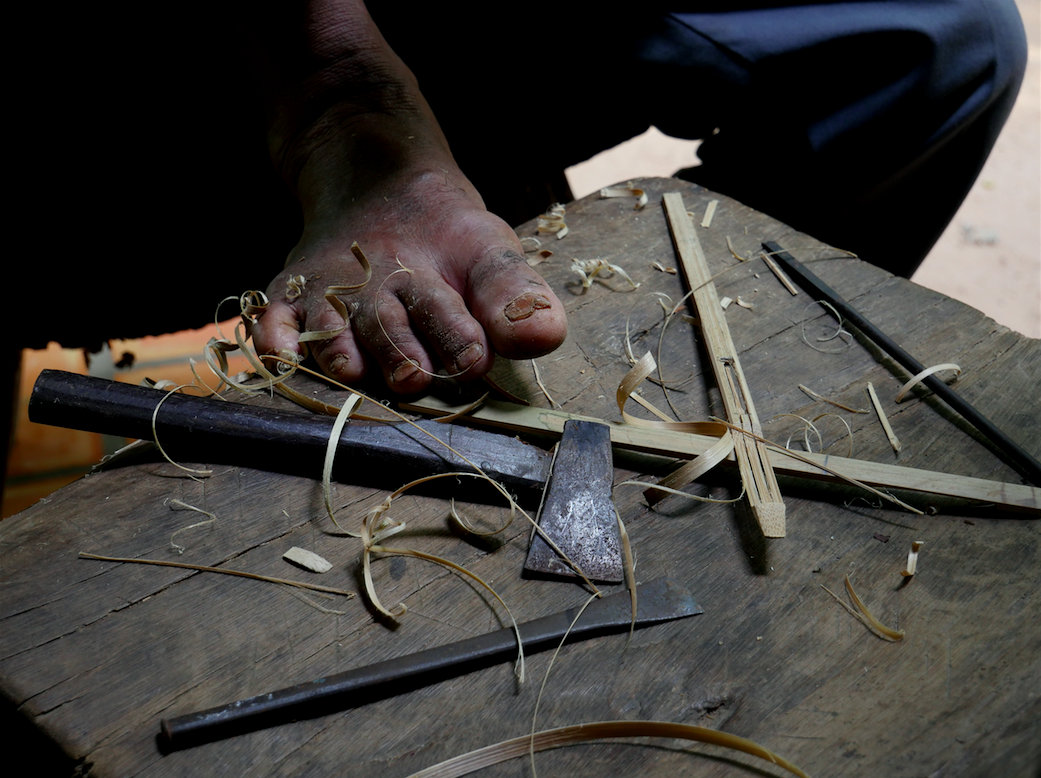
One of Cambodia’s few remaining angkuoch makers at work.
“Instead of collecting objects from around the world and displaying them in glass cases, it is about providing a cultural context and preserving that knowledge for future generations,” Dr Grant said.
Dr Grant received funding for a 12-month project to document a traditional Cambodian instrument called the angkuoch. There are only a handful of people left in Cambodia who still know how to make the instrument, and the process has never been properly documented.
Dr Grant goes behind the scenes at the British Museum with researchers, curators and conservators.
In January, Dr Grant will embark on a three-week field trip to remote villages in Cambodia’s Siem Reap province to document three of these instrument makers and local musicians. She will work with a local NGO, Cambodian Living Arts to create a series of documentaries for the British Museum.
Dr Grant is a senior lecturer at the Queensland Conservatorium, and the project is part of her research into music sustainability.
“All of us should care about the loss of cultural traditions and cultural diversity globally, not just those directly affected,” she said.
“Cambodia is a beautiful country, and I find the immense commitment of both young and old to protect and revitalise their cultural heritage extraordinary,” she said.
“Many of their musical traditions are in danger of dying out. I hope my research makes a contribution to the efforts of those communities who are trying to keep their cultures strong.”
A Griffith University wetland ecologist has played a key role in new research that looked to the past to identify historical changes in mangrove and salt marsh dominance and distribution over the past 250 years.
The study of books, personal journals, scientific articles, logbooks, photos and maps found human-driven climate change would likely lead to dramatic changes in coastal ecosystems with mangroves expanding and persisting poleward of their current range limit.
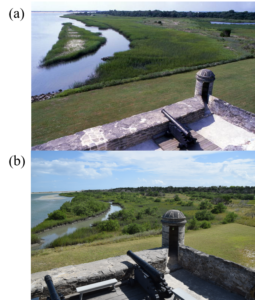
Fort Matanzas, Florida, taken in: (a) 1905-1908, (b) 1916-1927, and (c) 1964. Black mangroves are identified with white arrows on (b) and (c).
Alongside a US research team that included researchers from UCLA and The Smithsonian Institution, Dr Matthew Hayes from Griffith’s Australian Rivers Institute collected historical records from journals, photos, articles and maps to document how mangrove distribution along the Florida coastline had been highly variable in the past 250 years.
The research, published in PNAS, found that mangrove poleward expansion and the changes in community dominance from marsh to mangroves was the result of warmer periods, but the persistence of mangroves in more poleward locations was dependent on the frequency and intensity of extreme cold events.
In combining historical accounts of the Florida coastline area from historic books, personal journals, scientific articles, logbooks, photos and maps with historical climate data, the researchers showed that the ecotone – the transition area between two habitats – between mangroves and salt marsh had shifted dominance at least six times between the late 1700s and 2017.
Dr Hayes said this shift was due to the decadal-scale fluctuations in the frequency and intensity of extreme cold events.
Southeast from Fort Matanzas, Florida, taken in: (a) 1969, and (b) 2018.
“It’s easy to think that because there’s a cyclical aspect throughout this 250 years of mangrove expansion and retreat that it’s business as usual, but it’s not just that mangroves can expand their range limit poleward, or that they shouldn’t be poleward of their current range limit,” he said.
“Our historical research tells us mangroves have temporarily expanded into regions poleward of their current range limit, but eventually extreme cold events have killed these poleward mangroves and pushed the range limit back toward the equator. However, climate change is now having these dramatic effects on our coastal ecosystems.
“Due to warmer winters, with reduced incidences of extremely cold weather events, mangroves are now able to expand away from the equator and persist into habitat poleward of their current range limit.
“Rather than being a temporary expansion into marsh habitat, warmer winters with less severe freeze events are allowing these shifts to be become permanent.
“This permanent shift from marsh to mangrove dominance can lead to dramatic changes in ecosystem structure and function as one habitat is replaced by another.
“For example, imagine a prairie grassland being replaced by a forest and the impact this would have on ecosystem services as well as plant and animal diversity.”
The research team incorporated their historical research into a model to project daily minimum temperatures from years 2000 to 2100 and found that annual minimum temperatures throughout this period will increase by 0.5C per decade.
Dr Hayes said this would significantly reduce the incidence of extreme cold events and allow a persistent state of mangrove dominance.
The research ‘Climate-driven regime shifts in a mangrove-salt marsh ecotone over the past 250 years’ has been published in PNAS.
New research shows conservation initiatives are often contagious, helping scientists and policymakers design programs that are more likely to be taken up.
The study led by Imperial College London with 14 researchers from around the world, including Griffith University, modelled how conservation initiatives are adopted across regions and countries until they reach ‘scale’ — a level where they can have real impact on conserving or improving biodiversity.
Dr Duan Biggs.
The research, published in Nature Sustainability, looked at 22 conservation initiatives from across the globe to see how they spread, and how fast.
The study included initiatives covering land and water, those by low to high-income countries, and those at local, national and international scales.
For example, the initiatives ranged from villages introducing protections around local marine sites to governments designating areas as international World Heritage Sites, including state and privately protected areas.
By understanding the underlying factors that lead to conservation initiatives going viral, the team identified ways new or existing initiatives could boost their uptake, helping the efforts go further.
The research suggested that one key factor was to facilitate contact between those whohad already taken up a new initiative and those who might potentially adopt it.
For example, if one community that established local marine protections talked to another community considering doing something similarabout what they had done and what the benefits were.
Dr Duan Biggs from Griffith University’s Environmental Futures Research Institute said: “We hope our insights into how conservation initiatives spread will help practitioners to design and implement to maximise the scale of uptake, critical for tangible, lasting impact.”
Dr Morena Mills, from the Department of Life Sciences at Imperial, said: “Conservation initiatives like managing fishing resources and offsetting land for nature are critical for protecting biodiversity and the valuable ecosystems that help provide us with clean water and air.
“We found that most of these initiatives ‘spread like a disease’, where they depend on a potential adopter catching the conservation ‘bug’ from an existing one.”
The team found that most (83 percent) of the schemes followed a slow-fast-slow model, where initial adoption is slow as few people take it up, but then grows quickly as more early adopters connect with potential adopters.
Finally, the rate slows again as all potential adopters have either taken up the scheme or refused it.
The team said further insights into what ingredients and circumstances make a conservation initiative spread successfully are needed, as no initiative they studied had the desired properties of being taken up quickly, and being taken up by the majority of adopters.
Most initiatives had one or the other of these properties, with more than half being adopted by less than 30 percent of potential adopters.
Dr Biggs added: “In our study we did not find any initiatives that were taken up relatively quickly and by a large proportion of the potential pool of adopters.
“We are seeking to understand more about how local context facilitates or hinders spread, to help more initiatives reach scale.”
The research ‘Modelling how conservation initiatives go to scale’ is published in Nature Sustainability.
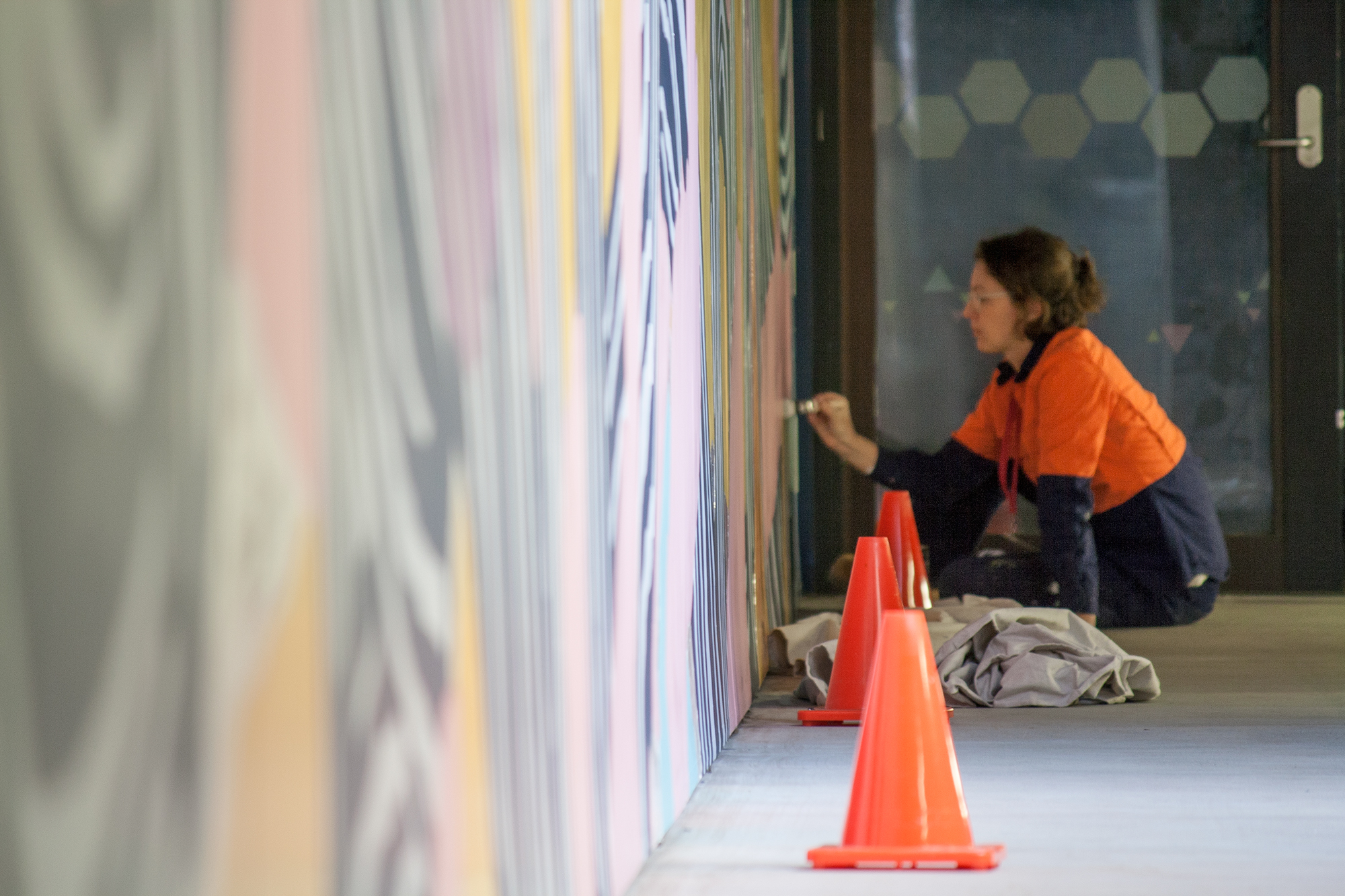
QCA student Natalie Lavelle working on the 60m wall mural
The Bachelor of Fine Art Honours student was mentored by QCA lecturer Dr Simon Degroot, who has completed large-scale public art commissions across Australia.
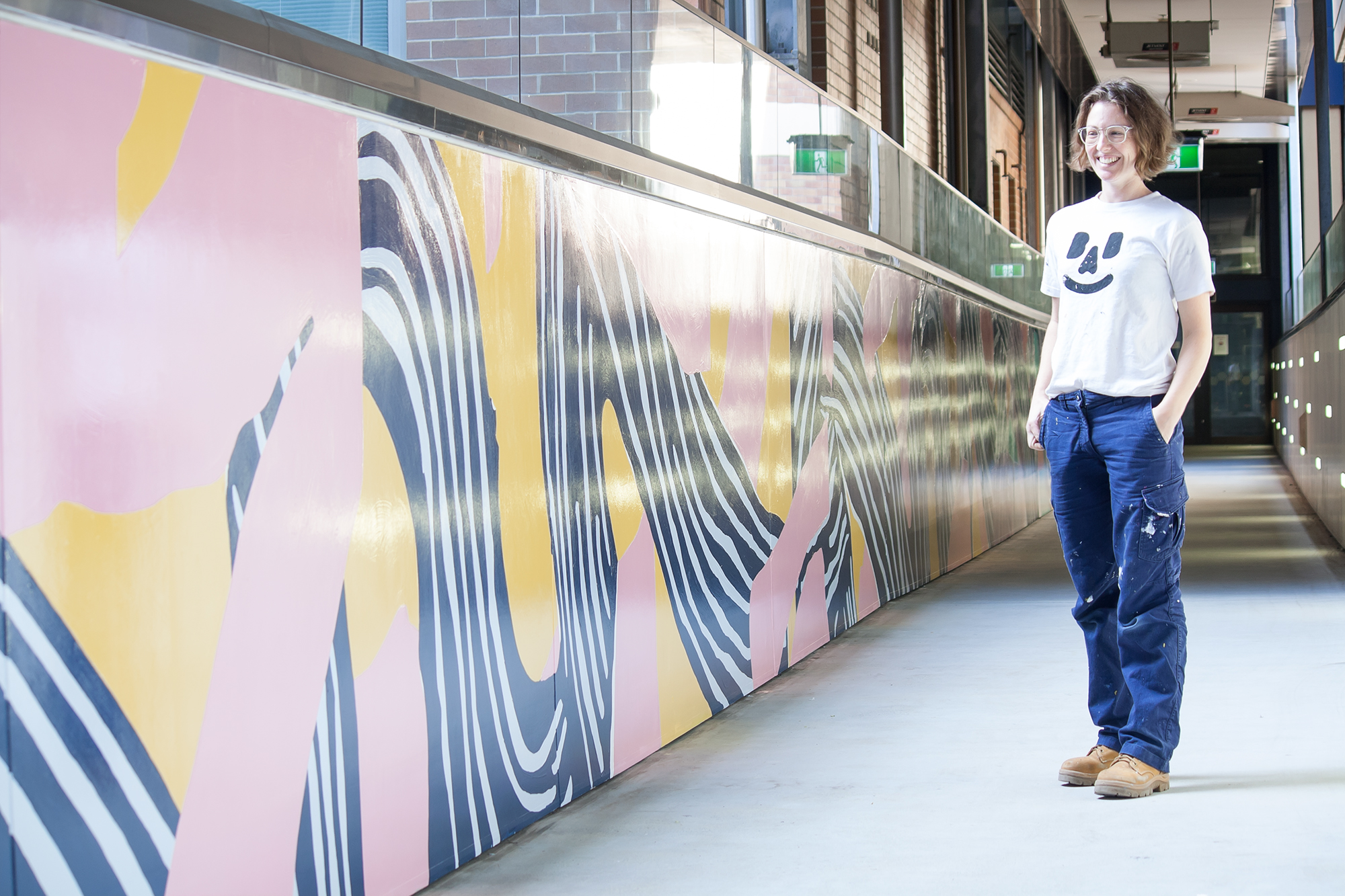
The eye-catching artwork, Mindful Trace, has transformed a drab walkway linking the Queensland Children’s Hospital and the Radiation Oncology Mater Centre, where young patients travel daily for radiation treatment.
A labour of love
Natalie, a mum of two young boys, said the project was a labour of love.
“Art has a very special role to play in a hospital, and it’s such a wonderful opportunity to be part of it,” she said.
“It’s amazing to be able to turn a sterile hospital hallway into an amazing public art space.
Natalie Lavelle with the finished mural.
“It was really touching seeing the children running their hands up and down the painting.
“I decided to create these colourful, imaginative abstract fields of colour and lines to create a feeling of freedom, and allow the children to escape from reality for a moment, and take their mind somewhere else.
“An abstract piece like this can convey so many things, and it allows people to use their imaginations.”
Taking art outside the gallery
Natalie said the project had sparked a passion for public art.
“Going into university, my focus was on studio work, but I’ve found that I enjoy working on a large scale, and really exaggerating my brushstrokes.
“I also really like the idea of people being able to enjoy art outside of a gallery. I’m excited to see where this leads.”
A blank canvas
Dr Simon Degroot
Dr Degroot said the project was an extension of his summer public art elective, an intensive three-week course which gives students the chance to collaborate on a large-scale public artwork.
“Projects like this give students the chance to engage in professional relationships outside university and build their professional practice,” he said.
“The opportunity to work on this scale doesn’t come along too often, and Natalie worked closely with the hospital to create an artwork that helps to develop a connection with the wider community.”
The healing power of art
Dr Degroot said art played an important role at the Queensland Children’s Hospital.
“This project supports the hospital’s Arts in Health program, which advocates the importance of arts programs to promote healing and recovery, and to support emotional wellbeing,” he said.
“It joins the hospital artwork collection, which brings colour, joy and life to the building, transforming the hospital from a clinical hospital environment to a vibrant and engaging space where patients’ imaginations can be engaged.”
‘The first of many collaborations’
Arts in Health Manager Lynn Seear
Queensland Children’s Hospital Arts in Health manager Ms Lynn Seear said she hoped it was the first of many collaborations between the Queensland Children’s Hospital and the QCA.
“This was a really special project – commissioning a senior artist to mentor an emerging artist – and it was a seamless experience,” she said.
“Everyone loves it and it’s really transformed the space.
“Both Simon and Natalie have small kids themselves, and they understand what the stakes are here, and they each brought a really personal commitment to the project.”
The artwork was commissioned by the Children’s Hospital Foundation, and completed with the generous assistance of Taubmans Paint and the Purdy Family, whose child received treatment at the Queensland Children’s Hospital Intensive Care Unit.
Two Griffith law students have returned home as the top Australian team for negotiation skills, and overall runner-up to Victoria University of Wellington, at the 2019 Australian Law Student Association (ALSA) Negotiation Competition.
Yuri Banens and Ethan Barr-Hamilton share a familiar, but professional ease that’s been formed over countless competitive negotiations, and it’s this approach that served them well during the intense ALSA competition.
“Before handing off to the other team, I’d always turn to Yuri and ask him: did you want to elaborate on anything? If I missed anything, he would fill it in and it became a tactic that we both used to give us time to think,” said Ethan.
ALSA’s competition format follows a grueling schedule with preliminary rounds and the finals taking place over seven days of competition.
“We would compete at 2 pm every day and we would get our next question at 4 pm. The second that you go it, you were prepping for the next day,” said Ethan.
Yuri Banens recalls how intense the competition became, which saw them preparing well into the night.
“Ethan would go down to the hotel lobby at midnight and ask them, can you do this printing for us please?” laughs Yuri.
But preparation was key to their success. They created documents and conducted research that gave them an advantage over their competition. Ethan recalls how he dealt with one problem involving regulations from the Environmental Protection Agency of Victoria.
“I rang them up and asked to be directed to someone who could tell us about the legal levels of soil limits,” said Ethan.
“He was very helpful, that guy,” adds Yuri.
Building a partnership against the odds
Ethan and Yuri met during Orientation Week in 2018 as part of a small cohort of commencing graduate entry law students. They made small talk about podcasts and their interests. A few weeks later, Ethan would see a flyer for a negotiation competition run by the Griffith University Law Student Association (GULSA).
Despite being an open competition, which is aimed at more experienced law students, the pair entered and placed second overall in their first ever competition. Since then they’ve become accomplished competitors, participating in the inaugural 2018 Queensland Intervarsity Law Competition and winning the 2018 GULSA Junior Negotiation Competition.
Yuri says that one of the reasons why they’ve persisted together is that they enjoy the art of negotiation.
“Negotiations are great, you always learn something new. If we didn’t have other things that we wanted to do, I’d love to keep going with these competitions because it’s a beautiful art that you’ll never get perfect,” said Yuri.
Future team-ups turn towards mentoring
With their eye on the future, Yuri and Ethan want to move into mentoring and judging roles to help the next generation of law students coming through.
“I’d like to see more students take up these competitions because there is so much you’ll learn. I want to see more people doing them,” says Ethan.
According to Yuri and Ethan, Griffith has a solid foundation to build on, GLSA already run their local competitions on the ALSA format and student judges are put through training on how to run a negotiation and give feedback.
“I’ve already had first year students come up to me for guidance and I’ve sat down with them and said well this is what worked for us. It’s already starting to happen, and I really enjoy giving that advice,” says Yuri.
Dr Peter Hegedus and Adjunct Professor Trish Lake will screen their latest documentaries as part of the festival.
Alumni Harvey Hayes and Angus Kirby will debut their short films, Biggie &Shrimpand Desperate Pleasures.Recent graduates Mieka Thorogood and Matthew Keen will present their short film, Gertrude, which started life as a graduate project at GFS.
A platform for local filmmakers
Professor Herman Van Eyken
Head of Griffith Film School, Professor Herman Van Eyken, said the strong showing at BiFF reflected the calibre of talent nurtured at GFS.
“We are very proud of what our faculty, students and alumni are producing,” he said.
“It is fantastic to see the Brisbane International Film Festival championing the work of local filmmakers.
“Platforms like this allow the next generation of filmmakers to make industry connections and build a wider audience for their work.”
Griffith provides pathways for emerging filmmakers
The QEST conference will feature the Australian premiere of On the Move, a world-first collaboration between three international film schools: Griffith Film School (Australia), Beijing Film Academy (China) and Dankook University Film School (South Korea).
Championing homegrown talent
Adjunct Professor Trish Lake
A new feature documentary by Griffith Film School Adjunct Professor Trish Lake will have its world premiere at BiFF before being released nationally next year.
Lili follows a young mother who fled Hungary during the Hungarian Revolution of 1956, leaving behind her first-born child. Decades after she settled in Australia, Lili’s second daughter, Edie, begins the search for her dislocated family, travelling across three continents to confront the past.
The feature documentary was directed and written by senior film lecturer Dr Peter Hegedus, who spent three months in Hungary shooting the film.
“I was granted six months leave to complete this as part of the Academic Study Program, and the support from Griffith has been instrumental in getting this project off the ground,” he said.
Dr Hegedus said making the film had been an enormously rewarding creative journey.
“To have the film premiere in front of local audiences at the Brisbane International Film Festival is particularly special,” he said.
The Brisbane International Film Festival runs until 13 October. For details and tickets go to biff.com.au.
A highly regarded chemical biologist with a distinguished record in championing research across several continents, Professor Mario Pinto, has been announced as Griffith University’s new Deputy Vice Chancellor (Research).
Professor Pinto joins Griffith’s leadership team after serving as President of the Natural Sciences and Engineering Research Council of Canada, Chair of the Global Research Council, Co-chair of the Canada-India Joint Science and Technology Committee, and Vice President Research and Chair of Chemistry at Simon Fraser University, Canada.
The decision to move halfway across the world to take the top research role at Griffith felt natural after his tenure at the British Columbia institution.
“I like upstart universities, those who are not fettered by tradition, and willing to engage in bold experiments,” he said. “Embracing interdisciplinary modes of research and teaching is vital because it’s the real way forward to address global issues.”
Professor Pinto believes strongly in the power of diversity and dialogue in effecting meaningful change.
“Griffith University and Simon Fraser University have a very similar ethos with a real focus on issues that matter, like sustainability, as well as facilitating the development of discovery and practice-based research,” Professor Pinto said.
“Professor Pinto has world standing in individual research capability as well as building university-wide research performance, implementing commercialisation opportunities and fostering relationships with government, industry and community partners,” Professor Evans said.
Professor Evans also acknowledged Professor Pinto’s outstanding contribution to the promotion of equity, inclusion and diversity across many research fields.
Professor Pinto said he was impressed by Griffith’s deep ongoing commitment to its values, particularly in relation to social justice, sustainability, and equity and inclusion.
A recipient of numerous awards recognising the quality and impact of his research, including a Fellowship in the Royal Society of Canada, Professor Pinto boasts an enviable record in brokering partnerships with industry and commercialising entities, government departments, community organisations and international partners.
As VP Research at Simon Fraser, Professor Pinto established partnerships between several academic disciplines and with many industry and commercial leaders locally and internationally, including the Bombay Stock Exchange, and shared best research practices with Sri Lanka’s National Science Foundation.
“We need to think of research as an ecosystem where academics, communities, businesses, and government work in concert,” he said. “We are all in this together.”
With a family tradition in both the Humanities, Performing Arts and Social Sciences and Sciences, Professor Pinto was also excited about the breadth and strength of research areas at Griffith University.
Professor Pinto argues that strengths in social sciences and humanities can permeate an inter- and trans-disciplinary approach to global problems.
“Griffith’s role as a leader in socially conscious research and inclusive scholarship in advancing societal knowledge will ensure it educates global citizens–ambassadors of the future–skilled in the art of creative, critical, and adaptive thought and equipped to improve life in an ever-changing, complex world, in terms of wealth creation and economic prosperity but also in ensuring social equity and global citizenship.”
Receiving his undergraduate degree and doctorate from Queen’s University in Ontario, Professor Pinto has published more than 250 papers and holds a simple but firm view on research.
“A recognition of scholarly impact is what counts and publishing and innovation remains at the core,” he said. “Researchers must also take some risks and not wander aimlessly down the well-trodden path.”
Professor Pinto also has a breadth of experience in research commercialisation, as one of the founding members of the Centre for Drug Research and Development, Zone Start-Ups India, VentureLabs® and Venture Connection.
Griffith musical theatre students are being put through their paces by Tony-Award winning Broadway star Faith Prince at QPAC this week.
The acclaimed actress and singer is conducting a series of intensive workshops and masterclasses with the final year musical theatre students, who will perform a cabaret showcase at QPAC tonight.
‘A dream come true’
Musical theatre student Tiarne Sue Yek
Bachelor of Musical Theatre student Tiarne Sue Yek said the experience had been “a dream come true”.
Musical theatre student Zac Parkes
“To get the chance to perform at QPAC and work with someone like Faith while we’re still at uni is pretty special,” she said.
Fellow musical theatre student Zac Parkes said that creating a show in less than a week was perfect preparation for life in the industry.
“A lot of us will be generating our own work after we graduate and having to put together a show in a few days forced us to dig deep and show our versatility.”
‘Once in a lifetime opportunities’
Queensland Conservatorium Acting Director Professor Gemma Carey said that Griffith’s partnership with QPAC had provided once-in-a-lifetime opportunities for students.
“We are fortunate to be based in the heart of Brisbane’s cultural precinct at South Bank alongside the state’s leading arts institutions,” she said.
“Our precinct partners provide incredible opportunities for our students to learn from industry professionals and perform alongside the world’s best artists.”
Industry mentors
Broadway performer Faith Prince
Faith Prince won a Tony Award in 1992 for a revival of Guys and Dolls and has starred in more than a dozen productions on the Great White Way, including The Little Mermaid, Billy Elliot and The First Wives Club.
In a career spanning three decades, she has also carved out a television and movie career, appearing in hit shows like Modern Family, Grey’s Anatomy and Spin City.
Ms Prince said mentoring was “incredibly rewarding”.
“There is so much talent here — the students are terrific,” she said.
“Teaching is a large part of what I do. For me, passing on the work is the most important thing.
“It’s all about telling a story.”
Building professional networks
Queensland Conservatorium Head of Performing Arts Associate Professor Paul Sabey said industry experience was a key part of the musical theatre degree.
“It is vital that young performers build their professional networks and gain exposure to the industry,” he said.
The Sky’s the Limit: Student Cabaret Showcase, October 3. An Intimate Evening with Faith Prince, October 4-5. For tickets, visit QPAC.
Learning how to use technology and geography for sustainable development was the aim when Griffith University STEM students Martin Juncal and Jacob Breslin travelled to Thailand last month on a scholarship.
Martin Juncal and Jacob Breslin in Thailand for the Asian Summer School.
Sustainability has hit the headlines as climate change has become a global concern, and there is mounting public pressure for sustainable resources such as renewable energy to become a “must-do” for all projects — personal, political and profitable.
Geoinformatics combines technology and geography to display data in a way that allows environmental professionals to make well-informed decisions about how we use, treat and manage natural resources.
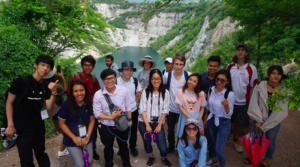
Martin and Jacob with some of the other Summer School participants.
“I’m fascinated with developing the natural world in a creative, innovative and sustainable way,” Martin said.
“I want to combine engineering and science to ensure that we can continue to grow and develop our infrastructure, but to do so in a way that preserves and protects the natural environment from any further detriment.”
During their time at the Asian Summer School the men undertook a series of workshops, including one with Google Earth. However, second-year Bachelor of Science student Jacob said a trip to LomSook Smart Farm was a highlight.
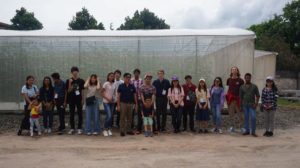
The group on a field trip.
“LomSook Smart Farm was my favourite as it demonstrated to me how smart farming is being utilised by the youth of Thailand through developing a series of smart greenhouses that can be used to improve crop yield,” he said.
“In fact, I was inspired with thoughts of starting my own little social enterprise to help empower young farmers in Australia through smart farming techniques.”
Both Martin and Jacob look forward to putting their new-found knowledge and skills to use, both in their undergraduate degrees and postgraduate study.
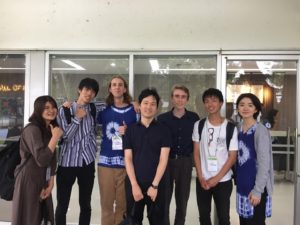
Jacob and Martin with students from Japan’s Chubu University.
“I’d like to help bridge the gap between industry and academia to ensure that my ideas will be used in a manner that is both, economically viable for companies, but also efficient and sustainable,” Martin said.
“The use of geoinformatics in natural disaster risk prediction, detection and management was so interesting to me that it has prompted me to look at how I can contribute to this vital field through further research… so I’m now considering an Honours year or further postgraduate study,” Jacob said.
The Asian Summer School has been held by Japan’s Chubu University and Thailand’s Asian Institute of Technology since 2015 and explores topics including agriculture, energy, natural resources, health and smart cities.