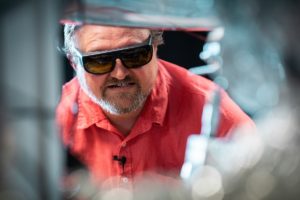
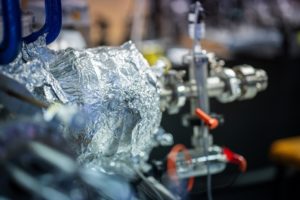
Griffith University has been helping farmers and co-operatives in Binh Thuan Province train for export expansion to Australia.
The province has historically concentrated on the export and distribution of dragon fruit across South-East Asia, but key stakeholders are now looking to expand to wholesalers and supermarkets in Melbourne, Australia.
Associate Professor Robin E Roberts, from the Griffith Asia Institute, is leading the initiative by delivering training that focuses on key concepts such as understanding demand, consumer buying behaviours, supply chain development and export entry protocols.
Associate Professor Robin E Roberts
The program provides practical training, with activities designed specifically to assist the Binh Thuan traders to supply Australian export markets. Associate Professor Roberts discusses the economic, social, and environmental considerations and draws on her agribusiness expertise to help build the capacity of the local stakeholders and improve their development skills.
“Vietnamese dragon fruit production is embedded in Binh Thuan’s cultural and economic history,” Associate Professor Roberts said.
“The locals tell the story of Hoang Tu Canh, a crown prince who led the province from a nearby citadel in the late 1700’s. When fresh produce was in short supply, the Binh Thuan people shared their local fruits to help sustain the army against the dragons of the East. The prince acknowledged their generosity and bestowed the name dragon fruit in their honour.
“Despite the historic connection to dragon fruit, production of the fruit in Binh Thuan province only emerged in the 1970’s. But the increased production, combined with the opening of the country to foreign tourists, has meant that the fruit has been in high demand ever since.
Robin E Roberts with dragon fruit growers and traders in Phan Thiet, Binh Thuan Province
“Dragon fruit is already extremely popular in Vietnam but what we’re hoping, by helping the Binh Thuan exporters through these programs, is that the Australian consumers will have more opportunity to fall in love with the fruit too.”
Associate Professor Roberts is eager to continue her collaboration with farmers and co-operatives in the province, with the intention to one day expand the program to include the export of other tropical fruits such as mango and passion fruit.
Our society faces the grand challenge of providing sustainable, secure and affordable means of generating energy, while trying to reduce carbon dioxide emissions to net zero around 2050.
To date, developments in fusion power, which potentially ticks all these boxes, have been funded almost exclusively by the public sector. However, something is changing.
Private equity investment in the global fusion industry has more than doubled in just one year – from US$2.1 billion in 2021 to US$4.7 billion in 2022, according to a survey from the Fusion Industry Association.
So, what is driving this recent change? There’s lots to be excited about.
Before we explore that, let’s take a quick detour to recap what fusion power is.
Merging atoms together
Fusion works the same way our Sun does, by merging two heavy hydrogen atoms under extreme heat and pressure to release vast amounts of energy.
It’s the opposite of the fission process used by nuclear power plants, in which atoms are split to release large amounts of energy.
Sustaining nuclear fusion at scale has the potential to produce a safe, clean, almost inexhaustible power source.
Our Sun sustains fusion at its core with a plasma of charged particles at around 15 million degrees Celsius. Down on Earth, we are aiming for hundreds of millions of degrees Celsius, because we don’t have the enormous mass of the Sun compressing the fuel down for us.
Scientists and engineers have worked out several designs for how we might achieve this, but most fusion reactors use strong magnetic fields to “bottle” and confine the hot plasma.
Generally, the main challenge to overcome on our road to commercial fusion power is to provide environments that can contain the intense burning plasma needed to produce a fusion reaction that is self-sustaining, producing more energy than was needed to get it started.
A donut-shaped magnetic confinement device called a tokamak is one of the leading designs for a working fusion power generator, with many such experiments running worldwide. Christopher Roux, EUROfusion Consortium, CC BY
Joining the public and private
Fusion development has been progressing since the 1950s. Most of it was driven by government funding for fundamental science.
Now, a growing number of private fusion companies around the world are forging ahead towards commercial fusion energy. A change in government attitudes has been crucial to this.
The US and UK governments are fostering public-private partnerships to complement their strategic research programs.
In addition to public-private resourcing, the technologies we need for fusion plants have come along in leaps and bounds.
In 2021, MIT scientists and Commonwealth Fusion Systems developed a record-breaking magnet that will allow them to build a compact fusion device called SPARC “that is substantially smaller, lower cost, and on a faster timeline”.
These incredible feats demonstrate an unprecedented ability to replicate conditions found inside our Sun and keep extremely hot plasma trapped long enough to encourage fusion to occur.
By focusing nearly 200 powerful lasers to confine and compress a target the size of a pencil’s eraser, they produced a small fusion “hot spot” generating fusion energy over a short time period.
We can afford to expand adoption of current renewable energy technology like solar, wind, and pumped hydro while also developing next-generation solutions for electricity production.
This exact strategy was outlined recently by the United States in its Net-Zero Game Changers Initiative. In this plan, resource investment will be targeted to developing a path to rapid decarbonisation in parallel with the commercial development of fusion.
History shows us that incredible scientific and engineering progress is possible when we work together with the right resources – the rapid development of COVID-19 vaccines is just one recent example.
It is clear many scientists, engineers, and now governments and private investors (and even fashion designers) have decided fusion energy is a solution worth pursuing, not a pipe dream. Right now, it’s the best shot we’ve yet had to make fusion power a viable reality.
Authors
Dr Nathan Garland is a Lecturer in Applied Mathematics and Physics at Griffith University, Australia. Prior to joining Griffith, Nathan was a post-doctoral researcher in the Theoretical Division at Los Alamos National Laboratory in New Mexico, USA. His areas of research interest are based around computational modelling of plasmas in various applications, and the integration of high-quality atomic input data into plasma modelling frameworks. His research has explored applications including the modeling of low-temperature plasmas and electron transport in liquid discharges, tokamak fusion plasmas, collisional-radiative modelling, deep-learning in plasma modelling, and scattering data and physics of electrons, positrons, muons with atoms and molecules.
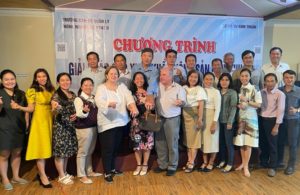
Associate Professor Matthew Hole holds degrees in Physics, Mathematics and Electrical Engineering, and completed a PhD on plasma centrifuge physics at the University of Sydney. During 2001-2002 Dr Hole worked for the U.K. Atomic Energy Authority on fusion power on the innovative spherical tokamak concept. From 2003-2004 Dr Hole worked on space plasma physics in the School of Physics at the University of Sydney. Since 2005, he has worked with Prof. Dewar of the Plasma Theory Modelling Group at ANU, which A/Prof. Hole now leads.
Share on facebook
Share
Share on twitter
Share
Share on linkedin
Share
You might also like
Griffith’s Climate Ready Initiative (CRI) board has gained a formidable force in former Federal MP, Terri Butler, putting her sharp political faculties towardclimate readiness and resilience.
Developing Australia’s plan for climate readiness is not a big stretch from Butler’s typically socially diverse projects which include working toward the prevention of family and domestic violence, the environment and water portfolio and co-sponsoring a bill to introduce marriageequality.
Terri Butler with Prime Minister Anthony Albanese inspecting the devastation along the Brisbane River after the 2022 flood.
“I chose to join the advisory board because CRI’s work is crucial in the face of the challenges that communities are facing because of climate change,” Butler said.
“Universities like Griffith University can be instrumental in climate action because they are trusted and have significant authority and capacity.
“The success of Griffith’s Climate Action Beacon demonstrates that Universities can and should be leaders in relation to climate action.
“Leadership, collaboration and action are all of fundamental importance, right now.”
Terri Butler, keeping domestic violence in public focus, at a Red Rose Bench unveiling.
CRI is developing bold projects like its flagship project Climate Ready Australia 2030, which brings together partners from across society to develop a shared agenda to drive climate action.
Collaboration between peak bodies will work to progress common priorities, facilitate priority projects, enhance national capability, and drive the necessary investment.
CRI projects include working with local, state, and national government to advance climate risk management such as the Queensland Climate Ready Program, and projects that work to progress climate readiness in and with industry and community sectors.
Examples include the creation of a podcast revealing first-hand climate change observations from Indigenous communities on country, and partnering with the aviation sector to progress zero emission aviation and delivery of an Aviation Reimagined webinar series.
Terri Butler after the passing of the Marriage Equality Bill.
Focusing on strategic and coordinated progress toward net-zero emissions and climate readiness, CRI identifies the importance of community resilience, placing social impact high on the agenda with an aim to deliver positive social outcomes through participation, inclusion and equity, building agency through all levels of society.
“I am particularly passionate about the way that taking a development approach to communities here in Australia can enable climate action,” Butler said.
“As a partnership-based social impact initiative, CRI can bring together people and organisations with complementary expertise, interests, and influence, and I hope to contribute to that important work.
“Local communities have specific needs, and their capacity to address those needs can be increased through building community connection and creating social capital.”
Professor Brendan Mackey, Director of the Griffith Climate Action Beacon
Climate Action Beacon Director, Professor Brendan Mackey said the Climate Ready Initiativeisprogressingambitiousclimateaction for Australia, and Butler’s political expertise will be invaluable in building new partnerships which focus on future-fit industries, innovation and quality jobs so Australia’s communities and ecosystems can flourish.
“We are delighted to have a person of Terri Butler’s experience joining our CRI advisory board,” Professor Mackey said.
“Terri’s insights intohowto develop and implement integrated policy and programs across sectors will greatly advance our goal of enabling effective climate action.”
Terri Butler joins the eminent CRI board, sitting alongside Rosemary Addis, Professor Brendan Mackey, Professor John Hewson, Tony McAvoy, Dr Helen Szoke, Leona Murphy and Sophia Hamblin Wang.
Almost one in three voters cast their ballot for minor parties or independent candidates in the 2022 federal election, the highest number in almost 100 years, Australia’s largest and longest-running study on elections has found.
The 2022 Australian Election Study (AES), prepared in partnership with Griffith University and The Australian National University (ANU), found Anthony Albanese was the most popular party leader since Kevin Rudd in 2007.
In contrast, Scott Morrison was found to be the least popular major party leader in the history of the AES, which has been tracking Australians’ political opinions since 1987.
Study co-author Dr Sarah Cameron, from Griffith University’s School of Government and International Relations (GBS), said the conditions for the rise of alternative actors in Australian politics have been brewing for some time.
Study co-author Dr Sarah Cameron (SGIR, GBS)
“Voter disenchantment with the major political parties alone is not enough to see a change in outcomes; there also needs to be a viable alternative for these disenchanted voters to support,” Dr Cameron said.
“The 2022 election combined several factors which supported the success of the so-called Teal independents.
“Voters were dissatisfied with the major parties generally, and the incumbent Coalition government and prime minister in particular.
“The Teals also ran well-funded, well-organised campaigns that were widely covered in the media, and these campaigns tapped into frustrations with the incumbent Coalition government on issues where they were perceived as weak, including climate change, political integrity, and gender equality.
“The medium-term success of the Teals will depend on how much they can create a distinct political identity to carry to the 2025 federal election.”
Study co-author Professor Ian McAllister, from ANU, said the 2022 federal election saw a “large-scale abandonment” of major political parties.
“The vote for the two major parties fell to historic lows in the 2022 election. The key beneficiaries of this seismic shift in voting behaviour were the Greens and independent candidates,” Professor McAllister said.
“While the 2022 election might be heralded as a ‘breakthrough’ for the independents, the conditions for their election have been building over several decades. Voters are now less ‘rusted on’ to the major political parties and becoming more independently minded in their political choices.
“In 1967, 72 per cent of voters said they always voted for the same party. In 2022, this dropped to a record low of 37 per cent.
“This trend has been driven by wider societal changes, such as the huge expansion of higher education, the turnover of generations, the rise of social media, and shifting issue priorities.
“Support for independents and minor parties will only continue to grow.”
The report found most Teal voters were not ‘disaffected Liberals’, but tactical Labor and Greens voters. Less than one in five Teal voters previously voted for the Coalition. And on average, Teal voters are ideologically close to Labor voters – placing themselves just left of centre.
The 2022 AES also shows now Prime Minister Albanese scored 5.3 on a zero to 10 popularity scale among voters. This ranks him as the 10th most popular party leader out of the 26 that have contested elections since 1987 and the eighth most popular election winner out of 13.
“Labor entered the election with a leader, Anthony Albanese, who was more popular than both Scott Morrison, and his Labor predecessor, Bill Shorten,” Dr Cameron said.
“With Anthony Albanese as party leader, Labor attracted more votes based on leadership than in the 2016 and 2019 elections.”
Professor McAllister said: “Anthony Albanese was evaluated more favourably than Scott Morrison in eight of nine leader characteristics, with the biggest differences in perceptions of honesty, trustworthiness and compassion.
“While Albanese scored 5.3 on a scale of 10 when it came to popularity, Scott Morrison became the least popular major party leader in the history of the AES, scoring 3.8. This was down from his score of 5.1 in the 2019 election.”
The 2022 Australian Election Study, which includes a report on the 2022 federal election, as well as Trends in Australian Political Opinion 1987-2022 was officially launched in early December.
Professor AJ Brown, Centre for Governance and Public Policy (CGPP), convened a webinar on 7 December to discuss the new Australian national anti-corruption commission. Drawing on the contributions of CGPP and other Griffith researchers over many years, the webinar examined key elements of the final legislative outcome on this historic reform – the passage of the National Anti-Corruption Commission Act just a week earlier. Against the backdrop of political history and community drivers outlined by Cathy McGowan AO, Griffith experts discussed the translation of Australia’s state-based ‘standing royal commission’ model to the national level for the first time.
Strengths such as the broad scope or definition of corrupt conduct, and new scale of prevention functions, were analysed against final controversies over new limitations – symbolic and actual – on the role of public hearings and guarantees for the political independence of appointments. The discussion provided a rich resource for those seeking to understand and monitor the implementation of these once-in-a-generation reforms.
Speakers:
Professor AJ Brown, Centre for Governance and Public Policy
Cathy McGowan AO,
Gary Sturgess AM
Professor Janet Ransley, Griffith Criminology Institute
Deborah Stokes, Transparency International
For biodiversity to thrive, conservation efforts must be ‘nature- and people-positive’, a recent study has found.
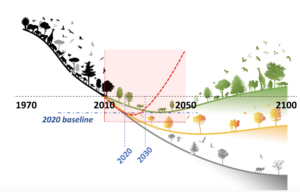
Despite decades of increasing investment in conservation, ‘bending the curve’ of biodiversity decline has not succeeded. Scientists argue that stronger outcomes for biodiversity conservation can be attained if conservation actions are combined with justice measures to tackle the underlying causes of decline.
Published in the journal One Earth, an international team of scientists from the Earth Commission, convened by Future Earth, say that efforts to meet new biodiversity targets and goals for the next three decades risk repeating past failures unless we: 1) focus attention to direct and indirect drivers of decline; 2) address unrealistic objectives and timelines for biodiversity response; and 3) address fundamental inequities of past and current conservation, and share nature’s benefits.
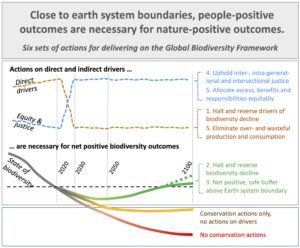
Potential biodiversity recovery curves for business as usual (gray), conservation only (yellow), and integrated scenarios are that combine conservation with reduced pressures on biodiveristy through reduced resourcedemand and production (green). The dashed red curve shows zero net loss of nature from 2020.
“Our research identifies the key drivers of biodiversity decline that need to be addressed, including inequality, increasing per capita consumption of resources, unsustainable technologies, investment and trade patterns, and governance systems that don’t promote care for nature,” said co-authorDr Ben Stewart-Koster, a Senior Research Fellow at theAustralian Rivers Instituteand a Research Scientist for the Earth Commission.
“We applied a new framework of ‘safe and just Earth system boundaries’ that brings together the quantification of nature (intact and semi-intact) with a set of criteria aimed at achieving justice for all humans.”
Professor Johan Rockström, co-chair of the Earth Commission and Director of the Potsdam Institute for Climate Impact Research explains that, “Safe and just Earth system boundaries provide scientific support for the necessity of halting biodiversity loss and conserving nature as a strategy to ensure a stable planet.”
“Staying within those boundaries will improve the chances for a just future for all people.”
Dr Ben Stewart-Koster, a Senior Research Fellow at the Australian Rivers Institute and a Research Scientist for the Earth Commission
Lead author and Earth Commissioner David Obura from Coastal Oceans Research Development – Indian Ocean (CORDIO) East Africa said, “As the urgency and challenges in resolving the biodiversity crisis increase, actions to conserve biodiversity must broaden to address root causes and the entire scope of human — nature interactions.”
“We identify ambition and equity shortfalls in dominant conservation paradigms leading up to negotiations of the post-2020 Global Biodiversity Framework in December 2022, [which]… can fundamentally undermine the long-term success for biodiversity conservation.”
Co-author Diana Liverman highlights the importance of transformations that address the drivers of biodiversity decline within a framework of justice that ensures wellbeing for all, including future generations and nature. She stresses the need to reduce pressure on the biosphere by reducing excess consumption and unsustainable trade and investments. “Consumption footprints in richer countries consistently drive biodiversity loss in poorer countries,” she said.
Solutions that avoid trade-offs between human wellbeing and conservation should be a priority. The authors point out that many proposals on conservation emphasize the importance of minimizing drivers of biodiversity loss in order to stem their impacts.
The authors state that whilst decadal targets designed to encourage behaviour change can play an important role in motivating action on difficult issues, if in 2030 targets fail to be met, as occurred in 2020, it could undermine the actions and commitments needed to achieve success in more realistic time frames.
The 22 targets contained in the draft Global Biodiversity Framework cut across most of the areas in which action is needed, so setting realistic targets and outcomes for achievement may be essential to build and maintain the commitment to achieve them.
In applying the framework of safe and just Earth system Boundaries, they identified six sets of actions aligned with the conceptual framework of the Intergovernmental Platform on Biodiversity and Ecosystem Services (IPBES), which can support the conservation community and society at large to engage with the deeper societal transformations needed for a safe and just future.
Reduce and reverse direct and indirect drivers causing nature’s decline
Halt and reverse biodiversity loss (i.e. ‘bend the curve’ of decline)
Restore/regenerate biodiversity to a net positive state, to a safe buffer above the Earth system boundary
Raise minimum wellbeing to secure each person’s fair share of the global biodiversity commons
Eliminate over-consumption and excesses associated with accumulation of capital
Uphold and respect the rights, responsibilities, and agency of all, in the present and future
“The proposed actions identified in this study are especially important for freshwater ecosystems, which host remarkable biodiversity, including 40% of the world’s fish species and one third of all vertebrate species,” said Professor Stuart Bunn, co-author and a member of the Earth Commission from the Australian Rivers Institute.
“Freshwater systems across the globe are highly impacted by human activities and have experienced species declines that are twice the rate of those on land and in the sea.”
Wendy Broadgate, Global Hub Director (Sweden) for Future Earth and Executive Director of the Earth Commission said, “The stakes are higher than ever. We are facing unprecedented extinction rates. A healthy biosphere is essential to support life and healthy societies. The goals for the next decade of biodiversity conservation need to consider a just future for all communities – present and future – within Earth system boundaries.”
This new research comes ahead of an associated Earth Commission report due out in early 2023 that will outline a range of ‘Earth System Boundaries’ (ESBs) to safeguard a stable and resilient planet and underpin the setting of science-based targets for businesses, cities, and governments.
The Earth Commission is the scientific cornerstone of the Global Commons Alliance.
Is using the threat of the judgement of Santa Claus for good behaviour year-round really a healthy and effective way to teach children how to display appropriate and socially acceptable behaviour?
He visits children on one night in December and distributes presents and joy in a mystical, logistical feat with thanks to his crew of magical reindeer, or just by himself.
Children who are earmarked by Santa as ‘good boys’ and girls’ are rewarded for a year of good behaviour with whatever they asked for (or at least a version of it), and those who are bad will apparently receive something a lot less exciting.
Positive behaviour and rewards
Let’s start with the adage “if you’re good, Santa will bring you a present”. Research suggests that physical rewards promised far in advance (i.e., future Christmas presents) are not actually linked with positive behaviour or performance and instead have the potential to reduce children’s own internal motivation to do something. In one study, when children were given a physical reward for sharing in the past, they were less likely to share in the future compared to children who were given verbal praise of sharing or given no acknowledgement of the sharing at all. What does this mean? Promising kids Christmas presents if they’re good doesn’t often lead to them actually being “good” and it might actually backfire. They then might expect presents in order to continue behaving well, which is a little trickier to do once Christmas has passed.
Okay, so I’ve told you what you can’t do, and now you’re probably pretty close to yelling at me “BUT WHAT CAN I DO?” So, here’s what you can do to improve your child’s behaviour this festive season (and all year round). You can use natural or logical consequences. These are consequences related to the behaviour you don’t want your children engaging in and they’re much easier for little brains to understand. If they are throwing a toy at their sibling after you have asked them to stop, you remove the toy. The consequence of throwing a toy is no longer having said toy. This way the punishment is linked closely in time with the misbehaviour, rather than the threat of losing a hypothetical Christmas present in a month’s time. So, hang up that phone call to Santa and focus on applying a related consequence to the misbehaviour. I know it sometimes takes a thinking capacity we don’t have at 6pm on the final stretch before bedtime after a toddler has been screaming in our ear for 3 hours, but if you can, it’s significantly more effective in the long run!
You can also focus on their positive behaviour. By pointing out when they are engaging in behaviours you do want to see and praising them for you, you are reinforcing that this is something they should do and you are associating that behaviour with positive attention and praise in their little minds. That connection is important for them but also for you. If you are focusing more on their positive behaviour, you’re more likely to see your child in a positive light and more likely to be patient during more challenging behaviour (this is the magic of gratitude!)
Of course, this has very little to do with Santa and more to do with positive behaviour change, so let’s drill back into Santa to talk about some of the positives Santa affords our children. Children are more likely to behave more generously after thinking about Santa as Santa and Christmas more broadly embody the spirit of giving.
Is Santa ‘real’?
What about finding out that Santa doesn’t exist? Children generally discover Santa is not real (most report they just ‘figured it out’ around 6-8 years old). In one study, most children reported positive reactions to finding out with very minimal distress. Parents said they were much more upset though, with 40% reporting they were sad that their children no longer believe. So, if you are currently torn between engaging in the Santa myth or not, we have some evidence to say that, if done right, the Santa myth can increase generosity and doesn’t harm most kids when they find out.
Okay, now I’ve told you all the things you should and shouldn’t do, but Christmas time can be tense with small (or big) children running underfoot while you just try to bring about a little Christmas cheer. The festive season is beautiful chaos but it leads to more meltdowns from your little ones and unsurprisingly more meltdowns from you too. Fear not, it you lose it and yell, or threaten, or punish in a way that doesn’t sit right with you, there’s some brand-new research that’s here to help you out. Researchers have found that apologising to your children is associated with more prosocial, and less internalising (like anxiety and depression), behaviours in children. So go ahead and apologise for losing your cool and work with your child to figure out how you can both do better.
And remember, despite the screaming, the meltdowns, the wrapping paper everywhere, to look for the beauty in the chaos and the joy in the mayhem.
Author
Kristyn Sommer is a Griffith University Postdoctoral Research Fellow. Prior to joining Griffith University, Kristyn completed her PhD at the University of Queensland (2015-2019) and was a lecturer in Developmental Psychology (2020).
Kristyn explores early cognitive development and has a keen interest in how children learn from technologies, specifically focusing on social robots. Kristyn is a strong advocate of open science and transparent research practices.
Outside of her research, Kristyn is an avid science communicator and engages in many public science activities. Kristyn runs a successful collection of social media platforms where she translates the science of child development into 1 to 3 minute videos for parents of young children.
Eleven Griffith students are headed on overseas adventures after being awarded scholarships to work and study internationally under Australia’s New Colombo Plan.
The program aims to lift knowledge of the Indo Pacific in Australia, with students supported to study for up to a year in several regions and undertake an internship, mentorship, practicum or research.
The Plan encourages a reciprocal relationship with the rest of our region, deepening Australia’s individual, academic and business relationships.
SOPHIE NAKAMURA
Sophie Nakamura has been frustrated at not being able to make tangible impact on sustainable clothing production in Asian countries but that will soon change when she embarks on her prestigious New Colombo Plan scholarship in late 2023.
The Griffith Honours College student will spend a semester at Thammasat University in Bangkok and PaññÄsÄstra University of Cambodia after being successful with her NCP application.
She also plans to intern with the United Nation’s Office on Drugs and Crime in Bangkok.
“I’ve always been passionate about slow clothing and the child labour and exploitation in these regions. I feel like everything I’ve been doing in that movement hasn’t really led me very far.
“I feel the New Colombo Plan scholarship would be the next step to help me achieve my passions and learn more about what I’ve been interested in for so long,” Sophie said.
Two years into a double degree in law and government and international relations, Sophie hopes the NCP scholarship will lead to valuable connections and networks with those agencies at the coalface investigating modern slavery and human trafficking.
“It’s a very nuanced issue and easy for us to condemn trafficking as something that’s inhumane. But I think there’s a lot more to it than that and I’m very excited to learn about the nuances of it and have a more holistic understanding of it, and maybe the different ways to approach it”.
Joshua Waterfall is off to Thailand and Singapore on his NCP Scholarship
JOSHUA WATERFALL
It was during Joshua Waterfall’s school years that both he and his friends were exposed to and learnt to adapt to a community with different beliefs to their own.
Joshua is passionate about LGBTQIA+ rights and helping others, and his aim for his NCP program is to facilitate bilateral cooperation between Australia and Thailand on LGBTQIA+ issues in the criminal justice system.
“I will travel to Thailand and Singapore as part of my NCP program. I am aiming to learn how these countries tackle LGBTQIA+ issues in their criminal justice and legal systems and apply these lessons in Australia in order to enhance our existing systems.”
SOFIE CRIPPS
Powering through a Law and Asian Studies double degree, majoring in Japanese Language, Sofie will spend 16 months at Sophia University in Tokyo, immersed in Japanese culture and developing her language fluency.
During her current studies, Sofie works as a Legal Assistant with a family law firm and volunteers as Editor in Chief of the Griffith Journal of Law and Human Dignity.
Growing up at the Gold Coast, Sofie joined Scouts Australia, where she developed skills in teamwork, leadership, volunteering and community service, and received the Australia Scout Medallion after ten years dedication.
Influenced by Scouts, Sofie is interested in environmental issues and aspires toward a niche expertise, facilitating cross-jurisdictional dialogue between Australia and Japan relating to hydrogen energy which will be crucial to ongoing global energy transitions.
MARY HIGGINS
Psychological Science and Business student Mary Higgins is off to Vietnam and Cambodia thanks to her New Colombo Plan Scholarship.
She is passionate about ending gender-based violence (GBV) and hopes to learn how Southeast Asia addresses GBV, and how they support survivors.
“Growing up in Allora, a small town of just 1200 people, I’ve seen my community come together through droughts, floods and many other crises, which has inspired me to work further toward social justice on a grander scale,” Mary said.
“This will undoubtedly be a rich learning opportunity both culturally and formally and I hope to build lasting connections with like minded individuals to create positive impact internationally.”
KATE McGUIRE
Griffith University Honours student Kate McGuire is about to head to Soka University in Japan on scholarship where she’ll study how regional communities can build economic resilience and promote sustainability to ensure a better quality of life.
This is a topic close to her heart as Kate hails from Grafton, in regional New South Wales and has witnessed the negative social and economic effects of floods, bushfires and droughts.
Kate attended Grafton High School and was awarded Dux in 2018 and a Business Plus Academic Excellence Scholarship which allowed her to move to the city and support herself while studying.
At the end of her first year she was invited to apply for the Griffith Honours College whereby she undertook an Honours College Research Bursary with the Policy Innovation Hub, under the supervision of Professor Susan Harris Rimmer in November of 2020.
Kate has since been involved in ENACTUS, the Sustainable Business Collective and is a Griffith Business PASS leader.
Kate was supported by the Honours College in her application to be a NCP scholar to Japan and found their assistance invaluable.
JARED NOBLE
Jared Noble is passionate about the environment and creating solutions to combat climate change.
It’s what led him to study a Bachelor of Business majoring in Sustainable Business, and a Bachelor of Government and International Relations majoring in Politics and Public Policy.
As part of his New Colombo Plan scholarship, Jared will study in Japan to learn about their waste management systems use it as the basis for a food waste initiative pilot through ENACTUS at Griffith.
He will then report on the outcomes to the Brisbane City Council to create positive changes. “I hope to create meaningful connections with the people I meet in Japan to understand how Australia can be a good neighbour in the Indo-Pacific to help itself and others solve the waste problem.”
ISABELLE KHAMSONE
Bachelor of Psychology (Honours) student Isabelle Khamsone is extremely passionate about understanding why we behave and think the way that we do and hopes to remove stigmas around therapy for Asian-Australian mental health.
She will soon head to Taiwan to learn about the country’s mental-health approach and gain further insight into barriers to effective mental-health care.
Isabelle hopes to return to Australia with more knowledge on how to bridge the gap between collectivistic and individualistic approaches towards mental health, and to one day create an organisation that considers multicultural differences influencing mental health, advocating for equity and diversity.
JORDAN McGRATH
New Colombo Plan Scholar Jordan McGrath’s is heading to the National University of Singapore on scholarship where he’ll aim to develop stronger governmental and institutional relationships.
Thanks to the Griffith Honours College, which Jordan credits as being an incredibly friendly and committed community, he’ll also undertake an internship at the NUS Centre for Nature-based Climate Solutions.
After this, he will fly to Vietnam to complete a second internship doing wildlife rescue and rehabilitation.
The program will help Jordan develop skills and tools necessary for his aspiring career as a researcher in the wildlife sciences and applied mathematics.
He also hopes to share his indigenous background to improve global awareness of Australian Aboriginal culture.
EDEN ANNESLEY
With a degree in Music and Violin performance at the Queensland Conservatorium, Griffith University, Eden Annesley is excited by the adventure of completing honours at the International College for Liberal Arts in Yamanashi, Japan.
Eden will then join arts NGO, Cambodia Living Arts where musicians are supported to advance their artistic ambitions and she hopes to enrich her passion for strengthening cultural economies.
Growing up in Grafton, regional NSW, immersed in music through family and church, Eden was the youngest person to join Grafton’s Clarence Valley Orchestra at the age of 12, then graduated to concert master as first violinist by her senior year of high school.
Having played in the Queensland Youth Symphony and volunteering with her string quartet to entertain nursing home residents around Brisbane, Eden has an innate sense of community and gives credence to music as a means for shifting perspectives and bringing community together.
CEDAR LETT
Bachelor of Science student Cedar Lett is heading off to Japan to study at Hiroshima University as part of the New Colombo Plan Scholarship.
She wants to learn from a society with one of the longest life expectancies in the world and wants to apply this learning to help indigenous communities in Australia.
Cedar will undertake culturally inclusive preventative health research, which will allow Indigenous Australians to have better health outcomes and information that caters to the unique differences in culture and way of life.
“I hope the research I am interested in will help Aboriginal and Torres Strait Islander people further understand and implement preventative health strategies into their lives.” Cedar said.
“I think this is a step towards personalised medicine which I think is the future and a goal for all researchers and healthcare professionals, as it would allow the best health outcomes for all Australians, and humanity as a whole.”
“Throughout this whole process, Griffith Honours College brought to my attention other opportunities for personal and professional growth, as well as putting me in contact with more wonderful people within, and outside, Griffith University.”
ISABEL MATTHEWS
Isabel Matthews is embarking on a journey to Singapore, thanks to support from Griffith Honours College, to discover how music can make out communities better.
Through the New Colombo Plan Scholarship Program, Isabel is heading to Singapore to further her studies, giving her a world view on how she can make a difference in her community.
Studying at the National University of Singapore at their well-established Yong Siew Toh Conservatorium of Music, Isabel said she hopes to use music in disadvantaged and disconnected communities.
“I want to better understand and use the power of music through this and empower people to make more meaningful connections in society,’ she said.
“Studying at Griffith has given me the opportunity to apply and receive this amazing opportunity, and I hope I can use it to help connect people through the power of music.”
The 2022 Brandpie CEO purpose survey of 1000 CEOs from six major economies – Australia, France, Germany, India, UK, China and USA and found that CEOs across the globe are shifting how they lead their organisations; moving from an unrelenting focus on short-term shareholder value towards a longer-term stakeholder orientation. To do this the CEOs identified a need to focus on their employees and form a meaningful corporate purpose. Although this overall message came forward across the full sample of CEOs, there were some nuances in the results depending on country and Australia had some nuances.
Isolating the responses of the Australian CEOs relative to the rest of the globe, we find that Australian CEOs are less likely to be aiming to turn their organisation into a purposeful sustainable business and developing an ESG policy and strategy, rather they are more likely focused on acquisitions and finding cost efficiencies than market expansion and ESG policy and strategy.
” … Australian CEOs are less likely to be aiming to turn their organisation into a purposeful sustainable business …”
For example, on average 21% of UK and USA CEOs and 24% of Chinese CEOS are focused on making their businesses sustainable, whereas only 13% of Australian CEOs are pursuing this. Building on this, just 7% of Australian CEOs, compared to 15% of UK and 13% of USA CEOs, are concerned about ESG policy and a lowly 4% of Australian CEOs, relative to 13% of UK and 8% of USA CEOs, about a diverse and inclusive workforce. Thus, Australian CEOs have some way to go in moving towards the norms of the rest of the world.
This lack of focus of on diversity and ESG policies might be because the approach to value creation favored by Australian CEOs is acquisitions and improved efficiency to reduce costs, wherein 31% of Australian CEOs favored these approaches to creating value relative to just 22% of CEOs from the rest of the world. Overall, Australian preferences indicate a leaning towards a conventional mindset, that is increasingly being challenged as the business world moves towards a stakeholder orientation. In this context, it is perhaps of little surprise that Australian CEOs are the least likely relative to CEOs from the UK and USA to be accelerating the development of a corporate purpose. Across the UK and the USA over two-thirds of CEOs (67%) are accelerating their development of a corporate purpose that is about more than money, whereas only half (51%) of Australian CEOs consider this a priority.
As we head deeper into the 2020s and the challenges of the coming decades, Brandpie is working with Prof. Nick Barter and Prof. Chris Fleming who believe that companies that can link their purpose to their teams and their business ecosystems are going to enable meaningful transformation that the world needs and in so doing deliver long-term stakeholder value. If you would like to be part of this conversation, please get in touch.
Author
Nick Barter is a Professor of Strategy and Sustainability in Griffith Business School. In this context, Nick helps executives and their organisations escape the myopia of conventional business thinking and embrace a Future Normal perspective. Future Normal organizations act meaningfully in their surroundings and purposefully to benefit society. He does this work through providing advisory services to organisations that are shifting to embrace the challenges of the coming decades. Alongside the advisory services, for the last decade he has taught MBA students sustainability and systems thinking on Griffith’s world leading sustainability focused MBA.
Christopher Fleming is Professor of Economics and Dean (Research) at the Griffith Business School. Formerly the Director of the Griffith Institute for Tourism (2020-2021) and Director of Griffith University’s MBA program (2015-2020), I teach, research, consult and provide public policy advice on the economic determinants of well-being and the sustainable management of the world around us. As an applied micro-economist, my research and consulting interests include natural resource and environmental economics, climate change economics, tourism economics, social and economic project/program evaluation, sustainable development, and the economic determinants of subjective well-being.
Joanne Kerr has over 20 years’ experience in marketing, brand and communications in both client and agency environments. Specializing in large, global, B2B organizations she understands the complexity involved in transformation and change at scale and is passionate about the role purpose can play in creating clarity and momentum in these complex environments.
As Strategy Partner at Brandpie, Jo works across brand, culture and campaign projects to develop ideas that build long-lasting behavioral change in people, and ultimately stronger, more sustainable businesses.
Share on facebook
Share
Share on twitter
Share
Share on linkedin
Share
You might also like
How fast do electrons inside a molecule move? Well, it is so fast that it takes them just few attoseconds (1 as = 10-18 s or one billionth of billionth of a second) to jump from one atom to another. Blink and you missed it — millions of billions of times. So measuring such ultrafast processes is a daunting task.
Scientists at the Australian Attosecond Science Facility and the Centre for Quantum Dynamics of Griffith University in Brisbane Australia, led by Professor Robert Sang and Professor Igor Litvinyuk have developed a novel interferometric technique capable of measuring time delays with zeptosecond (a trillionth of a billionth of a second) resolution.
Prof Igor Litvinyuk.
They have used this technique to measure the time delay between extreme ultraviolet light pulses emitted by two different isotopes of hydrogen molecules — H2 and D2 — interacting with intense infrared laser pulses.
This delay was found to be less than three attoseconds (one quintillionth of a second long) and is caused by slightly different motions of the lighter and heavier nuclei.
This study has been published in Ultrafast Science, a new Science Partner Journal.
“Such unprecedented time resolution is achieved via an interferometric measurement — overlapping the delayed light waves and measuring their combined brightness,”Lead author Dr Mumta Hena Mustary said.
The light waves themselves were generated by molecules exposed to intense laser pulses in the process called high harmonic generation (HHG).
HHG occurs when an electron is removed from a molecule by a strong laser field, is accelerated by the same field and then recombines with the ion giving up the energy in the form of extreme ultraviolet (XUV) radiation. Both intensity and phase of that XUV HHG radiation are sensitive to exact dynamics of the electron wavefunctions involved in this process — all different atoms and molecules emit HHG radiation differently.
While it is relatively straightforward to measure spectral intensity of HHG — a simple grating spectrometer can do that — measuring HHG phase is a far more difficult task. And the phase contains the most relevant information about the timing of various steps in the emission process.
To measure this phase, it is usual to perform a so-called interferometric measurement when two replicas of the wave with finely controlled delay are made to overlap (or interfere) with each other. They can interfere constructively or destructively depending on the delay and relative phase difference between them.
Such measurement is performed by a device called an interferometer. It is very difficult to build an interferometer for XUV light, in particular to produce and maintain a stable, known and finely tuneable delay between two XUV pulses.
The Griffith researchers solved this problem by taking advantage of the phenomenon known as the Gouy phase — when phase of a light wave is shifted a certain way while going through a focus.
For their experiments the researchers used two different isotopes of molecular hydrogen — the simplest molecule in nature. The isotopes — light (H2) and heavy (D2) hydrogen — differ only in mass of nuclei — protons in H2 and deuterons in D2. Everything else including the electronic structure and energies are identical.
Due to their larger mass the nuclei in D2 move slightly slower then those in H2. Because nuclear and electronic motions in molecules are coupled, nuclear motion affects the dynamics of the electron wavefunctions during the HHG process resulting in a small phase shift ΔφH2-D2 between the two isotopes.
Interferomic measurement is at the crux of this research.
This phase shift is equivalent to a time delay Δt = ΔφH2-D2 /ω where ω is the frequency of the XUV wave. The Griffith scientists measured this emission time delay for all the harmonics observed in the HHG spectrum — it was nearly constant and slightly below 3 attoseconds.
To understand their result the Griffith researchers were supported by theorists at Shanghai Jiao Tong University in Shanghai, China, led by Professor Feng He.
The SJTU scientists used the most advanced theoretical methods to comprehensively model the HHG process in the two isotopes of molecular hydrogen including all degrees of freedom for nuclear and electronic motion at various levels of approximation.
Their simulation reproduced experimental results well, and this agreement between theory and experiment gave the team confidence that the model captured the most essential features of the underlying physical process, so adjusting the model’s parameters and levels of approximation can determine the relative importance of various effects.
While the actual dynamics is quite complex, it was found that two-centre interference during the electron recombination step is the dominant effect.
“Because hydrogen is the simplest molecule in nature and it can be modelled theoretically with high accuracy it was used in these proof-of-principle experiments for benchmarking and validation of the method,” Professor Litvinyuk said.
“In the future, this technique can be used to measure ultrafast dynamics of various light-induced processes in atoms and molecules with unprecedented time resolution.”
Join Griffith researchers as they host 2018 Nobel Laureate Physics, Professor Donna Strickland at an evening event exploring the development of laser-matter interactions.
Such interactions have been the basis behind the development of new machining techniques such as that used in laser eye surgery and micromachining the glass used in mobile phones. The attosecond science research that Professors Sang and Litvinyuk conduct is the only example of its type in Queensland that uses the technology discovered by Professor Strickland.




 Associate Professor Matthew Hole






 SOPHIE NAKAMURA
 SOFIE CRIPPS
 KATE McGUIRE
 JARED NOBLE
 ISABELLE KHAMSONE
 EDEN ANNESLEY
 CEDAR LETT
 ISABEL MATTHEWS
 Nick Barter
 Christopher Fleming