TimGibsonwill become the first Griffith alumni in space.
In late 2013,Tim, who graduated with a double-degree in business management and human resources from Griffith in 2005, was selected to travel to the Kennedy Space Centre in Florida as part of a competition for a promotional journey into space with NASA.
As one of only four Australians selected, he joined 106 other finalists from around the world in a strict testing regime to determine which entrants would be selected to go to space. Buzz Aldrin, the second man to walk on the moonwith the Apollo 11 mission, was on hand to offer congratulations toTimwhen his name was one of the final group of 23 announced in the winners list. It’s always a pleasure to see our alumni reaching such great heights.
Closer to earth, I joined Tourism Minister, the Hon Jann Stuckey, in launching our new Griffith Institute for Tourism (GIFT) at our Gold Coast campus on 27 March. Tourism has been part of the Griffith University ‘fabric’ since 1990 when we first offered our Bachelor of Hotel Management degree. Today, tourism is strategically supported as one of our areas of research excellence. GIFT is well aligned with Griffith’s commitment to innovation and undertaking socially relevant research which provides demonstrable community benefit. The new Institute will focus on the triple bottom line principle with three major areas of impact: Business, Destinations & Organisations; Health, Experience & Well-being; and Environmental Change & Nature Conservation.
On 26 March at our Nathan campus, I attended a fascinating symposium on robots and the important role they are now playing in health care support. Professor Wendy Moyle (Director, Centre for Health Care Innovation) first became interested in assistive technologies and robotics when – as a recipient on a European Union grant in 2009 – she was introduced to the PARO seal robot. Wendy could see a place for robots in the care of people with dementia, so she and her team undertook the first pilot study examining the effect of PARO on the quality of life and behaviours associated with dementia. This was the first international randomised controlled trial of the PARO robot.
More recently, Wendy’s team was successful in receiving a $1.1 million NHMRC grant to undertake a large randomised controlled trial of the effect of the PARO seal as well as an economic analysis. This study will be the largest international robotic trial with people with dementia.Later in the year, a social robotics laboratory will be opened in our Nursing and Midwifery building on the Nathan campus.
The first few months of the year has seen a plethora of staff being recognised for their outstanding achievements. Congratulations to: Professor Haig Patapan (School of Government and International Relations), Associate Professor Heidi Muenchberger (School of Human Services and Midwifery), and Griffith Masters graduate Dr Vinay Rane, who were among 31 Australians to receive 2014 Australian Fulbright Scholarships; Associate Professor Joan Vaccaro (School of Biomolecular and Physical Sciences) who was elected as a Fellow of the Institute of Physics based in the UK; Associate Professor Brigid Gillespie (School of Nursing and Midwifery) who was made a Fellow of the Australian College of Operating Room Nurses; Professor Lex Brown (Griffith School of Environment) who received the 2014 Rose Hulman Award by the International Association for Impact Assessment; Professor William MacNeil (Dean and Head of the Griffith Law School) who won the inaugural Penny Pether Prize for Scholarship in Law, Literature and the Humanities; Associate Professor Eddo Coiacetto (Griffith School of Environment) who won the “Cutting Edge Research and Teaching Award” in the Planning Institute of Australia’s Queensland’s 2013 Planning Excellence Awards; and Professor Peter Best (Department of Accounting, Finance and Economics) who received a 2013 Systems, Applications, and Products (SAP) Outstanding Academic Award for the Australia and New Zealand region.
Well done to all!
Children and teenagers who suffer from Obsessive Compulsive Disorders (OCDs)are the focus of new research trials at Griffith University.
The aim of the study is to evaluate the effectiveness of a brief, intensive cognitivebehavioural treatment (CBT) for pediatric OCD. All children involved in theprogram receive a free assessment and evidence-based treatment for their OCD.
The treatment involves three intensive CBT sessions, followed by four Skypesessions. During the intensive sessions, children are assisted to gradually facetheir fears and to stop performing their habits or rituals.
Effects of taking a low-dose antibiotic
A secondary aim of the study is to examine whether taking a low dose, safe,antibiotic – d-cycloserine (DCS) – either before or after their intensive CBTsessions further enhances children’s treatment outcome.
“D-Cycloserine (DCS) is an antibiotic that research suggests improves thelearning that occurs whilst in behaviour therapy and following therapy, therefore
speeding up the treatment and providing faster relief from OCD symptoms,” saysDr Lara Farrell, research leader from the Griffith Health Institute.
“This is the third trial we have conducted at Griffith using this medication, mostrecently with children and teenagers who have had specific phobias.”
OCD is a type of behavioural disorder that affects approximately 2% of childrenand adults.
“People with OCD may experience obsessions including uncontrollable, intrusiveand distressing thoughts, as well as compulsions, such as repetitive behaviours or
rituals that they may feel they need to do in order to prevent something terriblefrom happening,” says Dr Farrell.
Obsessions often relate to fears or thoughts of contamination, harm, danger orreligious / sexual intrusions, which are distressing for the child. Rituals can involvewashing, checking, repeating, arranging or confessing habits and routines.
“OCD can be debilitating and disruptive for both the child and the family.Frequently, family members have to help the child ritualise, modify their routines
or accommodate to the demands of a child’s OCD. For example, some parentsmay be forced to wear surgical gloves to prepare food for their child due to their
child’s contamination fears, or assist the child to shower or clean their belongings.
Other parents may be caught in an endless cycle of answering repetitivequestions for the child to alleviate their fears.”
The Griffith University OCD Busters team seeks to recruit a total of 100 childrenand adolescents aged 7-17 years.
Interested participants should contact: Dr Lara Farrell, Project Coordinator Dr EllaMilliner, and the OCD Busters Team on (07) 56788317, or email on [email protected]
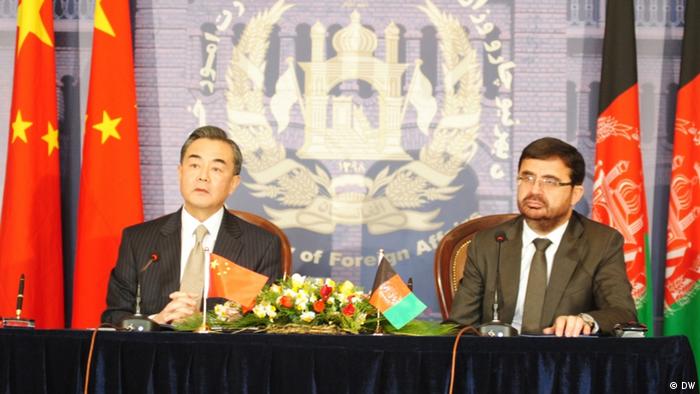
China has staked its economic future on deeper integration with Central Asia. But as the US withdraws from Afghanistan, Beijing is concerned that a renewed civil war there could thwart regional development.
Griffith Asia Institute’s Dr Michael Clarke spoke with DW’s Spencer Kimballabout the situation.
High school students from four Brisbane schools have joined Griffith University students for a series of G20-related discussions and debates in a graduate level course on Politics of the Global Economy.
More than 20 students from Corinda State High School, Indooroopilly State High School, Brisbane State High School and Brisbane Grammar School sat alongside Griffith University students for a series of three-hour blended learning sessions.
“Students came into a university setting and took part in debates about issues important to the future,” Dr Sarker said.
“As an academic institution we have a role to play in the community and the G20 Leaders Summit in Brisbane presents a great platform for Griffith to discuss and debate contemporary topics through interactive learning.
“We aim to improve awareness of the role G20 countries play in energy transition with our focus on the challenges of rising energy demand in Australia, and in emerging economies of G20 nations like Brazil, Russia, India, China and Indonesia.
“It is important that students grow into future leaders whose beliefs are backed by informed discussion and debate. Therefore, they were exposed to facts, figures and conflicting opinions.”
Griffith’s latest community outreach initiative fed into the Y20 element of the G20 Leaders Summit. The Y20 is a forum for developing cooperation with the future generation, and provides a platform for young people to voice their needs, opinions and interests on issues relevant to the G20 agenda.
“Covering subjects like migration, globalisation, climate change, international trade, Australia in the global economy, microcredit, foreign aid, urbanisation and climate change, the course had a strong G20 theme,” Dr Sarker said.
The high school students exchanged views with Griffith University students across a range of disciplines including business and government, industrial relations, law, energy systems engineering, environmental management and planning and international management.
“Students’ perceptions of the G20 were gathered, and de-identified, by Griffith researchers during and at the end of the project to inform a topical article in a leading business journal.”
Professor Heidi Dahles, head of the Department of International Business and Asian Studies, welcomed an “excellent” initiative. “It conveys to our students the urgency of positioning issues of clean energy and environmental security as major items on the G20 agenda,” she said.
“This initiative once again demonstrates the particular efforts that Griffith Business School is making in integrating the theme of sustainability into its educational programs.”
Professor Andrew O’Neil, head of School of Government and International Relations, noted that the initiative reflected Griffith’s broader recognition of the strong relationship between the economic rise of Asia and the increasing influence of the G20, which includes global powerhouses, China and India.
Reporting from conflict zones is not for the faint-hearted but it’s especially dangerous for those unattached to new organisations.
Leading international journalist Jess Hill discussed the challenges reporters face covering major international conflicts such as the war in Syria, at a recent Griffith University symposium.
Jess, who spent 12 months reporting from the Middle East in 2012, said the continuing trend towards unattached freelancers affected the quality of the coverage and the safety of reporters.
“When I talk about freelancers I mean both foreign freelancers as well as local citizen journalists, many of whom are activists themselves and mostly with the opposition,’’ she said.
“They provide news to agencies like the BBC, AP and Reuters for nothing, simply by posting to Facebook or YouTube, or in some cases, being paid as freelance journalists.”
She said fewer staff reporters were going into Syria than other wars because budgets for foreign correspondents had diminished over time and the insurance premiums and cost of security for journalists had escalated.
“Freelance foreign correspondents are still charging money for their work, but they cost less than staff reporters, so freelancers have become an attractive option for news organisations seeking coverage of Syria.”
By the end of 2013, many journalists had stopped reporting from inside Syria.
“The main reason is that dozens are being kidnapped at an unprecedented rate, far higher than the number of kidnappings in Beirut during the civil war in the 1980s.”
“Some newspapers and news organisations are not accepting work from freelancers — Syrians or foreigners anymore. One of them is The Sunday Times, the newspaper of Marie Colvin, who was killed in Syria in February 2012.
“There appears to be no solution to the problem but one thing is certain — there will always be wars and people (whether citizen journalists or staff reporters) willing to risk their lives to report from conflict areas.
“How news organisations manage the evolving nature of journalism remains to be seen.”
Jess Hill was Middle East correspondent for the Global Mail, based in Cairo and Beirut. In 2011 she was listed as one of the Top 100 ‘women to follow’ on Twitter and in 2013 was listed as one of the 30 most Influential Women Under 30 in Cosmopolitan. She is currently working as a reporter for the ABC’s Background Briefing program.
Today marks exactly four years until the opening ceremony of the 2018 Commonwealth Games on the Gold Coast.
Now the countdown is underway, Griffith University has announced a delegation will head to the 2014 Glasgow Commonwealth Games to work with local universities there and learn about the role they have played in the games.
The six delegates will travel to Glasgow on the 16th til 23rd of July to attend this prestigious world sporting event.
Delegation leader Mr Chris Madden, Strategic Advisor said it is all part of Griffith’s commitment to helping ensure the Gold Coast delivers a world-class event in 2018 and one which leaves a valuable footprint on the city.
“Universities are already international institutions with strong city and community links, which can help bring partners together,” Mr Madden said.
“Through legacy plans, universities can seek to further develop sporting assets and infrastructure and maximise participation in sport — whether that’s by elite athletes, students, or members of the local community.
“By working in partnership with our colleagues in Glasgow and sharing experiences and academic research, we can help deliver a sustainable legacy for future generations.
“We see levels of involvement across our campuses through our expertise in sports management, sports science, sports medicine, sports technology and physical education,”he said.
Griffith’s Head of Allied Health Science, Professor Peter Milburn, who works on a variety of sport and exercise research, said he is keen to find out what colleagues around the world are doing.
“My primary role will be to liaise with localuniversities and observehow they and the Games Organising Committee have provided and delivered sports medicine and sport science expertise in the lead-up and during the Games.As part of this, we will be promoting Griffith’s capacity to assist Teams in the lead-up to the 2018 Games with the aim of encouraging them to base themselves at the Gold Coast campus.”
Professor David Thiel (Engineering) is attending the International Sports Engineering Association in Sheffield where he and his Griffith University colleagues will be presenting seven papers on sports related wearable technologies (basketball, classical dance, running, swimming).
He will then join the delegation in Glasgow to review the inclusion of sports technology and local university interactions with the Commonwealth Games planning and implementation.
“The use of non-chemical sports technologies continues to increase in the preparation of athletes for major events, however, even at junior and amateur levels these low-cost technologies can be used for skill learning, skill assessment, training load and injury recovery,” Professor Thiel said.
Delegates also attending include:
Professor James Skinner, Department of Tourism, Sport and Hotel Management
David Morgan, Fitness Australia
Adjunct Associate Professor Mark Brown, Sports Medicine Australia (QLD)
‘Globalisation’ refers to the relationships between people and places within a country or across continents, and their propensity to foster or detract growth. These relationships may be built around virtual transactions or material ones. The change in labour markets in response to these developments has highlighted a range of inadequate conceptualisations around what work itself now is, comments Dr Atzeni; and globalisation itself has played a part:
“The movement and delocalisation of factories, the industrialisation or de-industrialisation of countries, the emergence of new economies like south Asia, and an increase in service-orientated activities” are but a few examples.
In response, Maurizio highlights how more research is being conducted to include broader categories of workers, such as those in retail, call centres, and unregulated, unproductive and unrepresented industries; a focus on the mobility of, and space in which, work is executed; the impact of citizenship on employment; the impact of the labour force’s relationship with worker’s social lives; and that which moves beyond the premise of work as only a ‘waged’ practice.
The impact of workers on social change also featured as part of the seminar presentation:
“Workers should…be looked at as a group of people who have a say in society”, suggests Maurizio.
And not just through the lens of unions: the impact of self-activity, community, and global unionism feature as result.
In concluding, Dr Atzeni highlighted researcher’s capacities to seek out connections — or the absence thereof — between the global value chain and how workers operate in different parts of the world when working for the same chain. Workforce organisation in global cities such as London and New York, and the place of ‘informal’ work in them also warrants investigation, he says, as does the organisation of strategic industries like transport and logistics.
Griffith University played host to Cancer Council Queensland (CCQ) this week asthe charity announced Professor Nigel McMillan as the Face of Relay for Life.
Professor McMillan from Griffith Health Institute’s Molecular Basis of Diseaseprogram had the honour bestowed on him in recognition of his contribution tocancer research and for his dedication to supporting CCQ’s vision of a cancer freefuture.
This will be the second year that Griffith has held the Relay for Life, a majorfundraising event which sees university students and staff get together with the
community to camp overnight in aid of CCQ.
“I am delighted to be a part of Face of Relay and to help raise awareness ofcancer research,” said Professor McMillan. “I think people feel that the science
can be something of a mystery but I aim to open the doors to what happens in thelaboratories and let people see where the money goes and what it may lead to.”
CCQ provides funding for research undertaken by Professor McMillan and histeam, such as his work focusing on cervical cancer.
“This form of cancer is driven by a virus and we have been able to develop somevery unique treatments that will treat only the cancerous cells whilst leaving the
normal healthy cells alone. We are hoping to get this into clinics soon and therebyoffer further hope for a cure for this disease.”
Big thanks
He also thanked the supporters of CCQ and its street campaigners for their vitalfundraising efforts.
“Without this financial assistance, this research would not be possible.”Di Dixon, Relay for Life Co-ordinator Cancer Council Queensland, said theorganisation is excited to have Professor McMillan as the Face of Relay for Life.
“The partnership between Griffith and CCQ is a very powerful one for oursupporters, as it provides them with a real insight into the worthwhile cancerresearch that the university is undertaking. It all adds up to providing much hopefor a future cure for cancer.”
EVENT INFORMATION
Griffith University Gold Coast Relay for Life
WHEN: October 18-19, 2014
For more information and for team registration, please visit:www.relayforlife.org.au
Like us on facebook: www.facebook.com/GUGCRelay
Students at Griffith University have again embraced Harmony Week, digging deep into their pockets to support the needy in the community.
Chancellor Leneen Forde AC this week presented a cheque of $4004 to Troy Bailey, manager of the Rosies Charity at the Centre for Interfaith and Cultural Dialogue at Griffith’s Nathan campus.
Ms Forde, a Rosies patron, said the charity extended a sympathetic hand to the homeless in our community and there were far too many homeless people for a rich society such as ours to be comfortable with.
“There are many root causes of homelessness, both personal and social, and the very concept of Harmony Week demands that we do whatever we can to address these,’’ she said.
“Griffith University is committed to developing communities based on the principles of peace, compassion, justice, human rights, respect for other cultures and support for the principle of sustainability.
“Sustainability goes beyond just concern for the environment and embraces everything we do in our private and public lives.”
Held nationally on March 21 each year, Harmony Day recognises the United Nations day of anti-racial discrimination, and celebrates the diversity of all people living in Australia.
“The extension of Harmony Day to Harmony Week allows for a multi-campus institution like Griffith to host activities across a longer period, and on different sites, providing a welcome to international and domestic students early in the academic year,” said Student Services Director Joanna Peters.
Harmony Week has been coordinated by Student Services at Griffith for more than 10 years, initially driven by the Chaplaincy Service as a ‘meet the chaplain” activity.
In recent years it has been a collaborative activity involving academic and central elements, and student associations.
This year Harmony Week ran from March 15-21, with a variety of activities on each campus including citizenship ceremonies, cultural dances, music, lectures, library displays and the sale of Harmony Week t-shirts
The Queensland College of Art and St Vincent’s Private Hospital have come together to establish a new artist-in-residence program to use artwork as a new means to enrich the environment of care and support.
According to the Hospital’s General Manager Ms Cheryle Royle, the initiative fits well amidst a growing body of evidence to suggest that arts have the potential to significantly improve health outcomes.
“These residencies are creating unique opportunities for talented artists who wish to not only create beautiful artwork, but also contribute to the life of our hospital by supporting the emotional and spiritual well-being of our patients, their families and our staff,” she explains.
“Our vision is to lead the way in transforming health care, making a real difference to the lives of those for who we provide care — and adding an artistic element to this journey allows for a unique response to the specific needs of our patients.”
Bringing arts and health together
The program came together following a conversation between Griffith University’s QCA Galleries Coordinator Cassandra Lehman-Shultz and the archivist at St Vincent’s Private Hospital Delene Cuddihy, and was brought to fruition over a 12 month period.
Cassandra says upon learning of the history of the Hospital, and that it was purpose built and intended as a beautiful place of rest with a magnificent outlook, it became clear that aesthetics already played a significant role — one that could now be furthered by the talent from the QCA.
It was also an opportunity she believed, to bring to Queensland an idea which was already gaining reputation for success in other states throughout Australia.
“Such a residency program brings arts and health together, creating new audiences and broadening understandings,” she says.
“It is intended to provide multiple benefits through a contemplative level of engagement with art, for hospital staff, patients, visitors and those who will then experience the results in the gallery context.
“Developing skills in empathetically reading art can assist medical practitioners and patients in understanding and explaining pain, confusion, loss and healing.”
Three QCA students have been selected to take part throughout 2014 and are encouraged to add creatively to the hospital environment; offer active artistic opportunities for patients; use resources in an inspired way; or offer useful reflections on the hospital and its care.
Reflecting on the significance of life
Doctoral candidate Brian Sanstrom undertook the inaugural three-month residency to coincide with his thesis and already established practice surrounding the human condition.
“From birth to death we all,in a multitude of ways, struggle to assert our independence,our sense of self and to understand our place in the world,” he explains.
“Whenlife is coming to an end, either through the natural ageing processes ormore particularly when illness besets us, we may choose tocontemplate and reflect onour life, andconsider its’ significance.
“Faced with our own mortality, reasoning canoftengiveway to acceptance and finally peace.”
It is within thiszone,somewhere between acknowledging death’s inevitability and remembering and honouring those who have passed, that moved Brian to develop his latest sculptural work.
The pieces stand as testament, he says, to the physical care of a patient, their bodily communion with medicine and finally, their absence from the world as we know it. But it is not just a commentary on acceptance.
“This work aims to assist us to not only remember and give honour but to truly know that person and thus gain a greater understanding of ourselves and our place on earth.”
After spending time within the walls of St Vincent’s and experiencing first-hand the individual patient care and the institution, Brian chose to integrate resources found on-site into his work.
With approval, he collected the rusted tin letters of the Hospital’s former signage, bandages, bed pans, plastic gloves and metal file boxes — each becoming a subtle commentary on the physical and spiritual passage of life and death.
The bandages were wrapped around the tin letters and painted with tar to signify the inevitable decay felt with passing time, while his ‘Incision’ piece brought together painstakingly stacked skeletal raw wooden beams.
While fragile individually, Brain reveals, together they represent strength and thus the power of individuals within the Hospital.
“The pieces offer a visual dialogue to encourage discussion, debate and emotion around this unique stage of life,” he says.
“It’s important to look at the formal order that surrounds this organic process, while uncovering the role of the strangers who devote their time to the care of these ones who have put their lives in their hands.
“It brings to light the multiple ways we can accept with grace, the life cycle in all its complexities.”
The next residency with artist Julie-Anne will take place in May-July, while the third with Glen Skien is planned for later in the year. A final curated exhibition of all three artists is expected to take place in October at the QCA’s South Bank campus.
St Vincent’s Private Hospital Brisbane cares for patients aged 14 to 100+ from all around Queensland and interstate, with 3,000 inpatients and over 4,000 outpatient visits conducted annually. The Hospital has been a part of the Kangaroo Point landscape since 1957 when the Sisters of Charity set out to care for sick and dying, the poor and vulnerable.
MEDIA CONTACT:
Lauren Marino, Arts Publicist, Griffith University
0418 799 544, [email protected]