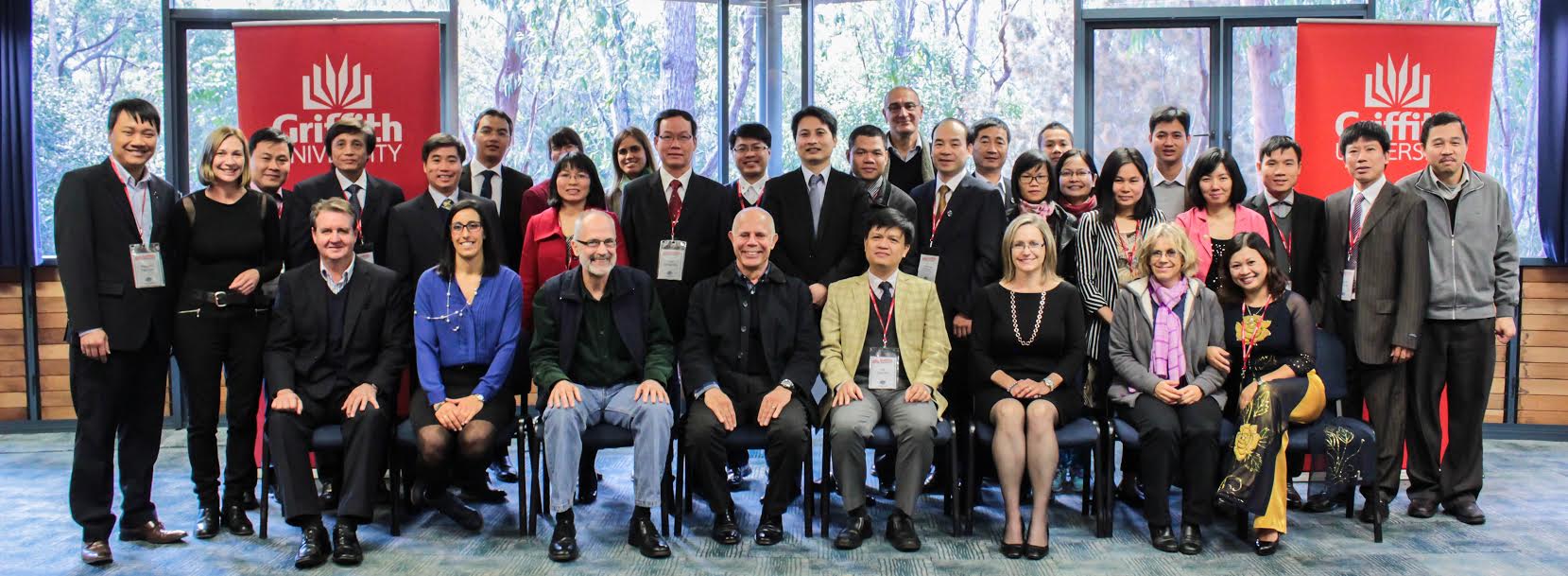
The first cohort of undergraduate Chinese students in Biomolecular Science completed their program of study with the School of Natural Sciences at Griffith in semester 1, 2015.
Following thisprogram, students from the Nanjing University of Chinese Medicine (NJUTCM) Bachelor of Science articulate into the Griffith Bachelor of Biomolecular Science with advanced standing.
The students attended an informal gathering on July 30which was presided over by NJUTCM’s Vice President, Professor Guicheng Huang and Professor Sarah Todd, Pro Vice Chancellor (International), Griffith University. The students also attended the formal Griffith Graduation Ceremony held at the Brisbane Convention and Exhibition Centre.
Established in 1954, NJUCM is one of the earliest established universities of Traditional Chinese Medicine (TCM) in China, and is a World Health Organisation Collaborating Centre for Traditional Medicine.
TCM’s are central to health care in China, and Griffith’s School of Natural Sciences and the Eskitis Institute collaborate with ongoing projects and initiatives with Chinese institutions in this area.
Further cohorts of students under the joint undergraduate program in Biomolecular Science commenced study in semesters 1 & 2, 2015.
As the next generation of students gets a glimpse of university life at Open Day, Griffith University is celebrating 40 years of teaching at Nathan campus.Old and new will come together to mark the celebration at Open Day on August 9.
One-hundred and twenty students and staff from 1975 will attend a champagne brunch at the Sir Samuel Griffith Building with special guest Emeritus Professor Colin Mackerras.
“It was a wonderful and memorable experience working at Griffith in the early days. Everybody was excited about doing something that had never been done before, a radical new form of education based on interdisciplinarity,’’ Professor Mackerras said. Read more about Colin Mackerras here.
In 1978, the first cohort of 170 Griffith students graduated from the Schools of Humanities, Modern Asian Studies, Science and Australian Environmental Studies.
Elizabeth Stevens was part of the original cohort and recalls a time of close learning, collegiality and collaboration. Studying a Bachelor of Arts in comparative literature and history, she remembers her undergraduate days with fondness.
“They say your school years are your best, but that’s not true. Those three years at Nathan campus were a phenomenal experience,’’ she said.
After graduating with her BA, Elizabeth completed a Graduate Diploma of Applied Linguistics and then a Master of Philosophy, also at Griffith, some years later.
Over the years, she’s maintained contact with the university working in education as a research assistant and lecturer. She is currently working with the Griffith Institute for Educational Research as a research assistant.
“I’m looking forward to connecting with former students and lecturers at the event on Sunday,’’ she said.
Another 1978 graduate, Colin Noy, credits Griffith for his successful career as a science teacher.
“Griffith gave me an excellent grounding in all of the sciences,’’ the Brisbane Boys College teacher said.
“I studied with a great bunch of people, it was such a close-knit group and absolutely fabulous.”
But a degree wasn’t the only thing Colin obtained from Griffith. He also met his wife Denise (nee Phillips), who was studying modern Asian languages, on his second day of university.
“I came from Manly, she came from Wynnum and a mutual friend put us in touch and told me to give her a lift to and from uni as it was taking her two hours each way on public transport. We’ve been married for 36 years.”
Colin is part of a group of science graduates who have been meeting regularly for the past 40 years and is looking forward to catching up with old friends and new on Sunday.
To find out more on Open Day click here.
by Elspeth Muir
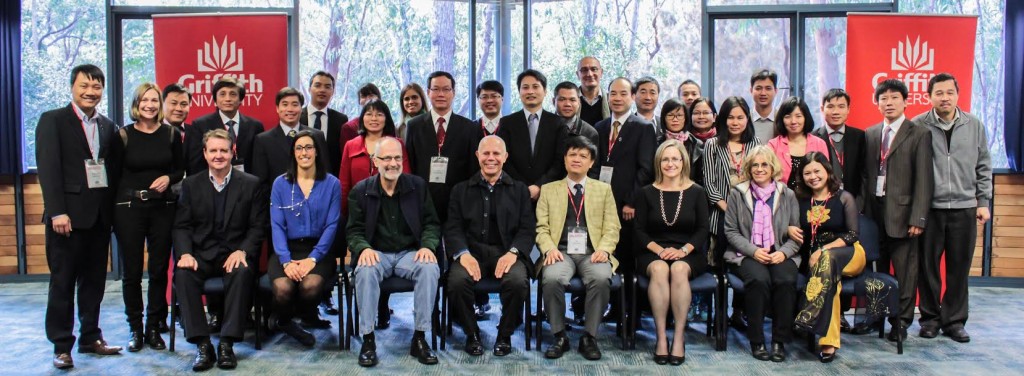
Food security, high quality freshwater, and health standards were among the issues discussed at the Griffith hosted Australia Awards Fellowship climate change program for the Vietnamese Ministry of Natural Resources and Environment (MONRE).
The Australian Government funds Australia Awards Fellowships administered by the Department of Foreign Affairs and Trade. They aim to build capacity and strengthen partnerships between Australian organisations and partner organisations in eligible developing countries in support of key development and foreign affairs priorities. By providing short-term study, research and professional development opportunities in Australia, mid-career professionals and emerging leaders can tap into Australian expertise, gaining valuable skills and knowledge.
Twenty fellows, comprising senior officers and experts from MONRE, attended the three week program facilitated by Griffith School of Environment Associate Professor Albert Gabric in conjunction with Griffith’s International Business Development Unit.
Climate change is a pressing environmental concern in Vietnam with the Mekong Delta likely to be one of three river systems in the world most impacted by rising sea levels.Deforestation caused by dioxins sprayed during the Vietnam War has heightened its impact.
Attendee and vice head of MONRE’s Science-technology and International Cooperation division, Ms Pham Lan Anh, said: “Vietnam is one of the countries which is most affected by climate change. Those areas contaminated by dioxin are spectacularly affected due to the loss of rainforest.”
“Extreme weather conditions occurring in these areas include: hurricanes, thunderstorms, tornadoes, floods, and more. Moreover, dioxin from those contaminated lakes, rivers and land are gradually spreading out further.”
MONRE requested that Griffith University run the program because of the University’s reputation as a key training provider to professionals working in the area of environment and climate change. Griffith is home to one of the largest groups of environment academics, researchers and professionals in Australia.
MONRE Department of Organization and Personnel (DOP) Director General Mr Ta Dinh Thi said the program had taught the fellows how to: “mainstream climate change issues into the sectoral planning developed by ministries and line-ministry agencies.”He said it would also, “strengthen training, research and international cooperation for responding to climate change.”
Mr Thi hoped the fellowship would “further strengthen the cooperation between MONRE and Australian relevant partners, especially Griffith University.”
Since 2011, nine Vietnamese delegations have chosen to undertake a Griffith University hosted Australia Awards Fellowship or short course.
Griffith University’s Cameron McEvoy has finished second in the final of the 100m freestyle at the 2015 world swimming championships in Kazan, Russia.
The silver medal was Australia’s only medal on the fifth day of competition, although more are likely as the meet continues, especially after excellent performances from Mitch Larkin — fastest qualifier for the men’s 200m backstroke final — and sisters Cate and Bronte Campbell in the women’s 100m freestyle.
A Bachelor of Science/Advanced Honours student at Griffith, McEvoy was the fastest qualifier for the 100m final but was overtaken in the final strokes to finish behind gold medallist Ning Zetao, from China.
McEvoy told media the result, his first individual medal at a world titles, has him well placed in the lead-up to next year’s Olympic Games in Rio de Janeiro.
In other events, Madi Wilson finished sixth in the 50m backstroke final, while Emma McKeon and Jess Ashwood were part of the women’s 4 x 200m relay team that finished sixth.
Griffith has a strong contingent of students and alumni among the Australian Dolphins swim team in Russia. All students are members of the Griffith Sports College.
Bachelor of Laws/Bachelor of Criminology and Criminal Justice graduate Lewis Glover presented the student speech at last Thursday’s graduate ceremony for Griffith criminology, law and education students. Lewis’s heartfelt words no doubt struck a chord with his fellow graudands as they prepare to enter the next stage of their lives.
Good morning Chancellor, Academic Provost, Griffith University staff, distinguished guests, ladies and gentlemen, and last, but by no means least, my fellow graduates.
I will try and keep this brief. The last thing any of you want is a Halle Berry-esque speech that gets me played off stage. After all, I’m sure there are cold beers and cocktails waiting for you all. Now, I must admit, I was very surprised when I was asked to deliver the valedictorian speech, and quite frankly my first thought was “great, another piece of work. Weren’t the 150 other pieces of assessment over the past 5 and a half years enough!?” But honestly, it is a great honour to have been asked to do this, but since this is my first speech of this magnitude, I thought it best to start with a quote from someone far more qualified.
Oscar Wilde once said, “Education is an admirable thing, but it is well to remember from time to time that nothing that is worth knowing, can be taught”.
I think that is very applicable to all of us sitting here today. We have all finished learning from textbooks, academic journals, professors, and Wikipedia, the foundations of knowledge that we need to begin a career in our chosen discipline. However, everything we need to learn to be successful can only be gained through our own experiences, triumphs, and failures. Today marks the end of one small chapter of our lives, and the beginning of many more different chapters.
For example, I don’t think it is acceptable to turn up at work hungover from a pub crawl. Or maybe you’ll get a cool boss. If so, congratulations! Never. Leave. that job.
Standing here today is quite surreal. Studying at Griffith has been the major component of my life for the past five and a half years, and all of a sudden it is over. It hasn’t quite sunk in for me yet, and I am sure that many of you are feeling the same way. Some of you will be excited to leave and start your careers, others will be nervous, scared even, at the prospects of having to navigate interviews and assessment centres to get that graduate job. Some of you will be disheartened at being rejected from positions — I know I was. It was soul destroying opening rejection letter, after rejection letter from judges for a position as their associate.
But… without these rejections, I would not have looked further afield and found my job in Budapest. Sometimes what at first appears to be a defeat is in fact a victory. I urge all of you still looking for your dream job to remain patient and to not settle for something you’ll hate. After all, if you love your work, you will never work a day in your life.
I believe that it is important to acknowledge the work of others in our achievements. None of us would graduating today without our own various support network of parents, family, friends, partners, and significant others. Personally, I would like to thank my parents and grandparents who are here today. Without their support and sacrifice, I would not have accomplished half of what I have been able to. So mum, dad, nanna, and Don, thank you for everything you have done for me. Words do not express how grateful I am, especially for the free rent and Foxtel all these years. I know I am not the only student who owes much to those who have come to share this day with them. So on behalf of the students, I would like to extend sincere thanks and gratitude to all of the guests here today.
I also offer thanks on behalf of the student body to all the academics and administrative staff who have helped us throughout our time at Griffith. These staff members have responded to cries of help during times of assessment and enrolment crisis, including many from myself. Their knowledge, experiences, and advice has been fundamental to us all reaching this point.
I would also like to thank the staff of the Griffith Honours College on behalf its graduating students. I have been fortunate enough to be guided and supported by the dedicated staff throughout my time here, and I am sure the other members of the College share my sentiments. So thankyou to Jeanne, Kim, Nadia, Fabi, and Aileen, for everything you have done for this cohort of the Griffith Honours College. Your guidance and advice has been invaluable to our development as young leaders.
Finally, I want to remind you all that success is not instantaneous, and it is not measured by the zeros in your bank account. As Winston Churchill said: “Success is stumbling from failure to failure, with no loss of enthusiasm”. Don’t chase a job just for the paycheque, because after all…. “Mo Money, Mo Problems”. Congratulations to all my fellow graduates, and best of luck in the future.
“Chancellor, I am pleased to present to you, a donation to support the Student’s Future Fund from the class of 2015. We hope this will benefit future students in need at Griffith University.”
Thank you.
The Immigration Minister’s confirmation that a boat load of people has been returned to Vietnam leaves many questions unanswered.
Who was on board? All people have the right to due process to determine their protection needs – what if there were trafficked children or torture victims on that boat?
What was the process for determining whether any of the people on board were seeking asylum? Did any of them have a claim for refugee status? Did they have access to legal advice? Were they interviewed while still at sea?
Without a robust and fair process, Australia is at risk of returning asylum seekers to a place where their lives and freedoms may be threatened. This would violate international law and effectively render Australians accomplices to human rights violations elsewhere.
The policy of secrecy surrounding the interception of boats prompts the question: does the government have something to hide? Why do we as a country have to react this way, leaving so many questions about whether Australia’s response has been legal, fair and proportionate? And what about the example this sets for our ASEAN neighbours?
Statement issued by:
- Professor Penelope Mathew is the Dean of Griffith Law School
- Dr Susan Harris-Rimmer is an ARC Future Fellow and an Associate-Professor at Griffith Law School
Media contact:
Deb Marshall, d.marshall@griffith.edu.au,0413 156 601
A 450km bike ride has raised almost $32,000 for the Autism Centre of Excellence (ACE) to help support parents of children with Autism Spectrum Disorder (ASD).
The ACE Gran Fondo, a four-day charity bike ride event from Noosa Heads to Byron Bay, ran from July 31-August 3 to raise awareness for autism research.
ACE Director, Professor Jacqueline Roberts, says riders’ surpassed last year’s fundraising.
“The 2014 ride saw 17 community members raise more than $30,000 for ACE,’’ she says.
“The funds raised helped fill a gap in support for families with ASD, andfunded research and a series of workshops across Queensland and Tasmania.”
“At ACE, our main goal is to help children with autism succeed at school, so we offer workshops that give parents the knowledge and confidence to advocate for their children.”
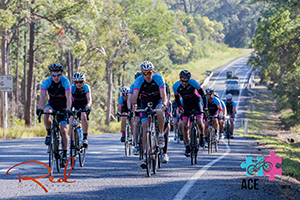
The ACE Gran Fondo team has raised almost $32,000 for ACE
Funds raised from this year’s ride will also go towards funding further research and workshops for parents.
The ACE Gran Fondo ride is co-ordinated by Glenn Williams, whose son Mitchell was diagnosed with autism at aged four.
Glenn says he decided to organise the Ace Gran Fondo ride after his wife Rayelene was inspired by an ACE seminar.
“Rayelene and I wanted to do something to help benefit other families and the money raised from the ACE Gran Fondo ride will go some way towards providing this assistance,” he says.
To donate to the ACE Gran Fondo and support the work of ACE, click here.
To view photos from the ride, head to the ACE Gran Fondo’s Facebook page.
By Dr Siobhan O’Dwyer, Centre for Health Practice Innovation, Menzies Health Institute Queensland.
My grandfather had a long name: Wilbur Vivian Maxwell Gericke. Rather than being a burden, the four names gave him options. Among friends, he was Max. To his optometrist, he was Wil. And when he called talkback radio, he was Vivian. He also had a long life–dying at 96 with nothing more than aspirin in his medicine cabinet.
Max was an outlier–most of his contemporaries died in their 60s and 70s–but as our population ages, more and more of us will live into our 90s and beyond. But what will those extra years look like? Will they be happy, healthy, independent years? Or will they be plagued by disease, disability, decline and dementia? And how can we change the course of our own ageing?
It was my relationship with my grandfather that really inspired me to become a gerontologist–and start asking these questions in a more systematic way.
My research focuses on people with dementia, and the wellbeing of their carers. No one wants to talk about suicide or dementia over cocktails, but as a society we really need to start the conversation. We cannot age powerfully if we aren’t prepared to have open, honest conversations about the more challenging aspects of getting older—illness, care, dying, and death.
In the academic world we often talk about ageing well or productive ageing and the media often talks about ageing gracefully, but I came across the idea of powerful ageing when I was a guest on Adam Holcroft’s podcast, The Dojo of Powerful Ageing.
The problem with the terms “ageing well” and “ageing productively” is that they can exclude a lot of people and be used to justify a lack of government investment, because they imply that an inability to age well or productively is a personal failure, not a social one.
This approach completely ignores the fact that your health conditions or your lack of employment may be completely out of your control, not to mention the fact that you may have spent the last 50 years working, paying taxes and raising children (ie being productive). It also ignores your right to not be productive.
And the problem with “ageing gracefully” is that it’s almost always used to describe women who are doing everything they possibly can to mask the fact that they are ageing!
Ageing powerfully on the other hand is–at least to my mind–about having choice, having autonomy and dignity, having a voice (both socially and politically), and having access to a safety net of social support if you need it.
The right to do what they please
As a society we need to recognise that by the time most people reach their 70s and 80s they have made an incredible contribution to our society and have earned the right to do whatever (and look however) they damn well please!
If you want to age powerfully, it’s important to understand that the benefits of exercise, nutrition and good mental health only come from years of consistent effort. And with research now suggesting that the biological changes underpinning Alzheimer’s disease start as long as 30 years before the onset of symptoms, it’s never too early to start thinking about the life you want when you’re 70.
Don’t wait until you’re 50 to start taking care of your health or your finances or getting your affairs in order. Start now–whether you’re 25, 30, or 40 there are things you can do now to make sure that, as much as possible, you’re in control of what your later life will look like.
In particular, you can agitate and advocate for the change you want. Don’t want to end up in a nursing home? Get politically active about the state of nursing homes now!
Want to be treated with dignity and respect when you’re 70? Call out age discrimination now–whether it’s on the bus, in the workplace, or in Parliament House–and donate to organisations like Carers Australia, Alzheimer’s Australia and COTA who fight for older adults every day.
Oh. Anduse a condom. Sex might keep you young, but rates of sexually transmitted infections among older adults are booming and there’s nothing powerful about ageing with an STI.
My grandfather built furniture and grew orchids, he read poetry and played the organ, he enjoyed cricket and world politics, and he didn’t speak unless there was something important to be said. He exercised regularly, ate well, drank in moderation and didn’t smoke. He took care of his teeth, saw his GP regularly and sought treatment for depression.
He stayed engaged, both cognitively and socially. He saved money, made a will, and had an enduring power of attorney. He had conversations with his family about his preferences for end-of-life care and cremation, and he was prepared to care and be cared for.
With the exception of not eating green vegetables, everything Max did is backed up by the science. And given that he died in his own home with all his marbles (and teeth!), I think the results speak for themselves.
Of course, there are no guarantees in life. Ageing is a crapshoot–you might do everything Max did and still get cancer or dementia. It’s also an uphill battle for AboriginalAustralians and other groups who face systemic and intergenerational disadvantage. But it is possible to load the dice in your favour.
For more reading on health, research and ageing, Siobhan recommends:
Dr Siobhan O’Dwyer is a Research Fellow at Griffith University. Her research on suicide risk in family carers of people with dementia was a world-first and her study of homicidal ideation in family carers has been described as “landmark research.”She is passionate about community and media engagement and ensuring that research is translated into better practice and meaningful policy.Read more about her work and reflections on her blog.
This article was first published on :http://www.dumbofeather.com/how-to-age-powerfully-and-what-that-means/#sthash.kaniOzDs.dpuf
Golden Lion Tamarins are endangered, occurring only in Brazil’s Atlantic Forests, which have been mostly cleared. However, many small patches of suitable tamarin habitat remain on privately owned land.
In a paper co-authored by Professor Ralf Buckley, Griffith’s International Chair in Ecotourism Researchin the School of Environment, and Dr Fernanda de Vasconcellos Pegas, from the Griffith Institute for Tourism, it is revealed that small-scale financial support to local landowners is a highly cost-effective way to help tamarin conservation.
The paper is published in the open access journalFrontiers in Ecology and Evolution.
The Australian mining industry has been responsible for much of the growth in shift work with 52% of all employees now working them. But roster arrangements for this type of work are the perpetual thorn in both employers’ and employees’ sides. Contributing heavily to employees’ work-life balance, shifts that lead to partner dissatisfaction or that do not align with their work schedules, and those that hamper a worker’s contribution to their household have been linked to sleep disturbance. There is also a growing body of evidence which observes its negative health effect on shift workers including (but not limited to) anxiety, depression, burnout and substance abuse.
In response, a team of researchers from the Centre for Work, Organisation and Wellbeing comprising Dr Rebecca Loudoun, Professor David Peetz and Associate Professor Georgina Murray (with Central Queensland University’s Dr Olav Muurlink), have analysed findings from phase one (2011) of the Australian Coal and Energy Survey which asked 1319 mine and energy workers and their partners if both saw age combine with a perceived lack of control over the intensity, duration and timing of their shift work tasks to impact upon the worker’s sleep quality and quantity?
On its own, age is the most significant factor in workers’ decreasing tolerance for shift work. As Australia’s workforce ages, calls have been made for more flexibility in the working hours of older workers. Although accepted that physiological, psychological and social disruptions characterise older workers, there is however no empirical evidence to suggest that their need for flexibility is greater than that of younger workers. Dr Loudoun (pictured below)explains:
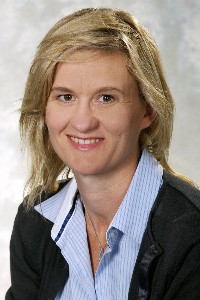
Dr Rebecca Loudoun
“More information is needed about the importance of control over aspects of shift work for different groups of workers and workers in different industries. It is important to know the factors influencing work-life interference for [those at] different ages and at different life-stages…. Substantial differences are likely to exist between [older and younger workers] in life circumstances, home responsibilities, job tasks and work-related experience. Previous studies have found no doubt, for example, that support from partners is critical for adjustment to shift work and indirect evidence suggest[s] that marital quality is associated with disrupted sleep.”
The team found shift control had a positive impact for workers over 50 years of age, leading to significantly lower sleep disturbance. Having a say over work tasks also had significant impact, but irrespective of age, no convincing evidence was found to suggest that it mitigated sleep disturbance.
In an industry characterised by high organisational restraint over workers’ freedom of behaviour, the team conclude that leeway around task discretion was more important for younger (<50 years) workers to minimise sleep disturbance than control over shift scheduling is. Older (>50 years) workers, however, placed importance on both, with scheduling the more critical of the two.
“Further research is needed to determine [though] why the pattern regarding the impact of control of shift variables ‘flips’ in middle age,” adds Rebecca.
This article, entitled ‘Does age affect the relationship between control and work and sleep disturbance for shift workers’ was published in the journal, Chronobiology International (2014, vol. 31, issue 10, pp. 1190-1200).