A new study using Explainable Artificial Intelligence (XAI) has revealed land-use change – particularly deforestation and unplanned agricultural expansion – is dramatically intensifying heatwaves across Africa, with findings that carry direct implications for Australia’s warm climate.
While the research focused on Africa, the physical mechanisms behind this amplification were universal.
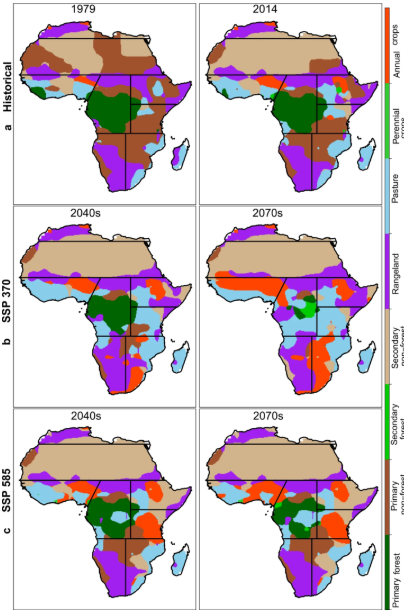
Land-use and land-cover distribution under historical and future scenarios.
“The way land use interacts with heat is not regional – it’s fundamental physics,” said co-lead researcher Dr Chris Ndehedehe, from Griffith University’s Australian Rivers Institute.
“Although our case study is Africa, the patterns we uncovered are highly relevant to Australia, especially given recent extreme heat in Queensland.”
The study, published in Communications Earth and Environment warned heatwaves were shifting from short-lived events to a “near-perennial state” in some regions.
Under high-emissions scenarios, parts of Southern Africa could experience more than 100 days of extreme heat per year.
In certain locations, heatwaves were projected to become 12 times longer and more frequent by the end of the century if current emissions and land degradation continued.
“Heatwaves are no longer just weather events; in many regions, they are becoming the climate itself,” said Dr Oluwafemi Adeyeri, a Research Fellow at the Australian National University.
“This study highlights that this is not just about temperature. In regions with dense vegetation or high soil moisture, high humidity combines with heat to create dangerous physiological stress conditions, which are often underestimated by temperature readings alone.”
By analysing climate drivers using XAI, researchers found land-use changes significantly reduced the land’s ability to cool itself.
When forests were cleared for crops or pasture, evaporation dropped, breaking down natural climatic buffers and creating a dangerous local warming feedback loop.
“We found land-use change doesn’t just alter the landscape; it effectively turns up the volume on heatwave intensity,” Dr Adeyeri said.
“Converting forests to cropland or pasture reduces the land’s ability to cool itself through evaporation.”
The study also highlighted the often-overlooked danger of heat and humidity in areas with high vegetation or moist soils, where humidity could combine with heat to produce life-threatening physiological stress not captured by temperature readings alone.
Dr Ndehedehe noted strong parallels between the study’s findings and recent climate extremes in Queensland. Rapid urbanisation and land clearing in South-East Queensland limited natural cooling in the same way observed in African regions.
“The physics identified in this paper apply globally,” Dr Ndehedehe said.
“This research shows that managing land use and protecting green infrastructure is just as critical as reducing emissions. It provides evidence that planning green infrastructure and managing land use is just as critical as reducing carbon emissions for protecting communities from extreme heat.”
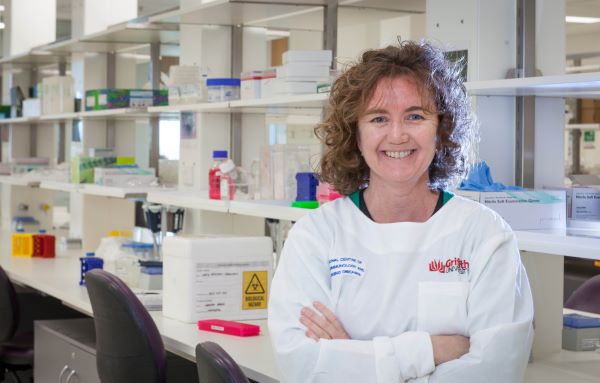
Dr Chris Ndehedehe
The researchers suggested Brisbane’s recent combination of oppressive humidity, intense heat, and sudden storms mirrored the compound events identified in the study – heat interacting with high atmospheric moisture to create volatile, high-impact conditions.
Importantly, the study findings highlighted that following a moderate emissions pathway (SSP370) could dramatically reduce the duration and severity of future mega-heatwaves.
“Adaptation cannot stop at the thermometer,” Dr Adeyeri said.
“To build resilience, we must integrate climate policy with smart land management.”
People with Myalgic Encephalomyelitis/Chronic Fatigue Syndrome (ME/CFS) and Long COVID experience a disruption to their brain connectivity during a mentally demanding task.
The new Griffith University research, published today, used ultra-high field MRI technology to investigate the significant reduction in brain connectivity in specific parts of the brain.
Professor Sonya Marshall-Gradisnik
Professor Sonya Marshall-Gradisnik from Griffith’s National Centre for Neuroimmunology and Emerging Diseases said there were common symptoms experienced by people with ME/CFS or Long COVID with this study focusing on neurological features.
“The symptoms include cognitive difficulties, such as memory problems, difficulties with attention and concentration, and slowed thinking,” Professor Marshall-Gradisnik said.
Lead author and PhD candidate Maira Inderyas said the study saw participants undertake a cognitive test while inside the MRI machine to gauge their brain activity.
“The task, called a Stroop task, was displayed to the participants on a screen during the scan, and required participants to ignore conflicting information and focus on the correct response, which places high demands on the brain’s executive function and inhibitory control,” Ms Inderyas said.
“The set up allowed us to precisely measure which areas of the brain were activated while the patient was performing a mentally demanding task.
“The scans show changes in the brain regions which may contribute to cognitive difficulties such as memory problems, difficulty concentrating, and slower thinking.”
The research supported what many people with ME/CFS and Long COVID experience which was that cognitive effort was not just tiring but could have real neurological impacts, and adequate rest was not optional but essential.
The ultra-high field MRI used in the study was one of only two available in Australia.
The research was funded by ME Research UK and the Stafford Fox Medical Research Foundation.
The paper ‘Distinct functional connectivity patterns in myalgic encephalomyelitis and Long COVID patients during cognitive fatigue: a 7 Tesla task-fMRI study’ has been published in the Journal of Translational Medicine.
A newly excavated archaeological site in central China is reshaping long-held assumptions about early hominin behaviour in Eastern Asia.
Led by the Chinese Academy of Sciences, an international team of researchers conducted archaeological excavations at Xigou, located in the Danjiangkou Reservoir Region in central China, uncovering evidence of advanced stone tool technologies dating back 160,000-72,000 years ago.
The explorations, co-led by Griffith University, revealed hominins in this region were far more inventive and adaptable than previously believed, at a time when multiple large-brained hominins were present in China, such as Homo longi and Homo juluensis, and possibly Homo sapiens.
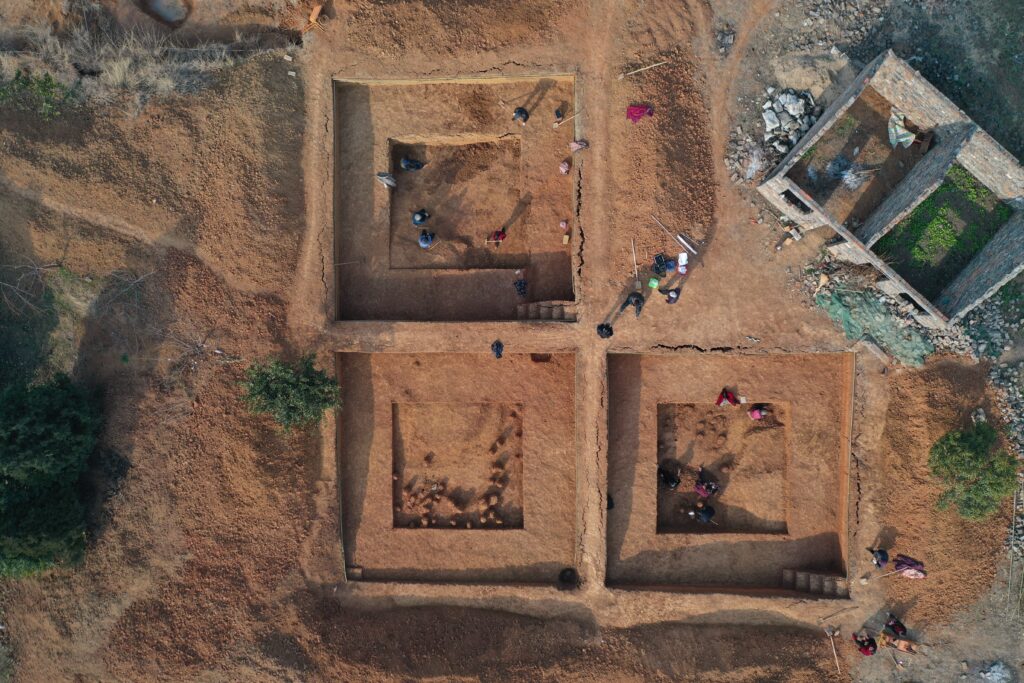
Excavation of Xigou site. Credit: Guo-Ding Song
“Researchers have argued for decades that while hominins in Africa and western Europe demonstrated significant technological advances, those in East Asia relied on simpler and more conservative stone-tool traditions,” said expedition leader Dr Shixia Yang of the Institute of Vertebrate Paleontology and Paleoanthropology (IVPP).
“Detailed analyses from the site show hominin inhabitants employed sophisticated stone toolmaking methods to produce small flakes and tools that were then used in a diverse array of activities.”
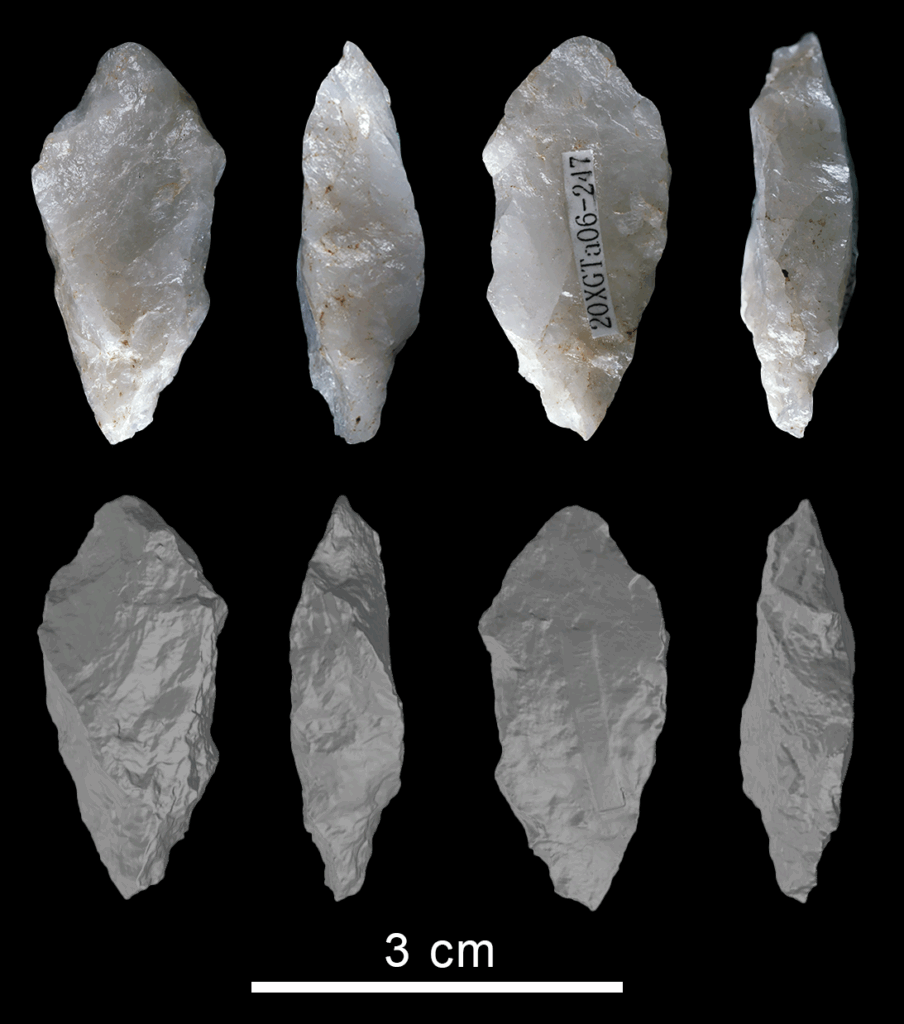
Among the most striking finds was the discovery of hafted stone-tools – the earliest-known evidence of composite tools in East Asia.
These tools combined stone components with handles or shafts, and demonstrated complex planning, skilled craftsmanship, and an understanding of how to enhance tool performance.
Tanged borer from Xigou. Credit: Jian-Ping Yue
Lead author Dr Jian-Ping Yue of the IVPP said: “Their presence indicates the Xigou hominins possessed a high degree of behavioural flexibility and ingenuity.”
The site’s rich layers, covering a 90,000-year period, aligned with growing evidence of increasing hominin diversity in China.
Large-brained hominins identified at Xujiayao and Lingjing, sometimes referred to as Homo juluensis, provided a possible biological context for the behavioural complexity reflected in the Xigou assemblages.
“The technological strategies evident in the stone tools likely played a crucial role in helping hominin populations adapt to the fluctuating environments that characterised the 90,000-year-period in Eastern Asia,” Professor Petraglia said.
The research team said the Xigou findings reshaped our understanding of human evolution in East Asia, proving early populations possessed cognitive and technical abilities comparable to their counterparts in Africa and Europe.
Dr Yang added: “Emerging evidence from Xigou and other sites shows early technologies in China included prepared-core methods, innovative retouched tools, and even large cutting tools, pointing to a richer and more complex technological landscape than previously recognised.”
The tiny zebrafish is helping researchers rapidly determine whether a newborn’s genetic mutation is likely to cause spinal muscular atrophy (SMA), one of the leading causes of infant mortality worldwide.
Dr Jean Giacomotto
The world-first research, led by Dr Jean Giacomotto from Griffith University’s Institute for Biomedicine and Glycomics, has featured on the front cover of EMBO Molecular Medicine this month (January).
Dr Giacomotto said: “SMA is a genetic disorder which causes progressive loss of motor neurons, leading to muscle weakness and loss of basic motor functions.”
“Without treatment, SMA is typically fatal, and while highly effective therapies now exist, they can exceed US$2 million per child per year and must be initiated before symptoms appear such as when a baby is able to sit but lacks sufficient neck strength to hold their head steady.
“If treatment starts after the emergence of these symptoms, the child will have already experienced irreversible degenerative damage, leading to life-long problems and possibly death within the first years of life.
“When a baby carries a mutation which has never been seen before, known as a ‘variant of uncertain significance or VUS’, clinicians face an impossible dilemma – start treatment immediately, risk unnecessary intervention, or wait and risk irreversible nerve damage.”
To solve this, Dr Giacomotto and his team developed a rapid zebrafish-based functional assay which could determine the pathogenicity of a novel SMN1 mutation within days, potentially informing urgent clinical decisions worldwide.
“Within a clinically meaningful timeframe, we were able to functionally test each baby’s exact mutation and show it was not harmful,” Dr Giacomotto said.
“This research provides the clearest demonstration to date that zebrafish can play a decisive role in clinical variant interpretation, particularly in newborns flagged through expanding genomic screening programs.
“With genomic sequencing rising worldwide, clinicians are encountering more and more uncertain variants.
“This tiny fish offers a fast and affordable way to help resolve these cases and reduce distress for families.”
The research titled ‘Clinical relevance of zebrafish for gene variants testing: Proof-of principle with SMN1/SMA’ has been published and featured as front cover in EMBO Molecular Medicine.
Professor Ruth McPhail
Griffith University community members have been recognised for their outstanding service and exceptional achievements in the 2026 Honours List announced on Australia Day.
Griffith Business School featured strongly this year with Professors Ruth McPhail and Caitlin Byrne both being awarded a Member of the Order of Australia (AM) in the General Division.
This comes as the subjects of Business and Economics improved on their Times Higher Education World University Rankings by Subject this year, jumping from 126-150 to 101-125.
A part of the Griffith community for 24 years, Professor Ruth McPhail held the role of Dean of Engagement in GBS since 2024.
A Griffith alumna, she has been the Chair of the Staff Giving Committee since 2020.
Her award recognised significant service to tertiary education, and to the arts.
Professor McPhail said it was a public acknowledgement that the way she has chosen to live and lead matters, and that it comes with a responsibility.
“To keep speaking the truth, to keep lifting others who seek support to realise their own potential, and to continue modelling brave leadership,” she said.
Professor Caitlin Byrne
Professor Byrne has been with Griffith Business School (GBS) since 2017, serving as Director of the Griffith Asia Institute until 2022, when she took on the role of Pro Vice Chancellor, Business.
She began a professional career as a diplomat with the Australian Government and worked across government, industry and community to be recognised as one of Australia’s leading academic-practitioners with a focus on international policy and diplomatic practice.
She said she was genuinely humbled to receive the award and felt incredibly fortunate to be engaged at the intersection of business education and international relations.
“It is a powerful space for driving positive change – beyond purely economic terms – towards shaping more sustainable, inclusive, and equitable outcomes in our communities,” Professor Byrne said.
Professor Emeritus John Wanna received an Officer of the Order of Australia for distinguished service to political and policy research, to tertiary education, to democratic innovation, and to the development of public administration frameworks.
Professor Emeritus Roderick ‘Dick’ Drew received a Member of the Order of Australia for significant service to horticulture research, and to agricultural development.
Mr Bruce Cowley, a member of the GBS Strategic Advisory board, was awarded a Medal of the Order of Australia for significant service to business, to the law, and to tertiary education.
Ms Karen Jane Phillips, on the Board of Advisors at the Institute for Biomedicine and Glycomics since 2019, was awarded a Medal of the Order of Australia for service to women, and to the community of the Gold Coast.
Other recipients included:
Mrs Leona Christine Murphy: Bachelor of Commerce alumna – awarded Medal of the Order of Australia for service to business through governance roles.
Emeritus Professor Marcus Tilbury Hockings: PhD Environmental studies alumnus – awarded AO for distinguished service to environmental conservation, to the development of protected area management effectiveness evaluations, and to tertiary education.
Mrs Renee Melissa Kyle: Graduate Certificate in Policy Analysis alumna – awarded Public Service Medal for outstanding public service to First Nations justice, policy and program reform in Queensland.
Chief Inspector David Harold Neville: Master of Science in Forensic Science alumnus – awarded the Australian Police Medal for distinguished service as a member of an Australian police force.
Ms Louise Jane Kneeshaw: Bachelor of Arts in Criminology & Criminal Justice alumna – awarded the Australian Corrections Medal for distinguished service as a member of an Australian correctional service.
Ms Nadia Ann Nearhos (Tschirpig): Bachelor of Arts in Criminology & Criminal Justice alumna – awarded the Australian Corrections Medal for distinguished service as a member of an Australian correctional service.
Assistant Commissioner Joel Brady Smith: Bachelor of Behavioural Science, Bachelor of Psychology with Honours alumnus – awarded the Australian Corrections Medal for distinguished service as a member of an Australian correctional service.
Commander Stefanie Maree: Master of Professional Engineering Leadership alumna – awarded the Conspicuous Service Cross for outstanding devotion to duty in the management of Navy Engineering training.
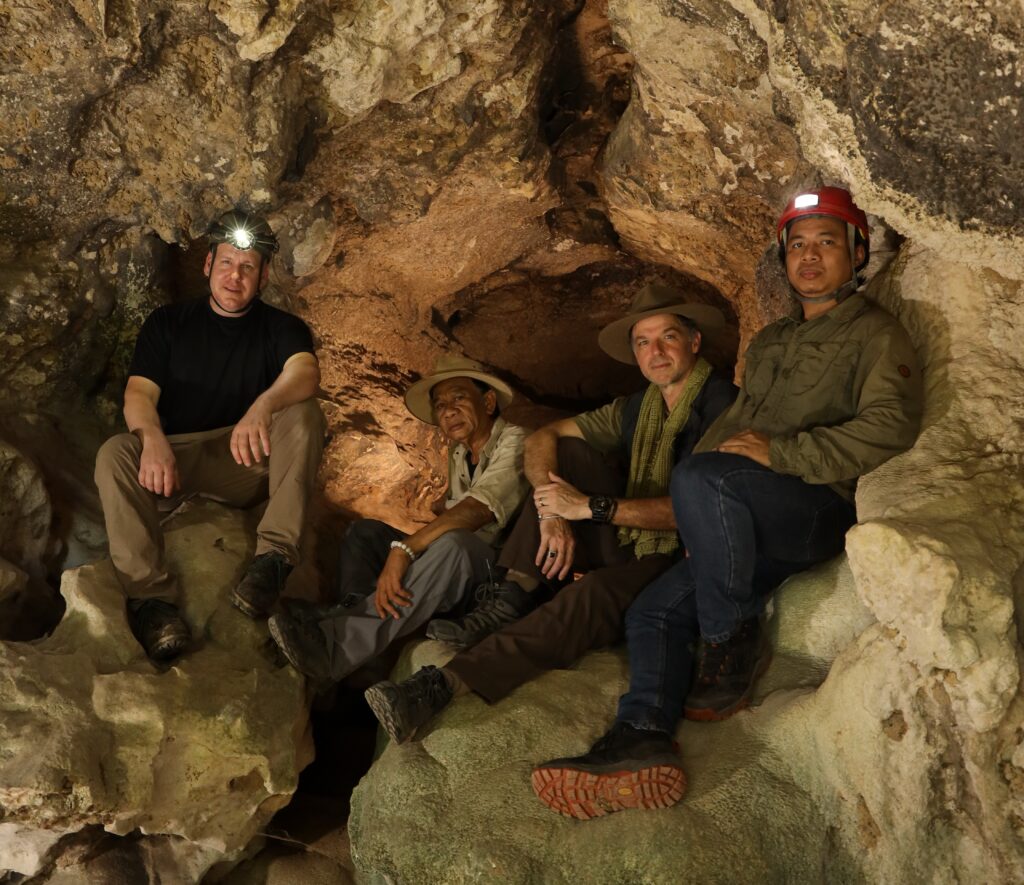
Professor Maxime Aubert, Budianto Hakim, Professor Adam Brumm and Dr Adhi Agus Oktaviana
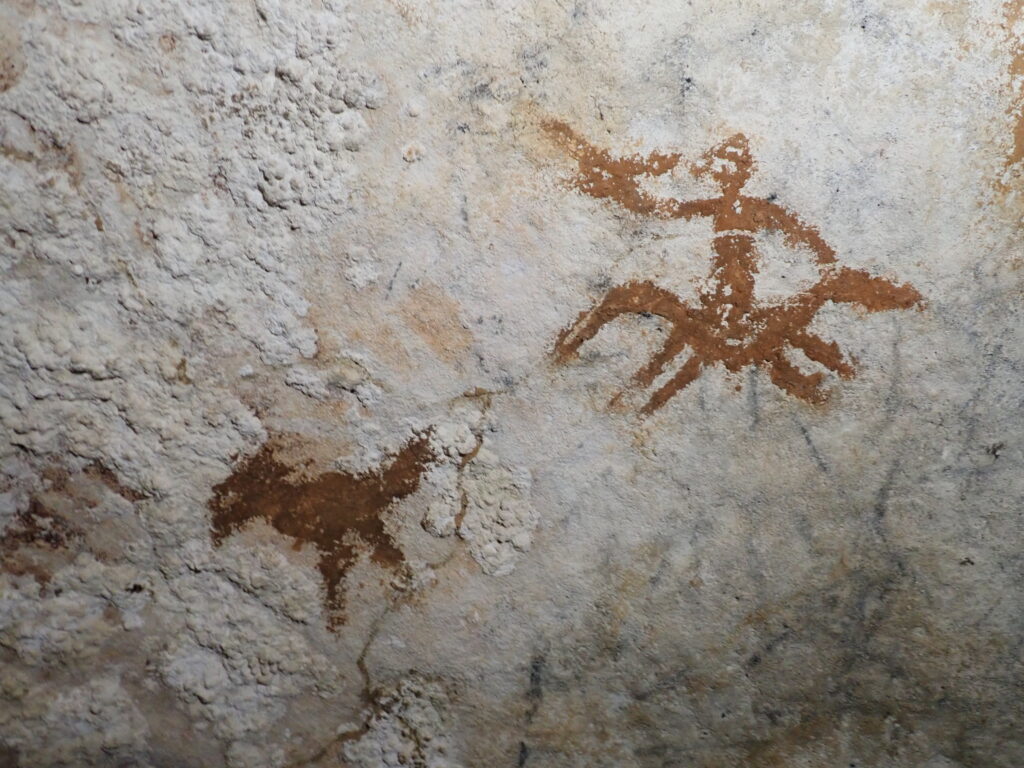
A hand stencil on the wall of a cave in Indonesia has become the oldest known rock art in the world, exceeding the archaeologists’ previous discovery in the same region by 15,000 years or more.
An international team, co-led by Griffith University researchers, Indonesia’s national research and innovation agency (BRIN) and Southern Cross University, discovered and dated cave paintings made by our species on the island of Sulawesi at least 67,800 years ago.
The research team said the findings advance our understanding of how and when Australia first came to be settled, with the Sulawesi art very likely created by a population closely linked to the ancestors of Indigenous Australians.
The faint 67,800 yr old hand stencil is barely visible amongst much younger art
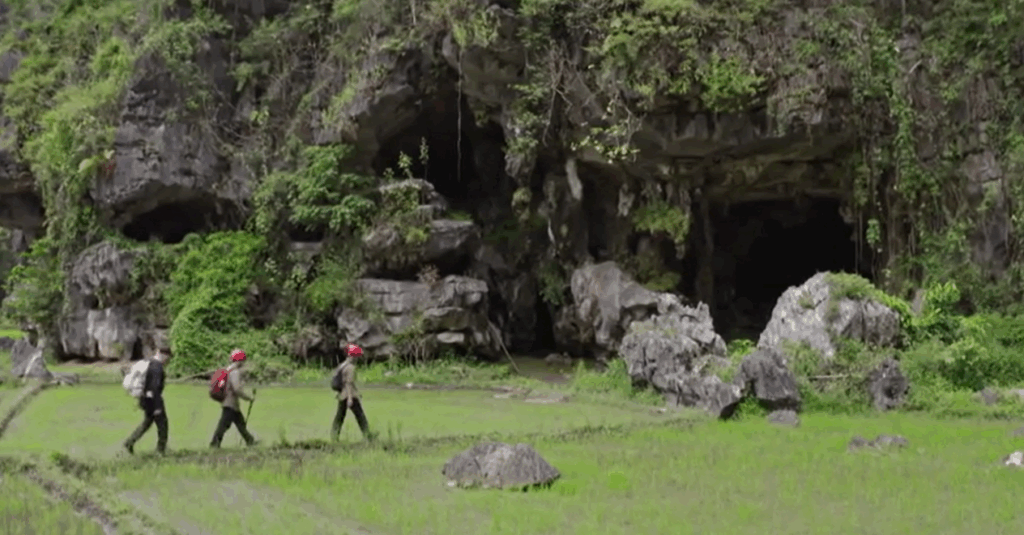
Preserved in limestone caves in southeastern Sulawesi on the satellite island of Muna, a fragmentary hand stencil was found surrounded by painted art of a much more recent origin.
The team applied advanced uranium-series dating techniques, analysing microscopic mineral deposits that formed both on top of and, in some cases, beneath the paintings from Liang Metanduno, providing a time period during which the art was made.
The hand stencil was dated to a minimum of 67,800 years ago, making it the oldest reliably dated cave art yet discovered, significantly older than the rock painting found in Sulawesi by the same researchers in 2024.
The new finding also revealed the Muna cave was used for making art over an exceptionally long period, with paintings produced repeatedly for at least 35,000 years, continuing until about 20,000 years ago.
“It is now evident from our new phase of research that Sulawesi was home to one of the world’s richest and most longstanding artistic cultures, one with origins in the earliest history of human occupation of the island at least 67,800 years ago,” said Professor Maxime Aubert, an archaeologist and geochemist from the Griffith Centre for Social and Cultural Research, who co-led the study.
The team also observed the hand stencil was a globally unique variant of this motif.
After the stencil was created, it was altered to deliberately narrow the negative outlines of the fingers, creating the overall impression of a claw-like hand.
“This art could symbolise the idea that humans and animals were closely connected, something we already seem to see in the very early painted art of Sulawesi, with at least one instance of a scene portraying figures that we interpret as representations of part-human, part-animal beings,” Professor Brumm said.
Dr Adhi Agus Oktaviana, a rock art specialist in BRIN and a team lead, whose doctoral research at Griffith University formed part of this study, said the paintings had far-reaching implications for our understanding of the deep-time history of Australian Aboriginal culture.
“It is very likely that the people who made these paintings in Sulawesi were part of the broader population that would later spread through the region and ultimately reach Australia,” Dr Oktaviana said.
There had been considerable archaeological debate about the timing of initial human occupation of the Pleistocene-era landmass that encompassed what is now Australia, Tasmania and New Guinea, known as Sahul.
Scholarly opinion was divided between the so-named short chronology model, whereby the first people entered the Sahul ‘supercontinent’ about 50,000 years ago, and the opposing long chronology model, in which they arrived at least 65,000 years ago.
“This discovery strongly supports the idea that the ancestors of the First Australians were in Sahul by 65,000 years ago,” Dr Oktaviana said.
There were two main migration routes into Sahul proposed by researchers: a northern route to the New Guinea portion of this landmass via Sulawesi and the ‘Spice Islands’ and a more southerly route that took the sea voyagers directly to the Australian mainland via Timor or adjacent islands.
“With the dating of this extremely ancient rock art in Sulawesi, we now have the oldest direct evidence for the presence of modern humans along this northern migration corridor into Sahul,” Professor Joannes-Boyau said.
“These discoveries underscore the archaeological importance of the many other Indonesian islands between Sulawesi and westernmost New Guinea,” said Professor Aubert, who, together with professors Brumm and Joannes-Boyau, continues to search for more evidence of early human art and occupation along the northern route with funding from the Australian Research Council (ARC).
The research was also supported by Google Arts & Culture and the National Geographic Society.
The research on early rock art in Sulawesi has been featured in a documentary film, ‘Sulawesi l’île d premières images’ produced by ARTE, released in Europe today.
Researchers have deciphered the diet of an important nomadic people in Eastern European history.
By analysing dental calculus, the international team – which included Griffith University researchers – provide the first direct evidence that the diet of the Scythians included milk from horses and other ruminants.
Supervisor and co-author Dr Shevan Wilkin.
For centuries, the Scythians had been immortalised as an empire of horse-back warrior nomads from the Iron Age steppe.
However, recent genetic and isotopic studies had begun to dismantle this myth, revealing the ‘Scythians’ were not a single group, but a diverse, multi-ethnic population of heterogenous origins with population differences in their regimes ranging from pastoralism to agriculturalism.
Building on this shifting narrative, a new study in PLOS One offers the most detailed look yet at the dietary practices of Scythian-era populations.
By applying advanced paleo-proteomic analysis to ancient dental calculus (mineralised plaque) from individuals from Bilsk and Mamai-Gora in modern-day Ukraine, an international research team identified species-specific evidence of dairy consumption through whey, curd, and milk-fat-globule membrane proteins derived from ruminant – such as cattle, sheep, and goats – and horses.
“Finding horse milk proteins in ancient plaque from Scythian era individuals is a major breakthrough,” said Jaruschka Pecnik, first author of the study and PhD Candidate supervised by Dr Shevan Wilkin from Griffith University’s Australian Research Centre for Human Evolution.
“It proves that horses were part of their food system, but the scarcity of these findings raises questions about whether this reflects a preservation bias or a cultural pattern – perhaps a status-based hierarchy or a specific division of livestock functionality.”
“Dental calculus is a remarkable reservoir of personal history,” Dr Wilkin added.
“By capturing the proteins consumed, we can move beyond generalisations about subsistence strategies to reveal the actual food that was consumed due to the constant mineralisation of dental plaque throughout a person’s lifetime.”
Dr Shevan Wilkin
While the study provided evidence for equine dairy consumption, the researchers noted the journey to understanding Scythian food systems was just beginning.
The research team emphasised future studies would need to assess the dental calculus of a much larger number of individuals across the Eurasian steppe to resolve current questions and further clarify the dynamic, multi-faceted food systems of the Iron Age steppe people.
Griffith University’s commitment to teaching and student education has been acknowledged in the Times Higher Education (THE) World University Rankings by Subject 2026, with business and economics jumping closer to the top 100 in the world.
Business and Economics improved on its 2025 ranking of 126-150 and has jumped to 101-125.
Dean (Sustainability and Rankings) Professor Jennifer Boddy
Dean (Sustainability and Rankings) Professor Jennifer Boddy was thrilled with the rankings, a credit to the University’s work following Griffith Business School’s (GBS) global recognition of an EQUIS accreditation in 2024, which placed GBS amongst the top one per cent of business schools in the world.
“The THE rankings signifies to the world our reputation as a leading institute not just for business, but also across a raft of subjects, exemplifying Griffith’s commitment to making it matter,” Professor Boddy said.
Alongside Business and Economics, Griffith also saw four other subjects improve their global rankings.
Physical sciences was now in the top 201-250 in the world, and Social Sciences saw a jump to the 126-150 bracket.
Arts and Humanities was ranked 251-300, an improvement on its 2025 ranking of 301-400.
Computer science also improved on last year’s result with a 2026 ranking of 176-200.
The THE World University Rankings by Subject 2026 evaluates universities across 11 subject areas employing 18 performance indicators categorised under five core pillars of:
Teaching
Research environment
Research quality
Industry
International outlook
Professor Christoph Nedopil
China’s global economic footprint through the Belt and Road Initiative (BRI) reached its highest level on record in 2025, according to the China Belt and Road Initiative Investment Report 2025 by Christoph Nedopil.
The report shows total Chinese engagement of USD 213.5 billion across BRI countries in 2025, driven by USD 128.4 billion in construction contracts and USD 85.2 billion in investments. This marks the strongest annual performance since the BRI was launched in 2013, bringing cumulative engagement to almost USD 1.4 trillion.
Energy dominated China’s overseas activity, accounting for 43 per cent of total BRI engagement. China’s energy-related deals reached USD 93.9 billion, combining record investment in renewable energy with a sharp resurgence in oil and gas. While green energy projects in wind, solar and waste-to-energy reached new highs, fossil fuel engagement—particularly gas—expanded even faster, underscoring the complex and sometimes contradictory nature of China’s overseas energy strategy.
The metals and mining sector also reached record levels, with USD 32.6 billion in engagement, reflecting growing demand for critical minerals such as copper to support data centres, electrification and emerging technologies. Technology and manufacturing investments surged to nearly USD 28.7 billion, with major projects in data centres, electric vehicle batteries and hydrogen.
Regionally, Africa emerged as the largest recipient of BRI engagement, recording a 283 per cent increase to USD 61.2 billion. Central Asia saw a sharp rise in investment, led by large-scale mining and processing projects in Kazakhstan, while engagement in the Pacific fell to its lowest level in a decade.
The report finds that large, high-value projects now dominate BRI activity, signalling a clear shift away from the “small but beautiful” projects promoted during the COVID period. Private Chinese firms led investment activity in 2025, while state-owned enterprises continued to dominate construction contracts.
Looking ahead, the report anticipates continued Chinese engagement in energy, mining and new technologies in 2026, shaped by global trade volatility, supply chain pressures and the search for new export markets—though with fewer megadeals than in 2025.
Find out more
If you would like to know more about the outcomes of the report, join Christoph Nedopil online to discuss the report in detail in a webinar on Tuesday, 22 January at 6:00pm (AEST).
Griffith University researchers may have unlocked the secret to treating sepsis, with a Phase II clinical trial in China successfully concluding with promising results.
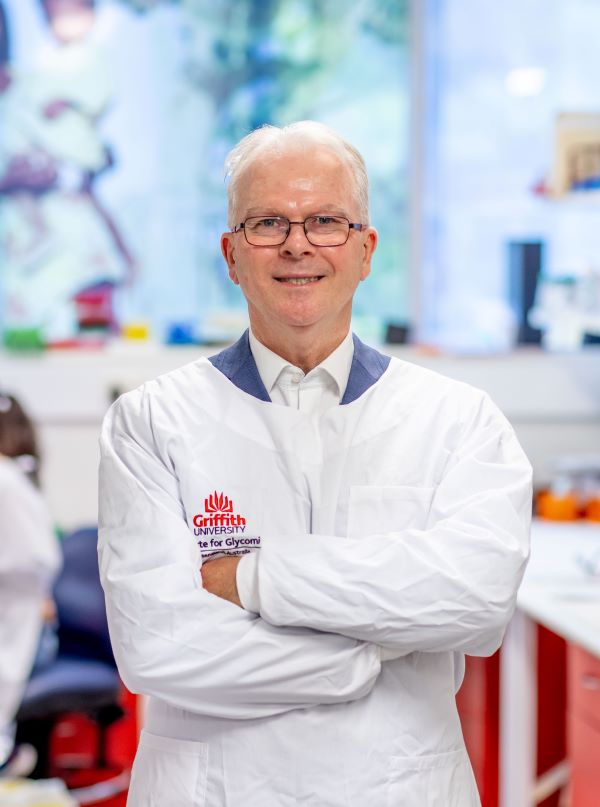
Distinguished Professor Mark von Itzstein AO
The sepsis drug candidate, a carbohydrate-based drug called STC3141, was co-developed by Distinguished Professor Mark von Itzstein AO and his team from Griffith’s Institute for Biomedicine and Glycomics, and Professor Christopher Parish and his team at The Australian National University.
“The trial met the key endpoints to indicate the drug candidate was successful in reducing sepsis in humans,” Professor von Itzstein said.
STC3141 was administered as an infusion via a cannula and counteracted a significant biological molecule release phenomenon which occurred in the body during the course of sepsis.
The small-molecule experimental drug was a carbohydrate-based molecule and could treat sepsis by reversing organ damage.
Sepsis was known to affect millions of hospitalised patients across the world each year and occurred when the body’s immune response to an infection attacked and injured its own tissues and organs.
“When sepsis is not recognised early and managed promptly, it can lead to septic shock, multiple organ failure and death,” Distinguished Professor von Itzstein said.
The trial, conducted by Grand Pharmaceutical Group Limited (Grand Pharma), involved 180 patients with sepsis, one of the leading causes of death and long-term disability worldwide.
Currently, there is no specific anti-sepsis therapy available, and sepsis is considered a clinical unmet need.
Professor von Itzstein said Grand Pharma would now look to progress to a Phase III trial to continue testing the efficacy of the novel treatment.
“It’s hoped we could see the treatment reach the market in a handful years, potentially saving millions of lives,” he said.
Executive Director of the Institute for Biomedicine and Glycomics, Professor Paul Clarke, said: “I am thrilled to see the results of the trial which ultimately aims to save lives.”
“The Institute and its researchers collectively work on translational research to deliver real and immediate impacts both in Australia, and globally to transform lives.”