Griffith University early literacy expert Dr Michelle Neumann welcomes a national early reading screening check announced by Education MinisterSimon Birminghamearlier this year.
As part of her research, Dr Neumann developed and validated an Emergent Literacy Assessment app in 2016 which tests alphabet knowledge (letter names and sounds).
She is now extending the app to include other important early literacy skills such as phonological awareness, print concepts, and early writing.
“These early skills are all key predictors of future reading ability,’’ she says.
“Teaching children how to read is a balanced approach and Australian teachers follow the Australian Curriculum’s three main strands of language, literature, and literacy.
“This ensures students are taught cuing systems such as visual knowledge of letters and sounding out words, structural skills such as the way language is written with grammar and punctuation and how to comprehend and make meaning out of the words.”
Dr Neumann believes phonics is a strong component of the Australian curriculum.
“Teachers are doing a great job of assessing students to find out where their strengths and gaps in knowledge lie — whether it’s decoding, structural, or comprehension. Then they apply the best learning activities to meet individual student needs.”
“But an early literacy screening test on entry to school would be a great way to determine what children already know and where needs lie so schools can be better supported to help children become successful readers and writers,’’ she said.
A phonics check is part of a suite of education reforms under review by the Federal Government.
ByPascalis RaimondosProfessor of Economics, Head of School, Queensland University of Technology &
Sara L. McGaugheyProfessor of International Business, Griffith University
President Donald Trump has proposed cutting the US corporate tax rate from 35% to 15% and ending the practice of taxing the foreign income of US businesses. Trump may be hoping that such a massive corporate tax cut will result in new investment. Indeed, historical data suggests companies will respond by shifting profits to where the tax is low.
This profit shifting will hurt investment in Australia, as companies move their profits to America rather than reinvesting in Australia. If the tax cut goes ahead, Australia and other countries will have to respond by either cutting taxes as well, or totally reforming the way we tax corporate income.
Alternative ways of taxing corporate income exist. The US Republican Party, for example, recently proposed a “destination-based cash flow tax”. Under this system, companies would be taxed on their revenues in the US minus labour costs.
The European Union is currently proposing a formula apportionment taxing system within its member countries. With this system, profit is allocated to be taxed by member countries based on how much activity (i.e. sales, employment and assets) occurs in each country.
Both of these tax activity rather than income, and thus are less prone to manipulation and profit shifting.
As you can see from the chart above, during the last three decades corporate tax rates have fallen across the OECD. But at the same time the amount of money raised through corporate taxes, both as a percentage of total tax revenues and as a percentage of GDP, has remained almost constant.
This is not because changes in total tax revenues or GDP have exactly matched the changes in corporate tax. The story is more complicated than that. With total tax revenues and GDP increasing, the amount of money raised through corporate taxes has actually been increasing at the same time as the rates have been cut.
Companies have simply been declaring more of their existing profits.
Tax rate changes
To understand why this has happened, you have to understand how firms react to tax rate changes. There are three general guidelines:
- The statutory tax rate (the headline 15% or 35%) affects where firms report their profits
- The average effective tax rate (the percentage paid by the firm after taking deductions) affects where firms locate their new plants – whether domestically or abroad
- The marginal effective tax rate (the percentage paid by the firms on their marginal investment) affects where the firms make new investments in existing plants.
Given these guidelines, one explanation for the increase in corporate tax revenues over the last thirty years is that the average and marginal tax rates have not fallen, i.e. even if corporate tax rates have fallen, the effective taxes have risen due to reductions in tax deductions.
But studies have shown this is not the case. Both average and marginal effective tax rates have fallen in this period, but not as dramatically as the statutory rates.
Firms unburdened
Another explanation could be that lower taxes remove a burden from firms, who are then able to create more activity and thus profits. This is the narrative behind President Trump’s tax plan.
If this is true, then we should see that periods with tax reductions lead to periods with higher economic activity and thus growth. But, again, studies show this is not the case.
A third, more plausible explanation is that lower taxes induce firms to report more profits to the tax authorities. In other words, they declare already existing profits from other countries.
We don’t yet have details about whether Trump will eliminate tax deductions along with lowering the rate, but the signal is clear. With the US willing to compete with a low tax country like Ireland, we in Australia will have to react.
There is no doubt that if a large country like the US lowers tax so much, it will divert investment from other countries such as Australia, along with profits (and hence Australia’s tax revenue).
It is a textbook “beggar thy neighbor” tax policy. Australia, and any other country that has high tax rates, will have to react by either reducing its corporate tax rate as well, or by totally reforming the way we tax corporate income.
Professor Pascalis Raimondos and Professor Sara L. McGaughey are friends of The Conversation
This article was originally published in
While there may be an air of uncertainty when it comes to the status of Australia’s new temporary visa program following the axing of the 457 Visas, Professor Ruth McPhail of the Centre for Work, Organisation and Wellbeing believes the local hospitality industry may see some hardships in some areas, but the situation may increase internal staff development in others.
According to Professor McPhail, the problems of the visa changes comes from attaining those employees with specialised skills that most Australians simply do not have.
“This can occur in areas like Chefs for example,” she said.
“if you’re looking for a highly specialised French-trained chef, there’s going to be limits on the people who have that background and skills. So, this visa will restrict that; you will then be having to find that nationally more complicated than previously where you can make a case and say this is a specialised skill not easily found in Australia. “
Similarly finding good Australian chefs internationally are also in demand, so there is a demand that goes back and forth.”
The search for specialised workers may be more difficult under new visa regulations, but having less of an ability to bring in foreign workers means more management positions may be open for Australians.
“I think there will be an opportunity to better develop individuals within the country, within the culture to go through to those more senior levels of leadership,” Professor McPhail said.
While there are still questions about what the new Temporary Skill Shortage Visa that is replacing the old 457 visa program will look like, Professor McPhail believes the hospitality industry will be looking very closely at the situation in the coming months.
“In hospitality, there is this continued development of people within the industry that move around internationally, and so the restriction will be about whether or not the specialised skills can be sought in Australia, and in some cases that may be very difficult if not impossible,” Professor McPhail said.
The Australian delegate to the W20Summit, Associate Professor Susan Harris-Rimmer, presented the final communique to Germany’s ChancellorAngela Merkel in Berlin this week.
She asked Merkel about the pledge made by G20 leaders at the 2014 Brisbane summit to reduce the gap in the labour-force participation rates between men and women by 25% by 2025.
“They said this would bring more than 100 million women into the workforce, increase global growth and reduce poverty and inequality,’’ Professor Harris-Rimmer said.
“Progress has been slow and opaque so what advice does Merkel have?”
Associate Professor Rimmer is an Australian Research Council Future Fellow at Griffith Law School and an Adjunct Reader in the Asia-Pacific College of Diplomacy at the Australian National University. Her Future Fellow project is called ‘Trading’ Women’s Rights in Transitions: Designing Diplomatic Interventions in Afghanistan and Myanmar.
The W20 is the official G20 dialogue with NGOs, female entrepreneur associations and scientists pushing forward women’s economic development.
Having your healthcare professional prescribe you a dose of bench presses to ward off an infection or help heal an injury may sound like shonky healthcare but could actually be the advice of the near future, according to Griffith University scientists.
This is the finding from a new study showing that resistance exercise administered at different doses results in unique increases in key white blood cells in the circulation, all of which are either central to immune defence against infection or aid in injury healing.
Published in Immunology Letters, the study collated and analysed the results of 16 previous studies from 1989 to 2016, which investigated participants undertaking a single session of resistance exercise encompassing various exercises.
“We combined the data from all relevant scientific publications, including two of our own original articles, to conduct a stringent systematic analysis of the resistance exercise research,” says Dr Adam Szlezak from Griffith’s Menzies Health Institute Queensland.
“We already knew that aerobic exercise such as moderate intensity walking (e.g. 20 min/day for 5 days per week) could stimulate the immune system and reduce the risk of upper respiratory tract infections (URTI), but not a great deal was known about resistance exercise in particular, and specifically if the dose (or amount) of resistance exercise would make a difference.
Even a low dose thumb resistance exercise was effective
“From analysing all 16 studies, we found that both high and low dosages of resistance exercise increased the immune system’s surveillance potential in the participants in a similar way to that of aerobic exercise. Even a low dose of thumb resistance exercise increased the number of key white blood cells in the circulation.
“Importantly, we also found that at higher dosages of exercise (such as a circuit protocol), there appeared to be a more rapid and greater number of these cells in the blood.
Now that we know that different resistance exercise doses can result in distinct biological responses, much like drugs can, we now need to see if these responses can be used to reduce risk of URTI, as well as improve recovery from illness and injury, says Dr Szlezak.
Practically speaking, since resistance exercise appears to improve immuno-surveillance similar to that of moderate intensity aerobic exercise, regular moderate intensity 20-45 min work-outs in the gym may provide similar protection against URTI.
“It may even eventually be possible to prescribe resistance exercise in a healthy limb to improve the transport of white blood cells to an injured limb, aiding with healing and effectively changing the way we manage injuries.”
“Further research is of course, needed, but we can see that exercise immunology has the ability to make people totally rethink their reasons for exercise,” says Dr Szlezak. It may not just be for fitness and losing weight; it could also overhaul our whole approach to our health.”
“Finally, as we now know that exercise can markedly affect the number of white blood cells in the circulation for short period of time, General Practitioners requesting full blood counts for patients are advised to recommend that their patients abstain from all forms of exercise in the hours prior to blood collection.”
They say laughter is the best medicine, but researchers at Griffith are looking at whether singing may be able tohelp improve the lives of Parkinson’s sufferers.
Researchers at the Queensland Conservatorium Research Centre are launching a 6-month project to evaluate whether singing can help improve the communication skills and mental outlook of people with Parkinson’s Disease.
They are calling for people with Parkinson’s and their carers to join weekly singing groups at South Bank and North Lakes.
The South Bank singing group will be led by Queensland Conservatorium vocal guru Dr Irene Bartlett, who has mentored star graduates like Dami Im and Katie Noonan.
“There will be movement and we’ll also do breath connection exercises, as many patients suffer from weaker voice production,” she said.
“We’ll make sure that they are singing songs that they enjoy and ask them to share their memories of each piece of music.
“We want to build that sense of community, as people can become isolated with Parkinson’s.
A specially designed program,SingtoBeatParkinson’s, has been developed in the UK by the Canterbury Cantata Trust. For the first time, Griffith is trialling the project in Australia, China and South Korea.
The project will evaluate the benefits of this specially developedsingingprogram on the quality of life, well-being and communication for people withParkinson’s.
Researchers will measure and investigate any changes that take place in the participants over that time.
Project Director, Professor Donald Stewart, has spent many years investigating the benefits of community-basedsinginggroups.
“TheSingtoBeatParkinson’s project will provide us with good evidence to show if groupsingingcan be a beneficial adjunct therapy for people withParkinson’s.”
Research fellow Dr Yoon Irons, who is also a music therapist, believes in the healing power of song.
“I’m a singer and I believe singing can be a medicine and it can change lives,” she said.
“When you sing, it engagesyour breathing, your vocal cords, your facial muscles and memory – so many areas of the brain are being stimulated and reconnected.”
The Sing to Beat Parkinson’s project is part of the Music, Health and Wellbeing focus of the Queensland Conservatorium Research Centre.
Interested participants should contact the QCRC on3735 6335 orqcrc@griffith.edu.au.
Do you know when malaria was eliminated from Australia or how many deaths were due to malaria in 2015?
While malaria is not a disease most Australians need to worry about, every day more than 1000 African children die from this devastating disease.
Australia has a long history of contributing to global malaria research efforts and Griffith University researchers are at the forefront of this area.
To acknowledge World Malaria Day this week, our researchers are encouraging the public to think about this disease and “to recognise that we are all a part of the solution”.
As Queensland’s leading malaria research university scientists from the Griffith Institute for Drug Discovery (GRIDD) and the Institute for Glycomics are committed to achieving a world without malaria through drug discovery and vaccines.
To help get their message out, GRIDD researchers have put together an online quiz asking people how much they know about malaria.
“Most people don’t know that Australia was declared malaria free in the 1980s,” says Dr Tina Skinner-Adams, a malaria drug-discovery researcher from GRIDD.
“We are determined to raise public awareness in Australia about this globally important disease.”
In addition to the online quiz (found here), GRIDD researchers are distributing educational packs on malaria to school children and raising money for Rotarians Against Malaria to providemosquito bed nets to vulnerable populations worldwide.
The volunteer organisation also partners with otherother malaria elimination initiatives within the Rotary family, including the Malaria Vaccine Projectwhich supports the development of what could be the world’s first malaria vaccine of its kindat the Institute for Glycomics.
To donate to malaria research, click here for GRIDD and here for the Institute for Glycomics. For more information about World Malaria Day activities at GRIDD email endmalaria@yahoo.com.
A career in speech pathology or child psychology is the fuel for study for Honours student Erin Condrin from Southport.
The Bachelor of Psychological Science student has just started her first year at Griffith, having coming straight from AB Paterson College, and says she is loving the student life and the chance to study as part of its prestigious Honours College.
“I always love to challenge myself and keep myself busy. The opportunity to join the Griffith Honours College was a goal for me due to the opportunities available for members,” says Erin.
Designed for outstanding Griffith University students, its Honours College provides students with enriching experiences in combination with undergraduate degree studies.
But life isn’t as straightforward for Erin as it is for her fellow students. Erin is a wheelchair user who has the genetic condition Ehlers-Danlos syndrome, a rare condition which affects the connective tissue, primarily the skin, joints and blood vessel walls.
Diagnosed in 2014 when she was just 13, Erin has the classical type of the condition.
“This means I have overly flexible joints that dislocate frequently, and skin that’s translucent, elastic and bruises easily.”
“I loved doing gymnastics and circus acrobatics when I was a child, but when I was about 13, my knees started dislocating and eventually my right leg became immobilised and a nerve was damaged as a result.
“By the time I got around to using a wheelchair it was actually a relief because I had been in so much pain from walking.”
An unpredictable life
EDS has made some parts of Erin’s life unpredictable.
“Fatigue can be a real problem with this condition and I have also encountered two bouts of malnutrition.
“Negativity and stigma around being in a wheelchair can also really hurt. I’ve had people say weird things to me such as ‘you’re too pretty to be in a wheelchair’ but I do think it’s important to keep positive and keep on letting people know what I (and others in similar situations) are really capable of,” says Erin.
Erin says that along with her assistance dog Lacey, she continues to have a positive experience at university.
“Lacey helps to break the ice with people who may feel a little wary about talking with me so that’s great, I am really lucky to have her.
“I am also really indebted to Griffith’s disability services which have been great in providing exam modifications to help me out and special read and write software which allows me to speak my assignments/exams and thus prevents dislocations in my hands
And she’s using her status to be a positive role model for people in marginalised groups, helping to raise awareness of EDS and sharing her story.
“I originally had dreams of starring in musical theatre on Broadway, but dreams change of course, but not always in a bad way. I am really hoping to get into either a speech pathology or child-centred psychology role after this degree and I know it will be possible with a bit of hard work just like anyone else!”
“Scientific research and a scientific understanding of our natural world are the key to Australia’s future prosperity, employment and environment.”
That is the message from Griffith University Professor Emeritus and Australian of the Year Alan Mackay-Sim ahead of this weekend’s global March for Science event, an international movementcelebrating the value and importance of science in our society.
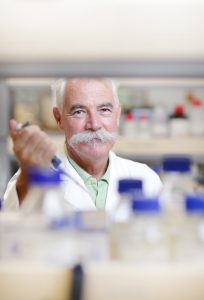 The biomedical scientist from the Griffith Institute for Drug Discovery (GRIDD)says, “As scientists in this age of “too much information” we must publicly discuss the importance of science in political decision making and convince politicians of all parties to keep investing in science is as important for our future as spending on health and defense.”
The Griffith Sciences Group is the research engine of the Griffith University, hosting more than20 research centres, institutes and facilities helping to direct the course of research and discovery.
Researchers work in a variety of disciplines from sustainable water supplies to human evolution, intelligent wireless technology, quantum dynamics and everything in between, furthered by an international reputation for excellence in learning and teaching.
Theevent, heldin more than 500 locations around the world and in 11 Australian cities, encourages people from all professions, races, genders, religions and socioeconomic backgrounds to attend and recognise the looming threats hovering over the scientific community and demanding positive action.
The aims of the March are centered around fostering a flourishing culture of robust scientific pursuit, ensuring that the knowledge gained through science is used for the public good, and improving the public’s relationship with the scientific process.
Griffith’sSchools Engagement CoordinatorAnne Brantis taking part in the Brisbane event and says it is imperative young people be informed and become active participants in their world.
“Through science literacy and understanding we develop critical thinking skills which allow us to make sense of the world and how we interact with the environment,” she says.
“Our legacy should be that we have equipped the next generation to be able to tackle and resolve global issues that we are currently facing and others that lie ahead. This can only happen if we value science and the important role it plays in our lives.”
Pro Vice Chancellor (Sciences)Professor Andrew Smith says in a knowledge driven economy that will be informed by big data and instantaneous connectivity, analytical and problem solving skills will be at a premium.
“Given that the graduates of today must shape the jobs and business of tomorrow, the value of a multidisciplinary science training is clear. Griffith is proud of both its remarkable research impact and remarkable teaching quality.”
To find out more about the March or register for the Brisbane event, visit this website.
While the Turnbull government’s recent announcement that they are axing the 457 Visa program has federal officials calling it a victory for Australian workers, Associate Professor Mohan Thite of the Centre for Work, Organisation and Wellbeing believes the decision is short-sighted.
“Cracking a whip to make sure businesses only hire locals is more of a political statement than a pragmatic one because it assumes employers want to hire overseas workers rather than locals, which is simply not true,” said Thite.
“If I’m an employer I would much rather have a local person if they meet all my requirements because it’s so much less of a headache for me. If I’m hiring an engineer, a doctor or an IT manager from India or China, all their personal problems become my personal problems. Are they going to get their visa? Do they understand the language? Do they have family issues settling down in Australia?”
 According to Thite, employers seek out foreign workers for their positions when there simply is not enough high skilled supply for their demand. This can especially be seen in the STEM field (Science, Technology, Engineering and Mathematics) which has seen a dramatic growth over the last decade, with countries like India and China leading the way when it comes to supplying skilled labour options.
“Demand is growing at the same time the supply is shrinking because of the ageing population and lack of interest to go into the field,” Mohan said.
“The skills you acquire today will become redundant in 3-4 years time, so the extremely dynamic nature of the field makes it complex in terms of forecasting the manpower requirements.”
“Companies like Google and Facebook have always been saying that for an innovation-led economy we need critical skills, and those skills change very rapidly and therefore no one country can provide these skills. Therefore, we need the flexibility to hire foreign workers as we need.”
Associate ProfessorThite believes the foreign worker debate has become more of a political football, where the facts are being buried behind the rhetoric.
“If you look at the statistics today the average wage of a foreign worker on the 457 visa is 90-thousand dollars, so by no means can you claim they are being hired to be paid lower wages,” Thite said.
“If you look at this list of people, most of them are professionals. They are managers, they are in IT and information media, they are in health services, they are doctors, nurses… they are not goat keepers.”
What’s more, putting heavier restrictions on companies who choose to employ foreign workers may lead them elsewhere.
“If you make the regime too tight and make the life of the businesses too difficult what will happen is that these jobs are just going to go overseas,” Thite said.
“It’s global by nature, it’s extremely dynamic, and any wrong-footedness in this area can cause serious damage to the innovative capability of the countries concerned.”
According to the Federal government, the 457 visa program will be replaced by a new Temporary Skill Shortage Visa. The new scheme sees the list of eligible jobs shortened by more than 200 for both the two and four-year options. The new program will also require a stricter English language requirement, previous job experience, and a criminal record check.