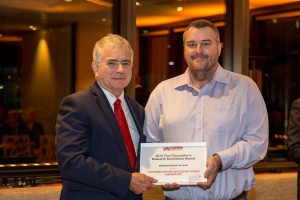
Griffith University rock art expert Professor Paul Taçon has been announced the winner of the Research Leadership Award in the 2016 Vice Chancellor’s Research Excellence Awards.
For more than 36 years, the director of Griffith’s Place, Evolution and Rock Art Heritage Unit and Chair in Rock Art Research has been exploring the rock art sites of Australia and south-east Asia, while collaborating with Indigenous peoples in archaeological research.
“In the more than 12 years I have been at Griffith University I have worked hard to build many successful research teams and projects, mentor junior colleagues and guide PhD students through their research programs,’’ Professor Taçon said.
“Winning the Vice Chancellor’s award for Research Leadership caps one of the most incredible periods of my research career.”
Multi-faceted career
In 2016 Professor Taçon was awarded an Australian Research Council Laureate Fellowship allowing him to build and lead a new team of researchers working with Indigenous peoples across Australia and overseas over the next five years.
Professor Taçon said the Laureate will enable him to fill key gaps in the knowledge of Australian rock art sites before they endure further damage and disappear forever.
“The Laureate will allow us to protect Australia’s threatened visual record of tens of thousands of years of group and individual experience in new ways for future generations,’’ he said.
“It will allow me to mentor a new generation so the research can continue well beyond the life of the fellowship.
“Rock art research will be more fully integrated into all aspects of mainstream archaeology and what is considered one of the most important parts of Indigenous Australian heritage will be better conserved and managed for the future, enhancing Indigenous well-being in the process.”
Completing a triumphant year, Professor Taçon was also awarded a prestigious Rhys Jones Medal for Outstanding Contribution to Australian Archaeology, the most coveted award of theAustralian Archaeological Association.
For information about supporting research at Griffith University, click here.
Leading Griffith University researchers have been honoured at the Vice Chancellor’s Research Excellence Awards held at the Gold Coast campus.
“Tonight’s nominees and winners are only part of Griffith’s research excellence story,” Professor Pankhurst said.
“I am sure you all agree that the 2016 Vice Chancellor’s Research Excellence Awards showcase just the tip of the University’s proud research legacy.
“On behalf of the University, I take great pleasure in congratulating the winners and commend the far-reaching benefits and diversity of your research.”
For more than 36 years, Professor Taçon has been exploring the rock art sites of Australia and south-east Asia, while collaborating with Indigenous people in archaeological research.
“In the more than 12 years I have been at Griffith University, I have worked hard to build many successful research teams and projects, mentor junior colleagues and guide PhD students through their research programs,’’ Professor Taçon said.
“Winning the Vice Chancellor’s award for Research Leadership caps one of the most incredible periods of my research career.”
Her research within road policing focuses on the high-risk group of young drivers and includes assault-related violence and traumatic brain injury including a project on the psychosocial impact on family and caregivers when an individual receives a brain injury from anassault.
As an early-career research Dr Bates has an outstanding record, author/co-author of 25 journal articles and book chapters. She has earned more than $400,000 in external research income and developed strong collaborations with both Australian and international agencies.
“Winning the Griffith University Early Career Researcher Award for 2017 is very exciting for me personally but, more importantly, its professional contributionhighlights the importance ofresearch in the area of road policing to save lives,’’ Dr Bates said.
“A lot of the research I undertake involves very strong collaborations with industry and government partners including the Queensland Police Service, Queensland Department of Transport and Main Roads, the Brain Injury Rehabilitation Service (Queensland Health) and Roadcraft Driver Education.
“This award recognisesnot only the research contribution butthe importance and strength of theseresearch and collaborativepartnerships.”
Excellence of an Individual Mid-Career or Senior Researcher
The award for excellence for an individual mid-career or senior researcher went toProfessor Vicky Avery, from the Griffith Institute for Drug Discovery.She heads the Griffith University Drug Discovery Programme for the CRC for Cancer Therapeutics (CTx) and the Discovery Biology team.
Professor Avery was recognised for her outstanding research in drug discovery over the past 18 years.Her vision is to promote world class drug discovery, utilising advanced image-based platforms, ultimately impacting on access to quality therapeutics for all.
She aims to address fundamental basic research questions, to better understand the biology and to facilitate drug discovery in the search for novel lead molecules, particularly where drug resistance is apparent or the disease is neglected.
Her objective is to improve and expedite drug discovery, and to endeavour to provide platforms where currently they are non-existent, limited or of poor quality.
“To receive this acknowledgement is fabulous,” Dr Avery said.
“It is always wonderful to receive recognition for what you do, especially when it is something that you love doing and means so much to you.
“To be the selected as the recipient of this award from so many amazing and truly remarkable researchers is very humbling.”
Since 1996, Professor Chu has supervised to completion34PhDs, 3 MPhils, 6 honours and more than 45 Masters theses.
Professor Chu has developed research expertise inareas integrating environment and health such as healthy cities, workplace health and safety risk management, gender and reproductive health, migrant and vulnerable populations, population and settings-based health promotion, climate change adaptation for health.
“It’s a great honour to receive this award. Iwould like to acknowledgethe wonderful supportive learningculture​we havedeveloped​with students here atthe Centre and the support we have received from ​Griffith,” Professor Chu said.
“I am very proud of our graduatesand the real contributions that they make towards policy and​practices in many countries.
“Our main focus is on producing translational research which makes a real difference inthe global communities.
“Currently, we are seeing enormous opportunities for students in the areas of global health and international development.”
Excellence of a Research group or Team
The Laboratory for Vaccines for the Developing World team led by Professor Michael Good from the Institute for Glycomics won the award for Research Group/Team.
Professor Good’s team’s outstanding work led to a major translational outcome for the Institute in 2016, with the signing of a significant licensing agreement with major international vaccine manufacturing company, Olymvax Biopharmaceuticals in China.
Their needle-free vaccine targets Streptococcus A infections, the cause of strep throat and rheumatic heart disease.
Globally it is estimated that at least 18.1 million people are currently affected by rheumatic fever and rheumatic heart disease, with 500,000 deaths each year. Invasive group A streptococcus kills about 20 per cent of patients within seven days of infection.
The lab’s team of more than 10 researchers could potentially see a vaccine in the market within the next 6-8 years.
“It’s very important to have both the basic discovery research and the applied and translational aspect of vaccine orientated research in our team,” Professor Good said.
The winners of the Remarkable Minutes video competition were also announced at the ceremony. They were Dr Jason van de Merwe from the Australian Rivers Institute for “Marine wildlife cell-based toxicology” and Mr Chris Little from the School of Engineering and Queensland College of Art for “Creating Windows Into our Past”.
“While the Research Excellence Awards celebrates the pinnacle of the University’s research achievements, the Remarkable Minutes videos demonstrates the untold story of research in progress and the passion of our researchers in seeking to share their research stories and to encourage us all to share in that journey,” Professor Pankhurst said.
For information about supporting research at Griffith University, click here.
Associate Professor Ashlea Troth has always been interested in people. She likes to know what makes them tick!! We spend a lot of time in the workplace, she says, and how one thinks and feels at, and about work, has a huge impact. So we spent five minutes with Ashlea to learn a little more about what she thinks and feels about being a researcher…
In what area/s does your research interests lie?
Ultimately, I’m interested in things that improve [employees’] work experiences, their wellbeing, and from that, their performance. We spend a good chunk of our lives at work and thus our worklife experiences have a big impact on our overall quality of life as well as our identity. This is one of the reasons why I moved across from social psychology to organisational behaviour; it has greater practical implications for a large group of people. More specifically, my research focuses on how employees and teams manage their own and others emotions in the workplace, and the impact this has on their workplace communication and performance.
Over the years, I have become increasingly interested too in multilevel research that spans the individual, interpersonal and team level. I have always found it ‘odd’ that a lot of HR [human resources] and Employment theories are rational and logical models and frameworks. For me, this does not accurately capture what happens in the workplace, and emotions research at least partially fills this gap.
At the moment I am also interested in how frontline managers regulate their emotion when engaging with different daily tasks (e.g., giving negative or positive feedback; resolving conflict etc.).
I’m interested too in understanding why some people are better, or not so good at, managing their and other people’s emotions.
Are there emerging or ongoing trends in your fields of research?
Emotions research [is] limited a lot by its methodology – surveys and interviews traditionally. But…[just as] emotions…change moment by moment, the methodology is changing swiftly…and range from using smart phone apps and watches that capture real-time emotion and emotion regulation strategies in response to certain events, to getting neuro- and physiological data (e.g., brain imaging, collecting cortisol and other biochemical markers etc.). Another trend, as for most OB [organisational behaviour] research, is to examine how workplace emotions (and consequences) occur at multilevels (e.g., within person, individual, dyadic, team and organisational level), and identifying some of the boundary conditions around these relationships.
Has there been major developments or key findings that have directed the trajectory of your research?
My work with Professor Peter Jordan kick-started my interest in emotions research many years ago in the area of emotional intelligence. Since then our work has transformed to a greater focus on employee’s use of different forms of emotional regulation strategies for specific emotions (e.g., anger). We have had two successful ARC [Australian Research Council] Discoveries [grants] on these topics.
Most recently, my research has taken a new and exciting direction with Dr Rebecca Loudoun, Professor Paula Brough and Dr Amanda Biggs. We are currently in the process of developing and validating a safety culture tool for a large organisation that includes a large proportion of blue collar workers employed within facilities and property, labour hire and maritime management. This organisation embodies health and safety practice and principles and the tool will help them recruit people who embody the same. It [also seeks to] identify areas within the organisation where there is health and safety risk not already identified by their existing tools…, as well as…areas for more education on health and safety matters. As we develop and validate this tool, the same project [calls upon my] psychology training [alongside that of] fellow psych. colleagues, Paula…and Amanda.
Another direction I’ve been involved in is multi-level research:…how individuals with skills have an impact on team performance, or how the relationship between a frontline manager impacts on the employees within that relationship. In the past, both I…and the OB area have neglected the team-level focus.
Where my earlier research looks at the cause of things and why it happens, it hasn’t really looked at how it can help an organisation. Community impact and agreement is so important now and this is partly why I’m doing these projects – you feel like you’re making a difference now.
What are you working on at the moment?
Recent tangents [include] a project with Associate Professor Keith Townsend and Rebecca funded by the Centre for Workplace Leadership (University of Melbourne) on frontline managers — people who have a lot of pressure on them — and how they manage an array of tasks daily, how they feel about it, and how they regulate their emotions around those tasks; and the aforementioned recruiting for organisational values research. These proceeded work with long-time collaborator Peter, and Dr Sandra Lawrence, on how employees regulate their emotions, and especially, how they regulate their anger.
Finally, are there challenges in your field/s in trying to bridge the gap between research, practice and policy?
A lot of organisations can see the benefit in training people up in emotional regulation or intelligence skills. One challenge though is letting an organisation know that it’s not the panacea and that they should be looking at the recruitment and selection stage – hiring people with [the] sorts of attributes [they desire] and not just the hard skills, for example, engineering [qualifications].
Griffith student Joshua Murchie has shown he has what it takes to make it in the world of big business. The co-founder of Griffith’s Entrepreneurship Club has spent the past couple of months taking out major innovation awards at both the Griffith Hackathon and the Startup Weekend Gold Coast.
The Hackathon was an event spread over two days, with next to no sleeping allowed, where student teams gathered to create new and exciting ideas to develop and pitch to a judging panel.
Josh’s team won the Best Idea and Best Team at the Hackathon for their app concept, which streamlined how students plan their university course load and capitalised on opportunities to build friendship groups and networks. The team’s winning design allowed a student, or course adviser, to plan out their degree and share an uneditable copy with a friend or fellow student so they can mix and match their classes. The simplicity of their drag and drop functions, coupled with their unique timeline view resulted in a simple yet very effective user experience.
Josh says he thinks his team had the edge because of the way they assigned responsibility for tasks based on skill set. “Our team agreed on the idea to pursue democratically and clearly delegated roles to one another in respective areas of strengths,” he says. “We didn’t overlap or argue… [giving] constructive feedback and communicating effectively helped.”
Not only is he making waves at Griffith, but as a representative of the University as well at the Startup Weekend Gold Coast. At this 54-hour event, run across 150 countries, people gather to pitch their ideas on the first night. The ideas are then voted on and the top 10 ideas are chosen, and teams formed accordingly. The rest of the time is spent developing the ideas through researching the market, running validation surveys and coming up with their final pitch to be delivered on the last evening.
Josh’s team was given five minutes to walk the judges —including Queensland’s First Chief Entrepreneur Mark Sowerby, and CEO of Opmantek Danny Maher —through their concept. “I pitched my idea for a charity platform that helps convert social media engagement into tangible benefits for charities,” Josh explains. “We formed a team, each having individual strengths and voted on the direction of the pitch.”
The Griffith student who is passionate about entrepreneurship says he then searched online for someone from the Animal Welfare league to validate that the concept addressed a real problem in the industry. They discovered that their idea was not only helping to solve a real problem, but one that was also critical for charities’ survival.
“We then focused on a platform that appeals to our market and reconnects youth to charities on a personal, empathetic level by being transparent and empowering the user,” Josh says. His team ended up being awarded Best University Team of the event.
But Josh’s love for entrepreneurship extends beyond winning awards for his own work. He also wants to inspire a love for the craft of creating a business in others, something he’s managed to do by co-founding the student Entrepreneurship Club at Griffith. “I want to build an ecosystem at Griffith that supports and upskills our students so we can compete on a global level,” he says of the club. “We are very well connected within the entrepreneur community and students can expect to benefit from our workshops, guest speakers, exclusive invites to community events and the possibility to receive mentoring and internship opportunities with some of the best in the industry,” he explains.
Josh says that Griffith excels in the entrepreneurship space thanks to the remarkable course convenor Dr Julienne Senyard. “She is extremely passionate about entrepreneurship and focuses on the “bootstrap” mentality, helping students to learn how to become resourceful and resilient when trying to start their own business.” He says the fact that Dr Senyardis also always up for a chat and to provide guidance to students is a great strength of the course as a whole.
Josh stresses that when it comes to entrepreneurship, Griffith is a leader in the space. “Griffith is a young university with huge potential for innovation. Some of our alumni have gone on to build multimillion-dollar businesses and the overall interest and support from Griffith around innovation and entrepreneurship has been building rapidly.”
And when he leaves uni, Josh aims to continue fostering young talent at Griffith. “I hope to be involved in developing and executing the innovation and entrepreneurship agenda at Griffith and one day being able to use my experience to assist on a global scale,” he says.
Professor O’Connor was awarded a Companion of the Order of Australia when Governor-General Sir Peter Cosgrove publicised the honours list on Monday (June 12).
“I am not only surprised but extremely humbled and honoured at receiving this award,” Professor O’Connor said.
“I am immensely proud of what we all have achieved at Griffith University and this award is recognition for all the dedicated staff who have made such a difference to the lives of our students.
“The growth of our University to stretch to five campuses in the south-east has ensured there are now more opportunities and options for those wanting to access higher education.”
Professor O’Connor is among almost 900 people to be recognised this year, a list made up of scientists, health professionals, academics, community leaders, community workers, artists and entertainers, and including renowned economist Ross Garnaut, Qantas CEO Alan Joyce and ABC election analyst Antony Green.
“I certainly didn’t expect to be the recipient of such as distinguished honour, and I am so grateful to the Griffith community who have helped it grow to a university with more than 200,000 graduates,” Professor O’Connor said.
This year’s list also includes a number of recipients with connections to Griffith University including Professor Rajiv Khanna (AO), Professor Margaret Sheil (AO), Kos Sclavos (AM), Dr Roger Welch (OAM) and Dr Terry Coyne (OAM).
Not only do soils produce 95 per cent of our food, they are also responsible for creating our clothes, shelter and fuels.
But with most people only seeing soil as dirt and something to vacuum off the floor, Griffith University is changingthat perception showing how important soils are to humankind and our environment.
To do this Griffith is supporting ‘Let’s Get Dirty’, an artist in resident program and the first of the Art in Soil Initiative held by Soil Science Australia.
In partnership with Soil Science Australia, Griffith will also host the first national symposium on the benefits of using recycled organics on degraded and marginal landscapes, being opened by Queensland Chief Scientist Professor Suzanne Miller on Thursday (June 15).
In Let’s Get Dirty artists have the opportunity to work in conjunction with soil scientists in developing an artistic work over the next six months, culminating in an Art in Soils exhibition. Queensland College of Art graduate Robert Andrew is one of the artists taking part.
Professor Chengrong Chen and artist Robert Andrew.
Professor Chengrong Chen, of the Griffith School of Environment, said soil should not be a dirty word.
“Everything we eat, everything we use, everything we wear actually comes from soil,” he said.
“This is the first time in Australia we’re raising awareness for this critical issue. A lot of people think soil is dirt but soils contribute significantly to about $26 billion worth of food and fibre production in Australia annually. Soil is the best filter for clean water.
“It’s very important to raise public awareness and change public perception otherwise soil degradation and soil pollution will continue and we won’t have enough food or enough fibre in the future.”
“Soil security is becoming a very important issue globally.
The symposium will bring together industry partners, governments, policy makers, land managers, farmers, environmental consultants and researchers in recycled organics to deliberate their application in degraded and marginal landscapes and better understand their use agriculture, mining, urban environments and infrastructure.
Australia produces 20 million tonnes of wasted organics – garden organics, forestry residues, municipal solid wastes, agricultural residues, biosolids, green waste and timber – each year and 45 per cent of our arable land is degraded, costing Australian farmers’ more than $2.5 billion per year in lost production.
Professor Chen said currently 44 per cent of organics were recycled, 9 per cent were used to produce electricity and 47 per cent went to landfill.
“If we can recycle that remaining 47 per cent it could create a $1 billion industry in recycled organics,” he said.
“On the one hand we generate waste but on the other hand we’re saying how can we put that back to make things grow better?”
Symposium organiser Dr Maryam Esfandbod said household food waste was not waste but rather “wasted gold” that could be recovered.
“The key problem with the recycled organics industry is education for everyday people,” she said.
“They need to understand recycling reduces their impact on the environment. But we also need to educate the end user — showing farmers how to use these recycled organics for agricultural production.
“If we can recycle more wasted organics we can minimise waste going to landfill.”
To find out more about the symposium visit the Soil Science Australia website.
Not everyone could juggle part-time study, managing a financial planning practice and still find time to teach scuba diving on the side.
But not everyone has Bachelor of Commerce student Jessica Harris’ passion forher industry.
Ms Harris was working in a different field when she decided she wantedto focus more on finance.
“From what I was aware of, and had read, the finance and commerce units at Griffith University were very highly regarded,” she said.
In her first year, she completed a financial planning subject and fell in love.
Real-world information and supportive lecturers encouraged Ms Harris to start searching for a new job that would allow her to put this passion into practice.
“I was ambitious, but also had tangible experience, which enabled me to get the role that I did,” she said.
Ms Harris was employed by My Wealth Solutions as a client service officer, but was told they were also searching for a practice manager.
“They told me to come in for the CSO role I’d applied for but, based on my interview and experience, suggested I’d be capable of both.”
Three months later, at a probationary review, she took the initiative to present a range of ideas for the business and was given the additional responsibility.
“It’s all been incredibly relevant,” Ms Harris said. “It’s helped me so much with the exams and the study that I’m doing.”
She added she’d also been able to use her experience to help fellow students.
“It’s all changed my life so dramatically and I’m really happy with where I’m working.
“I think it’s incredibly interesting to know what you can do with your money – and most people are so uneducated about this!”
While it may seem worlds away, she likens financial planningto her other great love – scuba diving.
“It’s incredible under the water and you just don’t realise…it’s similar [in financial planning]. No one knows what’s out there, so I’ve got to show them, because it’s so interesting.”
Ms Harris said she knows there’s a lot more to learn – and she’s looking forward to it.
“Even though I work in the industry and have a good understanding of it, I want to have a great understanding.
“I enjoy mentoring and seeing people grow and develop. To lead a team in an industry I’m really passionate about, and to help those people achieve their goals, that’d be incredibly satisfying.”
Looking for someone to dissect the Queensland budget?
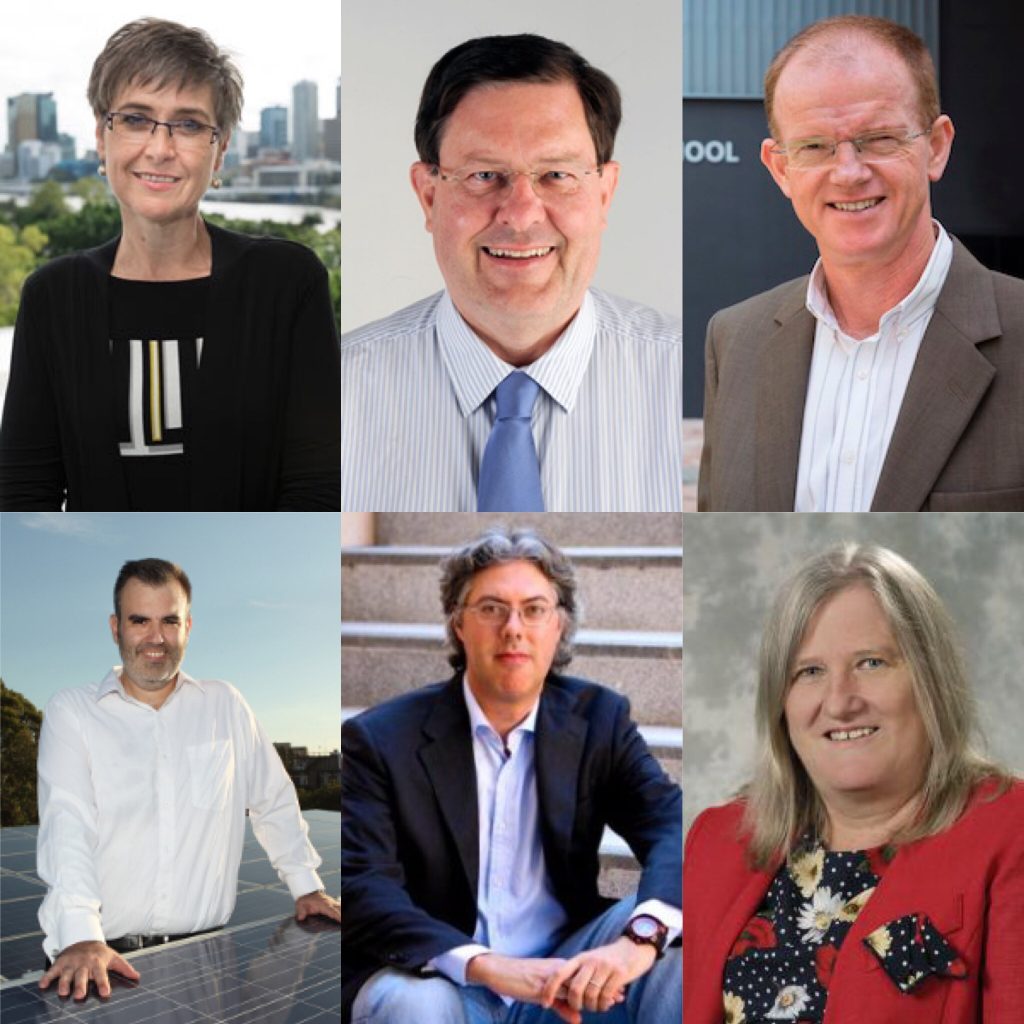
Griffith University is home to a range of experts who can talk about the budget on a broad scale, or narrow in on issues including power prices, political impact or the regions.
Professor Fabrizio Carmignani: Head of Accounting, Finance and Economics, Professor Carmignani specialises in economic growth and macroeconomics. He’s also an expert in fields such as tourism economics and the economics of natural resources.
Location: Nathan campus
Dr Liam Wagner: If you want to talk about power, Dr Wagner has you covered. He specialises in energy economics, renewable energy and electricity markets.
Location: Nathan campus
Professor Tony Makin: Professor Makin specialises in Government budgeting and fiscal policy. He’s worked for the International Monetary Fund and on budgetary issues in the federal departments of Treasury and Finance. He can also talk macroeconomics and international economics.
Location: Gold Coast campus
Professor Anne Tiernan:Professor Tiernan is available to talk about policy in relation to the budget. A respected political scientist, her research focuses on the work of governing – she’s regularly called on to consult for Australian governments at all levels.
Location: South Bank campus
Professor Ross Guest: Professor Guest specialises in public policy in relation to government spending and taxation. He’s also an expert in the economics of population ageing, but will be able to analyse the budget from a range of perspectives and provide detailed insight for your audience.
Location: Gold Coast campus
Professor Christine Smith: If you need someone to consider how this budget impacts the regions, Professor Smith is your go-to. She specialises in regional, urban and environmental economics.
Location: Nathan campus
Griffith Business School students have had the opportunity to learn from one of the biggest players on the south east’s tourism scene.
The Star Gold Coast hosted seven students for a 75-hour internship, taking them from front office through to concierge and housekeeping.
“This gives our students real-life experience in a very high profile organisation. It’s not only related to the student’s degrees, but also to their potential career path,” said Dr Caroline Riot,First Year Coordinator at Griffith Business School.
“It gives them an edge because they’re being exposed to the ins and outs of everyday work life, within a supervised context.
“They’re being challenged by industry leaders who have a wealth of experience to share. They’re guided through in a very safe and structured way to gain the skills they need to get a start in this business.”
Neseema Mustapha, a Tourism and Hospitality student, said this was a fantastic opportunity.
“Although I have a lot of experience in tourism itself, working as a travel consultant, I haven’t had any hotel or hospitality experience.
“It’s internationally recognized…and going to be fantastic for my resume. I’m hoping I’ll be able to secure a job after this.”
The value of this relationship is recognised by Bronwyn Hellie, Operations Manager Hotel at Star Entertainment.
“We’re definitely looking for future leaders in our business.
“We want to be heavily involved so we can bring them through and teach them what we know as well.
“It would have been a great opportunity when I was learning – to be able to step into a hotel and get that experience.”
Dr Caroline Riot added that the partnership between Griffith Business School and Star Entertainment was a significant one.
“We’re strongly drawn to key players in the industry that can make a difference not only to students and staff, but allow us to make a difference as well.
Dr Caroline Riot
“We’re leaders in the hotel and tourism management sectors. This provides us with the reputation and legitimacy to work with a significant leader in the industry.
“Hopefully long term we’ll see some great outcomes for students and the company.”
Rahd Youakim is only in his second year studying Marine Science at Griffith University but he already has big dreams about how he’s going to save the planet.
Those aspirations are already getting noticed, with Rhad receiving a Young Scientist Encouragement Award offered by ATA Scientific, a scientific instrument company.
The topic of their latest competition, which is normally reserved for post-graduate students, was focused on climate change and how we can develop innovations to minimise the negative effects.
Rahd is an active conservationist who is majoring in Coastal Physical Sciences. His career goal is to be one of the leading figures in Australia for sustainable fishing aquaculture practices.
Rahd plans to establish his own research groups, one in each state along the east coast of Australia exploring different temporal environments and maximising the yield production for each zone with minimal to zero impact.
“A big dream, yes I know! But my mum once told me that we are always destined to be the best person we can be and showed me the way to inner-happiness is to give more than you take,” Rahd said.
“All I want ultimately is the world’s oceans to be as healthy as they were 200 years ago. When all this comes together in the next 20 years I hope to use mine and others’ expertise to restock the oceans with species that are on the brink of extinction”.
Rahd plans to use his award to contribute to his tuition costs which will assist with achieving his career goals and implementing his ideas in the future. He plans to purchase an aquaculture/aquaponics system which will consist of severalfish tank with filters and heaters.
With the skills and knowledge gained from his studies, he would like to conduct his own experiments so that he can one day present his findings for every type of environment and implement these to ensure the best sustainable practices.

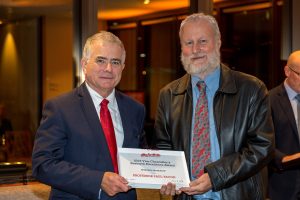 The award for excellence in research leadership was awarded to Professor
 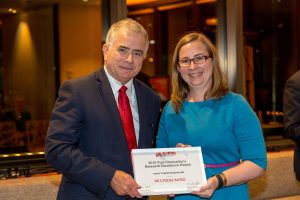 Dr Lyndel Bates
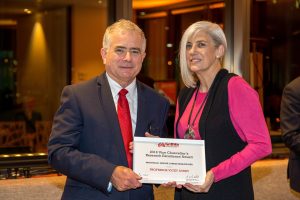 The award for excellence for an individual mid-career or senior researcher went toProfessor
 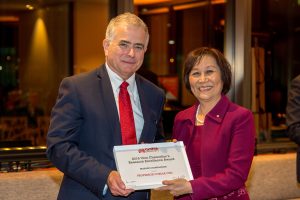 Professor
  The Laboratory for Vaccines for the Developing World
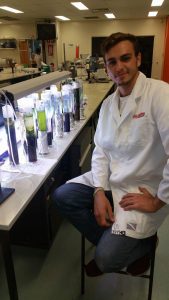 Rahd plans to establish his own research groups, one in each state along the east coast of Australia exploring different temporal environments and maximising the yield production for each zone with minimal to zero impact.