It was while completing his honours in psychology at a Gold Coast school that Phillip Pearce first realised teaching would become his raison d’etre.
“I always had a passion for child developmental psychology, discovered I loved being in a school environment and so enrolled in the Master of Primary Teaching at Griffith,’’ he said.
“My study has given me the perfect balance of theory underpinned with practical knowledge.
“The lecturers come from the classroom so they are all super experienced. We can be discussing various pedagogical theories and they are able to relate it back to real life.
“It’s made me more confident in my pracs and I know teaching is the right career for me.”
Phillip, who works part-time at a Gold Coast school, said the flexibility of the Master’s program enabled him and other students to work while studying.
“I can structure my timetable around work. It’s intense, but manageable.”
An advocate for Positive Education, a curriculum approach combining traditional education with the study of happiness and wellbeing to promote students’ positive mental health, Phillip wasselected as a guest to attend the three-day Positive Education Schools Association conference in Geelong.
“PESA selected one student teacher to represent their state and I was honoured by the accolade to represent Queensland,’’ he said.
Uponreturn from the conference, Phillip presented to the Griffith Masters cohort and included a cross-cultural analysis onhow a positive education study of 700,000students in Bhutan, Peru and Mexico promoted students’ academic achievement and wellbeing.
“At the end of the 15-month study all the children in study group scored significantly higher than the control group on wellbeing and performance on national exams,’’ he said.
“PositiveEducation teaches students how to capitalise on their existing character strengths.”
Recalling an experience where he undertook Positive Education, Phillip created a ‘What Went Well Wall’ in the classroom where at the end of each day, students would write one thing that went well for them.
“The class reflects on what has been added to the wall and it helps them develop optimism and hope.”
Phillip hopes to implement Positive Education components into his teaching when he graduates.
Find out more about studying teaching at Griffith.
By Jovana Mastilovic
Lesvos (Greece) July 2017
More than one million people, mostly originating from Syria, Iraq and Afghanistan arrived in Europe in 2015 to seek asylum. The majority of these people crossed the Aegean Sea from Turkey to Greece with over half a million people arriving on the Greek island, Lesvos. In response, the European Commission published an European Agenda on Migration, which enforced ‘hotspot’ facilities at the external borders of the EU; there are five in Greece–on the islands of Chios, Kos, Leros, Lesvos and Samos, and four in Italy in Lampedusa, Pozzallo, Taranto and Trapani. These centers are reserved spaces where the initial reception, identification and registration of all asylum seekers now arriving to Europe occur.
In July 2017, I visited the Moria Identification and Reception Center on Lesvos, which is the largest ‘hotspot’ facility on Lesvos, where according to the Head of the Regional Asylum Office, approximately 3000 of the 3800 asylum seekers on the island resided at the time. Moria does not appear to be a welcoming place. Despite the sign at the entrance of the center, which reads “[i]ci vous êtes en sécurité” (you are safe here), the security of refugees within the center is disputable.
Moria is a former military base surrounded by barbed wire fences, security personnel and gated spaces. Refugees inside the center have compared it to a jail, and various organizations, such as Human Rights Watch, have reported on the deteriorating mental health of those inside through incidents of self-harm, including attempted suicide, and rising anxiety, depression and aggression. Deaths inside the center have made headlines since its establishment as Greece’s first ‘hotspot’ center in 2015. There are certain sections in Moria where people are placed depending on whether they are being considered for international protection, deportation (Section B), or other procedures. While I was on Lesvos, asylum seekers set fires inside the center in protest to deportation to Turkey and riot police quickly arrived to regain control within the center.
There has been a lack of media attention on the ‘European migration crisis’, since the implementation of the European Union (EU)—Turkey deal in March 2016, which drastically decreased the number of people arriving from Turkey to Europe. The reason is that Turkey has been encouraged to ‘take any necessary measures to prevent new sea or land routes for illegal migration opening from Turkey to the EU’. Despite this, boats continue to arrive daily on the Greek islands from Turkey, full of men, women and children seeking international protection in Europe.
Although Turkey is a signatory to the 1967 Protocol Relating to the Status of Refugees, it maintains the geographical limitation of the 1951 Convention Relating to the Status of Refugees. This means that Turkey does not grant full refugee status to non-Europeans. In 2014, theUnited Nations High Commissioner for Refugees (UNHCR) recorded 1.7 million Syrians residing in Turkey. There was no sign of the conflict in Syria ending, and the number of people arriving to seek international protection continued to increase, so Turkey implemented a ‘temporary protection’ regime for Syrians and Stateless Palestinians from Syria. According to the most recent figures, Turkey now hosts over 3.4 million refugees. Beneficiaries of ‘temporary protection’ continue to live their lives in uncertainty, waiting to be considered for resettlement in another country, or waiting for the violence in Syria to end, as they are not accepted as permanent residents in Turkey. Many people put their lives in the hands of people smugglers and risk everything on unworthy sea vessels just to reach European soil to lodge their asylum claim. Once they arrive in Greece, however, they wait in uncertainty once again in the overcrowded ‘hotspot’ facilities, along with the other 60,000 people in the country waiting for their asylum outcome, sometimes in prison-like conditions.
Also in July this year, most of the European funding provided directly for NGOs ended. The European Commission now supports the Greek government in managing all aspects of asylum through designated asylum, migration and integration funds (AMIF) and internal security funds (ISF). There are many organizations whose functioning has been severely impacted by this shift. A few organizations and individuals who provide around-the-clock emergency support to refugees and were of great help to me and my research while I was on Lesvos, areLighthouse Relief,Lesvos Solidarityand theKempson family.
More than 30 high achieving Griffith Law students were honoured for their academic accomplishments at the Dean’s Law Awards–headlined by the Dean’s Thesis Award recognising the best honours student research dissertation completed last year.
Surfing enthusiast and law student Todd Berry took home the award for the most outstanding student thesis for his original work which argued urban planning and development needed to consider the ‘traditional knowledge’ of surfers.
Deputy Head of Learning and Teaching at Griffith Law School Associate Professor Therese Wilson says, students who complete an honours thesis are setting themselves up for the future.
“It’s an opportunity to develop and demonstrate expertise in an area of law, through a sustained piece of research, which can be very valuable to a prospective employer and qualifies them for admission into our higher degrees by research,” says Therese.
Sponsors and donors to the Griffith Law School were also acknowledged with a vote of thanks from Dean Professor Pene Mathew for their ongoing support and encouragement of students.
Without their support the unique opportunities offered by Griffith like attending the annual Vis International Commercial Arbitration Moot would not be possible says Therese.
“We want our students to have a remarkable experience with us and our donors and sponsors — many of them alumni — make a wonderful contribution to that experience through their involvement and contributions to our students,” she said.
Griffith Law School acknowledges with gratitude the contributions of the following award sponsors and donors:
- Daniel Gosewisch
- Tara Elston (McCullough Robertson)
- Stuart McNaughton (McCullough Robertson)
- Ismail Essof (Fragomen)
- Tom Fletcher (Minter Ellison)
- Michael de Waard (Barrister)
Full list of award winners
Dean’s Thesis Awards: Awarded for the most outstanding honours student thesis submitted
- Winner: Todd Berry for ‘Traditional Knowledge Among Surfers: Knowledge and Practice With Consequences’
- Runner up: Ashley Reynolds for ‘When our Hands are Tied’
Dean’s Essay Prize: Awarded for the most outstanding student non-honours essay
- Winner: Katrina Taylor
- Runner up: Joint recipients Todd Berry and Lachlan Robb
Gosewisch Family Prize for Contracts 2: Awarded to the student with the highest GPA in Contracts 2
McCullough Robertson Prize for Law and the Environment:Awarded to the student with the highest GPA in the Bachelor of Law/Environmental Science degree
Fragomen Prize for the Graduate Certificate in Migration Law and Practice:Awarded to the student with the highest GPA in the Graduate Certificate in Migration Law and Practice
Peter Channell Prize for Workplace Law: Awarded to the student with the highest grade in the Workplace Law Course or Griffith Law School legal clinics program
Voiceless Animal Law Prize: Awarded to the student with the highest grade in the Animal Law course
The Honourable Michael Kirby Award: Awarded to a student who has advanced the principles of justice, equity and equality related to LGBTIQ+ issues
Griffith Law School Award for Academic Excellence:Awarded to the twenty highest achieving students in the Bachelor of Laws degree
- Andrew Griffin
- Michelle Gunawan
- Siew Lau
- Courtney Linton
- Leanne Mahly
- Grance Manahan
- Jack Morris
- Tiela Morrison
- Alexandria Neumann
- Harrison Norris
- Narayan Pattison
- Lachlan Robb
- Michelle Simpkins
- Nicholas McLean
- Ebony Franzmann
- Kai Horarth
- Jill McGrath
- Laura Griffiths
- Enid Van Jaarsveld
- Paris D’Elia
An ‘heirloom’ piece of jewellery has been bestowed to Griffith Research Institute for Drug Discovery (GRIDD) Director Professor Jennifer Martin AC to honour her inspiring achievements in the field.
Professor Martin was among eleven leading female scientists from around the world – and the only one from Australia – to be awarded the hand-crafted scientific heirlooms by their peers at the fifth Suffrage Science Awards for Life Sciences, held at the Academy of Medical Sciences in London.
The awards celebrate women in science and encourage others to enter science and reach senior leadership roles.
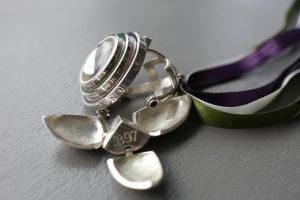
The scientific ‘heirloom’ jewellery piece, to be bestowed to Professor Martin. Credit: MRC London Institute of Medical Sciences
The 11 awardees were chosen by the previous award holders for their scientific achievements and ability to inspire others. The awards themselves are items of jewellery, inspired by the Suffrage movement, and are passed on as heirlooms from one female scientist to the next.
Professor Martin was unable to attend the awards in London but said of the honour:
“I am deeply humbled and honoured to be nominated for this award, especially considering I live on the other side of the world. Regrettably, because I live on the other side of the world, I am unable to attend the Suffrage Sciences Award ceremony in person. Nevertheless, I am delighted to be there with you in spirit and to applaud such a wonderful initiative. Thank you.”
The Suffrage Science scheme was initiated by Professor Dame Amanda Fisher, Director of the MRC London Institute of Medical Sciences (MRC LMS) in 2011.
These awards occur every 2 years and the awardees are nominated by the previous holders. Professor Martin was nominated by Dr Airlie McCoy from the University of Cambridge, UK.
Dr Airlie said the reasons for her nomination of Professor Martin were:
“The Suffrage Science Award is a perfect fit to Jenny’s contributions: she is an eloquent and effective advocate of women in STEM; was recently awarded Companion of the Order of Australia for her scientific achievements; and is a former D.Phil. student with Louise Johnson.
“Apart from these public and worthy reasons for passing the heirloom to Jenny, I also have a private one. Jenny was the first female scientific speaker I heard in a scientific meeting. I was at the very start of my PhD, and her presentation was intellectually exciting and delivered with her hallmark calm authority. I remember it well, and it has been a template I have aimed to emulate ever since.”
The jewellery was created by art students from Central St Martins who worked with scientists to design pieces inspired by research and the Suffragette movement, from which the award scheme takes its name.
The 2018 award winners are:
Professor Rebecca Voorhees, California Institute of Technology, USA
Professor Anna Wu, UCLA, USA
Professor Jenny Martin, Griffith University, Australia
Professor Liz Bradbury, King’s College London, UK
Professor Claire Rougeulle, Paris Diderot University, France
Professor Mikala Egeblad, Cold Spring Harbor Laboratories, USA
Professor Susan M.Gaines, writer/Bremen University, Germany
Professor Irene Miguel-Aliaga , MRC London Institute of Medical Sciences, UK
Professor Cathy Price, University College London, UK
Professor Denise Head, Washington University in Saint Louis, USA
Professor Anat Mirelman, Tel Aviv Sourasky Medical Centre, Israel
The old adage of not bringing your work troubles home with you has even more significance according to a new study by a leading Griffith researcher.
Professor of Organisational Psychology at Griffith University Professor Paula Brough has foundworkplace stress was being transferred from one partner to another at home, with around half of the participants reporting it had significantly impacted their relationship.
“Our research found transferred stress is very real and does occur and affects couples with our without children” Professor Brough said.
Psychologists call the phenomenon ‘stress contagion’.
16 couples, who all had full-time careers, were involved in the study which has been published in the Australian Journal of Psychology.
The outcome was part of a larger study which looked at how employees managed stress levels with the aim of tackling workplace bullying.
“That can be in the work environment, from your boss to you or vice versa, if you have a difficult co-worker then their issues can cause you stress and impact your performance,”

Professor Paula Brough has spent 20 years researching to enhance the psychological health of workers.
“We are aware that some stress comes from the family or outside the work environment but we were looking specifically at what proportion of work stress comes from the partner, so transferred across.
The research found enough cases showing when the work stressor was large enough it was communicated to their spouse.
This would then affect their partner’s level of health and well-being when they went to work, Professor Brough explained.
The findings highlight the importance of work-life-balance policies to ensure the workplace is psychologically healthy.
“Good workplaces understand the need to support their workers at different life transitions – whether that be with a new born or an ill relative,” Professor Brough said.
Griffith University is among a select of group universities chosen to conduct joint research with US universities on priority defence projects.
Griffith, along with University of NSW, Sydney University and the University of Technology Sydney, were announced by the Minister for Defence Industry, Christopher Pyne as the four Australian universities to help conduct the research, which will come under the auspices of the US Department of Defense Multidisciplinary University Research Initiative (MURI).
“This success is testament to the strength of quantum research at Griffith, and in our collaborating institutions” said Professor Howard Wiseman, who is the Director of Griffith’s Centre for Quantum Dynamics and one of the chief investigators in the project.
The MURI project, titled “quantum control based on real-time environment analysis by spectator qubits”, is led in Australia by Griffith Research Fellow Dr Gerardo Paz Silva.
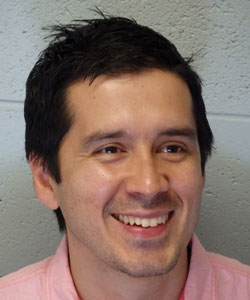
Dr Gerardo Paz Silva
“The research is an exciting multidisciplinary project that will be executed by a team of experts in the field of quantum control, silicon-based quantum technologies, and machine learning,” he said.
Mr Pyne congratulated the Australian universities, saying the Next Generation Technologies Fund supported their success.
He said it was the first time Defence had funded Australian universities to work with their US counterparts.
“As these universities were chosen from a pool of over 400 proposals, this is a great outcome, one which shows that Australian researchers are world class,” Mr Pyne said.
Mr Pyne said Griffith, University of NSW and University of Technology Sydney would work with Duke University, the University of Oregon and the Massachusetts Institute of Technology, Johns Hopkins Applied Physics Laboratory, Dartmouth College, Lousiana State University and University of California on integrated quantum sensing and control for high-fidelity qubit operations, while Sydney University and the University of NSW are to partner with the University of Tennessee, Ohio State University and Virginia Polytechnic Institute on a project in material sciences.
He said the Australian universities would each receive a grant of up to $1 million a year for three years to support their research in Australia, with the possibility of extending to five years.Professor Wiseman and Dr Paz Silva from Griffith, Dr Christopher Ferrie fromUniversity of Technology Sydney, and Professor Andrea Morella fromUniversity of NSW represent the Australian universities on the project.
AUSMURI scheme awards quantum project $3 million
The MURI project “quantum control based on real-time environment analysis by spectator qubits”, led in Australia by Griffith Research FellowDr Paz Silva, was awarded a grant of $3 million under the AUSMURI scheme.
Dr Paz Silva said $1 million of the $3 million grant would be used to buy hardware for the experimental part of the project, and $2 million would be used to hire the personnel to drive the project.
“We hope at the end of the day we have developed all the tools to have an Australian-based prototype for the technology we are trying to develop.”
The project’s objective is to protect quantum bits (qubits) from external noise in real time while manipulating them with high precision, using a multidisciplinary approach involving new experimental methods and theoretical tools, supported by advanced machine learning routines.
“The grant win was a huge boost for us and it gives validation to the work we are doing. We had been working on similar ideas before but moving towards this direction, so the grant win implies that we are on the right track,” Dr Paz Silva said.
“We’re hoping that it will be an important step towards achieving the incredibly high fidelities necessary to realise the dream of quantum computing.
“A working quantum computer will be able to solve complexcomputations that are incredibly hard for normal (classical) computers, in practical time scales. This will fundamentally change the types of problems we can realistically solve and will have implications in all areas on society, ranging from medicine to defence.”
An urgent need for high quality research aimed at reducing alcohol-related drowning is the call, following a new Griffith University systematic literature review.
The call comes from Dr Kyra Hamilton from Griffith’s Menzies Health Institute Queensland, who says that despite continued safety campaigns to alleviate this global public health issue, the statistics still remain high.
Through a research collaboration between Griffith University and Royal Life Saving Society — Australia, 73 studies were looked at as part of the paper “Alcohol use, aquatic injury, and unintentional drowning: A systematic literature review” published in Drug and Alcohol Review – 57 on prevalence and/or risk factors, 14 on understanding alcohol use, and two on prevention strategies.
On average, 49 per cent and 35 per cent of fatal and non-fatal drownings, respectively, involved alcohol, with large variations among studies observed.
“Globally, prevalence rates for alcohol involvement in fatal and non-fatal drowning varied greatly,” says Dr Hamilton.
The role of alcohol
In Australia, Royal Life Saving’s National Fatal Drowning Database shows alcohol was involved in 23 per cent of the 4,256 unintentional fatal drownings in Australia since 2002. Of these, 66 per cent had a blood alcohol content of 0.05 or higher. Alcohol involvement was unknown in a further 25 per cent of cases, indicating the role of alcohol in fatal drowning in Australia is likely larger than currently known. Alcohol was more prevalent among males and drowning incidents at inland waterways such as rivers, lakes and dams.
In their review of the global research in this area, results showed that “males, boating, not wearing lifejackets, and swimming alone (at night, and at locations without lifeguards) were risk factors for alcohol-related drowning. No specific age groups were consistently identified as being at risk. However, study quality was consistently low, and risk of bias was consistently high across studies.”
“Only two studies evaluated prevention strategies,” says Dr Hamilton.
“This study highlights the urgent need for high quality intervention research aimed at reducing alcohol-related drowning and the need for higher quality studies and behavioural research to better understand this risky behaviour.”
Royal Life Saving has had a strong focus on the prevention of alcohol-related drowning and aquatic injury for a number of years. It’s most recent campaign, “Don’t Let Your Mates Drink and Drown”, developed with the support of the Australian Government, aims to encourage men to look out for their mates and stand up to the sorts of risk taking behaviour that can lead to accidents and drowning. For participation in the evaluation of this research see hapiresearchlab.com/participate
Amy Peden, National Manager, Research and Policy, Royal Life Saving Society Australia, says: “A culture of risk-taking behaviour among men can be dangerous around the water, and when combined with alcohol and/or drugs, it can be fatal”.
“Future research should focus on the implementation and evaluation of prevention strategies to reduce further loss of life due to alcohol-related drowning,” Dr Hamilton says.
Patients with drug resistant forms of breast cancer and some forms of pancreatic cancer may have new hope, thanks to a new drug first developed at Griffith and now being trialled in the Czech Republic.
Clinical trials of the experimental drug MitoTam are beginning imminently in the Czech Republic with funding from a local venture capital firm Smart Brain.
Professor Jiri Neuzil from Griffith’s School of Medical Science is leading the clinical trials involving patients with the triple negative tumours which are known to be very hard to treat.
The drug has been modified from the commonly used breast cancer drug Tamoxifen to target the mitochondria of a patient’s cancer cells to make a more efficient compound that is able to kill resistant cancer cells.
Tamoxifen is ineffective in treating triple negative tumours or tumours with a high level of HER2, a protein found on the surface of cancer cells.
Could revolutionise treatment
“MitoTam could revolutionise the treatment of some aggressive forms of breast cancer and pancreatic cancers, improving survival outcomes and quality of life for people affected,” says Professor Neuzil.
“Cancer clinical trials are the single most important means of developing new and better treatments for cancer.
“Clinical trials improve health outcomes and improve cancer survival by improving the effectiveness of the cancer treatment.”
Professor Neuzil said it is unclear at this stage whether the drug may prove cost-effective in the treatment of drug-resistant breast cancer compared with other drugs such as Herceptin, but he remains hopeful that this will be the case.
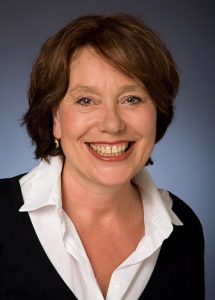 Professor Susanne Karstedt from the Griffith Criminology Institute has been appointed as a new member of the jury of the Stockholm Prize in Criminology. The jury is the international body that selects and appoints prize recipients.
“It is a great honour for me to be elected to the Jury of the Stockholm Prize of Criminology. I am proud to join the jury representing Australia and Griffith University,” Professor Karstedt said.
The prize is awarded for outstanding achievements in criminological research or for the application of research results by practitioners for the reduction of crime and the advancement of human rights.
Professor Karstedt’s research has a strong focus on cross-national and cross-cultural comparisons of both crime and justice, where she explores democracy and its values and institutions in relation to violence, corruption, state crime and prison conditions. Other research interests include atrocity crimes and transitional justice, and she is widely known for work on emotions, crime and criminal justice.
She has published more than 20 books and journal issues, and 200 articles in journals and edited collections on a range of topics, both in English and German. She has been the President of Scientific Commission of the International Society of Criminology, and has served on Research Councils in Belgium and Germany. She was an editor of the British Journal of Criminology, and of Criminology and Criminal Justice, and is a member ofnumerous editorial boards.
For her scientific work she has received the Christa Hoffmann Riehm Award for Socio-Legal Studies of the German Law and Society Association, the Sellin-Glueck Award of the American Society of Criminology, the Award of Excellence of the University of Maribor, and the International Award of the Law and Society Association.
A pilot solar project in a small Aboriginal community in far north Queensland could hold the key to cleaner and more reliable power supply for isolated Indigenous communities throughout Australia and the Pacific.
The township of Lockhart River on Cape York Peninsula is nestled in bushland, 800 kilometres north of Cairns, surrounded by pristine beaches and rainforest.
It’s idyllic, but incredibly remote. So much so it’s not even on the national power grid.
So Lockhart River relies on expensive and dirty diesel fuel to keep the lights on, and power the town’s businesses and homes.
But it’s hoped a solar trial instigated by Griffith University Professor of Economics Paul Simshauser could change that.
“We ended up installing about 200kW of rooftop solar around various rooftops,” he said.
“It’s a community project so all of the households benefit from it.
“I’m not completely sure but I wouldn’t mind betting this is one of the highest levels of solar in Australia.”
When Professor Simshauser was Director General of Queensland’s Power and Water Supply Department, he made a connection with the Lockhart River community through the government’s Champions Program, where the Director-General of each department is given an Aboriginal community to grow partnerships with.
Professor Simshauser says the ramifications for this project, if successful, will go far further than Lockhart River.
“There’s a couple of implications – the first thing is the idea of doing community solar is that each of the households wouldbenefit each year from the solar output; they’d get a rebate on their electricity bills, because you’re avoiding burning expensive and not-so-healthy diesel fuels,” he said.
“But I think the bigger implication is that we have 30 remote communities in Queensland and a whole bunch in the Pacific and across northern Australia so clearly if we can break the mould on how to really radically increase the amount of solar in these communities, that will be wonderful for those communities in terms of their power, reliability and reducing the logistics of bringing in and burning diesel fuels.”
Listen to the full Remarkable Tales podcast episode below.
Five Aboriginal languages were spoken by the people at Lockhart River, who have shown connection to the land for thousands of years.
It was also the home for around 5000 troops during World War II, with many historical relics still intact for tourists to visit.
Lockhart River overlooks the World Heritage-listed Great Barrier Reef, with bird watching, bush walking, and fishing to entice visitors.
ButLockhart River Mayor Wayne Butcher saysthe lack of reliable power supply has been a big hurdle to expansion for the community to take advantage of some of these tourism assets.
“We’refortunate to have a governmentchampion such as Paul who can think outside the square I guess,” Mr Butcher said.
“It’s good to be able to talk to Paul and to create an idea into a reality in such a short period of time.
“The cost of living up here, we’re not far from the equator, we’ve got plenty of sunshine, so common sense tells us we should be looking at alternative energy.
“I think the microscope is on Lockhart to see how the program goes here in the first 12 months, and I can see the benefits of it being rolled out to the other Indigenous shires on Cape York Peninsula.”
The excitement at the prospective benefits from the solar project has spread throughout the Lockhart River community.
Lockhart River State SchoolPrincipal Siobhan Jackson has been in Lockhart River for five years, and says the trial is exciting for the town.
“We’re trialling some sustainable energy in Lockhart River, which is fantastic, andit’s great for the kids to learn from that. They might be in a place where they don’t even get to see a solar panel but we’ve got lots and lots of them, so they’re very aware of that,” Ms Jackson said.
“Moving away from those dirty sorts of energy sources.”
As well as being extremely remote, the Lockhart River community faces many complex challenges.
Life expectancy is up to 20 years less than the Australian average, and income is far less than the average wage; however, groceries – including fresh food – are much more expensive. The unemployment rate is three times the national average.
In response to this, the community decided to put the focus on new technologies such as solar, to provide more options for the youngest members of the community and give them hope for the future of Lockhart River.
The Puuya Foundation is an important part of that.
It was developed by the community for all children under five years old, the most critical time for a child’s development.
The Kuunchi Kakana Centre is community-led and run, and is the heart of the Montessori model that the community decided to pursue for their children.
Denise Hagan is the coordinator of the Puuya Foundation, and works closely with Indigenous teachers to ensure the community’s wishes are being met.
“It’s life-changing work that they’re doing, they’re teaching parents to get involved in their children’s education and children are really benefiting from that,” Ms Hagan said.
“Research we’ve done shows that from teachers’ perspectives, parents’ perspectives, the children’s perspective, the children are much more prepared for school; they’ve got theheadstart they need.”
Professor Simshauser has organised a special auction of Aboriginal art from the Lockhart River art gang, to raise money for the Puuya Foundation,at the Brisbane Club onJune 19.
Denise Hagan says the money raised from last year’s art auction was invaluable to keep their important work with small children at the Puuya Foundation going.
“We do get some funding from the government but it’s not enough,” she said.
“We have a very big commitment here to training local people so that this centre is locally run and the costs of travel make everything we do here very expensive but it’s life-changing work, and work that wasn’t happening before.”
Follow Griffith’s Remarkable Tales podcast on SoundCloud.