New research from a phase 4 review by Griffith University of an in-market weight management program provides evidence that a pharmacy-based program can lead to long-term maintenance of weight loss.
Long-term maintenance of weight loss on the program runs counter to previous evidence that individuals re-gain weight even when on dietary interventions.
The program, developed in collaboration with the CSIRO, combines in-pharmacy support with the CSIRO diet book, meal replacements and a phone support service. Along with assessing weight loss the program takes measures of blood pressure, glucose and total cholesterol. Over 60,000 people have started the program since its inception five years ago.
Griffith University’s review covered data collected by pharmacies Australia-wide for the five-year period. In-market reviews are commonly undertaken by the pharmaceutical sector to continue assessing the effect and safety of new interventions.
For those compliant with the program there was an approximate loss of 5% of bodyweight along with reductions in blood pressure and total cholesterol.
“That weight loss is sustained on this program goes against all the belief that weight management programs are not effective in the long term” notes Professor Allan Cripps, the lead investigator on the review team.
“Obesity is now considered an epidemic in developed countries, with over 60% of the adult Australian population overweight. This increases the risk of diseases like type 2 diabetes, cancer and cardiovascular disease. Reducing excess body mass is a key health priority and requires multiple approaches, such as those incorporated in this program” says Dr Nicholas West.
The review is available on Griffith University’s website and is currently in the process of being published.
Aiming to positively improve local emergency department (ED) care during large scale mass gathering events is the focus of new Griffith University led research.
The study, which involves both public and private emergency departments, will look at the impact of the Gold Coast 2018 Commonwealth Games in terms of presentation numbers as well as the planning, preparedness and lessons learnt. This research will help inform operations for future mass gatherings locally, nationally and internationally.
The multi-site, collaborative study will involve local emergency departments including Gold Coast University Hospital, Robina Hospital, Gold Coast Private Hospital, John Flynn Private Hospital and Pindara Private Hospital.
“To date, the research in this area has been unclear with varying results of how large scale events such as the Olympics and Schoolies Week, impact on EDs,” says research lead Professor Julia Crilly from Griffith’s Menzies Health Institute Queensland and Gold Coast Health.
Analysing ED and costings data
The mixed method study will involve analysing ED and costings data from the five hospitals as well as interviewing health care clinicians and managers.
“Firstly we will be looking at how the 2018 Gold Coast Commonwealth Games impacts on the numbers and types of presentations at ED departments, both before, during and after the event,” says Professor Crilly. “This data will then be compared to the years before.”
“Secondly, there will be a qualitative aspect to the study with interviews taking place with medical and nursing staff as well as managers from all stakeholder hospitals and GOLDOC, asking them their perspectives surrounding the planning, preparedness, and lessons learnt from the Games.”
“In preparing for the CWG we were operating in the dark,” says Dr Benjamin Walters, director of Emergency Medicine at John Flynn and Pindara Private Hospitals.
“There was very little robust data from previous events. This made us extremely uncomfortable across the health service especially dealing with an event of the magnitude of the GC2018. This research will be the largest and most comprehensive description in the literature. It will leave a legacy that will assist health services across the globe.”
“Overall this study will provide us with a valuable opportunity to add value to the literature in this area, helping to understand the challenges that will support the planning for future mass gatherings, and provide opportunity for collaboration, as a positive legacy of the 2018 Gold Coast Commonwealth Games.”
Award-winning journalist and Griffith journalism lecturer Nance Haxton has taken out silver and bronze awards at the World’s Best Radio Program awards in Manhattan.
Nance won for her documentary about the “kanakas” from Vanuatu and the Solomon Islands who worked in brutal conditions on the cane fields and cotton farms of Queensland and Northern New South Wales.
The former ABC journalist dedicated her awards to the more than 60,000 descendants of the “kanakas” living in Australia today.
“I want to thank the South Sea Islanders who trusted me with their stories, who enabled me to bring this issue to better worldwide recognition,” Nance said.
“We have not confronted our past in terms of the so-called blackbirding of Indigenous cultures in the Pacific. Many kanakas were brought to Australia against their will or under false pretences.
“Many people are calling for Australia to come to terms with its past, and for this chapter of history to be acknowledged more truthfully.
“What I found most distressing in my interviews was how many were harshly treated, with many enduring incredible cruelty, and being buried where they died along fence-lines; treated with no more dignity than livestock.”
Nance says there is still much work to be done.

Nance Haxton addresses the NY Festival World Best Radio Program Awards
“The problem with current debate is that one history should not be honoured at the expense of the other. That needs to stop. We can recognise all the journeys that brought us to where we are today as a nation so all sectors of the community feel heard.
“When we manage that without falling back into the patterns of politics, we will make real progress.”
Ms Haxton has started a PhD at Griffith University on blackbirding, where she will produce more podcasts from the descendants of kanakas as part of her research.
“This story shows the strength of the radio medium – actually hearing the emotion in people’s voices, makes these stories much more personal and compelling.
“I think there is real power in connecting with people’s voices in difficult stories such as these – radio is such an intimate medium and it continues and honours the oral storytelling tradition of the South Sea Islanders as well.
Read about Nance’s bronze award for the 2017 best radio program.
A wealth of new student learning opportunities is on the agenda as the new Griffith University School of Medicine at the Sunshine Coast prepares to open its doors.
Set for its first intake of students early in 2019, the medical program will be delivered at the Sunshine Coast Health Institute (SCHI), which is co-located with Sunshine Coast University Hospital as part of Griffith University School of Medicine.
“I am delighted to announce Associate Professor Williams to the new Deputy Head position. As a Sunshine Coast local who is also an emergency physician at the Sunshine Coast University Hospital, she knows the community well and is well placed to assist in taking the Medicine School into the future,” says Pro Vice Chancellor (Health) Professor Sheena Reilly.
This is an exciting opportunity for students to undertake the Doctor of Medicine program in a state-of-the-art facility in one of the fastest-growing regions in the country, at the Sunshine Coast University Hospital,” says Associate Professor Jennifer Williams, newly appointed Deputy Head of the Griffith University School of Medicine at the Sunshine Coast.
A premier research facility
SCHI is a premier education, training and research facility on the Sunshine Coast and is a joint venture between Sunshine Coast Hospital and Health Service (SCHHS), Griffith University, the University of the Sunshine Coast and TAFE Queensland East Coast.
Griffith University’s Medical program has been training the doctors of the future on the Gold Coast since its inception in 2005, with expansion of the program to the Sunshine Coast to commence early next year. Griffith Medicine students will undertake the majority of their rotations at the Sunshine Coast University Hospital.
“Students will use the latest 3D digital technology for learning anatomy and they will undertake their clinical rotations in the most modern hospital in Queensland,” says Associate Professor Williams.
“A whole host of cutting-edge research and teaching facilities will be available including high fidelity simulation suites, where students will learn skills such as recognition of the deteriorating patient, advanced life support, and management of a variety of medical conditions.”
One pathway for local high school students will be the opportunity to study the Bachelor of Medical Science at the University of the Sunshine Coast, in order to gain provisional entry into the Doctor of Medicine.
“For the first time ever, Sunshine Coast high school students will have the opportunity to complete their medical studies in their local region and then practice locally in the community,” says Head of School of Medicine, Professor David Ellwood.
“Our initial impressions from the student application process so far, is that the new site is going to be extremely popular. We have also just started advertising for new academic positions within the School and expect to make appointments over the next couple of months.”
SCHHS Chief Executive and Griffith University Adjunct Professor Naomi Dwyer says the start of the medical program in 2019 will be a game changer for health education in the region.
“It is wonderful for our region and means medical students from the Sunshine Coast, Gympie and other regions will be able to train at Sunshine Coast University Hospital.
“We know that training in a local facility results in students being more likely to stay or ultimately return to the health service after their medical training is completed. It is an important factor in our aim to grow our own health staff.
“This cements our commitment to health industry education and training, which is a win for our students and all parties involved. The future of health in the region just got brighter.”
Leading Griffith University researchers have been honoured at the 2017 Vice Chancellor’s Research Excellence Awards held at Nathan campus.
Vice Chancellor and President Professor Ian O’Connor ACwarmly congratulated all the researchers who took part.
The awards were presented by theChancellor Mr Henry SmerdonAM DUniv and Vice Chancellor and President Professor O’Connor.
The full list of 2017 winners:
Excellence in Research Leadership:
Professor Nam-Trung Nguyen
Since starting at Griffith five years ago, Professor Nam-Trung Nguyen from the Queensland Micro and Nanotechnology Centre quickly established the lab and research activities, which has generated 150 journal papers and seven PhD completions from Griffith.
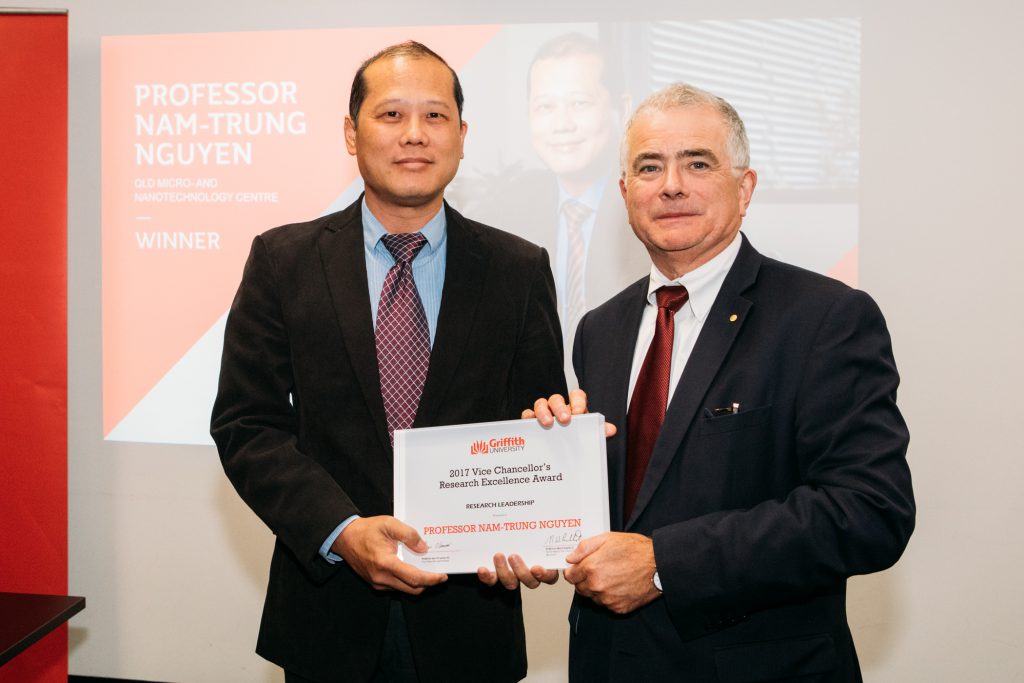
Professor Nam-Trung Nguyen accepts his Excellence In research Leadership award
Professor Nguyen, the recipient of the Research Leadership Award, said the win was recognition of his commitment to helping Higher Degree by Research students and Early Career Research members achieve their full potential.
“This is a nice recognition and very motivating,” Professor Nguyen said.
“I hope to provide an example on leadership beyond one’s own element to contribute more effectively to the success of the entire university.”
Excellence in Early Career Research:
Dr Amanda Ullman, School of Nursing and Midwifery received the Early Career Researcher Award, following her NHMRC Early Career Fellowship for “Innovation to improve the experience and outcomes of paediatric central venous access devices: the e-Vascular Access Passport”.
However Dr Ullman’s research program is more broad and as a paediatric nurse and researcher, and with support from colleagues, she is aiming to prevent these complications through innovation and pragmatism.
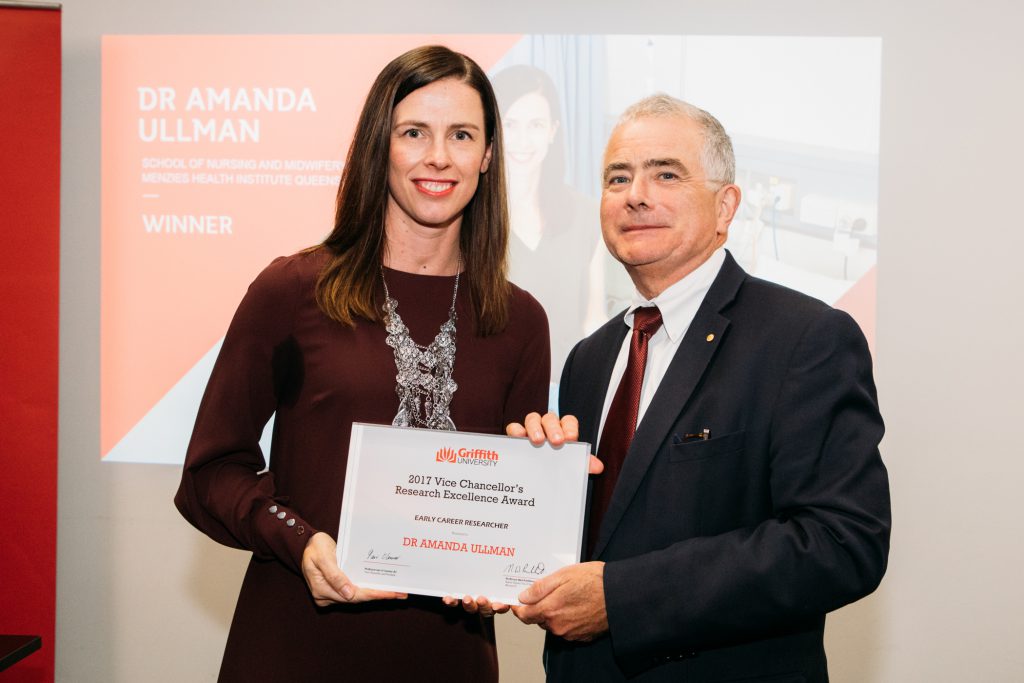
Dr Amanda Ullman accepts her Excellence in Early Career Research Award
“The insertion of a central line signals a turning point in a child’s life – the beginning of chemotherapy, undergoing a critical operation. The majority of the child’s treatments are administered through these central lines, however they are associated with significant harm, including bloodstream infection and thrombosis.
“It is pretty surreal to be receiving this award for the work I completed only 12 months after my PhD. I am excited to see what I can achieve over the next 30 years to transform paediatric healthcare, as a clinician and a researcher.”
Excellence of an Individual Mid-Career or Senior Researcher:
Associate Professor Guillermo Diaz-Pulido from the School of Environment and Science received the Mid-Career Researcher Award in recognition of his research leadership at Griffith’s Coral Reef Algae Lab, which has led to improved reef conservation practices.
“This award is the most important recognition I’ve received in my academic career and acknowledges the work, dedication and passion I’ve put into my research and especially the progress and achievements of the last 10 years at Griffith,” Associate Professor Diaz-Pulido said.
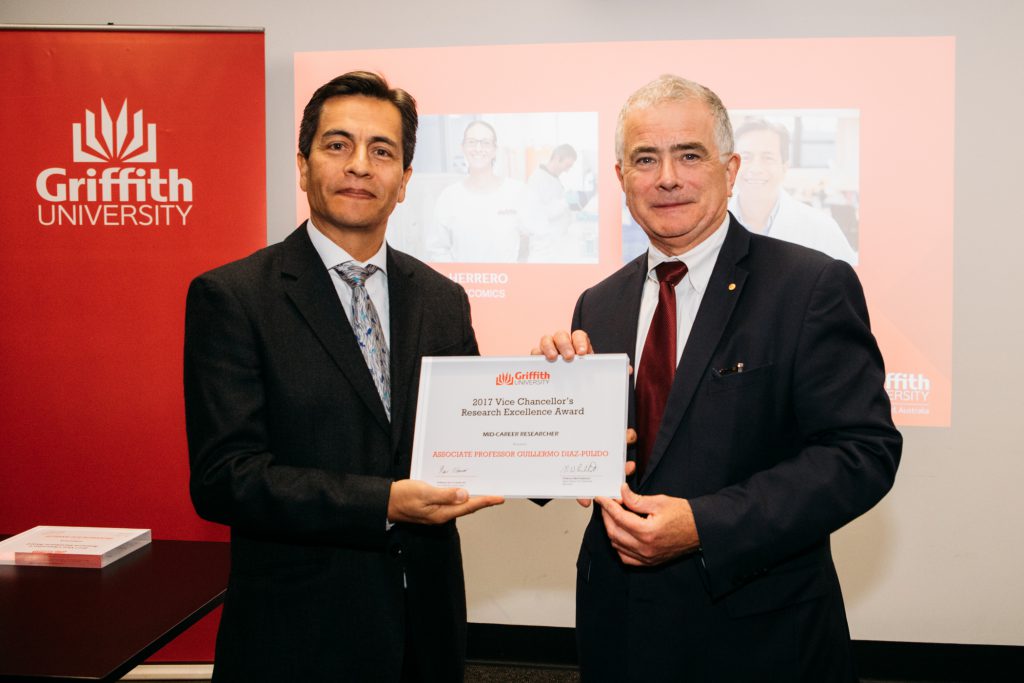
Associate Professor Guillermo Diaz-Pulido accepts his Excellence in Mid-Career Research Award
“The award is a big motivator internally, making HDR candidates and post-doctoral fellows proud to be part of our lab and to see the value of contributing to research with high impact.”
Dr Lara Herrero was also a recipient of the Mid-Career Researcher Award in recognition of her tireless work within Griffith’s Institute for Glycomics, which includes developing a potential treatment for Ross River virus.
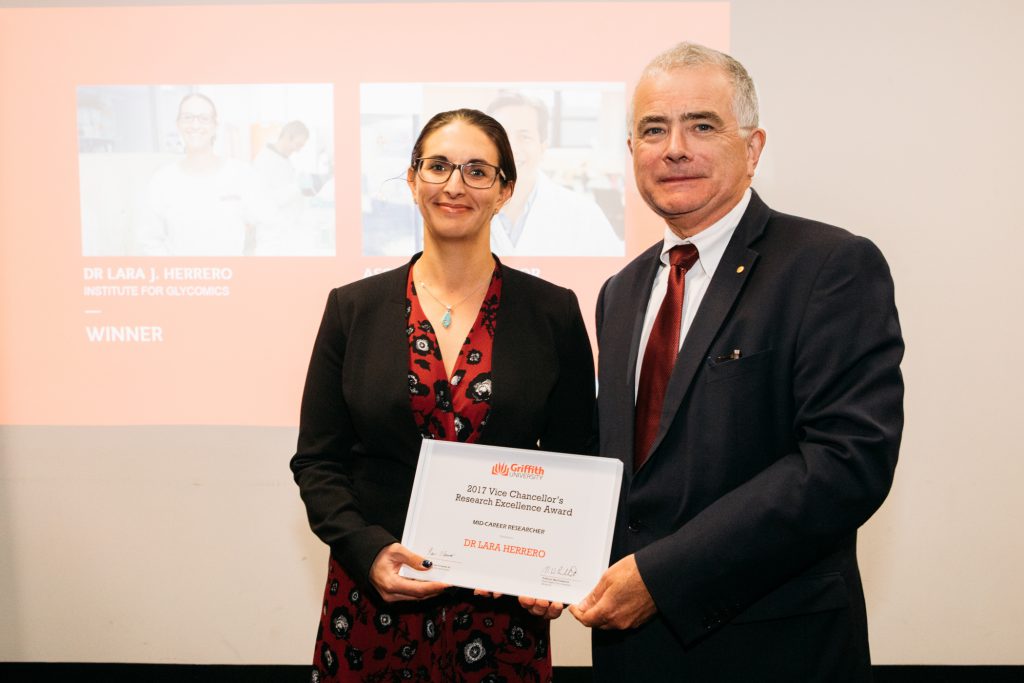
Dr Lara Herrero accepts her Excellence in Mid-Career Research Award
Excellence Award for Research Supervision:
Professor Rod Barrett, Deputy Head of School (Research) Allied Health Sciences, took out the Research Supervision Award for his leadership at University, Group and School levels.
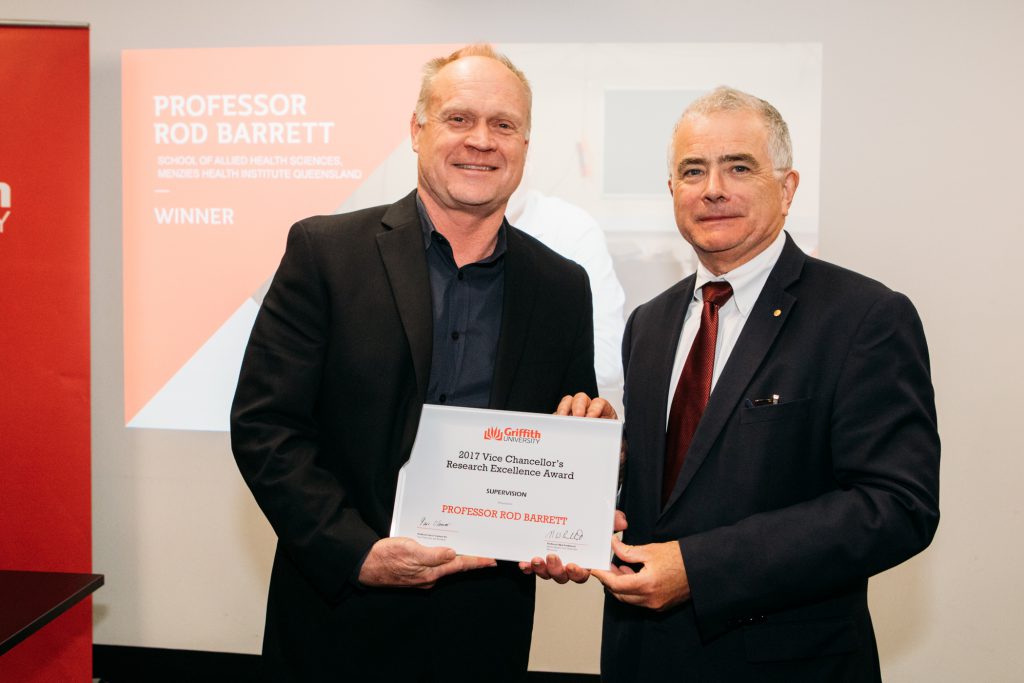
Professor Rod Barrett accepts his Excellence Award for Research Supervision
“Working closely with HDRs has been one of the most challenging, yet rewarding aspects of my academic career. It’s such a pleasure to see a student graduate and then go on to be successful in their own right and to know you played a small part in helping them get there,” Professor Barrett said.
Excellence of a Research group or team
Professors Suzanne Chambers and Tamara Ownsworth from Griffith’s Menzies Health Institute Queensland head up the study group which took out the Research Team Group Award.
Other staff in the group include Associate Professor Stefano Occhipinti, Professor Paul Scuffham, Dr Shu-Kay Angus Ng and Professor David Shum.
With a vision to undertake quality research in the health and behavioural sciences delivering effective and accessible psychosocial and survivorship care for people affected by cancer, the group has taken a multidisciplinary approach.
This culminated in the establishment of a Centre for Research Excellence in Prostate Cancer Survivorship in 2017.
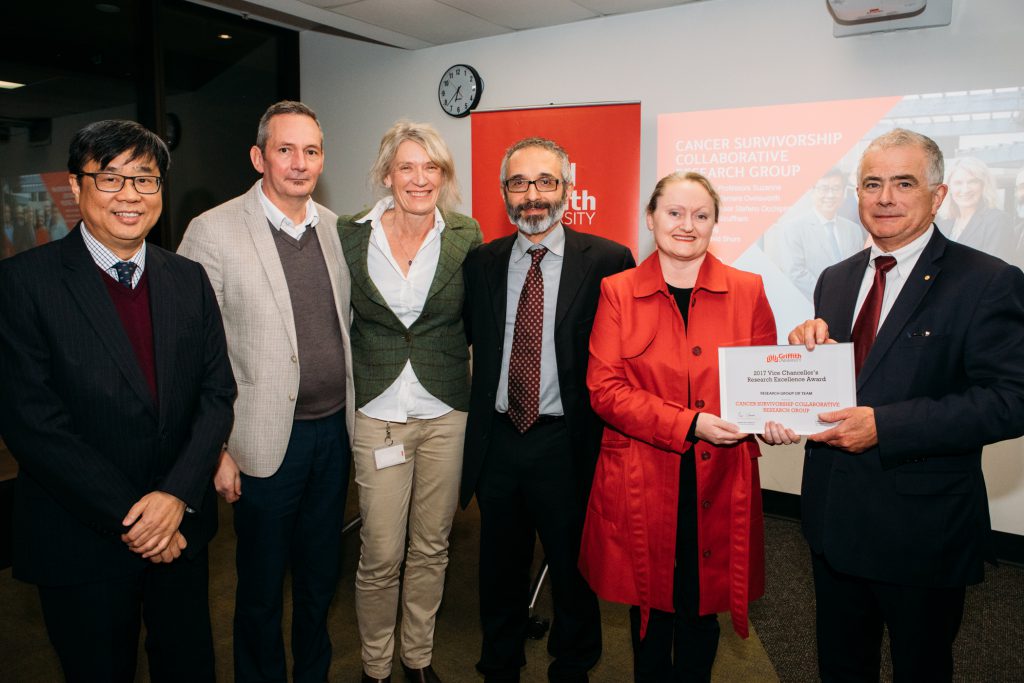
Professor David Shum, Professor Paul Scuffham, Professor Suzanne Chambers, Associate Professor Stefano Occhipinti and Professor Tamara Ownsworth accept the Research Team award
“We believe that our strong collaborative partnerships within the team and with consumers and community services underpin our translation-focused research program,” Professor Chambers said.
“We are delighted to have won this award which recognises the prevalence of cancer in the community and the high burden that it carries. It is crucial that researchers continue to support these communities.”
Remarkable Minutes awardees
Last night also saw the awarding of the winners of this year’sRemarkable Minutescompetition:
Dr Catheryn Khoo-Lattimore, Department of Tourism, Sport and Hotel Management for “Women in tourism and gender equality.”
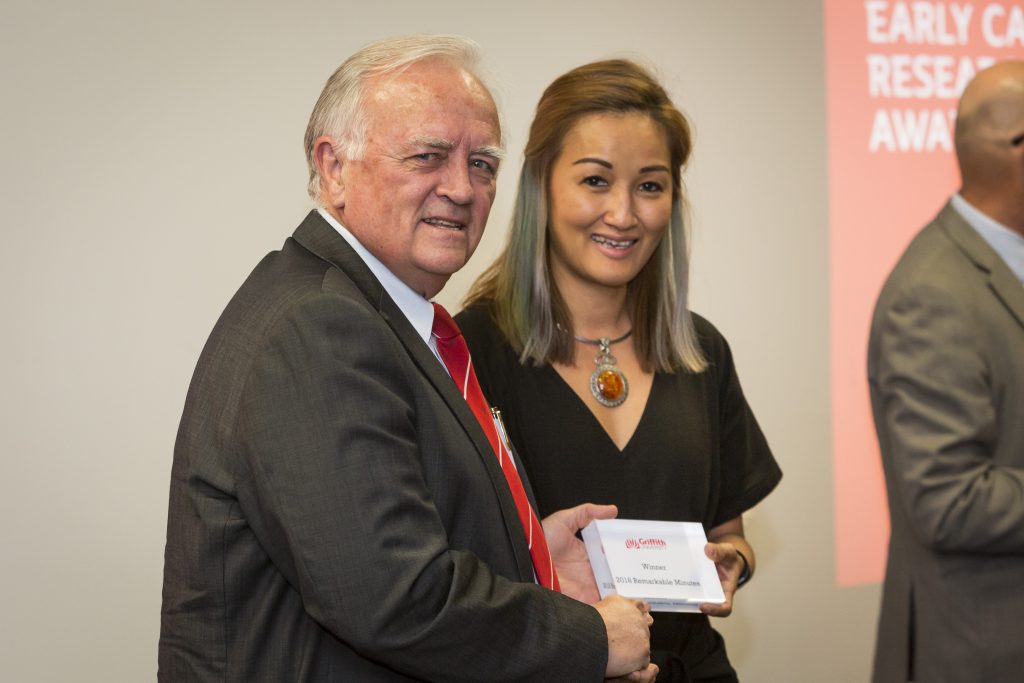
Dr Catheryn Khoo-Lattimore accepts her Remarkable Minutes award from Chancellor Henry Smerdon AM DUniv
Dr Diana Tolmie, Queensland Conservatorium for “Explore the lives of musicians who contribute to the economic and cultural growth of Australia”.
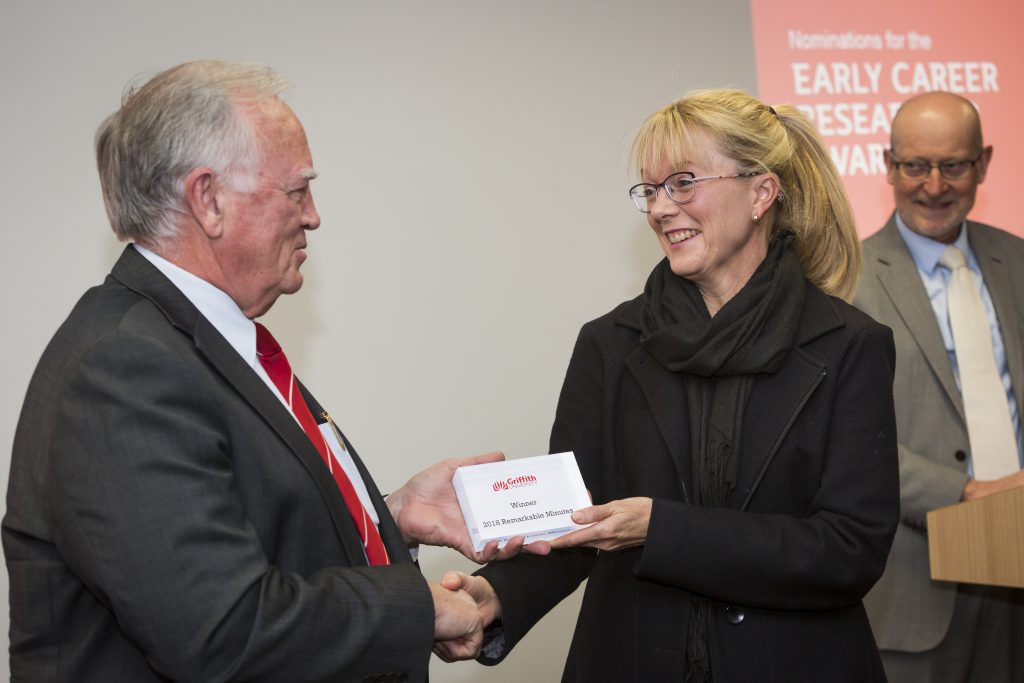
Dr Diana Tolmie accepts her Remarkable Minutes award from Chancellor Henry Smerdon AM DUniv
Griffith University is in the top ten of Australian institutions according to anew performance measure ranking universities on a range of published research criteria.
The University Ranking of Academic Performance lists universities on criteria including citation, impact and journal standing.
Griffith University has been ranked the tenth-best performed on a national level and is inside the top 300 on world rankings.
Ranked in 39 of the 61 subjects and disciplines, Griffith University was placed in the global top 100 in Nursing (11), Commerce Management, Tourism and Services (29), Law & Legal Studies (36), International relations (37), Marine Sciences (48), Education (53), Sociology (53), Studies in Human Society (57), Human Movement & Sports Sciences (58), Business (69), Environmental Sciences (78), Environmental Engineering (92).
Just outside the world top 100 is Agriculture (107) and Economics (113).
Griffith University Senior Deputy Vice Chancellor Professor Ned Pankhurst said the subject rankings show the excellence in research being undertaken across a wide range of disciplines.
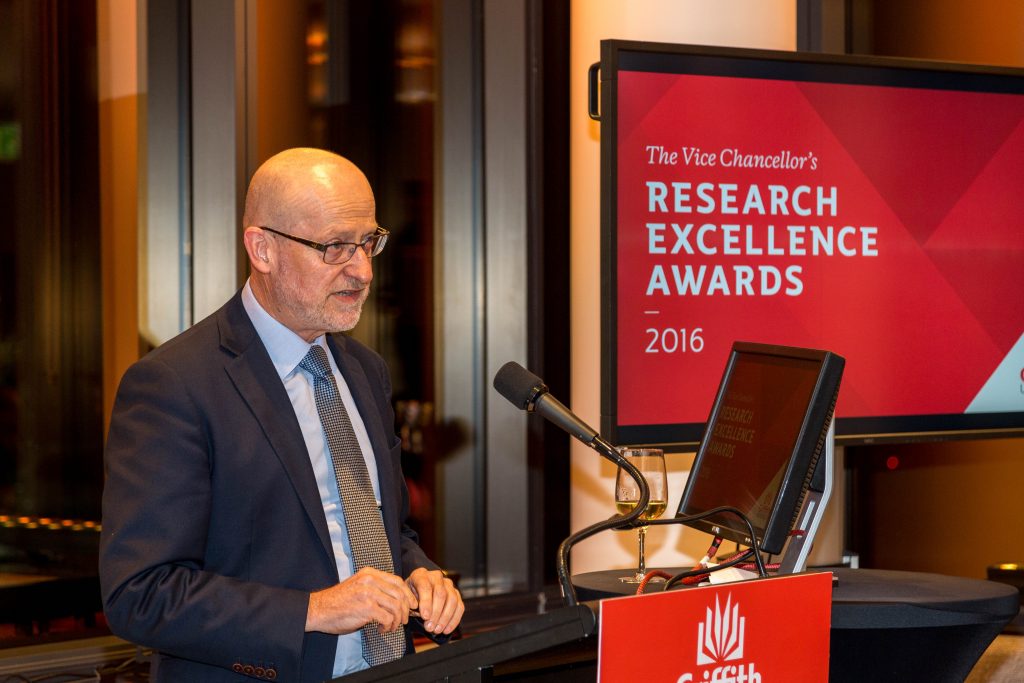
Senior Deputy Vice Chancellor Professor Ned Pankhurst
“To be a ranked in the top ten in Australia for our research and innovation is testament to the diligence and focus of our academics who are passionate about making a difference and improving society.”
Griffith Law School researchers Dr Kieran Tranter and Dr Edwin Bikundo are seeking out new research on the first full English translation of an early work penned by infamous German philosopher Carl Schmitt.
Despite Schmitt’s popularity among contemporary political thinkers on both the left and right, his early work, Die Buribunken, had never been fully translated into English until it was commissioned last year through Griffith’s Law Futures Centre.
Dr Kieran Tranter says the compact and cynical text has become deeply relevant to our social media age and information technology driven societies.
“In an age of social media, audit culture and the tyranny of continuous connection from our digitally accelerated existence, Schmitt’s text has evolved into a prophetic publication,” says Kieran.
In collaboration, Dr Bikundo and Dr Tranter will oversee a new book based on the translation, with a particular focus on the power and politics of data and the tragedy of the concept of existing beyond human form.
Another major theme is the way in which information culture reduces people to abstracts of data and time.
Kieran says, Carl Schmitt’s early work is better thought of as a provocative piece of dystopian speculative fiction with a dire warning for our social media obsessed society.
“Schmitt’s irreverent text describes the future emergence of the beings humans will become — the Buribunkens — beings who are required to contribute daily diaries to a global archive,” he says.
Dr Bikundo and Dr Tranter encourage researchers to offer up their critiques of the themes Schmitt writes about in Die Buribunken. Researchers who want to be a part of this book must submit their proposals by 15 August 2018, with the book expected in late 2019.
For more information on how to get involved in this new study, download the call for papers flyer (PDF).
By Dr Julienne Senyard, Griffith Business School
 Startups and entrepreneurs are a large contributor to new jobs and innovation in the Federal Government’s 2018 Innovation Agenda. This highlights the importance of State Government initiatives that connect and support entrepreneurs and innovative small businesses.
The 2018 Queensland Budget included an unexpected $1.5 billion surplus, and as a result the Palaszczuk Government maintains a strong focus on programs through Advance Queensland to assist startups and initiatives for innovative Queensland small business.
A total of $650 million is being invested through the Advance Queensland to support innovative Queensland businesses to drive economic growth and job creation within dynamic global business environments.
Advance Queensland “supports theneed for innovation, enhanced digital skills, connectivity and increased inclusion to position Queensland as a global innovation hub”.
Much of what the Budget provides is continued focus and extension on existing programs. Some selected Advance Queensland programs include:
The Ignite Ideas Fund,which provides grants provide funding to support startups and SMEs to commercialise market-ready innovative ideas for firm growth;
Advancing Regional InnovationFund, which encourages innovation across Queensland and supports local economies to create jobs for regional Queenslanders;
The Business Growth Fund,which provides targeted assistance for small and medium businesses that seekhigh growth;
The Digital Innovation Fundunder the eHealth Queensland Digital Innovation Strategy, which provides up to funding for proof-of-concept and pilot projects involving startups and businesses; and
The Catalyst Innovation Program, whichprovides opportunities for startups to pitch and showcase their digital health solutions.
The most significant investment from the State Budget is an additional $40 million into theBusiness Development Fund.This initiative supports high-growth, innovative, Queensland-based businesses in moving innovative ideas and viable commercial products and services.
Sweeney suggests (1987, p. 239) that “Government and its agencies can create the environment in which entrepreneurs will prosper”, and the Queensland State Government, through its continued financial commitment in entrepreneurship and innovation, provides valuable programs and initiatives that continue to strengthen the entrepreneurial ecosystem in Queensland.
By Professor Sheena Reilly, Pro Vice Chancellor (Health), Griffith University
 The Palaszczuk Government’s 2018 State Budget has been delivered with a commendable focus on strengthening frontline services and managing the rising demand of health services.
The Minister for Health and Ambulance Services, the Honourable Dr Steven Miles MP, said the budget reflected the Government’s commitment to providing quality health services across Queensland, with almost $1.5 billion to be invested in healthcare specifically on the Gold Coast in 2018-19 – a record investment in healthcare in the region.
We welcome the government’s investment to meet increasing demand and keep Queenslanders healthy by improving critical health infrastructure, enhancing medical technology, boosting frontline staff, and importantly focusing on approaches to promote good health as well as proven prevention programs.
However, the road to better health outcomes for all Queenslanders remains long.
As a leading health academic institution, Griffith University can pinpoint three crucial areas that health policy and decision makers must target for urgent attention.
Obesity and Overweight
Recent figures show obesity costs Queensland close to $2 billion per year, of which 44% is due to health system costs, 40% to tax forgone, 12% to productivity losses, and 4% to government subsidies. The impact of loss of wellbeing and premature death was assessed at a staggering $9.5 billion annually.
Even a small degree of weight loss can bring health and societal benefits, and I commend the Overweight and Obesity Prevention Strategy, part of the Health and Wellbeing Strategic Framework 2017 to 2026, for setting a prevention-focused pathway.
But there is always more to be done. Effective action need not be costly.
There are two key low-cost strategies to help reduce rising obesity levels with the focus on discouraging the consumption of energy-dense foods, which are cheap, widely available and heavily marketed.
These low-cost strategies are:
- banning the sale of drinks with added sugar from premises such as schools, hospitals and universities; and
- banning TV advertising of all junk food and drinks with added sugar during children’s viewing hours.
Domestic and Family Violence
The unqualified success of the State Government’s implementation of the recent Not Now, Not Ever initiative is a landmark step in uniting Queensland in ending domestic and family violence.
These initiatives are only a small piece in a larger jigsaw, and continued effort must be taken to improve awareness and education of domestic and family violence.
Griffith University recommends an approach in which there is targeted funding for those who are at an increased risk of domestic violence compared with the rest of the population. These include, but are not limited to, First Australian women and culturally and linguistically diverse women and their families.
Mental Health and Wellbeing
Griffith University is a leader in research and education in mental health and wellbeing, with our internationally acclaimed Australian Institute for Suicide Research and Prevention (AISRAP) a collaborating Centre for World Health Organisation (WHO).
We applaud the Government for its increase in funding to enhance community mental health treatment services essential for the one in five Queenslanders experiencing a mental illness or substance use disorder. We feel the impact and cost of mental health problems can be reduced by providing better services and support in our communities.
Introducing improved surveillance systems for suicide and attempted suicide in Queensland will provide much-needed information about suicidal behaviour, evaluate best practice for interventions to reduce suicidal behaviour at the individual, community, and population level, and provide strategic and policy-oriented advice.
By Professor Michael Barry, Griffith Business School
The Howard Government is (in)famously remembered for introducing radical industrial relations changes (known as WorkChoices) that profoundly diminished aspects of workers’ long-established rights, and led that Government to its electoral loss in 2007. Nevertheless, an enduring and profound effect of the Howard Government was to take control of industrial relations away from the states under the power granted to the Commonwealth to regulate corporations (s20 of the Constitution).
The outcome is that Queensland’s industrial relations system now regulates only unincorporated entities and public sector industrial relations. Therefore, the Government’s own pay bargaining outcomes, and increases in the size of the public service as forecast in the Budget, are key employment issues affecting overall government expenditure.
Aside from this, the Queensland Government’s main responsibility for employment relations is through its regulation of occupational health and safety. OHS regulation and workers’ compensation are vital features of any employment relations system, and require substantial resourcing. This endeavour requires a mix of regulatory techniques, including educating and involving the direct parties in OHS, monitoring and enforcement of safety standards, and punishment for serious breaches.
In 2017, the Government commissioned a best practice review of OHS, which was in part a response to the tragedies that occurred at the Dreamworld and Eagle Farm worksites and that led to a new legal provision for industrial manslaughter. The review recommended that OHS regulation be re-focused to prioritise the role of inspection and compliance. The employment of new inspectors and upskilling of existing staff were key recommendations.
Indeed, given the geographical size and diversity of the Queensland economy, and a lack of other enforcement mechanisms such as a strong union presence in most workplaces, the magnitude of this task is not to be underestimated. Given all of this, it is curious that the Government has not included substantial investment for this activity in the Budget, preferring instead to focus on other employment-related initiatives, such as boosting employment of health services workers, and generating employment associated with major infrastructure spending.
Looking forward, the growth of non-standard forms of employment in the new economy, through platforms such as Deliveroo and Uber, also presents challenges for the Government in work and safety regulation. Currently it is the case that platform workers are not classed as employees, and importantly are not covered by Queensland’s workers’ compensation system. If the health and safety implications for these workers are all too real, it also means that health and safety regulation will need to keep pace with new forms of work and employment, and be firmly on the Government’s agenda.