Current students, Lily Dick and Georgie Friedrichs, have been named as Griffith’s marquis players ahead of this weekend’s kick-off of the AON University Rugby Sevens. The announcement means Griffith University will be the only team whose two elite players are also current students.
Each university team is permitted two players from the national ranks, linking up with a combination of local club players and university students. Both Lily (18) and Georgie (23) are students at Griffith Business School.
They join a strong squad unveiled last week that includes players based in Brisbane and on the Gold Coast, with a number returning to build on last year’s strong showing in the inaugural year of the ground-breaking series.
Toowoomba native, Georgie Friedrichs, broke into the national sevens program in 2016, making her Australian debut in Canada, while Lily came to the attentions of Australian coaches during last year’s AON Series, leading to an Australian Development contract which took her to Sydney to train with the national squad.
 “The first week (with the national squad) was a massive step-up but you gradually get used to the workload and the skill requirement, and then you bring this knowledge and skills back to your state,” Currumbin born, Lily (right) said.
She welcomed the addition of a fifth round of games in the 2018 series, believing it will help to develop new and emerging talent in the sport. “Last year the series set a platform for players and gave us lots of minutes and game time that we would not have got before. Apart from a couple of invitationals and the main competition at the end of the year, we would have had no regular tournament before that. It is a great opportunity for girls coming through the program to get more minutes and game time.”
The Griffith squad flies to Hobart later in the week for the first round of games to be hosted by the University of Tasmania. Along with Lily and Georgie, current students Eliza Flynn (Sport Development), Kahli Henwood (Education), Ellen Field (Exercise Science), Laura Waldie (Oral Health Dental Science), Portia Bourke (Criminal Justice), Sophie Quirk (Exercise Science), Katie Curtis (Sport Management), Kiri Lingman (Public Relations & Communication), Anthea Moodie (Sport Management) and Eloise Schlecht (Design) are all vying for positions in the 12-player match-day squad.
Director of Griffith Sports College, Duncan Free OAM, said he was delighted that Griffith’s elite players are also current students at the university. “It is a real statement about the university’s commitment to and support for elite athletes who want to combine top level competition and academic studies.”
The Griffith squad has been developed in partnership with Griffith Uni Colleges Knights Rugby Club and Sunnybank Rugby Union Club.
The five tournaments will be played across the weekends of Aug 24-26 (University of Tasmania), Sept 7-9 (University of Canberra), Sept 21-Sept 23 (University of Queensland), Oct 5-7 (Bond University) and Oct 19-21 (University of Adelaide). The other universities in the contest will be Bond University, University of New England, University of Queensland, Macquarie University, University of Canberra, University of Adelaide, University of Tasmania, University of Sydney and University of Melbourne.
Full Griffith University Squad: Georgina Friedrichs (Business), Lily Dick (Business), Eliza Flynn (Sport Development), Kahli Henwood (Education), Ellen Field (Exercise Science), Laura Waldie (Oral Health Dental Science), Portia Bourke (Criminal Justice), Sophie Quirk (Exercise Science), Katie Curtis (Sport Management), Kiri Lingman (Public Relations & Communication), Anthea Moodie (Sport Management), Eloise Schlecht (Design);Rhiannon Revell-Blair, Alysia Lefau-Fakaosilea, Sophie Bell, Charlotte Kennington, Georgia Devlin, Alana Elisaia, Shannon Mato, Diaz Seumanutafa, Ivania Wong, Yolanda Gittins, Samantha Treherne, Kirby Sefo.
Australians’ trust in government has continued to slide, driven by growing concerns about corruption at the federal level, according to a special Global Corruption Barometer survey conducted by Griffith University and Transparency International Australia.
The results also show strong support for creation of a new federal anti-corruption body, with two-thirds (67%) supporting the idea, especially in Victoria, NSW and South Australia — with those ‘strongly supporting’ the idea outstripping those who strongly oppose it by 4 to 1.
Combined with Griffith University’s Australian Constitutional Values Survey, the in-person telephone poll of 2,218 adults, conducted in May-June, provides the first measure since 2012 of the growing impact of corruption on citizens’ trust and confidence in government. The survey shows:
- Trust & confidence in all levels of government fell in the last year, to 46% for federal and state levels and 51% for local government nationally
- Continued low levels of experienced bribery (less than 2%), but high concerns about officials or politicians using their position to benefit themselves or family (62%) or favouring businesses and individuals in return for political donations or support (56%)
- A 9 point increase since 2016 in perceptions that federal members of parliament are corrupt (85% at least ‘some’ corrupt, 18% ‘most/all’ corrupt) — placing them on par with state parliamentarians and worse than local officials.
Project leader Professor A J Brown, of Griffith University’s Centre for Governance & Public Policy, said the results provide both a warning and an opportunity for Australian governments.
“We now see a stronger correlation between trust and action against corruption.”
“Well over a third of citizens’ total trust and confidence is now explained by whether they feel the government is doing a ‘good job in fighting corruption’ (37% at the federal level, 25% state).

Professor AJ Brown
“Continued slippage in the perceived integrity of federal officials clearly has a disproportionate effect on overall trust and confidence, nationwide.”
Federal anti-corruption agency support
The survey is the first to test support for a federal anti-corruption body by also presenting respondents with a counter proposition — but still records strong support across the community, especially among respondents who have ever worked for the federal government itself.
Two-thirds of Australians (67%) support the idea, with most of these (43%) expressing strong support, against only 10% expressing strong opposition.
Respondents were also told: “Other people say a new agency isn’t needed because existing bodies like the Australian Federal Police are already adequate to deal with federal corruption”, before being asked to express a view.
Support is slightly higher among women (70%) than men (65%), and among citizens of Victoria (73%), NSW (69%) and South Australia (68%), and lower among those over the age of 65 (60%) but otherwise spread broadly across the community including all education levels.
Among the 1,011 respondents who had worked in government, the 245 respondents who had ever worked in the federal government recorded the highest level of strong support for a new federal agency — 54% against the national average of 42%.
The same group were marginally less likely than other respondents to rate corruption in government as a big or very big problem (50% against the national average of 57%), but were:
- the least likely to say that the “task of fighting corruption” was currently being handled well at the federal level (35% against the national average of 48%)
- more likely than other respondents to have witnessed or suspected an official or politician of making a decision in favour of a business or individual who gave them political donations or support in the last 12 months (68% against national average of 56%)
Undue influence a major concern
Serena Lillywhite, CEO of Transparency International Australia, said the results “firmly show that the risk of undue influence and decisions that benefit business and powerful individuals is real, and driving increasing corruption concerns”.
“For 56% of respondents — equating to over 10.2 million Australians — to say they had personally witnessed or suspected favouritism by a politician or official in exchange for donations or support is nothing less than shocking.”
“This snapshot also shows the case for a strong, comprehensive federal anti-corruption agency is well understood by those within government, not just based on the fears of outsiders.”
“Improved transparency and strengthened oversight of government decision making, including the regulation of lobbyists, is also long overdue,” Ms Lillywhite concluded.
It’s a night for support and appreciation of the ground-breaking work being carried out by Griffith University’s Institute for Glycomics and everyone is invited to be part of this special occasion.
The Institute’s Grand Ball Night is regarded as a show-stopper each year with the 2018 edition promising to deliver a memorable evening full of excitement and fun.

9 Gold Coast News Presenter Dominique Loudon will co-host the evening with fellow presenter Bruce Paige.
To be held at Royal Pines Resort on October 13, the Institute’s Grand Ball Night will be hosted by Nine News Gold Coast celebrities Bruce Paige and Dominque Loudon with a terrific support act of entertainment headed by local music act The Koi Boys.
Institute Director Professor Mark von Itzstein said the Gala Ball will also see the announcement of several exciting research developments currently being undertaken at the Institute’s Australian Centre for Cancer Glycomics (ACCG).

Institute Director Professor Mark von Itzstein and Dr Aimee Tan at the 2017 Gala Ball.
“I can’t give too much away but there has been some really pleasing outcomes in regards to cervical cancer research being done at the ACCG which we are looking forward to sharing on the big night.”
For more details on the Grand Ball Night please click here.
Using virtual reality technology to treat children for dog phobia is the aim of a new study at Griffith.
Aimed at children aged 8-12 years, the therapy entailsassessments andanintensive three hour treatmentwhereby participantsareexposed to multiple types of dogs wearing a virtual reality headset.
“A fear of dogs is one of the most common phobias amongthe 10 per cent ofchildrenwho suffer from them,” saysstudy leader andMasters of Psychology studentTakaMiyamoto.
“There are effective treatments for this phobia but unfortunately they can be difficult to deliverfor cliniciansgiven that the live stimuli —dogs-areneeded.
“Using virtual reality is an innovative alternative treatment for older children who can easily use the technology headsets tobe exposed toa range of several different breeds ofvirtualdogat once.
“This has the advantage of being more accessible and appealing for children with severe dog phobia. There is also the obvious advantage for the clinician with regards to the practicalities of having multiple dogs within the treatment area.”
Part of a wider Griffith study
The dog phobia therapy isapart of awider Griffith study looking at the efficacy of intensive, time-limited treatment for specific phobias inpre-schoolchildren using an efficient one session treatment approach.
Having just been awarded a $570,000 National Health and Medical Research Council grant, the five-year study will investigate the phobias of children aged 3-5 yearsin a bid to reduce the likelihood of mental health problems in later life.
“The most commonphobias among children arephobias of dogs and the dark; however, there are others, such as phobias ofhigh places,loud noises and costume characters,” saysAssociate Professor Lara Farrellfrom Griffith’s School of Applied Psychology.
“The long-term research to date has shown that phobias during childhood arethe strongest predictor for mental healthdisorders later on.Soif we can treat phobias in childhood,we may be able topreventothermental health problems later in life.
“Indeed, a very recent ten year prospective longitudinal study concluded that about half of all serious adult mental health disorders (including panic disorder, generalised anxiety disorder [GAD], OCD, PTSDanddepression) could be prevented if phobias beginning in the first two decades of life were effectively treated.
“This study represents a critical step towards testing these conclusions experimentally by treating phobias at the first sign of clinical onset during the pre-school years.
“Quite remarkably,phobiascan be effectively treated in just a single session; with robust evidence in support of the one-session treatment approach for older youth (7 — 17 years) and adults. However, the one session approach has not yet been tested with preschool aged children.”
Associate Professor Farrell says that the study will follow up the pre-school participants two years following the treatment to see if the development of anxieties and fears can be offset.
“It is when children get older that they may show signs of other anxiety and depression disorders.Our hope is to prevent such problems by targeting childhood phobias inpre-schoolers.”
Interested participants should phone:(07) 5678 8317or visit: https://www.griffith.edu.au/griffith-health/school-applied-psychology/research/pre-schoolers-overcoming-phobias
Dr Danielle Harris
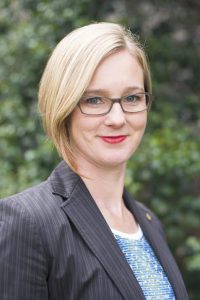
A new book by Dr Danielle Harris from the School of Criminology and Criminal Justice describes how men who have committed serious sexual offenses come to stop offending and end their ‘criminal career’.
Desistance from Sexual Offending: Narratives of Retirement, Regulation and Recoverywill be launched at South Bank campuson Thursday, August 23.
The book describes the complex process of desistance from sexual crime as told by 74 men incarcerated for sexual offenses and released back into the community.
Unlike much of the research on this topic, Dr Harris places strong emphasis on how men who have committed serious sexual offenses come to stop offending and end their ‘criminal career’.
“The book includes interviews withmen in Massachusetts and Maine. But, while writing the book I also spoke with men in California and Florida, as well as treatment providers and law enforcement personnel in several jurisdictions,’’ she said.
The book is the product of three years of interviews, as well as 20 years of experience workingwith men in Australia and England, and along time collaborating with people from all over the world.
“Quite simply, there is more that unites us than divides us,’’ she says.
“The specificlegislation to whichmy participantsare subject is exceptional in many ways, but their stories are not uniquely American. The experience of custody, and of community release after a long sentence are universal.
“The challenges they face are universal – the stigma they bear, the straining and breaking offamily ties, the difficulty offinding a job, or a safe and affordable place to sleep.
“Two hundred years of criminology tells us that desistance is a natural human process, andthat most people who commit crimes come to stop engaging in those behaviours.
“This finding is consistent across time and space.People can do terrible things and then stop doing those things. People can do terrible things and not be terrible people forever.”
Dr Harris is the Deputy Director (Research) of the Griffith Youth Forensic Service and a lecturer in the School of Criminology and Criminal Justice. She has published more than 30 articles and book chapters and have given over 50 presentations at international conferences. Her research examines sexual aggression through a life course perspective, examining oneset, specialisation/versatility, desistance and related public policy.
Register for the book launch.
WHAT: Book launch – Desistance from Sexual Offending: Narratives of Retirement, Regulation and Recovery
WHEN: Thursday, August 23, 5.30pm-7pm
WHERE: QCA Lecture Theatre, South Bank, Brisbane
Media Contact:Deborah Marshall 0413 156 601
A Griffith University squad including students of education, business, design, criminal justice and public relations has been announced for the 2018 Aon Uni 7s Series.
This week’s announcement also sees the return of some familiar faces from the inaugural series last year with Katie Curtis (B. Business), Laura Waldie (B. Oral Health Dental Science), Ellen Field (B. Exercise Science) and Eliza Flynn (B. Sport Development) all returning to compete in the country’s premier women’s rugby sevens university competition.
The first round of the 2018 series will be hosted by the University of Tasmania from August 24-26 with Griffith looking to build on last year’s encouraging endeavours. They will be part of an expanded competition now incorporating 10 universities with five rounds of action — one more than 2017 — between August 24 and October 19.
 “This means more opportunity to play which is very exciting,” Katie Curtis (left) says. “The extra round is another chance to get game time under the belt and gain experience which is so important.”
Katie, who impressed in the first season of the university sevens, encouraged teammates to be ready for some competitive outings. “It’s important to work hard, to do that one percent right in the gym work, in skill work, but also to enjoy it. It’s intense but training with your mates and travelling with your mates is a great experience.”
All competing teams will be enhanced by the forthcoming addition of two marquee players from the Australian Women’s Rugby 7s squad, with their identities to be revealed in the week prior to competition kick-off.
While each squad will also include a complement of club players, university teams competing at each tournament will be required to have at least 50% of its 12-strong game day playing group currently enrolled.
The Griffith team will again be under the guidance of leading Queensland coach Moana Virtue, while sport development students Teysha Deal and Lucy Turney will gain valuable experience managing the team off the field.
The Griffith squad has been developed in partnership with Griffith Uni Colleges Knights Rugby Club and Sunnybank Rugby Union Club. The high-quality set-up also sees the inclusion of Australian schoolgirls rugby sevens and Queensland State of Origin player Rhiannon Revell-Blair and emerging sevens and fifteens star Alysia Lefau-Fakaosilea.
The other universities in the contest will be Bond University, University of New England, University of Queensland, Macquarie University, University of Canberra, University of Adelaide, University of Tasmania, University of Sydney and University of Melbourne.
The five tournaments will be played across the weekends of Aug 24-26 (University of Tasmania), Sept 7-9 (University of Canberra), Sept 21-Sept 23 (University of Queensland), Oct 5-7 (Bond University) and Oct 19-21 (University of Adelaide).

Griffith University Squad:
Eliza Flynn (Sport Development), Kahli Henwood (Education), Ellen Field (Exercise Science), Laura Waldie (Oral Health Dental Science), Portia Bourke (Criminal Justice), Sophie Quirk (Exercise Science), Katie Curtis (Sport Management), Kiri Lingman (Public Relations & Communication), Anthea Moodie (Sport Management), Eloise Schlecht (Design);Rhiannon Revell-Blair, Alysia Lefau-Fakaosilea, Sophie Bell, Charlotte Kennington, Georgia Devlin, Alana Elisaia, Shannon Mato, Diaz Seumanutafa, Ivania Wong, Yolanda Gittins, Samantha Treherne, Kirby Sefo.
Meeting community demand for allied health degree programs in Brisbane has been the impetus behind the opening of a new facility at Griffith University’s Nathan campus.
The Nathan campus School of Allied Health Sciences, which houses the new Allied Health Programs, will be officially opened this Thursday 16 August.
The refurbished building boasts two state-of-the-art research laboratories, dedicated specialist teaching laboratories, simulated learning areas and a vibrant multidisciplinary breakout area, which will be used to deliver three new programs which were previously only offered at the university’s Gold Coast campus — the Bachelor of Occupational Therapy, Bachelor of Physiotherapyand Master of Speech Pathology.
Exceptional student demand
“Student demand for these programs at our Nathan campus has been exceptional, and has capitalised on Griffith University’s excellent reputation of delivering high quality allied health programs at the Gold Coast,” says Professor Andrea Bialocerkowski, Head of School of Allied Health Sciences.
“So far we have 93 enrolled students in physiotherapy, with 59 in occupational therapy and 18 in speech pathology.
“Already we have some great research partnerships in place with the local community. Theseincludevolleyballers from theQueensland Academy of Sport (QAS), BrisbaneAFL,rugby league andschool-levelrugby unionteams.”
“Our research involves investigating and preventing sports injuries,” says Professor Julie Hides, Deputy Head, Nathan, School of Allied Health Sciences.
“The new facility is a fabulous learning and teaching space to not only showcase the new facilities and complement our existing facilities at our Gold Coast campus, but also to house these health programs together which creates a great opportunity for multi-disciplinary learning,” says Pro Vice Chancellor (Health), Professor Sheena Reilly.
“The expansion of allied health programs to Griffith’s Nathan campus is also a great reflection of the strong partnerships we have in place with our local health services and other healthcare providers.
MHIQ to carry on building partnerships
“Our plan will be for our research organisation Menzies Health Institute Queensland, to carry on building allied health research partnerships with the community, to grow and develop our existing strong presence.”
A spokesperson from the QAS said the organisation is keen to support research projects that are identified by its supported sporting organisations, as an area of priority.
“This current project betweenVolleyball Queensland, Griffith University and QAS aims to reduce the injury risk of our elite athletes and by doing so, improve athlete availability for training and competition, leading to better sports performance outcomes,” she said.
Thursday’s launch event will also include a presentation titled Gene-brain behaviour relationships — relevance to the allied health professions, with Professor Angela Morgan, lead of the Neuroscience of Speech Group at Murdoch Children’s Research Institute. Angela is a speech pathologist and NHMRC Practitioner Fellow.
Now that we are in the era of genomic medicine, Professor Morgan will say that we are well placed to explain some of the genetic contributions to the disorders we study and treat, including speech, movement or nutritional disorders, and that the allied health professions are currently very well placed for attracting research funding.
ABC Brisbane Radio’s Loretta Ryan will host a discussion with community and university experts about the prevention of domestic and family violence on Tuesday, August 21, 2018.
They will discuss the prevalence and impact of gendered violence in the community and how bystanders can play a role in recognising and preventing this behaviour.
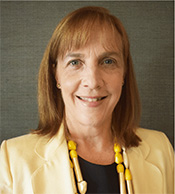
Vanessa Fowler — Director of the Allison Baden-Clay Foundation
After Allison’s death in 2012, her sister Vanessa has supported her parents in raising Allison’s three young daughters and has been driving The Allison Baden-Clay Foundation which aims to educate people on the signs of domestic and family violence and empower them to help prevent these situations.
The Allison Baden-Clay Foundation was developed to create a positive legacy in memory of Allison Baden-Clay, who was murdered by her husband.
 Nina Viljamaa – Regional Supervisor — Queensland Probation and Parole
Nina has worked within the criminal justice sector for the past 12 years. During this time there has been an observable and significant increase in the number of domestic violence related issues and ashift in the way this complex issue is managed within the community corrections environment.
Nina has a history of trauma which commenced in early childhood and an understanding of how trauma can influence decisions throughout an individual’s life time. Seeking to protect the community and enable change was a key influence in Nina’s choice of study at university and subsequent career pathway.
 Shaan Ross-Smith — MATE Bystander Program Director
Shaan has spent 16 years working with prisoners though her various managerial and director roles with Queensland Corrective Services. Shaan chose to diversify this experience in 2014 to work with victims/survivors at the Domestic Violence Prevention Centre. Shaan’s passion for ending gender-based violence saw her make the transition to MATE where she can focus on primary prevention, after years of working in the response phase. Shaan holds postgraduate qualifications in psychology and is the Chair of the Board at DV Connect.
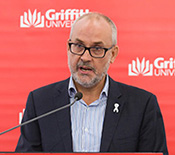 Professor Patrick O’Leary — Professor of Social Work, School of Human Services and Social Work, Griffith Criminology Institute
Professor O’Leary’s is an internationally recognised researcher with significant expertise in domestic violence/gender-based violence (focus on perpetrator programs), child protection in Australia, child protection in social development and humanitarian contexts, social work, long-term impact of child sexual abuse (especially in men), and socially excluded young people.
Professor O’Leary has published in high-quality journals as well as reviewing extensively for journals. His work has influenced international domestic violence and child protection policy and practice.
Recently Professor O’Leary was commissioned as an Expert Academic Advisor to the Royal Commission into Institutional Responses to Child Sexual Abuse with a particular focus on male victims and the long-term effects. He is currently a Senior Research Fellow with UNICEF’s Office for Research.
 Professor Paul Mazerolle— Pro Vice Chancellor (Arts, Education and Law)
As Pro Vice Chancellor, Professor Mazerolle has lead the transformation of the Arts, Education and Law Group, which reflects a high-performing and high-achieving academic community that includes world-class scholars and creative thinkers, high demand academic programs, impressive students and distinguished alumni.
Since 2014 Professor Mazerolle has led and chaired the Griffith Integrity 20 Summit, an annual event that brings together world experts to examine and debate a range of integrity issues associated with many of the most pressing issues facing contemporary society.
Register to be part of the audience
WHAT:Why Do We Need to Talk About This?
WHEN:Tuesday, August 20 5.30pm-7pm
WHERE:Queensland College of Art Lecture Theatre, 226 Grey Street, South Bank
Media Contact: Deborah Marshall 0413 156 601
Griffith University research into fighting diseases of global impact are set to benefit from the latest National Health and Medical Research Council(NHMRC) 2018 Fellowship Program funding outcomes.
Principal Research Leader Professor Suresh Mahalingam of the Institute for Glycomics has been successful in obtaining a Senior Research Fellowship B (SRFB) for the project “Arbovirus-Induced Inflammatory Disease: Mechanisms and approaches to Therapy.”

Professor Suresh Mahalingam
Professor Mahalingam has been awarded funding worth $792,275 for his Research Fellowship.
His research is helping find new ways to treat debilitating diseases caused by alpha viruses such as Chikungunya and Ross River virus.
Mosquito-borne viruses cause severe joint and muscle inflammation, and there are no vaccines or specific drugs to effectively treat the disease caused by these viruses.
Dr Larissa Dirr, also from the Institute for Glycomics, was awarded $327,192 in funding for her Early Career Fellowship and her project “Human parainfluenza virus hijack the host cell glycosylation machinery to facilitate infection – Potential new antiviral targets”.
Currently no therapies or vaccines are available to treat or prevent human parainfluenza virus (hPIV), the second most prevalent cause of acute respiratory tract infection in infants in the world.
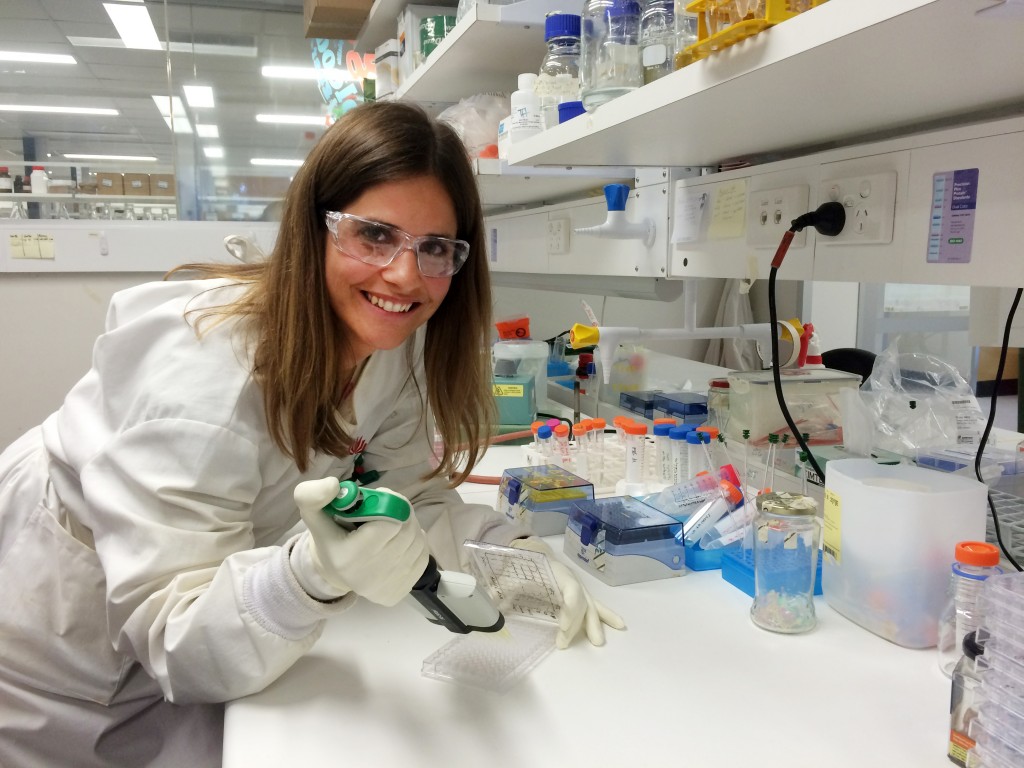
Dr Larissa Dirr
Senior Deputy Vice Chancellor (Research) Professor Ned Pankhurst said the Institute’s world-leading health-based research is playing its role in the fight against challenging diseases.
“The significant and ongoing support from NHMRC will allow our remarkable researchers to progress their projects and deliver transformative outcomes.”
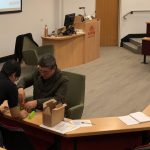
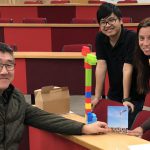
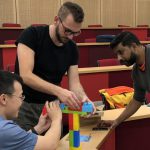
In last week’s Sustainable Supply Network Management for the Next Decade course, Griffith University lecturer, Mr Omid Haass creatively used building blocks to help students learn about innovation styles.
In this interactive game, invented by Omid’s esteemed colleague, Dr Erin Evans, the aim was for students to learn to develop a team, brainstorm, and allocate tasks while dealing with time and communication constraints. In the process, they were exposed to uncertainty and ambiguity as some of the characteristics of the Industry 4.0 era, a name given to the current trend of automation and data exchange in manufacturing technologies.
In small groups, students were given an envelope containing a card with a photo on it, and a box containing a limited number of plastic building blocks. Students were then asked to create the object on the photowithin a set time frame using only the contents of the box.
“My passionate learners really enjoyed the challenge and learned a lot through this fun and entertaining game”.
“Students learn to be innovative by adopting different innovation styles, such as bending, blending and breaking, to tackle the complexity and uncertainty of their tasks” Omid said.
The competition and teamwork games-based learning promotes, motivates students to use interactive, collaborative problem-solving skills to apply their chosen strategy to solve a given problem.