Melbourne-based Cancer Therapeutics Co-operative Research Centre – which Griffith University is a foundation participant of – has struck a blockbuster research partnership with global pharmaceuticals giant Pfizer that could eventually be worth as much as $US460 million ($650 million).
CTx CRC specialises in the “small molecule” approach to treating cancer by modulating — switching on or off — cancer-causing chemicals in the body, a more targeted approach than blasting cancers with radiation or chemotherapy.
Cancer Therapeutics CRC (CTx) was established in 2007.
Professor Vicky Avery heads the Discovery Biology team at the Griffith Institute for Drug Discovery, who are leaders in the field of high throughput screening and high content imaging. The Discovery Biology team use sophisticated image-based assays to support CTx projects such as those that lead to this collaboration with Pfizer.
Senior Deputy Vice Chancellor (Research) Professor Ned Pankhurst congratulated the CTx management on this outstanding partnership.
“Outcomes such as this highlight the incredible value of multi-disciplinary, multi-institutional collaborations to benefit from the scientific expertise within Australia,” he said.
“Griffith University is proud to be a contributing member of this successful team.”
Brett Carter, CEO of CTx, said: “We are very excited to work with a company of Pfizer’s calibre on the progression of these programs. This deal, together with the three prior deals for CTX technology, has the potential to return a billion dollars to Australia. Funds that will help support the biomedical sector and that can be ploughed into new drug discovery programs; providing opportunities for the world class team we have developed, and potentially leading to the delivery of new treatments for patients and economic benefits for the nation.”
Dr Robert Abraham, Senior Vice President and Group Head of Pfizer’s Oncology Research & Development Group said: “We are constantly searching the globe for the best science that has the potential to change the way we can treat people with cancer in the future. What we have found at CTx with these two chromatin modifying enzyme targets are very promising, differentiated programs that have the potential to provide new treatment options for patients.”
Asked why CTX had achieved such great success, Dr Ian Street, CTx CSO said: “Every new cancer drug starts with a great idea, however what Australia lacked was a good mechanism to convert these ideas into potential new medicines, and this is the niche that CTx has filled.”
About CTx
CTx is an oncology focused small molecule drug discovery and early development biotechnology group, established under the Australian government’s Cooperative Research Centre initiative. CTx’s unique partnership model leverages the capabilities and expertise of its Industry Participants with those of a number of Australia’s pre-eminent Medical Research Institutes and Universities. CTx’s Participants are the Children’s Cancer Institute, CSIRO, Griffith University, Melbourne Health, Monash University, National Cancer Centre Singapore, Peter MacCallum Cancer Centre, Walter & Eliza Hall Institute of Medical Research, Clinical Genomics, SYNthesis Research, CTxONE, Cancer Trials Australia, Medicines Development for Global Health Limited, Cancer Council of Victoria, Syneos Health and the Victorian Comprehensive Cancer Centre.
When Nelson Bayer graduates this year with a Bachelor of Dentistry and Oral Health, it will be the culmination of a hard fought and long path to success.
After years of determination to succeed in his chosen field, Nelson says he never wavered from his dream which began when he was just eight.
“My dentist at the time was a real legend and I remember thinking how it must be amazing to work on people’s teeth and restore confidence in people when they didn’t feel good about their mouth!
“I decided there and then that was what I wanted to do with my life and so I got as much work experience as I could through my school.”
But the Gold Coast student’s career path was not as straightforward as he had hoped.
“Unfortunately my grades were not good enough to get into dentistry so I got into the Bachelor of Dental Technology instead, which then led into the Bachelor of Oral Health Therapy.”
Still thwarted in his chosen career
Nelson graduated from the program in 2011, but was still thwarted in his chosen career when he realised that his GPA was not up to scratch in order to undertake the Bachelor of Dentistry and Oral Health.
Undaunted, he began work as an oral health therapist, undertaking basic fillings, extractions and hygiene work with young people. In addition, he undertook a year of a Bachelor of Business Studies in order to improve his GPA, which he was successful in doing.
“The great thing about this period of my life, was that as well as gaining valuable work experience in basic dentistry, I was also gaining some great business experience which will definitely hold me in good stead for any potential future business I may own,” he says.
Looking back on his career path, Nelson does not have any regrets.
“Apart from telling my eight year old self that I should have worked a lot harder, I am really excited about where I am now. I stuck with it all the way and never lost sight of what I love about dentistry which is that it is a fantastic integration of science and people.
“I love the technology and having the ability to heal people’s oral health, as well as the artistic flair that is needed to make and fit a truly perfect filling.
“Griffith has also been really good to me in terms of the high standard of clinical education; I have had some great mentors during my time here.”
A group of Griffith students took out the top award at the 2018 Opmantek Awards by creating health and safety solutions for factory and production line workers using virtual reality (VR).
On October 24, three of the highest achieving groups from Griffith multimedia, design and IT presented their Industry Project in competition for $2000 of funding – the finalists included Virtual Soccer Coach, CSI Application and Vision VR.
The award-winning group Vision VR were able to use the unique capabilities of VR to tackle complex issues of health and safety for factory and production line workers.
This allows employees to familiarise themselves with training, machinery and daily operations. The detailed and varied training modules allow for the guiding and assessment of employees’ safety, featured knowledge and protocols.
With the support and funding from Opmantek, these Griffith students will continue to lead the development of safer overall operations for future companies and employees.
Gold Coast City Councillor and judge Glenn Tozer said theimportance of training in a virtual environment is revolutionary in lowering the risk and injury rate of employees in our workplaces.
“Anyone can have a great idea – the difference between those who become phenomenally successful is the execution,” he said.
“Ensure to seek support from the community, with organisations such as the Gold Coast Innovation Hub. Overall, the Opmantek prize provides students the opportunity to develop business solutions and systems, to solve current issues in our community and workforces.”
Griffith University ICT & Work Integrated Learning Project Professor, Dr Andrew Lewis confirmed “Opmantek have given students the opportunity to work with not only their own company but exterior organisations, allowing them to learn, make mistakes and grow their technical abilities to succeed in their future workplaces.”
Opmantek Chief Technology Officer & NMIS Founder, Keith Sinclair who was also an executive judge said the Opmantek and Griffith University community project brings value to the IT industry.
“It was great to see training, learning and safety aspects featuring in the student projects, as well as reusability and business strategy integration being applied. For student and innovators to be successful in the technology industry and the workforce as a whole, you must have passion, conviction and persistence to drive you forward,” he said.
About Opmantek
Opmantek is a multi-award winning Software Company operating in the field of Intelligent Network Management and IT Audit software.
Opmantek’s commercial open source network management, and IT audit software, helps IT teams detect faults, review current and historical network performance, and predict where future failures are likely to occur.
Opmantek software is used by more than 100,000 organisations in 130 countries and manages some of the world’s most complex IT environments, including some of the world’s largest telecommunications carriers, managed service providers and banks.
While building their community of users, Opmantek has also sought to build the local Innovation community through the sponsorship and support of a number of initiatives aimed at increasing the knowledge, opportunity and expansion of innovative businesses. Opmantek are proud to partner with Griffith University for the 6th year to showcase and celebrate local talent and increase awareness of the Industry Projects program that Griffith deliver each semester.
By Associate Professor Sue Harris-Rimmer
Griffith Law School
South-east Queensland (SEQ) has just hosted the Commonwealth Games and is preparing to bid for the 2032 Olympic Games. As a successful bid brings the potential of spending around $12 billion of taxpayers’ money, Susan Harris Rimmer asks whether SEQ can think harder about human rights and social infrastructure.
In 2016, SEQ Council of Mayors began discussing the possibility of placing a bid to host the 2028 Games.
The Mayors of SEQ then released their Olympic Pre-feasibility Analysis Report, which indicates the region has the capability and capacity to successfully bid for and host the 2028 Olympic and Paralympic Games, but the 2028 Games went to Paris.
Following the Gold Coast 2018 Commonwealth Games, the Courier Mail reported last week that the Future of SEQ may be boosted by hosting the Olympics in 2032, Australia’s last chance after Sydney and Melbourne as previous hosts. All the reports were about physical infrastructure — transport, stadiums, hotels.
I argue that after a series of disgraceful practices at previous sporting events, human rights violations must be taken seriously as a risk to the success of these events, and also as a positive part of the legacy of a host. Could SEQ be the first to promise and deliver a fully human-rights compliant Olympic Games? Now that would be a gold medal outcome in every sense.
About Human Rights and Mega-Sporting Events
Mega-sporting events (MSEs) should be able to provide evidence of a human rights legacy: job creation, urban regeneration, new public housing, increased sports participation, and improved attitudes towards people with disabilities. However, the evidence that sporting events are in themselves intrinsically human rights promoting or apolitical events does not bear up to scrutiny.
Hosting a MSE makes the host face increased human rights scrutiny on areas of existing weakness (in Australia’s case, refugee policy, indigenous rights, rights of public assembly). For example, the 1986 Games were boycotted by many nations due to Prime Minister Thatcher’s refusal to impose sanctions on the apartheid regime in South Africa
Sport itself is the subject of international human rights law. The International Olympic Committee and Commonwealth Games Federation both now havehuman rights regulationin their host city manuals and bid processes that will start to kick in during the next decade.
If Australia wishes to host more MSEs, this is an area of practice that needs rigour and investment.
Learning from the Commonwealth Games
Gold Coast 2018 (GC2018) was the largest sporting event staged in Australia this decade. More than 6,600 athletes and team officials from 70 Commonwealth nations and territories came to Queensland. They were joined by in excess of 3,000 international media, 15,000 volunteers, a security force of 10,000 and over 1.5 million spectators, 670,000 from overseas. There was a broadcast audience of around 1.5 billion. How should we evaluate thehuman rights legacyof the Commonwealth Games, beyond the ‘inspiration’factor? What can we learn for an Olympics bid in 2032?
The good news
There were some visible moments of human rights triumphs during these Games:
The Gold Coast 2018 Commonwealth Games Corporation (GOLDOC) did some ground-breaking work on a creating a meaningfulhuman rights policy.
GOLDOC took part in an Australian-first benchmarking program designed to measure the inclusion of lesbian, gay, bisexual, transgender, intersex (LGBTI) people within Australian sport.
The GC2018 Games can make claims proudly about the first major sporting event in history to have equal events and medal chances for men and women. This brought more focus on gender equality issues for the delegations. It also brought into sharp relief the highly challenging & complex questions aroundtransgender and Intersexathletes competing, where due process and dignity are paramount concerns.
Para athletes participating in mainstream events set a precedent at these Games, sparking a movement to reform the Olympics in the same manner. An exemplary moment was Kurt Fearnley’sspeechafter winning a silver medal, on bringing the topic of the rights of people living with disabilities into our daily lives: “Inclusion’s working, we’re nailing this… Let’s take the conversation further”
TheReconciliation Action Planis an Australian first for a MSE. GOLDOC established the Yugambeh Elders Advisory Group and the Indigenous Working Group.
The London Olympics took strides, but GC2018 can take pride in its Sustainable Procurement Policy.
GOLDOC worked with UNICEF to create a Safe-Guarding Children policy.
Queensland Tourism and the Gold Coast City Council created an Accessible Tourism website andresources.
The bad news
There were more questionable moments, from the Mayor of the Gold Coast opening the games whilst under anactive corruption investigation, sexual assaultchargesagainst a senior delegation official who then left the country, and anextraordinary security presencedespite no particular threat that raised civil liberties concerns.
Generally speaking, Australia should not use MSEs as an opportunity to trial new security measures or experiment with counter-terrorism techniques, and stop the overly securitised nature of these events. Outside the netball stadium, I counted double the number of police/army uniforms to punters.
Thearrestof Stolen Wealthprotestors, including youth detaineeDylan Voller, also showed the darker side of thehistory of the Games. The Commonwealth Games were never just about sport, but also about the influence of the British Empire. The MSEs held in Australia have always been the site of indigenous protest.
Another site of public contention and comment during the Games was theabsconding of some athletes from the Village, possibly with the view of claiming asylum. It is a regular feature of MSEs in developed countries that athletes may make refugee claims,as is their rightunder international law. The treatment of these people after their visas expire will be another moment of international judgment. Two Ugandans are set for deportation this month.
Behind the scenes, the GC2018 made history in its human rights framework, but there is still so much further to go for future Games. What if the most lasting legacy of GC2018 was thenormative infrastructureit leaves for future hosts? How will we know if the local community are better off in the long-term and by whose measures? An Olympics bid could explore that issue more fully and deepen our own nation-branding and place-branding with real integrity.
The Games highlighted the deep and urgent need for the Queensland Government to honour its election promise to pass aHuman Rights Actthis term. Australia has no comprehensive human rights protections at either federal or state level, but has some institutional protection of rights and anti-discrimination measures; a “patchwork”. By 2032, if the Act is passed, we will have credible human rights architecture to offer as part of our bid.
The way forward
The missing link in the protection of human rights at MSEs is still the right to a remedy if rights are infringed. Will the assault of an athlete on film still receive impunity by 2032?
Some of the human rights issues that arise from hosting the Games cannot be resolved by the host alone, due to the ‘phoenix’ nature of the organising bodies. The Olympics should encourage the use of partnerships with national and local integrity mechanisms (national human rights institutions, ombudsman, civil society organisations, welfare providers) as well as international actors who can bring expertise but also add a degree of legitimacy to the Games human rights reputation.
Improved governance and modelling of human rights protection, education and promotion can itself be a Games Legacy. The Olympic Games should aim for sporting excellence but also seek to use the Games to strengthen human rights protection in the host nation and celebrate progress towards achieving better human right standards. A legacy worth celebrating.
Laura Waldie has received the Griffith Sports College Award for Most Outstanding Griffith Student Player in the 2108 AON Rugby Uni 7s Series.
The Bachelor of Oral Health Dental Science student was also named Players’ Player of the Series at an awards ceremony held at Griffith’s Gold Coast campus.
Laura, who was among 10 Griffith students to feature during the series, had a stellar season across the five weekends of tournament competition.
Griffith clinched the series in the final round in Adelaide with a third successive tournament win.
Wallaroo and Aussie 7s star and Bachelor of Education graduate Shannon Parry attended the ceremony for the inaugural presentation of the Shannon Parry Award to acknowledge the Most Outstanding Player which went to all-action player, Charlotte Kennington.
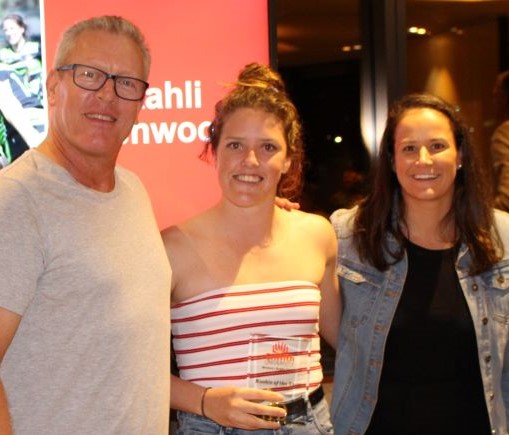
The Leadership Award was presented to team captain and Bachelor of Public Relations and Communication student Kiri Lingman (above), while Bachelor of Education student Kahli Henwood, who burst on to the sevens scene this year, received the Rookie of the Year Award (below).
“An award named after Shannon Parry sets the standard very high for any recipient and Charlotte certainly reached those heights with some magnificent performances during the series,” Director of the Griffith Sports College, Duncan Free OAM, said.
“Laura’s commitment both to her studies and her sporting endeavours is remarkable. She maintained the highest of standards on both fronts throughout the series. She is a worthy recipient of the first Griffith Sports College Award.”
Duncan Free OAM paid tribute to the work of players and coaching staff in taking out a highly-competitive national title.
“They have been great ambassadors not only for Griffith University but also for the sport of rugby sevens.”
Humanities graduates possess a unique set of transferable skills, are capable of working across disciplines and adept at finding solutions to complex problems.
“A humanities degree has two great values. First, it gives students a deeper understanding of society, culture and people and develops the skills needed to thrive in an ever-changing global environment,’’ says Professor James Carson, Head of Griffith University’s School of Humanities, Languages and Social Science.
“But it is also the perfect degree for the knowledge economy that will define future employment because a humanities degree delivers those core skills that creative and entrepreneurial employers are looking for: the ability to find and synthesize information, the ability to create new knowledge, to think critically and creatively and to communicate new knowledge effectively.”
Indeed, a new report by Deloitte Access Economics about the value of humanities echoes this sentiment.
It identifies more than 30 technical skills that may be acquired in a humanities degree including “quantitative analysis skills, policy development, software use and foreign language skills. Precisely because of their diversity, and not being common to all degrees, these skills can be difficult to neatly summarise but are nevertheless highly valued by employers.”
Griffith’s suite of humanities degrees cover a diverse range of areas. Students can complement their professional interests with study in sociology, security studies, politics, international and literary studies, creative writing, Islam/West relations, Indigenous studies, languages and history.
“What you’ll get from studying humanities is knowledge that will serve for the rest of your life and what we really need for a healthy, functioning democracy in Australia is informed citizens, says lecturer Associate Professor Halim Rane.
“This is really the graduate of the future, someone who is informed, who is ready to be able to occupy a position where they make a meaningful, constructive contribution.”
A new study of250,000 year-oldNeanderthal teeth has revealed the oldest exposure to lead and the first natural weaning from breastfeeding in a fossil hominin (humans and their close ancestors and relatives).
Thenew study published today inScience Advancesreportsa major breakthroughin the reconstruction of ancient climates – a significant factor in human evolution, as temperature and precipitation cycles influenced the landscapes and food resources our ancestors relied on.
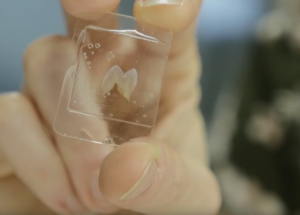
Thin sections of teethfromtwo Neanderthals and one modern human(5000 years ago)from a French archaeological sitewereimaged with polarized light microscopy to document each day of their childhood growth.
Teeth have biological rhythms akin to tree rings, but on a much finer scale, leading to numerous applications detailed in Smith’s new popular science book from MIT Press,The Tales Teeth Tell.
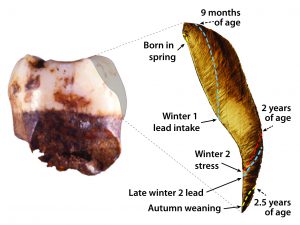
“This allowed us to relate their development to ancient seasons, revealing that one Neanderthal was born in the spring, and that both Neanderthal children were more likely to be sick during colder periods,” Professor Smith said.
“At the time they grew up, 250,000 years ago, this region of southeast France was much more seasonal than it is today.”
The teethsections also traveled to theIcahn School of Medicine at Mount Sinai, New York, where experts in environmental health mapped the concentrations of metal in the teeth, including barium, a marker of milk consumption.
The team was surprised to discover that the two Neanderthal children either ingested or inhaled lead during their childhood, representing the oldest documented lead exposure in any hominin (humans and their close ancestors and relatives).
This occurred multiple times during the cooler seasons, potentially happening in caves as underground lead sources have been found within 25km of the archaeological site.
The tiny amount of barium also showed that one Neanderthal appears to have breastfed for 2.5 years, weaning in the fall. This individual survivedinfancy butwas unlikely to have reached adulthood.
ProfessorSmith and her team are keen to explore the childhoods of other hominins using this novel paleobiological approach, as many questions remain about why humans survived while our many evolutionary cousins, including the Neanderthals, were not so lucky.
Professor Smith will sign copies of her book and share more details of her work atQueensland Museum as part of theAfter Darksessions in her talk ‘What Primates Teach Us About Being Human’, on November 16.
The official book launch forThe Tales Teeth Tellwill be held at The Ship Inn, Southbank, on November 21 as part of Griffith’sImpact lecture series.
The Year 4 teacher and leader of the PPP robotics and dance clubs, has set up school partnerships with Google, IBM, Cancer Council Queensland, BOP Industries (hologram), Suncayr and Technology One. This year she was awarded a RMIT scholarship to study Apple Swift Programming.
A former professional dancer, it was while she was living in Japan and teaching English that Natalie found she really enjoyed being with children.
“I thought this is something I can do when it’s time to hang up my dancing shoes, and because I knew Griffith had a great reputation for teaching education returned to Australia to study,’’ she says.
When she first began teaching Natalie wanted to inspire in her students a love of dance and the arts, but soon became passionate about science and technology.
“I volunteered to be one of the school’s first iPad teachers and it showed me the possibilities of integrating technology into teaching. So I learnt to code and to do as much as I could with the kids to engage them in learning.
“I was also inspired during my student practical placement by teachers who were passionate about science. The lecturers and tutors were so supportive and engaging.”
Natalie encouraged five of her students to enter the Tech Girls Movement Search for the Next Tech Girl Superherocompetition, which they subsequently won at a state and national level before being named as one of 20 global semi-finalists for Global Technovation.
“Two years ago, when I came across the Tech Girl Superhero competition I thought it would be really valuable for my students,’’ she says.
“We were the first state school to win and it opened a lot of little girls’ eyes to the possibilities of being involved in science and technology.”
Tech Girls Club
From this Natalie started a Tech Girls Club and currently about 30 girls in Years 4 to 6 attend each Thursday for one hour to learn about drones, robots, blended reality, stop motion and basically anything related to science and technology.
“For children to contribute as digital citizens in the workforce, they need to be digitally literate and fluent if they are going to succeed.
“Winning the QCT award is so special and rewarding. You don’t teach for awards but because you love what you do and to be recognised by your peers is humbling.”
The Queensland College of Teachers Excellence in Teaching Awards are the only state government awards that recognise teachers from all schooling sectors state-wide. The awards were announced on October 25, on the eve of World Teachers’ Day celebrations in Australia.
Academics and esteemed industry experts will address one of Australia’s enduring social crises at the 2018 Affordable Housing Symposium to be held in the CBD this month.
The event is jointly hosted by Griffith University, the National Affordable Housing Consortium (NAHC) and Sustainable Living Infrastructure Consortium (SLIC), with support from the Queensland Government.
Griffith Business School researchers Professor Eduardo Roca, Associate Professor Richard Chung and Dr Benjamin Liu convened this year’s program, which focuses on delivering and managing a Build-to-Rent market within a whole-of-life approach, alongside NAHC Chairman and SLIC CEO Professor George Earl and NAHC CEO Mike Myers.
“In Australian society, housing affordability has become a major social, economic and political challenge, and one of increasing importance and urgency,” Professor Roca said.
“In conjunction with our friends at the NAHC and SLIC, we expect to engage in robust discussion with thought leaders from across government, businesses and the community to determine how best to deliver a whole-of-life-informed Build-to-Rent market, and what the economic and social impacts of such a market may be.”
Topics to be canvassed at the symposium include government/industry strategies for addressing the nation’s housing crisis (such as the establishment of a Management Investment Trust for Affordable Housing), sustainability, and other economic and social opportunities and barriers that could potentially affect the development of viable affordable housing solutions at a national level.
“This symposium will present a range of high-quality research into a variety of aspects of social and affordable housing,” Professor Roca said.
“It is our hope that we are able to work effectively across industry and governmental lines in order to help the vulnerable people at the core of the country’s housing problem, and provide the nation with workable recommendations and solutions to help put roofs over their heads.”
Joining Professor Roca, Professor Earl, Professor Carmignani and Mr Myers on the symposium’s speakers’ list are Michael Zorbas of the Property Council of Australia, JLL’s Mr David Rees, Griffith academics Professor Mark Brimbleand Associate Professor Leigh Shutter, UNSW Professor Hal Pawson, Port Phillip Council member Gary Spivak, and industry representatives Nils Miller (Investec), Ryan Rathborne (Clean Energy Finance Corp) and Chris Menz (Commercial & General).
Griffith has an extensive history of research in the field, being the home of the Social and Affordable Housing Program, a group of more than 25 academics from a range of Australian and international universities, colleges, SLIC and the NAHC.
The program provides a platform to bring together academics, researchers, practitioners and policy-makers to carry out research and exchange ideas to develop innovative solutions to the financing of social and affordable housing.
TheQueensland College of Art Graduate Exhibitions are a must-see forart lovers on the lookout for the “next big thing”.
The Queensland College of Art will open its doors to the public this week for a series of exhibitions featuring the work of its graduating students.
The annual QCA Showcase will take over the South Bank and Gold Coast campuses, showcasing the work of final-year students from Fine Art, Photography, Design and Contemporary Australian Indigenous Art.
Many of the works on display will be on sale, helping kick-start the careers of emerging artists.
Homegrown talent
Director of the QCA, Professor Derrick Cherrie (pictured right), said the exhibitions were an opportunity for the community to see the talent being nurtured in their hometown.
“The QCA is Australia’s oldest and one of the country’s largest art academies and has produced some of Australia’s leading contemporary artists,” he said.
“The showcase exhibitions are an ideal way to see the many diverse and exciting art forms the QCA has on offer and the extraordinary work being made here.”
Events across the QCA Showcase will include industry previews, student awards, panel discussions, exhibition displays and more.
Finding your passion
Graduating Bachelor of Fine Artstudent Kierra-Jay Power is exhibiting ‘Anatomise’, a series of 3D printed jewellery pieces made based on anatomical models and cast in sterling silver.
“I came to the QCA intent on studying art theory, but you get addicted to making things, and I fell in love with jewellery design,” she said.
“I’ve had fantastic mentors and been able to access all kind of cutting-edge equipment and materials.”
A powerful journey
Bachelor of Photography photojournalism student Shaun Singleton is exhibiting a series of photographs that tackle issues of ageism in the workplace – an issue close to his heart.
“I’m in my late 50s and came to study at the QCA after being retrenched,” he said.
“The photos I’m exhibiting are designed to create an emotional response in the viewer and make them think about how it feels to be without employment or purpose – a broken dinghy, disused industrial buildings.”
Shaun said his studies at the QCA had been life changing.
“My studies here have made me a different person – I haven’t just learnt a lot about photography, my whole world view has changed,” he said.
“As part of the degree I’ve travelled to Goa and Nepal and worked with internationally renowned photographers – it’s been wonderful.”
Designing the future
Design student Jaeda Abraham is exhibiting a collection of stunning workfrom her portfolio, from tote bags and button badges to art prints and activity books.
The graphic designer and illustrator works across a range of mediums, from digital design to typography, screen printing and hand lettering.
“I believe creativity is everywhere and for everyone,” she said.
“My time at the QCA has given me amazing freedom to experiment, and I feel like I’ve had a chance to taste everything I wanted to study.”
The QCA Graduate Exhibitions will be held from 31 October – details of individual shows are available online.
You can follow the QCA’s talented graduates on Instagram.

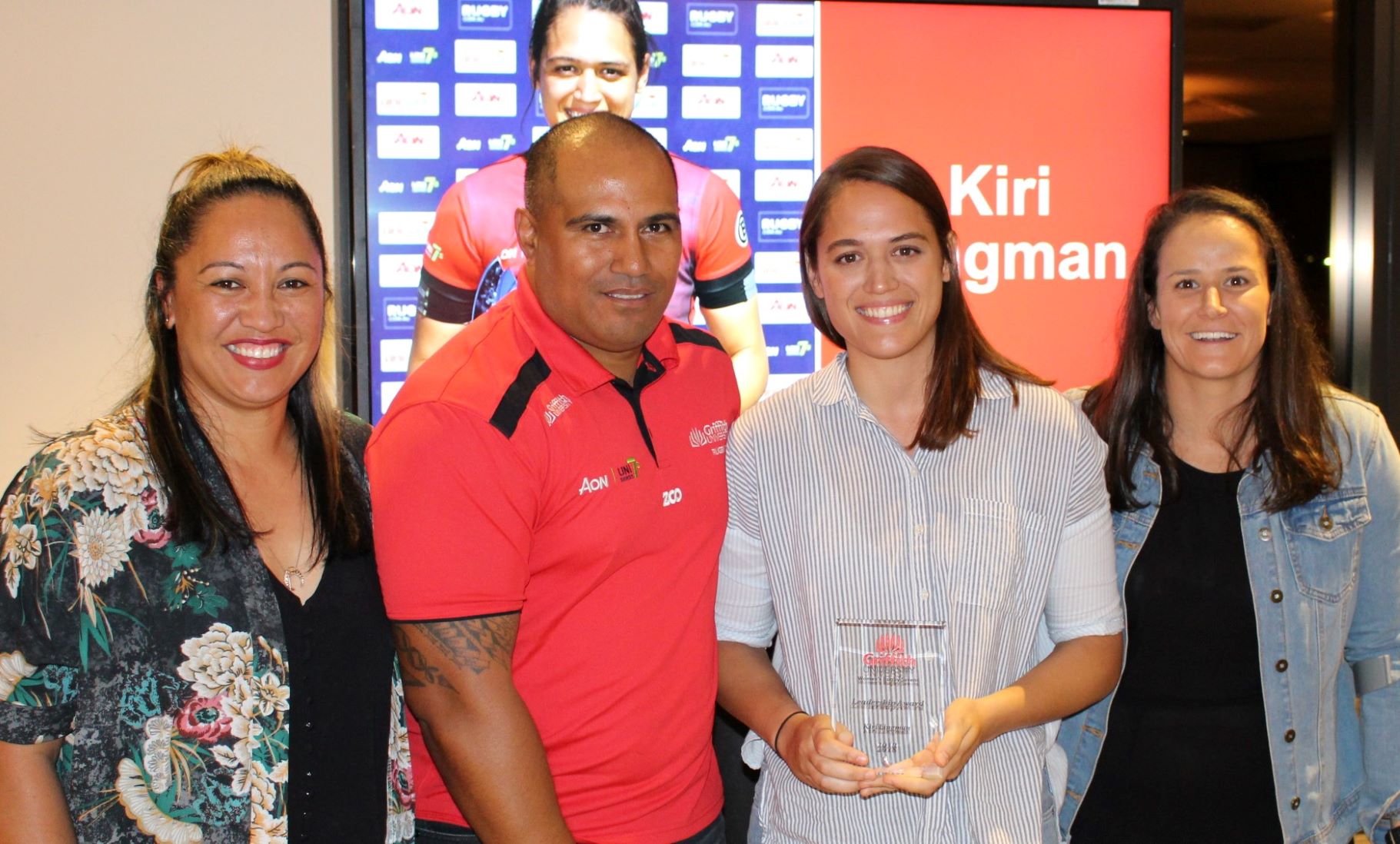 The Leadership Award was presented to team captain and Bachelor of Public Relations and Communication student Kiri Lingman (above), while Bachelor of Education student Kahli Henwood, who burst on to the sevens scene this year, received the Rookie of the Year Award (below).
 “An award named after Shannon Parry sets the standard very high for any recipient and Charlotte certainly reached those heights with some magnificent performances during the series,” Director of the Griffith Sports College, Duncan Free OAM, said.