Four teams of expert scientists from the Institute for Glycomics are targeting SARS-CoV-2, the virus that causes COVID-19, to discover new vaccines and drugs to prevent or cure the disease.
The teams are led by the Institute’s group leaders Professor Mark von Itzstein AO, Professor Michael Good AO, Professor Michael Jennings, and Professor Johnson Mak, all world-renowned research scientists in their various fields of infectious diseases research.
“There is an urgent need for drugs to prevent or treat COVID-19 and a vaccine to prevent this disease,” said Professor von Itzstein. “However, acquiring the necessary funding to aid our research is of paramount importance.”
“We are extremely grateful to Bendigo Bank Paradise Point Community Bank Branch for this generous donation towards our research.
“Philanthropic donations, Government and community support enable us to fast track our research efforts, utilising state-of-the art equipment and an expert team of some of the greatest scientific minds in the field of infectious diseases.”
The vital funding has enabled the acquisition of an Avanti J-15R centrifuge, a new piece of equipment housed within the Institute’s Physical Containment Level 3 Facility. The high-speed refrigerated centrifuge is used to separate virus from culture media, and this particular model has the added features of bio-containment lids for working with highly infectious pathogens such as SARS-CoV-2.
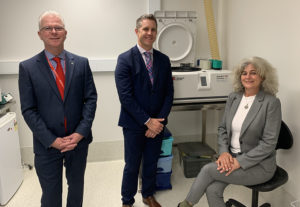
Professor Mark von Itzstein AO (Institute for Glycomics), Mr Tony Jensen (Bendigo Bank) and Ms Cassandra Hugonnet (Bendigo Bank) pictured with the Avanti J-15R centrifuge
Bendigo Bank Paradise Point Community Bank Branch have contributed significantly to the Institute for Glycomics since the relationship began in 2014.
Their annual contributions have helped pave the way for the world’s future scientists through essential scholarship programs. Through their sponsorship of the Institute’s annual ‘Bendigo Bank Paradise Point Glycomics Summer Scholarship program’, multiple undergraduate students have been given the opportunity to further their research studies under the expert guidance of world-renowned research leaders at the Institute for Glycomics.
In previous years, their sponsorship enabled the purchase of a Tecan D300e Digital Dispenser, an important piece of research equipment which is shared across multiple biology laboratories and benefits several of the Institute’s research groups.
“These are challenging times for everyone. We are all facing a common enemy – COVID-19 — and our only hope, to be able to return to a sense of normality in the coming months, is research. The discovery and development of new vaccines and drugs to prevent or cure COVID-19,” said Tony Jensen, Senior Manager, Paradise Point Community Bank Branch of Bendigo Bank.
“Researchers at the Institute for Glycomics are actively pursuing this mission, but they need our support. We are so pleased that we’re able to contribute towards their fight against this insidious disease.”
The Institute for Glycomics has set a fundraising target of $1 million to make ground-breaking advances in their COVID-19 research. The funds would allow them to accelerate their drug and vaccine discovery programs. Their approach to drug discovery is to evaluate a library of over 3,000 existing drugs in novel screens, which is not being done anywhere else in Australia.
“The Institute for Glycomics is profoundly grateful to Bendigo Bank Paradise Point Community Bank Branch for their ongoing and vital support. This is a partnership that is helping us shape the world’s future scientists, and one that is positively influencing our critical fight against some of the world’s most devastating diseases, such as COVID-19,” said Professor von Itzstein.
To stand with us and join the fight against COVID-19 in supporting the vital research being done at the Institute for Glycomics, click here.
Your donation could quite literally save millions of lives.
Griffith Asia Institute (GAI) researchers have released a tracker, organising publicly available data, of financial aid and assistance given to Pacific island countries to fight COVID-19.
The aid tracker is the first major research project from the newly formed Pacific Hub team within GAI, consolidating expertise across Griffith to provide high-quality analysis, commentary and research for the Pacific region.
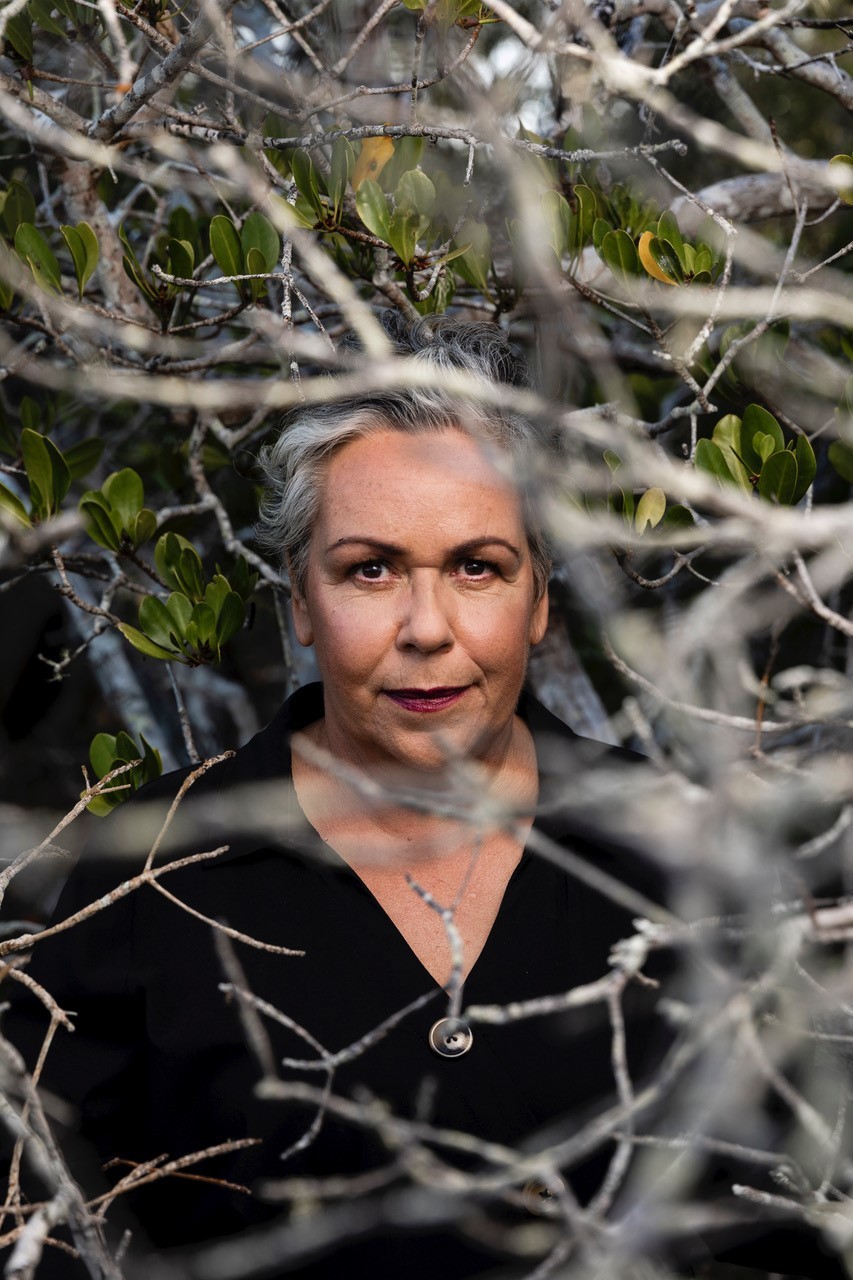
Pacific Hub Program Leader: Dr Tess Newton Cain
Pacific Hub program leader Dr Tess Newton Cain says the tracker emerged out of a need to understand the scope of aid flowing to Pacific island countries.
“It became quite clear that aid and assistance was going to be a significant part of how those countries deal with the impacts of COVID-19, whether that’s health impacts or what looks to be a more pressing need, economic impacts.
“This is a beneficial resource for our own team but also other researchers, policymakers and the media. We’ve drawn together disparate reports in various sources and put them together for the first time in one place,” she said.
Dr Newton Cain said the data revealed how the pandemic’s widespread economic impact also affected donors making it quite different from other humanitarian events, like natural disasters, Pacific Island countries deal with.
“The tracker provides a record of this particular point in time in which the way things normally happened, couldn’t happen any more and how they have been done differently.”
“The tracker provides a record of this particular point in time in which the way things normally happened, couldn’t happen any more and how they have been done differently. As researchers were getting a sense of the quantum and modality of aid to this part of the world.”
Pacific island countries struggle with coordinating aid
Pacific Hub researchers will also use the COVID-19 aid tracker to evaluate how aid is being used and whether there are sufficient monitoring and accountability measures in place.
“If you look at the Solomon Islands, they’ve received money, loans and resources from all over the place. There’s already concern within the bureaucracy about how they can manage the coordination of this complex supply chain.
“It can be quite a challenge for small bureaucracies to manage the transaction costs associated with multilateral finances which feeds into effectiveness because if you don’t have enough people or resources to manage the money, it makes it difficult to make good use of it,” said Dr Newton Cain.
While active cases of COVID-19 are low in the Pacific region, the loss of tourist revenue from closed borders is creating ongoing pressure to restart the economy in many countries.
“The support will move more to economic support and supporting livelihoods because things are becoming quite grim very quickly. We’ve seen some partners say that aid can be pivoted to support government stimulus packages,” said Dr Newton Cain.
Hockeyroo and 2019 Bachelor of Sport Development graduate Rosie Malone will be one of the star attractions at Griffith Sports College’s elite athlete webinar event.
Rosie is currently on the Gold Coast after COVID forced all Hockeyroos players to down sticks and head home from the national performance centre in Perth, with news the Tokyo Olympics would be pushed back 12 months.
“I am someone who has high expectations of myself not only in sport but also my career, and the sports college made sure I had the opportunity to achieve in both areas,” she said.
“From liaising with my professors and course conveners about scheduling external exams if I was overseas or interstate playing, to rearranging my timetable so that I could attend both my classes and training, the sports college was there to help me the entire way through.”
Olympic gold medallist and manager of Griffith Sports College, Naomi McCarthy
Griffith Sports College Manager and Olympic Gold Medallist Naomi McCarthy OAM said Rosie’s experiences balancing study and sporting commitments is something potential students are keen to hear about.
“Rosie Malone came to Griffith as a developing, emerging athlete, just missed out on Commonwealth Games and since then she’s been capped more than 50 times for the Hockeyroos,” McCarthy said.
“She’s a main stay of the team and would have been high up the list to be selected for Tokyo this year.
“She studied on campus for a number of years and then had to move to Perth because that’s where the training centre is for the Hockeyroos and the Sports College helped her to finish her degree over there online.
“Rosie is a really great example of what a lot of these student are aspiring to. They’re just starting on this sporting pathway and balancing study around their goals.”
Zac Stubblety-Cook in action
More than 150 high school students and others have registered for the Sports College’s webinar, which will feature a Q and A session with Rosie and current Bachelor of Psychology/Bachelor of Business student, 2018 Commonwealth Games swimmer Zac Stubblety-Cook.
Stubblety-Cook was awarded Academic Athlete of the Year at Griffith’s 2019 Blues Awards for Sporting Excellence, balancing training for and competing in the World Swimming Championships while studying dual degrees and maintaining an extremely high GPA over the year.
Walking the talk
Griffith Sports College is also the only tertiary agency with two Olympic Gold medallists in key positions and both McCarthy and College Director Duncan Free OAM will also speak at the webinar.
“I’ve been speaking to a lot of athletes in the last 6-8 weeks that are interstate but are looking to get support from the Sports college through online study,” McCarthy said.
“The Business degree is a really popular degree for athletes and its fully online from next year.
“I think that makes a massive difference because it gives people living outside SE Queensland the flexibility to study even if they’re travelling.”
Emma McKeon, Bachelor of Public Health and Health Promotion student, 2016 Rio Olympic Gold, Silver and Bronze medallist and 2018 Gold Coast Commonwealth Games Gold and Bronze medallist
“Rosie sat a lot of exams in Perth while she was at the training centre over there. I’ve sent exams overseas with the swim team for Emma McKeon to sit the week before world champs, that sort of thing happens a lot.”
“The difference is that an elite athlete can finish one or two courses in that trimester, compared to having to sit that whole trimester out.”
Rosie admits she might not have managed her full-time study load and sporting demands without the Sports College.
“I think the number of elite athletes choosing to study at Griffith University really demonstrates the amazing reputation the sports college has,” Rosie said.
“The relationship didn’t end when I graduated either. They’ve stayed in touch; letting me know of opportunities that come up, keeping up to date with what I’m competing in and helping when I need them.
“I am so grateful for their support both in my studies and my sport, and I couldn’t think of a better group of experienced, passionate people to help athletes tackle the study/compete journey.”
Back on the coast during lockdown Rosie recently shared her training schedule in this video.
Griffith is the number one University in Australia for elite athlete support, with almost 600 elite athletes studying at the University.
A panel of international experts brought together by Griffith University has warned there will be dire health consequences if action is not taken against climate change.
From Brisbane and Ballarat to Malaysia, Iran and everywhere in between, a global audience switched on to hear from academics speaking at the Centre for Environment and Population Health’s (CEPH) Future-Proofing Health Care through Climate Action web event.
Deputy Vice Chancellor (Research) Professor Mario Pinto.
“Climate change has become a serious concern around the world in the age of uncertainty and pandemic,” Professor Pinto said.
“As the climate changes, health security issues including bush fires and droughts, floods and cyclones, emerging infectious diseases and pandemics, and food and water security all increase the scale and spread of human suffering.
“Without improving capacity and becoming better prepared, health systems worldwide will struggle to cope.
“This requires urgent climate action to mitigate, better prepare and manage the risks.
“The immense challenges ahead make working together in the health care sector across states and regions more important than ever.”
The virtual event had 250 registrants and was co-hosted by Griffith University, International Network of Health-Promoting Hospitals and Health Services, and international agency, Healthcare without Harm.
The conference focused on links between climate change and COVID-19, and noted that the health sector in many parts of the world have been stretched beyond their limits to cope with the pandemic.
“We want to put a spotlight on the climate action that hospitals in the region can implement to future-proof themselves against coming climate-related disasters,” CEPH Director Professor Cordia Chu said.
“Our partners and Griffith hope to kick-start healthcare climate action in Southeast Asia and the Pacific region.”
Centre for Environment and Population Health Director Professor Cordia Chu.
Healthcare Without Harm Southeast Asia Executive Director Ramon San Pascual said climate impacts were already taking hold.
“We in healthcare need to rethink our role in combating climate change, and we need to do better,” he said.
Dr Ming-Nan Lin, from the International Network of Health Promoting Hospital and Health Services, agreed.
“Climate threats jeopardise the essential ingredients for good health. When we incorporate climate solutions into our clinical practice we simultaneously address the concerns of our patients, staff and community,” Dr Lin said.
Possible solutions to future-proofing healthcare
Panelist Filipino physician and PH Lab Chief Planetary Doctor Renzo Guinto said climate change leads to a multitude of adverse health conditions, from heat related illnesses and respiratory illness from worsened air quality, to mosquito borne diseases during flooding and malnutrition, and that 250,000 additional deaths annually from 2030 onward would be attributed worldwide to climate change.
“The healthcare capacity can be increased, but the earth’s capacity is non-negotiable — that you cannot change,” Dr Guinto said.
“We are the ones that need to adjust and make the changes so our ecological footprint gets flattened.”
“Because if not — and now there is a lot of talk about, ‘When is the second wave coming? When’s the third wave of COVID-19?’ — there is a much bigger and much scarier wave that is about to happen that we can anticipate if climate action is delayed.”
Dr Renzo Guinto
Dr Guinto suggested a shift towards a circular — or “doughnut” — economy could solve part of the problem.
“We love using the term ‘new normal’ — there is really nothing normal in the pre-pandemic state that we came from, and really what we need to start talking about is how can we renovate the political economy of planetary health that creates climate change, but also makes us more susceptible to COVID-19 and other infections?” he said.
“How can we shift from this limitless growth model of the economy to an economy that meets peoples needs but does not violate the planetary boundaries? That’s when we should look at the doughnut economy model.”
Dr Nguyen Huong.
Professor Chu said one example might lie in strongly integrating climate change into key national plans.
For example, Griffith’s long-standing partner Dr Nguyen Huong, from Ministry of Health Vietnam, presented her country’s national climate change adaptation plan.
“Their climate action plan is really comprehensive and impressive, and sets out a plan for a more sustainable future,” Professor Chu said.
“Vietnam is leading the way in the Southeast Asian and Pacific regions.”
Other experts in the event included Malaysia’s Tzu Chi Dialysis Centre sustainability coordinator Teoh Bee Ling and Asian Development Bank Health Infrastructure Consultant Frank Rammelo.
Each Saturday morning, hundreds of art lovers from around the globe have been tuning into drawing workshops streamed live from Dr Platz’s home studio in Brisbane.
The workshops are based on a series of lectures Dr Platz delivers to second-year fine art students at the Queensland College of Art (QCA).
The classes use hidden treasures from QAGOMA’s collection as inspiration, with lessons themed around everything from ‘bad’ drawing to mirror self-portraits and stop-motion animation. In each session Dr Platz also shares tips or a recipe for creating drawing materials at home.
The fine art lecturer said he was thrilled with the global response to the online classes.
“I’ve done workshops at QAGOMA where it’s been standing room only, but this is fantastic,” Dr Platz said.
“We had more than 900 people register for the first workshop.
“As well as people from all over Australia, we had people tuning in from the US, Canada, Hong Kong, New Zealand.
“I was trying to engage with the comments and feedback during the session, but I couldn’t keep up!
“My instagram was going crazy with people tagging me in and sharing their work.”
The Queensland Art Gallery’s online program mirrors the QCA’s pivot to online learning and virtual exhibitions.
The QCA’s social media channels have provided a showcase for art created by students during the coronavirus pandemic, under the hashtag #QCAatHome.
The QCA Galleries have also run a series of online exhibitions featuring work created by students and alumni during lockdown.
Dr Platz said it was inspiring to see students adapt so well to online learning and embrace different ways of showcasing their work.
More than just art students are reaping the rewards, with thousands of people around the world turning to online workshops as a creative outlet.
“It seems to be the perfect way for people to flex their creative muscles during COVID,” Dr Platz said.
“It’s amazing to see people come together from all over the world to make art together.
“I try to plan each workshop so that everyone from complete novices to experienced artists get something out of it.”
The next workshop takes place at 10:30am on Saturday 20 June. For more information, visit QAGOMA.
Griffith University has been recognised with Bronze Tier status in the Australian Workplace Equality Index (AWEI) at the 2020 Australian LGBTQ Inclusion Awards, which were held online.
The University was also one of only two Queensland universities to receive acknowledgement at the awards ceremony and one of ten universities nationally.
Griffith was one of the top three organisations recognised within the Bronze Tier, which also included workplaces like The Star Entertainment Group and a range of federal government agencies including the Department of Health, Australian Federal Police and the Australian Tax Office.
Griffith Vice Chancellor and President, Professor Carolyn Evans
President and Vice Chancellor Professor Carolyn Evans was delighted to see Griffith’s efforts recognised at the awards.
Griffith places high value on embracing diversity, being inclusive and enabling a culture that ensures that all staff and students are provided with a safe and supportive environment,” Professor Evans said.
The 2020 Australian LGBTQ Inclusion Awards is the country’s leading annual celebration of LGBTQ workplace inclusion and hosted by ACON’s Pride Inclusion Programs, the national not-for-profit LGBTQ inclusion support program for employers, sporting organisations and service providers.
ACON’s Dawn Hough said 2020 marked an important milestone for the AWEI, being it’s tenth anniversary.
“Once again, we have record numbers of employers across all sectors and states participating in the indices,” she said.
Marnie King Photo: Bradley Cummings
HR Lead for equity, diversity and inclusion at Griffith, Marnie King, said Bronze Tier status was fantastic recognition of the efforts of current and past Pride Committee members.
“Recent achievements have included launching guidelines for supporting gender affirmation/transitioning in the workplace, installing an all-gender toilet in the new Engineering, Technology and Aviation Building on Nathan Campus, improving the information and communication on LGBTIQ+ inclusion on our website and launching a LGBTIQ+ video featuring the Vice Chancellor,” Marnie said.
“We also celebrate days of significance by raising the rainbow flag on all campuses, ensure all Griffith forms recognise the diversity of gender, provide workshops on LGBTIQ+ inclusion and have made improvements in pre-departure guidance for incoming and outgoing students.”
Chair of Griffith’s Pride Committee, Maddison Harrington said the AWEI result formally recognised that Griffith’s founding values of inclusivity and equality remain at the forefront of its actions, even in 2020.
“It provides recognition for all the Griffith staff working tirelessly behind the scenes pushing for greater diversity and inclusion at the University, to make it a safe place to bring your whole self to work or study,” Maddison said.
The AWEI is a rigorous and evidence-based benchmarking tool that annually assesses workplaces in the progress and impact of LGBTQ inclusion initiatives.
2020 marks the first time Griffith has been recognised with Tier status.
Australian research into the use of convalescent plasma in clinical trials for the prevention and treatment of COVID-19 should be supported according to a leading immunologist from Griffith University’s Institute for Glycomics.
Professor Michael Good AO, a member of the National COVID-19 Health and Research Advisory Committee and chair of the working group on convalescent plasma therapy, said the working group’s conclusions included the active support of research into trials of convalescent plasma for treatment and prophylaxis.
“Convalescent plasma therapy involves the transfusion of blood plasma collected from patients recovered from COVID-19. As they will have produced antibodies against the disease, the aim is to provide passive immunity in infected patients, as opposed to active immunity in patients that would be induced by a vaccine.”
Convalescent plasma is not a new therapy and has been used and trialled in influenza, SARS-CoV-1 and Ebola infection, as well as in many established diseases such as diphtheria and tetanus.
Professor Good said while only a few small studies had been published in China and Korea on the use of convalescent plasma to treat COVID-19, they were not controlled trials so their efficacy could not be validated.
The working group also recommended that Australian research into the use of hyperimmune globulins (antibodies enriched from plasma) as a potential treatment for COVID-19 should be supported as well as treatment using monoclonal antibodies.
“Monoclonal antibodies are made by identicalimmune cells that are all clones of a unique parent cell. Major benefits of them as a treatment is that their production is scalable and uniform.
“Biotechnology affords the development of monoclonal antibodies of very high affinity for the virus without the need to collect plasma from donors who have previously been exposed to SARS-CoV-2.”
The National COVID-19 Health and Research Advisory Committee provides evidence-based advice on Australia’s health response to the COVID-19 pandemic with the aim of preventing new cases, optimising the treatment of current cases and assisting in optimising overall health system readiness to deal with the pandemic.
Professor Good AO heads the Laboratory of Vaccines for the Developing World, Institute for Glycomics at Griffith University. He is a past Chair of the NHMRC Council, a past Director of the Queensland Institute of Medical Research and a former President of the Association of Australian Medical Research Institutes.
Three Griffith University scholars are shining a light on the state’s untold stories after receiving prestigious fellowships at the State Library of Queensland.
The State Library’s Queensland Memory Awards have awarded a total of $60,000 to researchers to provide new insight into the library’s archival collections and further knowledge about the state’s history.
Honouring female guardians of the Great Barrier Reef
The $20,000 John Oxley Library Fellowship was awarded to Griffith University Associate Professor Kerrie Foxwell-Norton and Monash University’s Dr Deb Anderson for their joint project, The Women of the Great Barrier Reef: The Untold Stories of Environmental Conservation in Queensland.
The project will highlight the significant role women have played in the conservation of the Great Barrier Reef in Queensland.
Associate Professor Foxwell-Norton was inspired after stumbling across an archival newspaper story about 19-year-old Terri Ridgway, who left her secretarial job in Brisbane in the 1960s to live on a remote island off the North Queensland coast, where she documented local marine species.
“This fellowship is about investigating these stories of the passionate, fierce, intelligent women who have been influential and who have cared for the reef,” she said.
“It really does matter how we remember these important nature superstars in Australia.
“We are so excited to discover what stories we will find and to tell those stories of women and their contribution to Queensland.”
The pair hope to produce a series of oral histories, a podcast and book.
Associate Professor Foxwell-Norton said it was important to elevate and amplify women’s role in the conservation movement as the world faced unprecedented ecological and climate crises.
Revealing Queensland’s forgotten Indigenous history
The fellowship is named for political activist and author Monica Clare, who was the first Aboriginal woman to publish a novel. It is designed to explore Queensland’s Aboriginal and Torres Strait Islander cultures using the State Library’s collections.
Dr Foley, who will join the QCA’s fine art faculty in August, intends to use the fellowship to explore the Queensland’s first experiment in racial segregation.
She will research the stories of 52 Badtjala people taken from Maryborough to Fraser Island’s Bogimbah Creek Mission in the late 1800s and hopes to publish a series of essays and create a new photographic series, The Magna Carta Tree.
“I feel very honoured to be the first recipient of this fellowship, and it’s important acknowledgement that my research is important and valued,” she said.
“There is a need to bring this hidden history to the fore – the Badtjala people are missing from this Queensland narrative.”
Ms McCoy will use the State Library’s collections to research Queensland-born composer Letty Katts, the first Australian to have an original song in the pop hit parade in the 1950s.
“Her music provided a distinctly Australian voice to a scene dominated by American culture,” Ms McCoy said.
“This project aims to reclaim her position as a successful creator of popular music in an era when female composers were rare.
“Letty often said that musicians should be heard and not seen, but this belies the determination and tenacity she showed in her dealings with the predominantly male music industry.”
School students are making career decisions based on biased and outdated views of vocational and education training (VET) according to a Griffith University study.
“We have over 50% of young people who do not complete their apprenticeship which is a huge waste of time and effort. We also know that young women largely complete their hairdressing apprenticeships and then leave in droves.
“Education is longer and more ubiquitous. It’s for these reasons that young people need personalised, impartial career advice that helps them make the right decision.”
He said one of the study’s major findings was how influential career advisors elevated professional aspirations over VET, based on their own limited experiences and narrowly defined views.
School-age students ranked parents as the most influential source on post-school decision-making followed by school teachers.But when parents and teachers were surveyed, they both ranked the advice from teachers much lower in order of influence.
Professor Billett said teachers might not realise the impact that they have and assume decisions are being made with advice from guidance counsellors.
“Students spend very short periods with career guidance counsellors, but the things said all the time in classrooms reinforce societal views about aspirations. For instance, if you don’t do your math well, you’ll end up working in a factory.”
“Students spend very short periods with career guidance counsellors, but the things said all the time in classrooms reinforce societal views about aspirations. For instance, if you don’t do your math well, you’ll end up working in a factory.”
He said teachers interviewed often admitted to their limited knowledge of VET, but parents were often equally as ill-informed and less objective.
“It’s a very difficult situation, parents want to support their child to aspire to be the best. But the reality of pursuing some careers is very difficult and may not be suited to their capabilities and their interests.
“That’s why I think impartiality is important and exposing young people to a whole range of career options is important.”
A research bulletin summarising the project’s findings highlights four major areas of action to improve the status of VET, including specific strategies for schools, governments, VET institutions and the need for a public education campaign.
“Across Australia we need to enhance the status of jobs that VET serves and implement practical strategies to engage young people,” Professor Billett said.
My new book, Indigenous Courts, Culture and Partner Violence, published by Palgrave Macmillan in May 2019, considers what aspects of the sentencing process are most important in influencing a change in attitude and behaviour of Indigenous[1] offenders who repeatedly engage in abusive behaviour towards their partner, and what types of justice processes better meet the relationship, rehabilitative and safety needs of Indigenous partner violence offenders and their victims. These are not easy questions to answer and the findings presented in the book are the product of five years of research on the topic.
Indigenous sentencing courts have been in operation in Australia since 1999, the first having been established by a magistrate in South Australia who sought to improve court communication and understanding, and trust in the criminal justice system for Indigenous people (Daly and Marchetti, 2012). Some courts are under threat due to cuts in government funding and penal populism which pushes governments to support ‘tough on crime’ policies that result in more offenders being on remand or receiving prison sentences as opposed to community-based orders. Getting tougher on crime contradicts the ethos of Indigenous sentencing courts, which target offenders at risk of imprisonment. The focus of the courts is on making the sentencing process more culturally appropriate and sensitive by including Elders and Community Representatives in the discussion that takes place during the sentencing hearing. Community members, magistrates and lawyers involved with the Indigenous sentencing courts have seen what these courts can do and despite cut-backs in government funding in some jurisdiction, have continued their commitment and support of such processes to safeguard the continuance of the courts. Indigenous sentencing courts seem to strike a chord with Indigenous Australians who have been involved with their operation either as Elders, Community Representatives, offenders or victims. They see the courts as empowering their people and communities through giving them a voice and showing them respect.
How Indigenous sentencing courts work in sentencing Indigenous offenders convicted of domestic and family violence offences has not been the focus of evaluations or much of the research (other than my own) that has been conducted of the courts. This book is the first to consider how the transformation of a sentencing process into one that better reflects Indigenous cultural values and knowledges can improve outcomes for both victims and offenders of Indigenous partner violence. One of the most important and original contributions of the book is to map differences in outcomes between victim and offender pairs who stayed together after the sentencing court hearing and those who didn’t. For this comparison, I used data from interviews with 16 victim/offender pairs (32 participants in total), of which 11 were still in a relationship at the time of the interview and a further 14 offenders (whose victim partner or ex-partner was not also interviewed), and 13 victims (whose offending partner or ex-partner was not also interviewed). The findings in this book, however, offer more than an assessment of how sentencing courts can better address Indigenous partner violence offending. In recent times, there has been a greater emphasis on ensuring criminal justice programs are culturally appropriate and inclusive of Indigenous epistemologies, axiologies and ontologies when they are specifically targeting Indigenous offenders or victims of crime. However, when it comes to evaluating the Indigenous-focused programs it appears that little thought is given to how the measures and methods reflect Indigenous-centric values and knowledges. Research or evaluations of even the most thoughtful Indigenous-focused criminal justice programs continue to find that such programs have little or no impact on offending outcomes such as recidivism rates (Beranger et al., 2010), but we need to ask whether such findings are an accurate reflection of program ineffectiveness or the consequence of how the research was carried out. Although my book does not use quantitative statistical analyses of court and police data, it uses in-depth interviews and a pathways to desistance analysis to assess how culture and the criminal justice system can latch or ‘hook’ onto an offender’s internal sense of who they are to encourage Indigenous partner violence offenders to change. This choice of method was considered appropriate because it is able to accommodate the many complex and contributing factors that affect a person’s partner violence offending trajectory.
Like other First Nations people around the world, Australian Indigenous people are more likely to experience higher unemployment, chronic health conditions, and violent victimization, and to have fewer years of formal education. Changing offending behaviour in such circumstances, particularly in regional or remote towns, where access to jobs and services is more limited and where systemic and institutional racism can be more pronounced, is not easy. However, as this research shows, it is not impossible. With the help of Elders and Community Representatives, who act as cultural authority figures in court, Indigenous perpetrators of partner violence, with a readiness to change, can find the support and motivation to either desist from further offending or reduce the severity of their abuse in towns that have Indigenous sentencing courts. The cultural influence of an Indigenous court contrasts to the impersonal and efficiency-driven nature of mainstream courts. Indigenous sentencing courts have only been operating for a short period of time in Australia’s settler-colonial history and most of the courts are not adequately funded if it is acknowledged that to be properly resourced, the courts require culturally appropriate post-sentence support programs to be established. Nevertheless, the Australian Indigenous sentencing courts appear to effect change, even if it is not linear and immediate.
References
Beranger, B., Weatherburn, D., & Moffatt, S. (2010). Reducing Indigenous Contact with the Court System. NSW Bureau of Crime Statistics and Research: Crime and Justice Statistics Bureau Brief, 54, 1-4.
Daly, K. & Marchetti, E. (2012). Innovative Justice Processes: Restorative Justice, Indigenous Justice and Therapeutic Justice. In M. Marmo, W. de Lint & D. Palmer (Eds.), Crime and Justice: A Guide to Criminology (pp. 455-481). Sydney, Australia: Law Book Co.
[1] I use ‘Indigenous’ to refer to Australian Aboriginal and Torres Strait Islander people. I am aware that there is much cultural and language diversity between, not only Aboriginal and Torres Strait Islander people, but also amongst various communities and societies of both groups. If needed, I will make mention of those differences.











 The University was also one of only two Queensland universities to receive acknowledgement at the awards ceremony and one of ten universities nationally.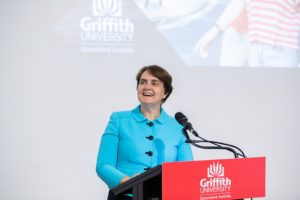

 “We also celebrate days of significance by raising the rainbow flag on all campuses, ensure all Griffith forms recognise the diversity of gender, provide workshops on LGBTIQ+ inclusion and have made improvements in pre-departure guidance for incoming and outgoing students.”