A team of finance students from Griffith Business School has beaten counterparts at UQ, QUT and Bond University to win the Queensland final of the CFA Institute Research Challenge.
All four university teams pitched an investment thesis on AfterPay (APT.AX), regarded as one of Australia’s leading fintech companies offering “Buy-Now-Pay-Later” payment services.
Team captain Navrubina Dhillon, who is in her final year of a dual Bachelor of Commerce / Law, said she was conscious of all those that had gone before them.
“Griffith has a very strong record in this competition and we’ve made the final for this competition five years running now”
“Griffith has a very strong record in this competition and we’ve made the final for this competition five years running now,” she said.
“I don’t think any other Queensland team has that kind of record.
“It was actually a good foundation to start with and it really shows the quality of the education we are receiving.”
Navrubina said she was also proud of the team’s hard work and commitment to the competition and conceded there was little they didn’t know about the stock now.
“You could ask me anything about Afterpay now. When we first got together as a team it was June, so for about three months all we were doing was thinking Afterpay… Afterpay… Afterpay.
“One of the biggest parts of the Challenge is the report you have to submit, which is 10 pages with 20 pages of appendices and each appendices page has about 7-8 graphs on it.
“Collecting all that data and information gives you an holistic view of a company.”
As part of the competition, Rubina and teammates Stuart Farmer(BCom/BSc), Austin Tsang(BCom), Joshua McBrien(BCom)and Fang Cui(MFin) were quizzed about their thesis by three local industry leaders, who were anonymous for equity reasons.

Dr John Fan
Senior Lecturer in Finance within the Department of Accounting, Finance and Economics, Dr John Fan said the judges were particularly impressed by Griffith’s report.
“The judges acknowledged that the quality was above and beyond the industry standard,” Dr Fan said.
“This year’s competition marks our eighth national finals appearance in the last nine years.
“These students have shown extraordinary effort, passion and top-quality work.
“Through this intensive experience over four months they have developed industry-ready skills, learned about teamwork, how to deal with competing deadlines and more importantly, adversities.”
Senior Client Advisor at Morgans Financial and a long time industry advisor to Griffith, Ken Howard, said culture had been a differentiating factor in Griffith’s success in the challenge over many years.
Griffith will now represent the CFA Brisbane Chapter in the new Sub-Regional competition, facing winners from Perth, Melbourne, Sydney and New Zealand.
CFA is a globally-recognized professional designation given by theCFA Institute and stands for Chartered Financial Analyst.
Boasting alumni of more than 55 Olympians, 10 Paralympians and 60 Commonwealth Games athletes, Griffith is on the podium as a leading sport-affiliated university and will acknowledge its proud history with a newly-launched Sporting Hall of Fame.
An initiative of Griffith Sports College, the Hall of Fame (HOF) will showcase the University’s mission to help elite athletes achieve their goals on and off the field, as well as recognising contributions made by those in sport including administration, research and volunteerism.
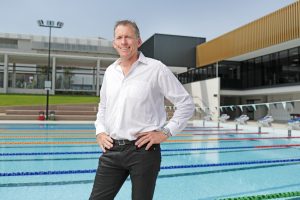
Duncan Free OAM
Director of Griffith Sports College, Duncan Free OAM said the HOF will honour and recognise students and staff who have achieved success and personal accomplishment in their chosen sport.
“We are incredibly proud of all our alumni, current students and staff members whether they are making representative teams, breaking world records or winning premierships for the Lions, Broncos or Reds to name but a few,” Free said.
“We’ve built a solid worldwide reputation for supporting elite athletes on their journey, both as student and athletes, through what can sometimes be a long journey juggling study and on-field performance.”
The criteria, induction process and governance of the Griffith Sporting Hall of Fame will be administered by a Steering Committee chaired by a Senior Leader of Griffith and include a mix of internal and external sporting people and expertise as well as athletes with a disability.
Nominations for the inaugural intake of inductees are open to the public from 16 October and close 6 November and to be nominated, the sportsperson must be a Griffith graduate and be recognised as a superior athlete at the highest level of their sport or have made an exceptional contribution over an extended period of time to their sport at the very high level.
The two categories of Athlete and General inductee include staff and students in all areas of sport including athletic performance, coaches, referees, volunteers, academic/research achievements and more.
Learn more about Griffith’s current and former sporting alumni online.
Griffith University’s political experts foresee the upcoming Queensland election as pivotal on several fronts, not least because it is the first time in any Australian state or federal election that two female candidates are up against each other.

Dr Paul Williams is among the Griffith University academics contributing to election analysis.
However, it is the collision of the complex community health, social and economic issues around the COVID-19 pandemic that some of the University’s leading academics in the field of politics, governance and leadership find so compelling.
Dr Paul Williams, a senior lecturer in politics, journalism and public relations at Griffith University’s School of Humanities, Languages and Social Science, has been watching and studying Queensland elections for 37 years.
He acknowledges the outcome for 2020 this October 31 is even harder to predict than the 2017 election, arguing that in the current climate the polls may not be the most reliable measure of voter intention.
“Looking at it through a COVID lens, the electorate is facing its greatest economic challenge and health challenge since the Great Depression”
“Looking at it through a COVID lens, the electorate is facing its greatest economic challenge and health challenge since the Great Depression,” said Dr Williams.
“But there are also political and social issues at play, as well as the legal implication of whether it’s constitutional to keep borders closed. We’ve never experienced this before in living memory.”
Despite the historic first, Dr Williams doesn’t see female leadership playing any part in the outcome.
“The bipolar system of Australian politics is an adversarial system which some would argue is a masculine trait. Politics is just as combative as it always has been, regardless of the gender of the leadership.”
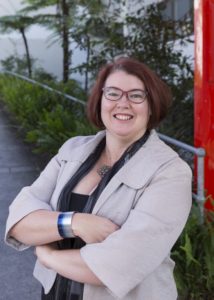
Professor Susan Harris-Rimmer
Professor Susan Harris Rimmer, the director of the Policy Innovation Hub at Griffith Business School, notes that neither Premier Annastacia Palaszczuknor Opposition Leader Deb Frecklington are playing the gender card in the way it may have been in the past.
“They are very different politicians, and I don’t think they have anything in common apart from being women and lawyers,” said Professor Harris Rimmer.
“But it is still an important event in Queensland and Australian history.
“Griffith boasts extensive research on gender and political leadership and it doesn’t affect electability, but there are often issues around internal party support, and we saw that with Deb Frecklington four months out from the election and potentially now with the ECQ.”
Despite this, Professor Harris Rimmer says there is no denying female leaders face unique challenges.
“Female leaders are rare in every walk of life and they’re much more likely to cop abuse than a male candidate,” she said.
“They get a lot more hate online and people talk about them in different ways. I’ve never heard a male politician being called whiney, for example.
“…in this environment we have seen female leaders globally rise to the challenge and do particularly well in managing COVID-19”
“However, in this environment we have seen female leaders globally rise to the challenge and do particularly well in managing COVID-19.”
The youth vote, on the other hand, could play a key role in the Queensland election, in part due to the economic fallout of COVID hurting jobs and future opportunities for younger workers.
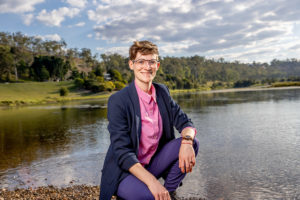
Elise Stephenson
Dr Elise Stephenson, a post-doctoral fellow of Griffith’s Policy Innovation Hub, identifies this as a risk to political leaders who have failed to address the needs of this demographic.
“By the end of June there were some 343,000 people enrolled to vote who were first-time voters which is a historically high level,” said Dr Stephenson.
“Young people are far more politically engaged than in the past”
“Young people are far more politically engaged than in the past.
“Climate change, COVID-19 and unemployment have put them in a more precarious position, so they’re applying a critical lens to the issues that matter to them.
“They are more aware now than perhaps ever before and it’s a crucial time for the electorate.
“Those politicians who have not been engaging with younger people as they should have will feel it this time around.”
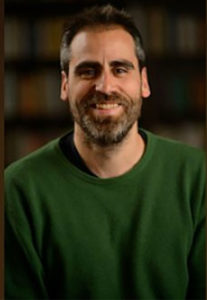
Dr Ferran Martinez i Coma
Dr Ferran Martinez i Coma, senior lecturer at Griffith’s School of Government and International Relations, notes that, following the local council polls cast in March this year, Queenslanders are unique around the world as this year they will have faced two elections in the midst of a pandemic.
While there is scope for disruption in voting patterns in the state election, he believes the public has adapted to voting in ways they may have never considered in the past.
“The pandemic has led to a skyrocketing of postal votes, for example, and we’re also seeing increasing trend towards early voting,” said Dr Martinez i Coma.
“At the moment, though because the pandemic in Queensland is largely under control, we should expect that people will be prepared to vote in person come election day.”
As for any guide to the outcome, Dr Williams points to Queensland’s unique political history.
“Queensland politics is the politics of electoral hegemony,” he said.
“When any political party comes to power, they tend to dominate and squeeze out the oxygen for the other side for long periods of time.
“Labor has been in office for 26 of the last 31 years.
“It was in opposition for 32 years before that.
“Queenslanders generally need a reason to change, they need a case for change and perhaps that case hasn’t been made yet.”
Griffith University experts are available to provide independent analysis of the 2020 State Election www.griffith.edu.au/queensland-state-election
Family history in the broader context of colonial settlement and the complexities of frontier conflict is the focus of a new Australian Research Council Special Research Initiative study led by Associate Professor Lynley Wallis from the Griffith Centre for Social and Cultural Research.
The $263, 414 study, Reconstructing Yalluna experiences of the frontier, is a multi-institution collaborative project which includes Professor Heather Burke (Flinders University), Dr Billy Griffiths (Deakin University), Mr Nicholas Hadnutt (Queensland Museum), Ms Trina Jackson (James Cook University) and Mr Vincent Wall (All Hallows School).
Through a collaboration of Indigenous peoples, archaeologists, historians, anthropologists, museum curators and educators, the project will provide the first sustained history of an elusive Aboriginal experience of the frontier.
Associate Professor Wallis said the study would provide fresh insights into a contentious period in Australia’s past and contribute in a practical way to reconciliation.
“Australians continue to grapple with what reconciliation might mean for them in a practical and personal sense. This project aims to harness the combined powers of history, archaeology, heritage and anthropology to offer one way forward.”
At the request of an Aboriginal family from Western Queensland, the Sullivans of the Yulluna people, the study will document and map the detailed oral histories and traditions of the family.
“Descended from the Aboriginal survivor of a punitive massacre and a Native Mounted Police officer who conducted retaliatory raids, the Sullivan family’s history speaks to the complex, cross-cultural nature of the Australian frontier,” Associate Professor Wallis said.
She said in part, the project was a response to the call for truth-telling made in the recent Uluru Statement from the Heart.
“While designed as a call for constitutional recognition, the preceding Regional Dialogue Meetings revealed an additional unexpected, but fundamental desire — the need to know more about Australian and Aboriginal history.
“The project aims to produce data of national cultural and social significance that will shape our understandings of a core, but contested, component of recent Australian history.
“Through far-sighted, innovative partnerships with the education and museum sectors the project will provide genuine opportunities for alternative understandings of the frontier that will cement Australia as an international leader in frontier conflict studies.”
Griffith University researchers have been awarded a $280,000 Australian Research Council Special Research Initiatives grant to improve understanding of the social and cultural attitudes to water in the Murray-Darling Basin.
The three-year project headed by researchers at the Australian Rivers Institute aims to discover how the present attitudes, values, norms ad practices relating to water in the Murray-Darling Basin evolved.
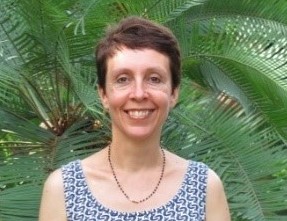
Professor Sue Jackson
“Only once we have an understanding of the historical and present-day cultural attitudes, can we start to identify the entrenched problems that need to be addressed with the coming warmer and drier future under climate change,” said chief investigator Professor Sue Jackson.
“As the catchment for Australia’s most important river system, the Murray-Darling Basin holds a central place in Australia’s geographic imagination.
“While water researchers have tended to study its biophysical character, an understanding of the origins and development of influential ideas about the value of water and rivers in the basin has been lacking.”
The research by Professor Jackson and colleagues (Professor Katie Holmes – La Trobe University, Professor Lesley Head – University of Melbourne, and Associate Professor Ruth Morgan – ANU), will for the first time investigate how attitudes, norms, beliefs, and practices relating to water have developed across the Mildura, the Murrumbidgee and the lower Darling regions. The team will conduct historical research in each region and interviews with First Nations people, irrigators, graziers, and water managers.
“In this way we hope to clarify the basis of current thinking about water sharing and conflicts over water in this region,” Professor Jackson said.
“Drawing on insights from both environmental history and cultural geography, our team will analyse changes in ways of understanding and relating to water in the Basin, and how that has defined rights and responsibilities to share water in the region’s rivers.
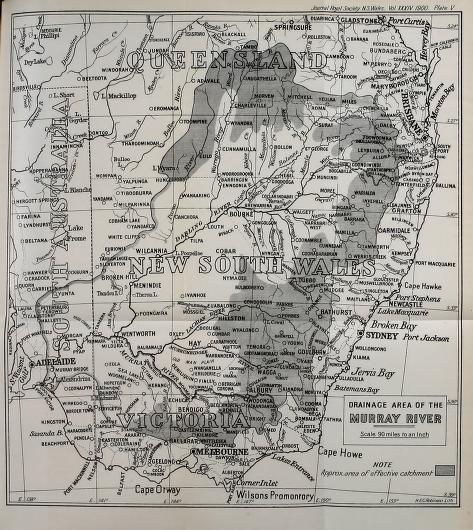
Map of the Murray-Darling Basin (circa 1900)
“We’re particularly interested in what obligations, if any, people perceive they have to communities up- and down-stream, and the deeply engrained idea that water which flows past without being used, destined for the environmental or those downstream, is considered wasted.
This is especially important to catchment management and basin-scale water planning and allocation, and is essential to understand as public reaction to environmental water can enhance or impede policy efforts to restore the Basin after decades of over-extraction.
“By building stronger cross-disciplinary collaborations and establishing a Water Cultures Network, this research will integrate the value of social and cultural insights and methods to water policy development with those of environmental scientists and water managers.
The Special Research Initiatives Research Scheme provides funding for new and emerging fields of research and builds capacity in strategically important areas.
Elevating the visibility of Norfolk Island’s living cultural heritage of its Pitcairn Settler descendants is the focus of a new research project led by Professor Sarah Baker and funded through the Australian Research Council Special Research Initiative scheme.

Professor Sarah Baker is a research expert in heritage studies.
The project revolves around the Kingston and Arthur’s Vale Historic Area (KAVHA) a World Heritage listed site on the southern side of Norfolk Island.
While the picturesque outlook of KAVHA’s ruins and Georgian buildings mark it as one of 11 significant Australian Convict sites, its historic role in the settlement of Pitcairn Islanders has been downplayed according to Professor Baker.
In 1856, the entire Pitcairn Island population, descendants of Tahitian women and mutineers of HMS Bounty, landed on and settled the abandoned penal site at KAVHA and are the forebears of present-day Norfolk Islanders with a distinctive and living culture and language.
Professor Baker says her project will engage and collaborate with Norfolk Island’s Pitcairn Settler descendants to develop a self-guided heritage walk to overlay the Pitcairner story onto a site which focuses primarily on penal heritage.
“Pitcairn Settler descendants experience contemporary island life as colonial subjects.”
“There are concerns that the governance changes that occurred here following the passing of the Norfolk Island Legislation Amendment Bill 2015 are a threat to the culture and language of Pitcairners and their identity as Norfolk Islanders.
“Bringing greater recognition and visibility to the Pitcairner story in KAVHA is a small step toward greater cultural justice in the site’s interpretation”.
The project will also deliver an industry focused policy report to help heritage managers and tourism operators to adapt their practices in ways which Professor Baker says does justice to Pitcairn Settler heritage.
“The Pitcairner occupation of KAVHA has a long history now, far longer than the colonial and penal settlement periods combined.
“Ensuring this living heritage is front and centre in interpretive strategies — whether that be the bus and walking tours that move through KAVHA, interpretive signage or exhibitions — will ensure visitors leave the island with an understanding of the unique cultural, language and heritage of Norfolk Islanders.”
“KAVHA is a site of contemporary and historical struggle.”
Professor Baker is a sociologist in the School of Humanities, Languages and Social Science and the Griffith Centre for Social and Cultural Research. She was also chief investigator on an Australian Research Council funded project on popular music.
Professor Baker is lead investigator with Dr Zelmarie Cantillon from Western Sydney University on Reimagining Norkfolk Island’s Kingston and Arthur’s Vale Historic Area which received $229,000 in the 2020 Australian Research Council Special Research Initiative for Australian Society, History and Culture.
Griffith University has been awarded more than $1M in Australian Research Council (ARC) Special Research Initiative funding for four projects announced by the Federal Minister for Education Dan Tehan MP this week.
The projects cover historical Aboriginal responses to contact with newcomers to their land; family history in the broader context of colonial settlement and the complexities of frontier conflict; the formation and evolution of cultural values and practices relating to water in the Murray-Darling Basin; and the role living heritage sites play in resisting or reinforcing cultural injustices faced by colonial subjects.
The grants are part of the ARC’s Special Research Initiative for Australian Society, History and Culture scheme which provides funding for new and emerging fields of research and builds capacity in strategically important areas.
Vice Chancellor and President Professor Carolyn Evans said with a success rate of 12.5% for Griffith,theprojects are well above the national average of 7.1%.Griffith ranking fourth nationally for grants and dollars awarded.
“Griffith has a strong commitment to ensuring that research relevant to understanding Australian subjects can thrive. The research being undertaken through these projects areconsistent with our vision of expanding human knowledge and understanding and transforming lives.”
Deputy Vice Chancellor (Research) Professor Mario Pinto said he was thrilled that the government has invested in the fundamental understanding of Australian Culture and Society.
“I am extremely proud of these four researchers who have brought honour and recognition to Griffith University,” he said.
The grants are as follows:
Professor Sarah Baker — AEL, Griffith Centre for Social & Cultural Research
$229,108 — Reimagining Norfolk Island’s Kingston and Arthur’s Vale Historic Area
This project aims to explore the role living heritage sites play in resisting or reinforcing cultural injustices faced by colonial subjects. Focusing on the World Heritage Listed Kingston and Arthur’s Vale Historic Area, the project’s significance lies in generating new understandings about Pitcairn Settler descendants’ struggles for recognition and self-determination.
Dr Sally May — AEL, Griffith Centre for Social and Cultural Research
$273,828 — Art at a crossroads: Aboriginal responses to contact in Northern Australia
This research will raise awareness of rock art as a rare visual record of human history and experience and contribute to improved conservation and management outcomes. It aims to help build pride in Aboriginal history, heritage and culture within local Aboriginal communities and across Australia by highlighting the lives, achievements and challenges faced by artists and their families in western Arnhem Land.
Associate Professor Lynley Wallis — AEL, Griffith Centre for Social and Cultural Research
$263,414 — Fugitive Traces: Reconstructing Yalluna experiences of the frontier
Focusing on oral histories held by a prominent Aboriginal family whose history is deeply enmeshed with the Queensland Native mounted police, this project aims to consider family history in the broader context of colonial settlement and the complexities of frontier conflict.
Professor Sue Jackson — Sciences, Australian Rivers Institute
$281,446 — Understanding the Water Cultures of the Murray-Darling Basin
The project aims to generate new knowledge of the formation and evolution of cultural values and practices relating to water in the Murray-Darling Basin. By applying innovative approaches from the environmental humanities, it will investigate the development of cultures of water and their role in long-standing water-sharing conflicts
Griffith University PhD candidate Shaun Ziegenfusz is working to raise awareness for a common condition you have probably never heard of.
Developmental Language Disorder (DLD) affects 7.6 per cent of the population, which is about two children in every classroom, and impacts a person’s ability to speak and understand for no known reason.
People with DLD may have reduced vocabulary in comparison to others of the same age, leave words out, say them in the wrong order, or confuse tenses.
October 16 is DLD Awareness Day, with this year’s campaign message, “DLD — See me” aiming to make DLD visible to the world.

PhD Candidate Shaun Ziegenfusz.
Shaun, who has a background in speech pathology and founded social enterprise The DLD Project, said there is plenty that can be done for people with DLD, but admitted it is difficult to treat when people do not know the disorder exists in the first place.
“It’s definitely hard to put the right support in place if families and children don’t even know what they have,” Shaun said.
“When I work with adolescents with DLD, they often tell me others call them “dumb” or “stupid”, despite research showing their IQ is normal.
“It’s their language that is impacted.”
DLD is considered a “hidden” condition as there are no soft tissue markers, but the impact it has on a person’s life can be devastating if it goes undiagnosed.
“DLD is lifelong and puts people at greater risk of unemployment, academic failure, mental health issues and there is even an increased risk of sexual assault,” Shaun said.
“Approximately 50-60 percent of incarcerated youth have previously undiagnosed DLD.”
Shaun also graduated from a Master of Special Education at Griffith and said greater awareness of DLD and of typical speech and language development are key to better outcomes for these people.
After diagnosis, Shaun said The DLD Project helped to break down complicated research into information that was easy to understand.
“The DLD Project is focused on knowledge translation to help make research-based information accessible for consumers,” he said.
“It could be showing them how to adjust language, reading with their child or supporting their understanding.”
Parker’s story
Parker is a 15-year-old who loves photography and has almost 4000 followers on Instagram.
He also has DLD.
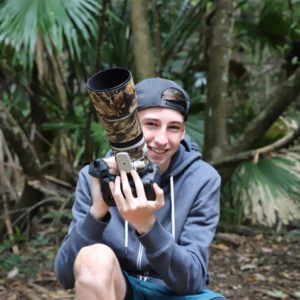
Parker loves photography and has DLD.
DLD often overlaps with dyslexia, which was the case for Parker.
Parker was originally diagnosed with dyslexia in Year 3 after having difficulties with NAPLAN.
He then started working with a dyslexia specialist but continued to have difficulties at school that were not totally explained by dyslexia and received a diagnosis of DLD in early 2020.
“Having a label has been life changing for Parker,” Shaun said.
“It explains why he finds it difficult to understand when a teacher gives him an instruction and why he finds it hard to concentrate, with his mind often going blank.”
“Knowing you have DLD means you don’t beat yourself up over it — it’s not that you’re not listening or paying attention,” Parker said.
“DLD feels like everything is going over my head all the time and when I talk, it feels like I’m about to stutter.
“It would be easier if more people knew about DLD.”
Shaun is conducting research on DLD as part of his PhD at Griffith Health, investigating the needs and necessary supports for students with DLD from the perspective of key stakeholders.
Griffith graduate Elliot Miller combined his games design degree with his experience living with profound deafness to create an app set to improve the lives of those with hearing aids.
While studying a Bachelor of Games Design at Griffith, Elliot became interested in interactive design and developed his own ‘serious game’ in the form of an app named Hearoes, which assists cochlear implant and hearing aid recipients learn new sounds in an engaging, self-paced environment.
So-called ‘serious games’ are considered games beyond entertainment and in Elliot’s case, one that can create learning experience outcomes.
“Receiving a bionic ear, also known as a cochlear implant, although an incredible milestone, is like trying to drive a sports car when you don’t have a licence or have never driven a car before.”
“I ended up using the learnings from the Griffith University course to create some gamified auditory training exercises to help myself with earning to identify new sounds, which I personally found challenging,” Elliot said.

Elliot Miller is the creator and founder of Hearoes.
“From there, I ended up showing it to my clinician, and releasing it on the app store to help others with their new hearing journey.”
Elliot was born with sensorineural hearing loss — with mild to severe hearing loss in his right ear, and profound hearing loss in the left side- and was fitted with hearing aids as a child, before receiving a cochlear implant at 25.
“It has been a very life changing experience, especially being able to hear the higher pitches in sounds that I’ve never heard before,” he said.
“I’ll always remember the time I was jogging down the street shortly after receiving my bionic ear, and I noticed a sound that I couldn’t identify.
“I stopped to try and identify this new sound, but the sound stopped as well, and it wasn’t until I got home later that day, I realised it was the coins in my pocket.”
According to Hearing Care Industry Association in 2020, an estimated 3.95 million Australians have hearing loss.

Users play games to assist in identifying sounds they may not have been able to hear previously.
“Almost everything around us makes a sound, from the wind howling, to the car indicators, to even leaving the fridge door open for long periods of time and they’re not really things that you think about, especially if there aren’t any visual references or other feedback associated with it,” Elliot said.
“It became a big learning curve for me, because although I could hear new sounds, it was very challenging being able to identify them.
“Hearoes aims to help others on their hearing journey.”
Hearoes is Australia’s first auditory training tool of its kind, and has had more than 25,000 sessions, with the activities played more than 80,000 times in the last 12 months alone.
It is described as a user centric auditory training app and contains more than 50 gamified activities focusing on key and proven modules in auditory training such as environmental sounds, vowels, consonants, sentences and narratives in different accents including Australian and American male and female voices.
“We’ve had some amazing feedback and stories, not only from the recipients, but also others involved in the training process, including clinicians, teachers and even parents,” Elliot said.
“It’s very motivating being able to help others who are experiencing similar challenges, especially as I’ve faced similar daily challenges myself.”
Hearoes was recently recognised with an Early Innovation Award at the recent Bionics Queensland Challenge and has collaborated with different organisations such as eHealth Queensland, Royal Brisbane and Women’s Hospital, as well as Deaf Services.
Hearoesis available on iOS and Android.
Griffith Film School graduate Steve Jaggi is helping to kickstart the local screen industry with a raft of projects underway in Queensland.
Netflix has bought the global rights to Steve’s latest production, Dive Club. Shooting in Port Douglas it has created more than 100 jobs and is pumping $8 million into the local economy.
“It’s incredibly meaningful to me to be able to support the local industry,” Steve said.
“There was a point during the early COVID lockdowns where I thought we would go bankrupt, but we’ve been busier in the past six months than ever before.
“We’ve shot projects in Brisbane, Cairns and now Port Douglas, and once international players realised that we were open for business, my phone has been ringing off the hook.”
While Netflix acquired worldwide distribution rights for the 12-part TV series, it will also be broadcast on Channel Ten in Australia.
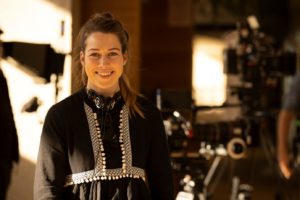
Griffith Film School alumnus Hayley MacFarlane
The series will be directed by fellow Griffith Film School alumnus Hayley MacFarlane, who also helmed the company’s recent feature film, Swimming for Gold.
Since graduating from Griffith, Steve has established his own production company, The Steve Jaggi Company, and carved out a niche producing young adult and female-centred content for companies including Disney.
The showrunner and producer said the growing popularity of streaming services provided plenty of opportunity.
“Netflix buying the global rights for our first TV series is a big milestone,” Steve said.
“Audiences are deserting cinemas in droves for streamers like Netflix, Amazon and Stan – and these companies are hungry for content.
“There was a real gap in the market for audiences sidelined by the big action blockbusters and arthouse films.
“Our niche is feel good, aspirational content for kids and women over 35.”

Griffith Film School alumnus Steve Jaggi
Steve’s first foray into the young adult genre, Rip Tide, was one of the highest grossing Australian films and picked up by Netflix for worldwide release.
His next film, Back of the Net was distributed by Disney and his latest feature, Swimming for Gold, has been snapped up by Universal Pictures for worldwide release after a theatrical release in Australia.
Steve said Queensland was fast becoming a global mecca for film and TV production, with COVID impacting the screen industry in the US and Europe.
“Queensland is perfectly positioned to welcome productions from all over the world,” he said.
“After I graduated, I worked in London and the US, but now Queensland is the place to be.”
Steve said moving from his native Canada to study a Bachelor of Film and Screen Media Production at Griffith had prepared him well for a diverse career in the industry.
“I really enjoyed the course and I feel like it has given me an edge in my professional career,” he said.
“I think I also received a boost from coming to study abroad — it gave me the confidence and connections to build up my company and approach these huge companies in LA and London.”

Professor Herman Van Eyken
Head of Griffith Film School Professor Herman Van Eyken said Steve and Hayley were part of a community of GFS alumni enjoying international success in the film industry.
“It is wonderful to see our graduates stepping up and taking on films and TV series for the world’s biggest studios and streaming services,” he said.
“The fact that they are producing and directing these projects right here in Queensland speaks to the talent we are helping to nurture and our reputation as a global screen hub.”