This post has been contributed by Professor Brett Freudenberg, member of the Law Futures Centre.
In April 2021, Griffith University secured $100,000 in federal funding to continue the Griffith Tax Clinic.
This is the third year of funding, which in part represents the ability of the tax clinic to continue to deliver services to the community despite the pandemic.
Due to restrictions about human movement and interaction because of Covid-19, many universities had to either cancel their work-integrated learning (WIL) experiences or move them to a remote online platform (Sandhu and de Wolf, 2020).
Within four weeks in 2020, the Griffith Tax Clinic was able to alter its operations to be fully online allowing law and business students to continue their WIL experience.
The Griffith Tax Clinic allows unrepresented taxpayers to gain assistance from tax students under the supervision of experienced tax practitioners.
The objectives of the tax clinic are to provide greater access to justice for unrepresented taxpayers (including micro and small businesses); a rich learning environment for students; an avenue to identify systematic problems in the tax system, as well as to improve community tax literacy.
For over seven months in 2020, the Griffith Tax Clinic was able to operate online through Microsoft OneDrive and Microsoft Teams for video conference calling, including the ability to share screens and record, including the ability to invite clients to the video conference call.
Student tax advisors were divided into two teams of three, and each team would have two client meetings per day, taking on different roles in each meeting, being interview leader, note taker and observer/researcher.
The tax agent would attend and supervise each of the meetings. In this way, clients could be assisted with their tax issues, including completing their tax returns as well as objections against the Australian Taxation Office.
But what did this online environment mean for the law and business students involved in terms of developing their skills and confidence, in particular their professional identity? Pretti, Etmanski and Durston (2020) note how the notions of socialisation and meaningful work are essential for WIL students when working remotely. Looking at the literature about employees generally, remote working can raise concerns about the feeling of isolation due to a loss of communication (Bartel et al., 2012; Charalampous et al., 2019).
This potential remoteness is important as WIL can offer ‘students first-hand knowledge of people and the community and introduces them to the complexity of the world beyond the classroom’ (Miller 1997, at p 16).
WIL has the potential to enhance professional identity and knowledge, which can provide career direction, as well as students’ suitability and understanding of the skills required for their chosen profession (Patrick, Peach, and Pocknee, 2009).
Research was undertaken to consider students’ perceived development of their professional identity at the Griffith Tax Clinic when it moved to be fully online. This development was compared to prior student cohorts that participated face-to-face.
The results demonstrate that there was professional identity development for both cohorts, with the online students indicating stronger growth in a number of dimensions.
However, when looking at the online students’ comments there was a sense they wished they had the on-campus experience, even though they appreciated the valuable online learning experience.
I would not change anything. I would have loved if we had an opportunity to run the Clinic from the campus instead of online, however there is not much we could do. Being a part of this team was an amazing experience even if we had to do it online!
Part of this appears to be the difficulty for students to lead the client meetings due to the technology, or that in the online environment the tax agent might dominate the meeting more given that it was his screen being shared with the client.
This can be compared to the physical on-campus environment where generally it is the computer on the student’s desk that is used to navigate the client through any online software (even though under direction of the tax agent).
I know it was tough being online and all, but I just wish there was more opportunity to lead conversations and guide the tax return process.
When considering the professional identity development of domestic and international students, the domestic online end scores are higher than the domestic on-campus students.
For international students, the online cohort is weaker than the on-campus international students in two of the three measures.
It may have been the case that the domestic students dominated in the online environment due to higher English conversation skills, and that the online environment allowed more opportunity for shy international students to ‘hide’ and wait for someone to step in.
This ability to fall into the background appeared to have adverse influence on the development of their professional identity.
Looking at the results it appears that an important part of developing professional identity, is the socialisation that can occur at the tax clinic, and the feedback and observation, whether it be from the tax agent supervisor, fellow tax clinic student advisers or their clients.
All three sources of socialisation and mentoring appear to assist. It could be that the online environment may limit this interaction with the supervision, student and clients.
For example there were generally less client meetings per day with the online clinic compared to the on-campus.
Also, the online environment may mean some more experienced and confident students dominate.
It appears that having low confidence can potentially impede a student’s learning experience in the challenging environment of a WIL experience, particularly if they do not have the motivation and perseverance.
Overall, the results indicate that students gained a lot from still being able to assist clients at the Griffith Tax Clinic in the online environment.
However, the online environment can lack the social interaction that can be so important for students in gaining valuable feedback and being able to observe what it means to be a professional.
While technology assisted Griffith law and business students to continue to assist the community at the Griffith Tax Clinic it appears that socialisation is an important part of developing students’ professional identity.
Given the recent funding announcement, the Griffith Tax Clinic looks forward to be able to continue to assist those vulnerable in the community.
Read a paper about the Griffith Tax Clinic or go online to apply for assistance from the clinic.
The results from a recent study conducted by CQUniversity Australia and Griffith University have shown clear public support among Australians for the constitutional enshrinement of a First Nations Voice.
The Australian Constitutional Values Survey 2021 measured public attitudes towards establishing an Indigenous Voice to Parliament.
Lead researcher Dr Jacob Deem from CQUniversity said the survey results indicated substantial support for a First Nations Voice to Parliament: 62 per cent of respondents were in favour of some form of First Nations Voice, and only one in eight respondents (12.4 per cent) were against the idea.
There was also a clear preference for enshrining the Voice in the Constitution, rather than a simply legislated model.
“More than 50 per cent of respondents were expressly in favour of a constitutionally enshrined First Nations Voice to Parliament” (as opposed to 26 per cent in favour of a legislated Voice).”
Asked to explain why they were in favour of or against the Voice, most respondents engaged with the issue on moral and emotive grounds.
“Some respondents viewed the Voice as being an important mechanism for giving First Nations peoples a say or for listening to their perspectives, while others viewed a constitutional Voice as a way of recognising the special status of First Nations peoples as the traditional owners of the land.”
Dr Deem said that low support for a Voice that was simply legislated, without providing Constitutional recognition, showed that Australians want to be included in establishing the Voice.
“A majority of Australians view the Voice as the right course of action, and they want to be a part of that step in Australian history. Compared to constitutional reform, a purely legislative Voice would deny Australians a significant chance to participate in the change,” said Dr Deem.
Foundation lead researcher, Griffith University’s Professor A J Brown said there was clear scope and clear need for political leadership to make both the Voice and Indigenous constitutional recognition a success.
Professor Brown said the results showed major room for more public education and engagement about the Voice.
“After the majority who support, the next largest group of respondents are the ‘undecided’, accounting for around 30 percent.”
“These ‘undecided’ Australians are significant because rather than indicating disinterest or apathy, more than half said they simply did not know enough or needed more details.”
“In particular, many undecided respondents wanted to know how representatives would be chosen and what benefits the Voice would bring for First Nations peoples — underscoring that once the Government’s current Voice Co-Design process is complete, many citizens will be ready to support the plan, especially if a constitutional recognition process then gives them not just reason but need to engage.”
Dr Deem added that The Uluru Statement is expressed as an invitation to walk with First Nations peoples on a journey towards recognition, which includes the constitutional enshrinement of a Voice to Parliament as a crucial step.
“The results of the Australian Constitutional Values Survey 2021 demonstrate that many Australians have taken up this invitation, supporting a constitutionally enshrined Voice.”
The Australian Constitutional Values Survey 2021 surveyed a nationally representative sample of 1511 Australian respondents aged 18-65 plus between 9-18 February 2021. It was founded by Griffith University in 2008 and has been conducted at regular intervals since.
New research has reappraised the age of bone artefacts found in a famous Kimberley cave site as being more than 35,000 years old, making them among the oldest bone tools found in Australia.
Published in theInternational Journal ofOsteoarchaeology, the team of scientists from across Australiaanalysedeight bone artefacts fromRiwiCave inMimbicountry in south-central Kimberley, Western Australia.
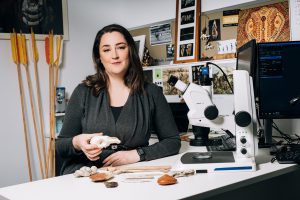
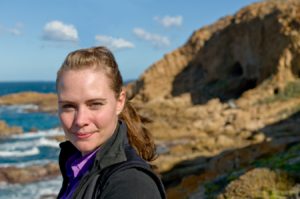
Dr Michelle Langley from ARCHE.
Four of the bone artefacts were found in layers dating from between 35,000 and 46,000 years ago, making them some of the oldest bone tools in Australia. Previously, the oldest bone artefact from Carpenter’s Gap 1 in the Kimberley was found to be <46,000 years old.
The artefacts were used for a range of activities occurring at the site, including the manufacture ofplantfibre items, the processing of spinifex resin, and fish or bird hunting.
“These tools indicate that bone tools have been around for a very long time in the Indigenous Australian toolkit; we once thought that bone tools were not so important in the north of Australia and were only brought into the toolkit relatively recently,” Dr Langley said.
“These tools show that wasn’t the case – they were always made and used, we just hadn’t found them because they haven’t been surviving long time periods in the hostile preservation conditions of northern Australia.”
Dr Langley said the bone artefacts were of different forms with different traces of use, indicating the variety of uses in which bone tools were used in this region in the deep past.
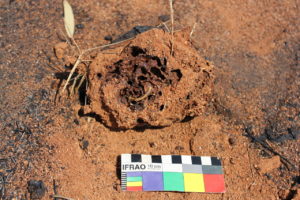
A lump of resin that may have been broken up with the tools. Credit: Sue O’Connor
“They were used for activities which typically do not survive archaeologically,” she said.
“One indicates plant or skin working (making baskets or working skins) while another appears to have been used in digging up or working resin. Resin was used to glue together tool parts and to make hand holds for tools.”
“Until recently bone artefacts of this age were thought to be confined to the cold southern regions of Australia and Tasmania and to have been used in skin working to make clothing as protection against the cold. These new finds from the arid zone show have changed our perspective,” Professor O’Connor said.
“These tools show the importance of organic materials in the early technologies of First Nations people, and they provide a window into a greater diversity of activities undertaken by people than are revealed by stone artefacts alone,” ProfessorBalmesaid.“We are grateful for the generosity of theMimbiCommunity who gave us the opportunity to study this site.”
‘The research ‘Bone Artifacts fromRiwiCave, south-central Kimberley: Reappraisal of the timing and role of osseous artifacts in northern Australia’ has been published inInternational Journal ofOsteoarchaeology.
A team of Griffith global health experts is facilitating a national project to build climate-resilient hospitals in the shadow of the world’s highest mountain.
Researchers from Griffith’s Centre for Environmental and Population Health (CEPH) have partnered with Health Environment and Climate Action Foundation 360 (HECAF360) to implement the World Health Organization Guide for Climate Resilient and Environmentally Sustainable Health Care Facilities in three ecological regions across Nepal.
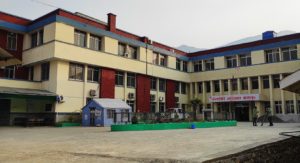
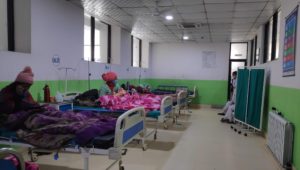
A Nepalese hospital involved in the climate-resilience plan.
The project is funded by the World Health Organization Country Office for Nepal and has support from the Government of Nepal Department of Health Services.
Griffith PhD candidate Connie Gan said CEPH’s facilitation of the pilot project was crucial to improving healthcare in the South Asian country well-known for climate-related disasters, like floods, infectious disease outbreaks, bush fire and heatwaves.
“Climate-resilient and environmentally sustainable health care facilities refer to those able to anticipate, respond to, cope with, recover from and adapt to reduce health impacts, climate-related shocks and stresses,” Ms Gan said.
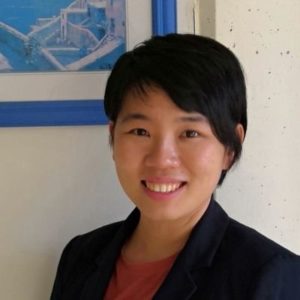
PhD candidate Connie Gan.
“On a daily basis, they work to reduce environmental pollution and seize opportunities to restore and improve it.
“This allows them to deliver continuous and quality health care services to the community they serve.”
The project covers a climate vulnerability assessment and disaster preparedness at proposed sites in three ecological regions, being the Terai region (Gaur Hospital), the hill region (Dhaulagiri Hospital) and the mountain region (Jumla Hospital).
“This is the first national pilot project since the WHO guide was published in October 2020,” HECAF360 Executive Director Mahesh Nakarmi said.
Radiators can be used to reduce the risk of infection.
The organisation, based in Kathmandu, is a pioneer in environmentally safe health care waste management systems and non-burn technology in healthcare settings.
“Nepal is the perfect country to apply the assessment methodology because of its unique geographical terrain,” Mr Nakarmi said.
“There is no other country in the world that has the same range in terms of ecosystems.
“Griffith’s CEPH is the ideal partner in this effort because of its expertise in health and climate change.”
The effectiveness of solar panels is being analysed.
The climate vulnerability assessment looks at whether an area is at higher risk of flood, landslide, or fire, the density of population, access to transportation in rural areas, climate-sensitive disease surveillance, existing climate adaptation activities and climate services.
This includes analysis of the effectiveness of radiators to keep patients warm and reduce the risk of hospital-acquired infections, a recycling system to reduce emissions and generate income, relocation of generators to flood-free zones, and capability of solar panels as a renewable and reliable source of energy, which is particularly important in the instance of a disaster.
Ms Gan said once the assessment was complete, concrete measures aimed at reducing emissions from health facilities and helping them to adapt to the impacts of climate change would be implemented.
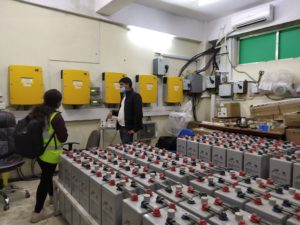
The solar battery backup and control room at a hospital.
“We hope to document the new advances in knowledge (and) experiences, and lessons learned from the pilot hospitals could serve as a model to improve implementations in Nepalese hospitals and beyond,” Ms Gan said.
“At CEPH, we address pressing concerns for population health, environmental sustainability and economic opportunity by working in partnership with international communities through research, consultancy, capacity building and by nurturing leaders,” Professor Chu said.
“This project encompasses all those aims and supports our vision to strengthen environmental and population health at a time when it is more under threat than ever.”
Five Griffith University students have been chosen to join a 16-member group of 2021 Gold Coast Mayor’s Student Ambassadors.
The ambassador program is offered each year to a select group of international and local Gold Coast students and includes the opportunity to lead and facilitate activities across the city.
Nikol Slynkova
Nikol Slynkova is in her third year of a Bachelor of Science, majoring in marine biology and already volunteers in several capacities for Griffith.
“It’s a good feeling to return something back to the community,” she said.
“I would like to share my Australian journey and get to know all these incredible ambassadors from several different educational institutions.
“I am from Prague, Czech Republic and I’ve found the Gold Coast to be a place where people are very open-minded, easy-going and very welcoming to different cultures.
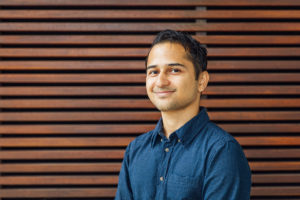
Naveen Makker
“For now, this is my last year studying, but I am considering honours as well, to do research on sharks or Orcas in the future.”
Like Nikol, Delhi born international student Naveen Makker is excited to represent Griffith and the Gold Coast as a Mayor’s Student Ambassador, hoping it will help him to grow personally and professionally.
“I feel the year ahead will bring excitement, experiences, built good memories, and friends for life,” he explained.
“I will be able to serve the community, get to know students and individuals, to learn from them and be positive and inspired.”
The second year Master of Marketing/ Master of International Tourism and Hospitality Management should graduate at the end of the year.
“I’d like to be a Marketing Manager or customer service officer for brands like Study Gold Coast, Gold Coast Student Hub, City Gold Coast, Gold Coast Airport, Apple, Office Works and EB games.”
“These students play a key role in diversifying both our culture and economy,” Gold Coast Mayor Tom Tate said of the new ambassadors.
“Those who join the program from overseas become champions for our city as they promote their experiences through their networks across the globe.
“In these challenging times those networks are more important than ever.”
Highlights from this year’s program include extensive tours of the city’s key infrastructure, including Gold Coast Airport; taking part in a SeaWorld marine rescue operation; an indigenous experience through the Jellurgal Aboriginal Cultural Centre; and an exclusive leadership session with the Mayor.
Mikhail Eremeev
Mikhail Eremeev came to the Gold Coast from Moscow, Russia last year and fell in love with his new city.
“When I applied (to be a student ambassador), I wanted to try and challenge myself with something new,” he said.
“I am passionate about being a good example for others, I get many messages from my friends and strangers in Russia saying I motivate them by my achievements.”
Mikhail hopes to complete a Master of International Tourism and Hospitality Management in 2022.
Final year Bachelor of Computer Science student Sushant Karki, originally from Nepal, is keeping himself busy, already doing an internship with a Gold Coast company as well as his studies and now, his new student ambassador role.
Sushant Karki
“After my studies, I plan to complete at least one professional year in my field to gain credibility,” he said.
“Depending on job prospects, I will decide where to move as countries like China, India and the U.S have a lot of growth potential in Data Science.
“Australia has also seen growth in Data Science. I will have my eyes out for any opportunities.
“In the Technical field, one must adapt and change with time (so) I would not rule out the possibility of me finding a suitable position here.”
Sujin Kim hopes to finish her PhD in Psychology with Griffith next year and says her time on the Gold Coast, even during the pandemic, has been enjoyable.
Sujin Kim
“I come from Seoul which is the capital city of South Korea and is hustle and bustle,” she explained.
“Seoul is surrounded by a concrete jungle, and it usually takes approximately 1 hour from home to university or workplace using public transport (whereas) the Gold Coast has a more relaxing and chilled atmosphere. I go to university just within 10 minutes by tram, which is convenient and not crowded.
“I am excited to meet new people and broaden my networking via this program.
“The Gold Coast has amazing and fabulous natural scenery and living and studying here has been a blessing.”
“This is such an incredible launching pad for our students as we help them to realise their potential while creating opportunities and friendships that will carry them forward throughout their lifetimes,” Study Gold Coast CEO Alfred Slogrove said.
This year’s crop of 16 students are from 11 different nationalities and represent eight different Gold Coast education and training providers.
Archaeological evidence in arockshelterat the edge of the KalahariDesert,South Africa,is challenging theidea thattheoriginsofourspecieswere linked to coastal environments.
Dr Jayne Wilkins.
Published inNature,Dr Jayne WilkinsfromGriffith University’sAustralian Research Centre for Human Evolutionledan international collaborationwhichfoundevidencefar from coastal sitesofthe complex symbolic and technological behaviours thatdefine modern humans, stretchingback 105,000 years.
“Our findingsfrom thisrocksheltershowthatoverlysimplifiedmodels for the origins of our speciesare no longer acceptable. Evidence suggestsmany regions across the African continentwereinvolved,the Kalaharibeing just one,”Dr Wilkins said.
“Archaeological evidencefor earlyHomosapienshas been largely discovered at coastal sites in South Africa,supportingthe idea that our origins werelinked to coastal environments.Therehave beenvery few well-preserved, datable archaeological sites in the interior of southern Africa that can tell us aboutHomosapiens’origins away from the coast.
“ArockshelteronGa-Mohana Hillthat stands above an expansive savannahin the Kalahariis one such site.”
Used asa place of spiritualactivitiestodaybysomeof thelocal community, archaeological researchintherockshelterhasrevealeda long history as a place of spiritual significance.
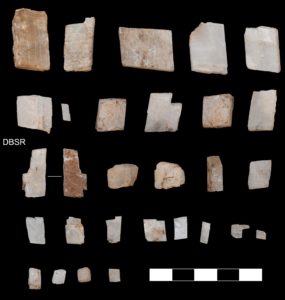
The researchers excavated 22white calcite crystalsand fragments of ostrich eggshell, thought be used aswatercontainers,from deposits datedto 105,000 years ago at Ga-Mohana HillNorthRockshelterwhen the environment was much wetter than today.
“Our analysis indicatesthat the crystals were not introduced into the depositsvia naturalprocesses, butwere deliberately collected objectslikelylinked to spiritual beliefs and ritual,” Dr Wilkins said.
“The crystals point towardsspiritual or culturaluse of the shelter 105,000 years ago,”said Dr SechabaMaapefrom theUniversity of the Witwatersrand.“Thisis remarkable considering thatsitecontinuesto be used to practiceritualactivitiestoday.”
The researcherswere delighted to discover thattheassemblage of human-collected crystals and ostrich eggshell fragments at Ga-Mohana Hill were significantly older than that reported ininterior environments elsewhere.
“At coastal sites, the earliest evidence forthesekindsof behaviourdate to aboutthe same time, 105,000 years ago,”Dr Wilkins said.
Crystals collected by early Homo sapiens in the southern Kalahari 105,000 years ago. CREDIT: Jayne Wilkins
“This suggeststhat early humans in the Kalahari were noless innovative than those on the coast.”
The chronology of Ga-MohanaNorthRockshelterwasdetermined by the research team using luminescence dating.
“This techniquemeasuresnatural light signals that accumulateovertime in sedimentary quartz and feldspar grains,” saidDrMichael Meyerfrom theUniversity of Innsbruck.
“You can think about each grain as a miniaturised clock, from whichwe can read outthis natural light orluminescence signal,giving usthe age of thearchaeological sediment layers.”
Due to the ongoing spiritualsignificanceofGa-Mohana Hill,the researchersareconscious tominimisetheir impact on thelocal communities’use of therockshelterafter each season.
“Leaving no visible trace and working with the local communityiscritical for the sustainability of the project,”DrWilkinssaid.
“So that Ga-Mohana Hill can continue to provide new insights about the origins and evolution ofHomosapiensin theKalahari.”
Providing food as an intervention to patients in GP and community clinics may help support weight loss a Griffith University study has found.
Associate Professor Lauren Ball
Led by Associate Professor Lauren Ball from Menzies Health Institute Queensland, the researchers undertook a review of all studies designed to elicit weight loss by directly providing food or supplements in primary care settings.
“Primary care is recognised as the ideal setting to promote healthy eating of people and communities. There is no other place that has greater reach to communities, including vulnerable populations, migrants and Indigenous Australians,’’ Associate Professor Ball said.
“There are increasing calls for primary care services to expand what they do, and patients highly value discussions about diet during consultations, but many health professions report significant barriers to providing nutrition care including insufficient nutrition knowledge, low nutrition self-efficacy and competing priorities in consultations.”
The researchers analysed four studies with a total of 476 adults. Two of the studies utilised meal replacement products, another provided green tea and Vitamin E supplementation and one study used a farmers’ market hosted at a primary care clinic. Interventions ranged from four to 13 weeks.
“The diversity in the interventions shows there are a range of ways to support patients by giving food,’’ Associate Professor Ball said.
“In all of the studies, some early indications of success were apparent, such as weight loss or improving a health outcome such as waist circumference, blood pressure or insulin level.
“This study provides examples of how initiatives could be designed, but we still need further high-quality research to determine whether the cost of providing food is worth the benefit in improved outcomes.”
The National Disability Insurance Scheme (NDIS) has been one of Australia’s biggest public policy reforms. It was the result of a campaign by disability advocates, carers’ organisations, and service providers collaborating with senior members of the government.
The NDIS enables Australia to achieve the minimum standards required by the United Nations Convention on the Rights of Persons with Disabilities (CRPD) that would otherwise not have been possible. The NDIS replaced an inequitable, underfunded, unsustainable, inconsistent patchwork State and Territory “system” described by the Productivity Commission as “overwhelmed by the social and economic disadvantage manifest among people with a disability and their families and the inability of the current system to cope”.
Prior to the NDIS there were multiple funders and service providers focused on treating the medical and health “problems” of people with disabilities with little or no co-ordination between services, or concern for individuals as people.
The NDIS abandoned the paternalistic narrative of disability as a personal tragedy according to ableist norms, and moved away from “experts treating problems” via an allied health medical model to a system giving voice and infrastructure to individuals to decide what they need to equitably participate in society.
This necessarily involved moving away from framing disability as an economic cost to framing it as an economic and social investment.
The NDIS was designed as an actuarial system to make short-term investments that reduce long-term costs by increasing an individual’s independence and ability to participate in society.
An actuarial approach to funding aimed at financial sustainability included the establishment of a dedicated reserve fund and the creation of a quasi-market in the provision of supports.
According to the Productivity Commission, this would minimise demands on expenditure from general revenue, provide “a buffer against” any “unpredictability” and “avoid rationing” if there was ever any shortfall in funding.
The rationale behind this model was that over time, as more information became available, the NDIS would be better placed to understand the risk profile.
Despite the virtue of the NDIS it has been criticised. Amongst other reasons, Carey and Dickinson note that it does not fund advocacy for people with “mental and physical disabilities” who must “navigate a newly created service market to gain the assistance they need”. As such the NDIS lacks the measures expected under Art12 of the CRPD to facilitate access to the scheme.
Some problems have arguably arisen because concerns about cost. While cost concerns are legitimate, the relative importance of costs should not outweigh other factors decision-makers are bound to consider.
Government Changes
Meanwhile, in response to these criticisms, the Minister responsible initiated consultation. However the consultation occurred over the Christmas and New Year period. This impacted the capacity for a comprehensive response from the disability community, individual organisations, and people with disability.
In short, Minister Robert’s changes would require people seeking support for their disability to be subjected to assessments by one of eight providers selected by government tender to gain access to the Scheme and on an ongoing basis while participating in the Scheme.
This is a sharp departure from the current approach of using a person’s treating doctor and therapists’ recommendations as the evidential basis for access and funding decisions.
The proposed approach has been ‘justified’ by the NDIA as resolving ‘inconsistent and inequitable access and planning decisions’.
The public response to the proposed approach changes has been critical, verging on damning, with some participants in a trial of the approach describing their experience as ‘dehumanising’.
Disability advocates have criticised the proposed change because it does not comply with the requirement for codesign required by CRPD Article 4(3).
Other concerns relate to departure from the recommendations made by the government’s 2019 Review including deficits in consultation, reframing the recommendation for assessments from ‘discretionary’ to ‘mandatory’, and additional impacts on appeal and review rights.
Arguably, the most concerning criticism of the approach has come from Bruce Bonyhady, former Chair of the board of the NDIA, who (along with Helena Sykes), in 2008 proposed the reform which ultimately led to the NDIS. Bonyhady likened the proposed approach to the disastrous “robo debt” crisis, because it would change individualised planning to “robo planning”.
This criticism throws into question the Minister’s contention that the proposed approach is consistent with the Productivity Commission’s vision for the Scheme.
Bonyhady also identified a risk that the current ‘goal and ability focus’ might be disturbed, encouraging a ‘deficit-based’ approach, requiring participants (and prospective participants) to emphasise impairment in order to ‘increase the likelihood of a sufficient resource allocation.’
The proposed approach fundamentally changes the character of the evidence relied on for reasonable and necessary decision making in the NDIS (see eg Ray and National Disability Insurance Agency [2020] AATA 3452) and will impair the ‘information learning’ necessary to an actuarial approach.
Put another way, the recommendations of an extremely limited number of providers obtained in an exceedingly short period of time in settings unfamiliar to the participant, will inform critical funding decisions — and people subject to these assessments will have restricted rights to challenge the results.
This will not only impact the accuracy of assessment of support needs, it may also lead to an upswing in delays arising from the exclusion of the broader field of practitioners, and the construction of additional barriers for challenges to NDIA decision making.
This could lead to a swell in applications for external review by the Administrative Appeals Tribunal (AAT) in relation to decisions which rely on the un-challengeable results of an assessment.
This is made more important in the context of the forthcoming draft NDIS bill which will affect a large number of other aspects of the legislative framework.
However, the implementation and development of the NDIS are arguably going to pose greater challenges than its conception. If the NDIS is to transcend the “underfunded, unfair, fragmented, and inefficient” system it replaced to provide people with choice and certainty of access to appropriate supports, then it cannot be dominated by concern with the financial sustainability of the system or political interference.
Instead, decisions about access and supports need to be made independently of government based on human need if Australia is to meet the minimal obligations under the CRPD.
Otherwise we risk repeating history. Recall there were similar struggles over another major equitable policy reform. In the 1970s Medibank was fiercely contested by the then opposition which later abolished it after gaining office. It was however redesigned and implemented as Medicare by the next federal government in the 1980s. Could this be a repeat of public policy history?
After COVID destroyed the 2020 season, Griffith University’s 2021 Rugby 7s side has hit the ground running, winning the weekend’s Brisbane tournament to kickstart this year’s Aon Uni Sevens competition.
Both Griffith and Sydney Uni claimed opening bragging rights, winning the finals of their respective pools in Brisbane and Sydney, in the first regional round of the new competition format.
Ivania Wong casts off her opposition. Image by Craig Dick.
In all, four regional rounds will be played in both Queensland and New South Wales across March and April, with nine teams vying for six qualification places in May’s two final National tournaments.
Griffith’s girls showed resilience and tenacity to progress through the weekend’s games to line up a Gold Final clash against archrival University of Queensland.
They won 19-12 in a thriller which showcased tries from co-captain Kiri Lingman, Georgina Friedrichs and Ivania Wong.
Coach Moana Virtue said she was extremely proud of their efforts.
“We’ve been working hard since January, improving our core skills, conditioning and team culture, so it was pleasing to see all that hard work paid off,” she said.
“Two weeks ago, we lost four players in the same weekend, but I have good relationships with a lot of my former players. We were able to get Georgina Friedrichs and Alana Elisaia to play, all original Griffith representatives, and they were just outstanding for us this weekend.”
Georgina Friedrichs about to cross the line for a try. Image by Stephen Tremain.
Georgina Friedrichs, a Griffith Business degree alumnus now studying a Master of Primary Education, has been playing rugby 15s and admitted that switching back to the 7s format tested her.
“The fitness side of it I struggled with a bit — the game fitness, but the other aspects of the game haven’t changed much since I last played so it was like riding a bike.
“The main difference is that there’s not a lot of contact in 15s compared to 7s where its more one on one tackling and you have to be fit to last the whole 80 minutes, but its not as intense as 7s where your lungs are burning from the start!
“This year originally my focus was to make the 15s world cup squad but recently that’s been postponed, due to the pandemic, they’re still working towards having some tests for the Wallaroos this year. That is my main aim, to debut for the 15s team.”
Game wrap
In Day 1 games over the weekend, Griffith beat Adelaide 26-12 in their first match of the tournament.
They followed the win with another victory, this time against Melbourne University. Despite Melbourne scoring first Griffith romped home 19-7.
Kahli Henwood too strong for her opposing player from Bond Uni. Image by Stephen Tremain.
In afternoon games, Griffith narrowly lost to Bond University, going down 19-17 after a missed conversion.
In the final game of the day Griffith met UQ and Georgina Friedrichs broke through for the first try. Despite some brilliant play, the 2018 champions went down to the 2017 and 2019 winners UQ 21-12.
In Day 2 semis, Griffith and Bond had an absorbing contest, but the Brisbane team came home winners 22-12, setting themselves up for the exciting Gold Final clash with UQ.
Moana Virtue said the next Queensland Aon regional round would be played at Surfers Paradise on 10 and 11 April.
“With the allocation of all the Australian players, this will make a very competitive Round Two and make my job even harder to select,” she explained.
“We’re really grateful to get our Australian player selections and Griffith students Lily Dick and Demi Hayes, who have played with us for a few years now, so we’re looking forward to their professional energy in the group.
“I cannot wait to see what these ladies can do in Round Two so we’re looking for plenty of support in Surfers Paradise!”
Australian players Lily Dick and Demi Hayes are current Griffith students and members of Griffith Sports College.
2021 Aon University Sevens Series
Regional Round Two: 10-11 April
Pool A: Surfers Paradise Rugby Club, Surfers Paradise
Pool B: No. 2 Sports Ground, Newcastle
National Round One: 1-2 May
New South Wales
National Round Two: 15-16 May
Queensland
The Health Sciences and Social Work student awards were created to celebrate our students, our highlight our future health sciences and social work professionals.
“We are concerned with improving the social, economic, and personal well-being of people and our communities.”
“We seek to promote social inclusion and achieve equity, social justice, independence and human rights for people who are adversely affected by social and economic factors.” Assoc Prof Jennifer Boddy.
In 2020 we have seen our students rise to new heights and we acknowledge our winners in the following categories:
Conferred to outstanding students in the School who have maintained a GPA of at least 6 and whostaffand peers feel have demonstrated their sustained contribution to three or more of the following areas:
Academic engagement as evidenced through a GPA of 6.0 or higher
Supporting diversity among student peers and others in the University community
Ability to work collaboratively with others
Modelling the positive characteristics of a professional in-training;
Demonstrating commitment to study
Displaying awareness of and responsiveness to contemporary issues in our surrounding communities and/or the environment.
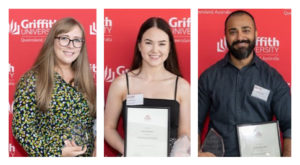
Outstanding Higher Degree Research Student 2020 Recipient – Dr Grant South
Outstanding Higher Degree Research Student – 2020 Recipient — Dr Grant South
Conferred to an outstanding higher degree research student who demonstrates:
Outstanding emerging ability inresearch;
Publishing in academic peer reviewedpublications;
Tenacity and commitment to topic ofstudy;
Contributions to the field through innovative methods, conferencepresentations;
Contributions to research community at Griffith, through participation in Three Minute Thesis competitions, workshops, conferences, peer support and engagement,team work.
Lesley Chenoweth Award for Social Justice and Equity 2020 Recipient – Daniel Spain
Lesley Chenoweth Award for Social Justice and Equity – 2020 Recipient – Daniel Spain
Conferred to an outstanding student in the School who demonstrates contribution to equity and social justice in at least two of the following areas:
Student engagement and capacity building
Community engagement and capacitybuilding;
Engaging with other disciplines andprofessions;
Internationalisationefforts;
Promoting the profession and its role in social justice and equityissues;
Outstanding self-advocacy or allyship in promoting social justice for diverse groups andindividuals;
Promoting the importance of lifelong learning for the enrichment of Queensland, Australia and the international community
Allied Health Awards:
Exercise Science and Sport
Annaleise Stoyko – Sport Development Leadership Award