This year Australia has seen a horrific string of reports and allegations about abuse and neglect in childcare centres. Families are desperate to ensure their kids are safe and political leaders have been rushing to respond.
On Friday, Australia’s federal and state education ministers agreed on several new safety measures. Federal Early Childhood Education Minister Jess Walsh described them as “the strongest and most significant package of child safety reforms in our nation’s history.”
What was agreed? And how could they be improved?
What’s been announced?
Education ministers agreed to set up a new “national educator register” to tell regulators who is working in the early childhood sector and where. It will also show the status of people’s working with children checks. Federal Education Minister Jason Clare said it would be developed from scratch, need new legislation and roll out from February next year.
Other measures include:
mandatory child safety training for all early childhood education staff – including the bosses of childcare companies. This will begin in 2026 to help workers “spot a person who might be hiding in plain sight” and who may be grooming a child
a national CCTV trial in up to 300 services, which will begin by the end of 2025
a ban on personal mobile phones in services from September 1 2025
1,600 extra spot checks to be carried out by Commonwealth officers
more information for parents about the condition and record of centres, including the last time a check was made and if any issues have been raised by regulators.
These measures are a positive start but they could also go further, as we explain below.
Is a national educator register a good idea?
A register for early childhood education and care workers makes sense. The register will be helpful for tracking where people have worked, so potential employers can look up the backgrounds of those applying for jobs.
For example, it could be a red flag if someone has moved around a lot (noting the sector is highly casualised, staff turnover is high and it is not unusual for people to work in multiple jobs). A national register will also help investigators if someone is suspected of wrongdoing.
Clare says the government will “develop and build” the register over time. But in its current planned form, it falls short of a nationally consistent reportable conduct scheme (which was proposed by the child abuse royal commission in 2017).
This would include any reports of misconduct that cannot be prosecuted criminally and are therefore missed in criminal history screenings (via working with children checks).
Some states are doing this on their own (for example from July 2026, in Queensland, early childhood organisations will be required to report concerning conduct from anyone who works with children). This week, the Victorian government announced it would reform its reportable conduct scheme so information relevant to child-safety “whether substantiated or not” is shared with relevant regulators and agencies.
But such schemes are most effective if they’re all connected to each other as it’s very easy to cross a border in Australia. We should also be enforcing standards around reference checks – which was recommended by the Victorian review this week.
How would CCTV help?
A 2025 report on the New South Wales sector estimated 30% of childcare services already had CCTV installed.
Obviously, 300 services nationally is not a lot (there are more than 9,000 centre-based services in Australia). Clare said the trial would look at where cameras are placed in centres and how data can be safely stored.
We know CCTV can have a general deterrent effect – and people are less likely to offend if they believe they are being surveilled. And it can also be used in investigations if there is an allegation or complaint. Research (including our own upcoming study) suggests many educators would like CCTV for their own protection if allegations were ever made against them.
But we can’t expect CCTV to prevent everything – you can’t have someone sitting at a control panel looking at footage all the time.
The Victorian report recommended a “four eyes” principle in centres, where there need to be two adults, visible to each other, taking care of kids at all times. Clare told reporters on Friday ministers had asked the national childcare authority to report back before the end of the year on this idea and the impact on educator-to-child ratios. This is an important prevention strategy. But it will depend on addressing workforce issues so there are enough staff who are empowered to speak up when they notice something.
More spot checks
Regulatory agencies have been woefully under-resourced – so more funds to do checks is a positive step. But beyond the spot checks, regulators need to actually shut services down if they are unsafe.
They have previously had the power to do this but have rarely done it, given the impact on families. As the Productivity Commission noted in 2024, shutting a service down was “severe” and “should be used as a last resort when less severe measures have not succeeded.”
Parents should also know they can do a spot check themselves at any time. Just turn up at your centre unannounced (so, not at 8am or 5pm). Is your centre welcoming and happy to see you? Do the children seem calm and cared for?
What are we missing?
As the Victorian report observed this week, there is an inherent problem in Australia’s early childhood system. It is mainly run by for-profit providers. We know for-profit childcare services are, on average, rated as lower quality than not-for-profit services.
These latest federal government proposals don’t address the root causes of problems in the early childhood. Instead they work within the boundaries of what we already have. There is a tendency for policymakers to take the conventional wisdom and package it up and say “we’re doing more, we’re trying harder”.
Arguably we have to do something more radical and restructure the entire sector so profit is not a driver and services are only focused on quality and safety.
Media leaders, journalists, and officials from across the Pacific gathered in Brisbane earlier this month for an international workshop focused on strengthening crisis communication and countering disinformation.
The event, Communication during a Time of Crisis: Practical Approaches and Lessons Learned from the Pacific, was co-hosted by the Griffith Asia Institute (GAI) and the Global Cooperation and Training Framework (GCTF) on 5–6 August 2025. More than 50 participants representing 15 countries explored strategies for improving media resilience in the face of natural disasters, public health emergencies, and the growing challenge of misinformation.
Dr Eve Chiu, CEO of the Taiwan FactCheck Center (TFC), shared Taiwan’s experiences in building robust defences against false information. She noted that despite Taiwan’s strong record on freedom of speech, it remains a prime target of foreign disinformation campaigns. “Fact-checking has become a frontline safeguard,” she said. Dr Chiu introduced TFC’s tools, including a LINE chatbot for crowdsourced reports and an AI-powered dashboard that monitors online narratives to identify emerging threats.
Participants also addressed region-specific challenges such as climate change and disaster response. Journalists from island nations discussed the difficulty of communicating timely evacuation messages across multiple local languages and considered the role AI-driven translation might play. Others highlighted the ongoing importance of radio and word-of-mouth communication in remote communities.
The workshop also shone a spotlight on misinformation around COVID-19 vaccines and recent examples of AI-generated false content. Dr Chiu pointed to fabricated claims and manipulated videos circulating in Taiwan as a cautionary example of how technology can amplify disinformation risks.
Delegates visited the ABC’s Brisbane headquarters to observe Australia’s emergency broadcasting system in action, underscoring the role of public broadcasters in supporting regional resilience.
This was the first time Australia hosted a GCTF event since joining as a partner country in 2021. Alongside Taiwan, the United States, Japan, Canada, and Australia now jointly back the framework, which has held nearly 90 international workshops since 2015.
With Pacific nations on the frontline of climate change and geopolitical competition, participants stressed the importance of continued collaboration. As one delegate observed,
“Strengthening communication capacity is not only about responding to the next cyclone or pandemic — it’s about safeguarding trust in our societies.”
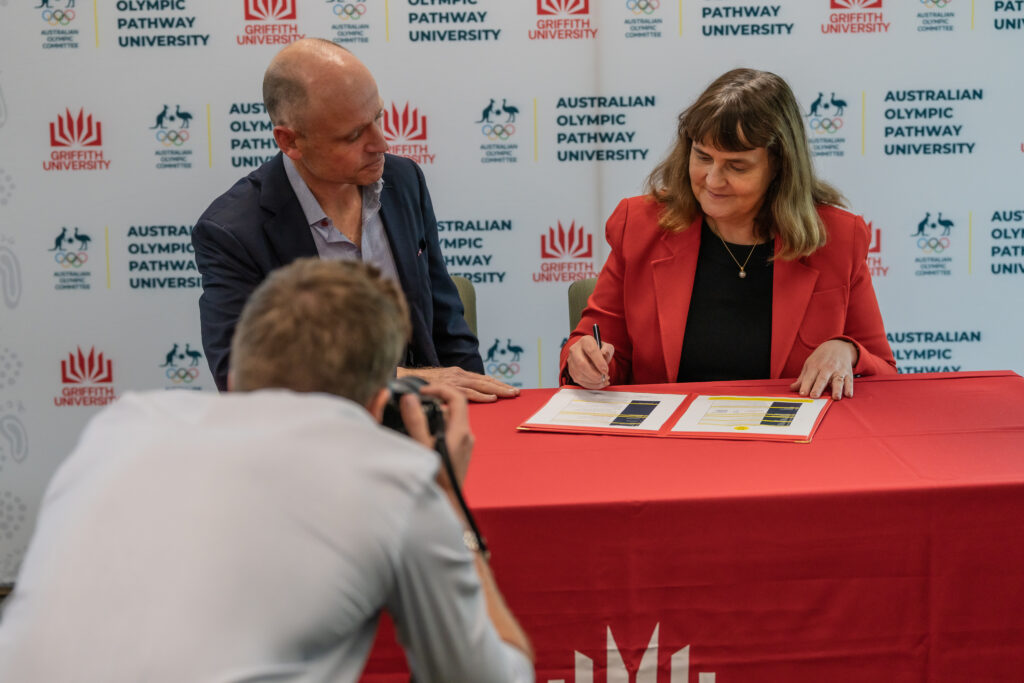
Griffith Vice Chancellor and President Professor Carolyn Evans signing the partnership agreement with AOC CEO Mark Arbib
Griffith University is proud to announce a new partnership with the Australian Olympic Committee (AOC), naming the Queensland education institution an “Australian Olympic Pathway University” recognising its longstanding commitment to supporting elite athletes combining academic and sporting pursuits.
The partnership will result in increased financial and academic support for student athletes including significant scholarships worth up to $40,000 along with offering credit and pathways into many degrees at Griffith.
Griffith has a distinguished history of athlete support, having produced more Olympians than any other Australian university across the past three Olympic Games.
This partnership formally recognises the University’s exceptional and flexible support systems that enable Olympians and aspiring Olympians to compete at the highest level while successfully undertaking their studies.
Griffith left an indelible mark on the Paris 2024 Olympic and Paralympic Games setting a new benchmark for university sports achievements on the global stage.
With 50 athletes comprising students, alumni, and swimming squad members competing, the University contributed 36 medals including 12 gold, 11 silver and 13 bronze.
The partnership, which will run until 2027, will further strengthen Griffith’s role as a leader in dual career pathways, ensuring athletes are well-equipped for success during and beyond their sporting careers.
Griffith University Vice Chancellor and President Professor Carolyn Evans said the collaboration reflects our deep commitment to helping elite athletes thrive both in their sport and in the classroom.
“We’re proud to continue providing the tailored support that allows them to pursue excellence in every aspect of their journey.”
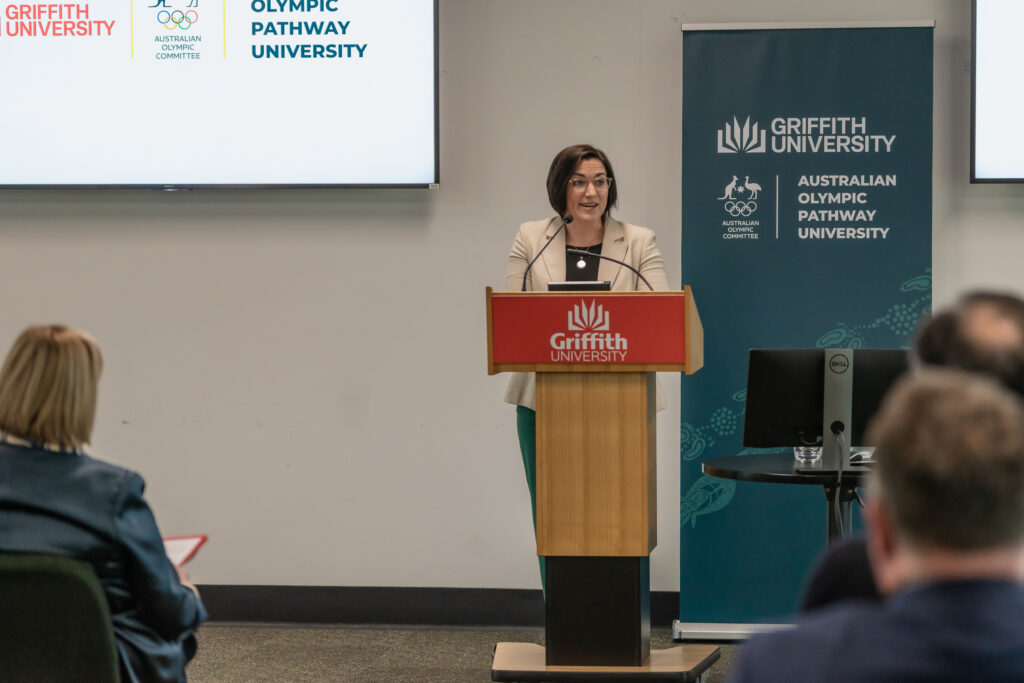
Australian Olympic Team Chief de Mission Anna Meares OAM at the launch of the partnership
Australian Olympic Committee CEO, Mark Arbib, said this is a landmark University partnership that places athlete education, wellbeing, career development, and future success at its core.
“Griffith is putting dollars on the table to help our athletes. This agreement ensures more Olympians will have the opportunity to gain scholarships at Griffith and recognises the University’s outstanding sporting and training facilities, and flexible study schedules.”
Additionally, all Olympians potentially will be eligible for recognised prior learning (RPL) credit towards a range of Griffith degrees, acknowledging the valuable skills and experiences gained through their sporting careers.
This initiative not only honours their achievements but also provides a more flexible and supportive pathway into higher education.
Griffith Sports College Director Naomi McCarthy OAM said this recognition reflects the high-level competencies Olympians develop through years of training and competition.
“We offer a system that values their unique experiences and helps them transition into academic life with confidence.”
QUOTES FROM CURRENT GRIFFITH SPORTS COLLEGE STUDENTS
Shayna Jack Swimming Gold Medal Olympian Paris 2024 and B Criminology and Criminal Justice student:
“Griffith has been an incredible pillar of support throughout my swimming career, offering guidance, resources, and even scholarship assistance that has allowed me to chase my sporting dreams while pursuing my education. Their belief in me has made it possible to excel in the pool and the classroom, and I’m grateful for the balance they’ve helped me maintain.”
Zac Stubblety-Cook – Swimming Gold Medallist and dual Olympian 2020 and 2024, B Business student:
“One of my beliefs is that you are a person before you are an athlete. With the support of Griffith Sports College, I can facilitate this philosophy. The Sports College has given me the ability to study whilst competing or training on the other side of the world, allowing me to pursue a sporting career whilst also preparing for a future after swimming.”
Charlize Andrews Water Polo Silver Medallist and Paris 2024 Olympian, B Nursing student:
“As an athlete balancing study, work and training can be very challenging. Fortunately, Griffith University has an amazing sport college that is very supportive to its elite athletes. During my Olympic preparation and campaign Griffith was extremely flexible with my study commitments and provided fantastic support during a stressful period.”
We often hear about the financial losses associated with internet scams, but new Griffith University research is shining a light on the toll it can take on a person’s mental health.
Dr Luke Balcombe
Dr Luke Balcombe from Griffith’s School of Applied Psychology has researched the significant emotional distress victims can experience.
“Internet scams can often lead to anxiety, depression, trauma, shame, and even social withdrawal and relationship breakdowns,” Dr Balcombe said.
“Scams have become a global epidemic, costing victims more than $USD 1 trillion in 2023, with only an estimated seven per cent of scams being reported.
“With this in mind, it’s not surprising the mental health impacts of scams can often be hidden or overlooked in favour of financial losses.”
Dr Balcombe’s research paper highlighted the need for mental health strategies to aid scam victims.
“It’s important for people to build resilience and seek support from others with a similar experience,” he said.
“Accessing digital mental health services and AI chatbots for emotional support and practical coping strategies is a great first avenue.
“It is also valuable for people to make use of traditional medical and psychological support services by consulting with a GP or mental health professional if needed.
“Another option is to use education resources to learn about scam tactics and recovery options.”
Dr Balcombe said the research reinforces the urgent need for better support systems including innovative solutions such as emotionally-intelligent AI companions.
“Increased education, digital tools, and coordinated prevention strategies are recommended to help reduce the emotional toll of scams and support long-term recovery,” he said.
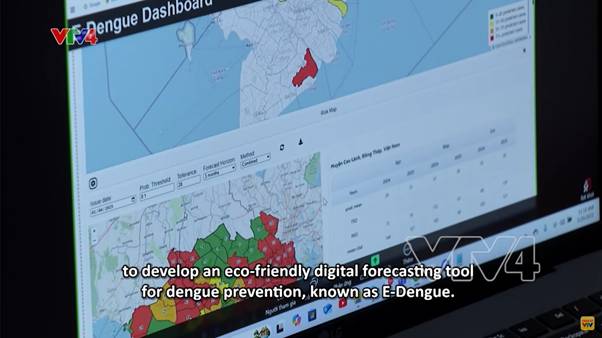
Vietnam’s health sector is stepping up to the growing threat of climate change with an innovative digital tool that predicts dengue outbreaks before they occur. The E-Dengue project, developed with leadership from Griffith University’s Centre for Environment and Population Health (CEPH), was recently featured on Vietnam’s international television channel, VTV4.
Vietnam is one of the most climate-vulnerable countries in the world, where rising temperatures, heavier rainfall and frequent natural disasters are reshaping disease patterns. “For every one-degree increase in temperature, we see a measurable rise in hospitalisations, particularly from dengue and heat-related illnesses,” said Professor Cordia Chu, Director of CEPH.
“The health sector must move from reacting to crises to predicting and preventing them.”
The E-Dengue system does exactly that. By integrating climate, environmental and epidemiological data, it can forecast dengue outbreaks at the district level up to three months in advance. Accessible via mobile and web platforms, the tool provides real-time risk maps, alerts, and prevention guidance tailored for frontline health workers.
Photo: E-Dengue tool – a digital innovation for Dengue prediction and prevention.
“What makes E-Dengue unique is its collaborative design,” Prof Chu explained. “We worked closely with Vietnamese health authorities to ensure the system responds directly to their needs and can be integrated seamlessly into existing surveillance and control programs.”
The VTV4 feature highlighted the shift toward a proactive dengue prevention strategy grounded in data, prevention, and early action across the Mekong Delta. Local health officials described the tool as “a game changer” in helping them prepare communities before outbreaks escalate.
CEPH’s work is also contributing to broader resilience. By fostering partnerships between government agencies, research institutions and international experts, the project is laying the foundations for a climate-responsive health system.
“The E-Dengue project is not just a technological innovation, it’s a model for how science, digital tools and local engagement can come together to protect vulnerable populations in a warming world.”
📺 Watch the full VTV4 segment here: (in Vietnamese with English subtitles).
As Brisbane prepares to host the 2032 Olympic and Paralympic Games, Griffith University is at the forefront of shaping how sport can drive social, cultural, and economic change.
Associate Professor Popi Sotiriadou, based at Griffith’s Gold Coast campus, is Australia’s top-ranked scholar for international collaboration in sport management. Her research focuses on boosting diversity, accessibility, and workforce sustainability in sport and events – areas critical to Australia’s tourism economy.
“My research directly addresses key industry challenges such as accessibility, sustainability, inclusion, youth engagement, and workforce development – all particularly relevant amid rising living costs and the lead-up to Brisbane 2032.”
Associate Professor Popi Sotiriadou
With more than 17 years at Griffith, Sotiriadou is internationally recognised for delivering practical solutions that go beyond the scoreboard. She has partnered with leading organisations including the Australian Institute of Sport (AIS), the International Olympic Committee (IOC), and the Queensland Academy of Sport (QAS). Her collaborations with the Gold Coast Titans and the National Rugby League (NRL) through the LeagueAbility program stand out, creating structured, inclusive participation pathways for people with intellectual disabilities.
Shaping policy and practice
A hallmark of Sotiriadou’s career is her ARTN framework (Attraction, Retention, Transition, Nurturing), first introduced in 2008 and widely used in sport management worldwide. Now expanded to include performance optimisation, it underpins strategies in parasport inclusion, talent transfer, leadership development and global sport policy.
Her research has directly informed the Australian Sports Commission’s Play Well Win Well framework and shaped international initiatives such as the IOC Portrayal Guidelines, which ensure athletes are represented respectfully, regardless of gender, race, religion, or sexual orientation.
Real-world impact
Across Australia and abroad, Sotiriadou’s research is applied in multiple contexts:
Disability inclusion: Co-designing the NRL LeagueAbility program, now scaling nationally.
Gender equity: Supporting initiatives like Logan City Council’s Game On for Women Strategy and advancing global portrayal guidelines for female athletes.
Olympic legacy planning: Developing volunteer models for Brisbane 2032 that improve retention and satisfaction.
Coach wellbeing: Leading AIS research on mental health and sustainability for high-performance coaches.
Athlete protection: Conducting cross-national studies into how retirement and unemployment policies shape athlete motivation.
Sport technology: Advising platforms like PlayaPower and examining the ethical implications of performance-tracking technologies.
Her work consistently blends rigorous research with actionable insights, enabling governments, councils, clubs, and international federations to design systems that deliver real community benefits.
Dr Popi Sotiriadou co-designed the NRL LeagueAbility program
A personal turning point
Sotiriadou’s passion for inclusion and integrity stems from her own experiences as an athlete. Growing up in Alexandroupolis, Greece, she competed in yachting from an early age, winning the national 470s sailing championship at 18 and qualifying for the 1992 Barcelona Olympics. But she was replaced following a backroom deal – a turning point that revealed the political dimensions of sport.
“That injustice left a lasting impact. It inspired my lifelong mission to create transparent, inclusive and fair sport systems that protect athletes and expand opportunities for all.”
Looking ahead
Sotiriadou is now leading a new Australian Research Council Linkage project with the NRL, developing sustainable pathways for people with disabilities in sport. She is also exploring how sport-technology innovation can align with Brisbane 2032 legacy planning.
“I’m excited to lead initiatives that ensure sport remains accessible, empowering, and future-focused,” she says.
Her work continues to bridge local and global arenas, from grassroots community projects with Logan City Council to collaborations with the IOC. Whether championing women in sport, protecting coaches’ wellbeing, or shaping inclusive talent pathways, her goal is clear: to unlock sport’s potential as a driver of social change.
Griffith at the Forefront
Through the Griffith Institute for Tourism (GIFT), Sotiriadou and her colleagues collaborate widely across tourism, events, and sport. GIFT is Australia’s leading tourism research institute – ranked in the top ten globally – specialising in areas from climate change resilience to the future of aviation and the visitor economy.
As Brisbane 2032 approaches, Griffith researchers like Sotiriadou are ensuring that sport leaves a legacy far beyond medals – one of inclusion, empowerment, and stronger communities.
Let’s work together
Griffith University, Griffith Institute for Tourism (GIFT) – We are Australia’s number 1 tourism research university (Top ten in the world) with an extensive team of tourism experts, including current and future PhD students, specialising in a wide range of areas impacting tourism including the visitor economy, climate change initiatives, resilient and sustainable tourism, the future of aviation, events and sport.
A belief that individual actions do make meaningful difference are among the common factors that motivate people to voluntarily reduce their consumption of single-use plastics (SUP), a Griffith University study has discovered.
The study found individuals who strongly identified with environmental protection, received positive social reinforcement, set clear goals, and believed their actions would make a meaningful difference, were significantly more likely to engage in SUP reduction behaviours.
Excessive use of SUP tableware, including items such as plastic takeaway containers, cutlery and straws, continues to contribute to the global waste crisis.
The study aimed to discover the potential barriers and enablers of SUP tableware reduction behaviour.
Co-author of the study and Social Marketing @ Griffith Director Professor Sharyn Rundle-Thiele said while governments around the world were focused on bans and levies, voluntary behaviour change remained an untapped solution to addressing SUP consumption.
“People are increasingly willing to engage in pro-environmental purchase and consumption behaviour, but there is a big gap between what people intend to do –and what they actually do,” Professor Rundle-Thiele said.
“Our research highlighted that motivation alone does not lead to behaviour change.
“Individuals must also have the knowledge, skills and opportunity to act on their intentions.
“Some examples of capability include knowledge of alternatives, the ability to plan ahead, and the development of sustainable habits.
“Opportunity referred to the presence of alternatives, and supportive social norms which included encouragement from social networks and being a part of environments that enabled and reinforced sustainable practices.”
The study applied the COM-B (Capability, Opportunity, Motivation—Behaviour) behavioural model to examine the full spectrum of barriers and enablers that affected an individual’s ability and motivation to reduce SUP consumption.
The COM-B model accounted for 70 per cent of the motivational factors associated with SUP tableware reduction.
The study showed successful SUP reduction interventions needed to go beyond traditional education and policy approaches to incorporate capability and opportunity.
“This research provides a valuable framework for developing targeted interventions that bridge the gap between environmental attitudes and actual behaviour,” Professor Rundle-Thiele said.
“By incorporating behavioural insights and addressing the psychological and environmental conditions that shape consumer behaviour, policymakers, social marketers, and environmental advocates can more effectively promote sustainable practices.”
The study was among the first to offer a nuanced understanding of human behaviour in environmental contexts.
A Phase 1 human clinical trial to treat chronic spinal cord injury, the first of its kind in the world, has commenced to test the efficacy and safety of a revolutionary new treatment using nasal cells.
The Griffith University trial has been three decades in the making and involves taking olfactory ensheathing cells, which are specialised cells involved in our sense of smell, from the nose as they have numerous therapeutic properties for repairing and regenerating nerves.
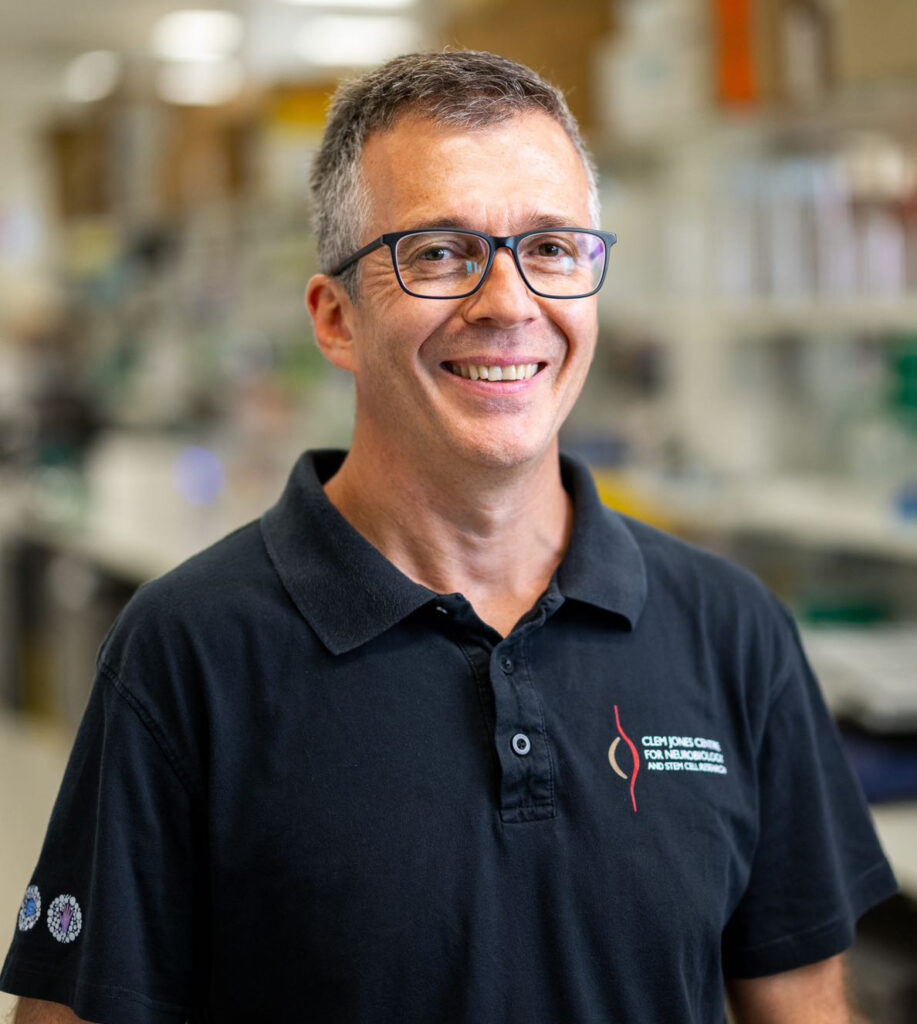
Professor James St John
Lead researcher Professor James St John, Head of Griffith’s Clem Jones Centre for Neurobiology and Stem Cell Research and Principal Researcher at the Institute for Biomedicine and Glycomics, is carrying on the legacy of the late Professor Emeritus Alan Mackay-Sim AM.
“Once the cells have been removed from the patient’s nose, they are then used to create an innovative nerve bridge which is about the size of a very small worm,” Professor St John said.
“The nerve bridge is then implanted into the spine at the site of the injury, offering what we think is the best hope for treating spinal cord injury.
“To help stimulate regeneration, patients will undergo intensive rehabilitation for three months prior to the transplantation and then for eight months after the transplantation.
“While primary assessments are to ensure the therapy is safe, we will also be measuring numerous aspects to assess if there are changes in functional outcomes that are important to people living with spinal cord injury.
“The ability to regain some sense of function, whether it’s regaining independent function of their bladder or bowel, regaining movement in their fingers, or the ability to stand and hug a loved one again can improve quality of life.
“Regaining some form of independence can open the world up to people living with a chronic acquired spinal injury.”
The trial, to be conducted at Gold Coast University Hospital, is a blinded and randomised control study with preclinical research demonstrating the olfactory nerve bridges are effective in repairing spinal cord injury in animal models.
CEO of the Clem Jones Foundation, Peter Johnstone, said the latest milestone illustrated how long-term philanthropic support could foster ground-breaking research with the potential to change lives for the better.
“The Clem Jones Foundation has supported this world-leading project from day one alongside other philanthropic groups and individuals which meant it also attracted state and federal government funding commitments,” Mr Johnstone said.
“All of the funding partners recognise that results from medical research never happen overnight but rely on long-term funding as well as the long-term application of the knowledge, skills, and hard work of the talented team of researchers at Griffith University.”
Founder of the Perry Cross Spinal Research Foundation, Perry Cross AM, who became a ventilated quadriplegic at age 19 from a rugby accident, has dedicated his life to advocating for a cure.
“This clinical trial represents a long-awaited breakthrough that speaks to the enduring strength of those impacted by spinal cord injury and the extraordinary belief of those who support us,” Mr Cross said.
“For too long, individuals living with paralysis have been told that recovery lies beyond the horizon of possibility.
“Today, we challenge that notion with evidence, ambition and above all, hope.
“It is proof that philanthropy, when guided by purpose and vision, can accelerate real change. Every contribution has mattered, and each gesture of support has brought us closer to this point.
“For someone like me, who knows all too well the permanence of spinal cord injury, this trial offers not just the possibility of improved function, but a renewed sense of independence and dignity; qualities that define the human experience.”
Professor St John said: “To have a cell transplantation therapy progressing to clinical trial after only eight years is testament to the benefits of the strategic translational research program the team has used.
“To be able to develop the therapy in Queensland is thanks to the incredible support from our funding partners, in particular the Motor Accident Insurance Commission as the major funder, the Clem Jones Foundation, the Perry Cross Spinal Research Foundation, National Health and Medical Research Council, Medical Research Future Fund, and the dedicated spinal injury community which has been the inspiration and driving force behind the therapy development.”
The trial is funded by the Medical Research Future Fund, Perry Cross Spinal Research Foundation, The Clem Jones Foundation, Queensland Government, Nicola and Andrew Forrest, Brazil Family Foundation, Terry and Rhonda White, and Griffith University.
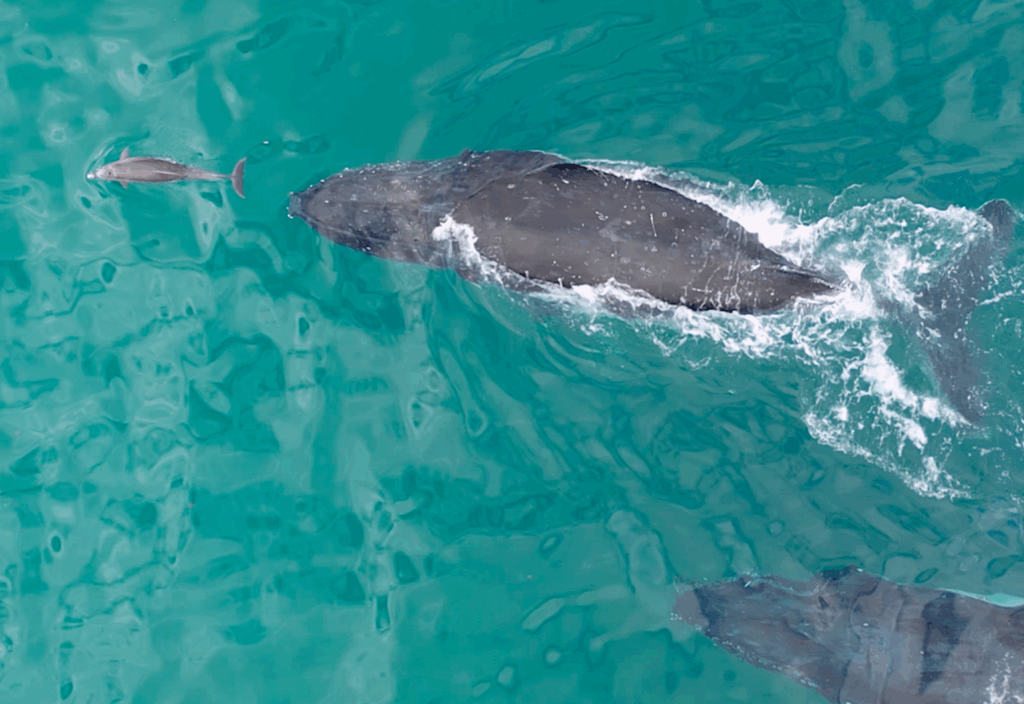
A new study has investigated hundreds of videos and images taken by the public, tourism operators and scientists to better understand a rarely studied behaviour among whales and dolphins – do they actually “play” together, or is it more of a one-sided relationship?
Led by Griffith University’s Whales & Climate Program lead, Dr Olaf Meynecke, the study analysed instances of baleen whale and dolphin interactions involving 19 species in 199 separate and unrelated interactions, documented by photographs and videos from 17 locations around the world.
Published in Discover Animals, Dr Meynecke said the findings demonstrated a quarter of these interactions can be defined as a mutual interaction.
“And in particular for humpback whales, we found that for one-third of the events the behavioural responses towards the dolphins appear positive. The humpback whales were rolling from side to side, undertaking belly presentation and other behaviours that are associated with courtship or friendly socialising.”
Dr Olaf Meynecke
“Whales also strategically moved slowly in the direction of the dolphins with their head and rostrum.
Bow-riding bottlenose dolphin with humpback whales off the Australian coast. Credit: Roving media
“The vast majority of the observed interactions did not show avoidance behaviour.
“We were in particular interested to document the whales’ reactions and responses toward the dolphins’ as commonly dolphins are described to harass and annoy the whales.”
Co-author and Masters graduate Olivia Crawley said: “When you’re out on the water, you often see whales and dolphins interacting and as a scientist, you can’t help but wonder why.
“Having the opportunity to document these observations and observe some of the behavioural patterns like bow riding by dolphins and close touches was intriguing.
“I hope that this study can serve as a foundation for future studies.”
Within each interaction, the authors noted the species of the whale and dolphin, the date and time of the interaction, the location, the number of animals involved, the age class, and the relative position of the dolphins in relation to the whale´s main body parts (rostrum or the ‘beak’, flank, and fluke or tail).
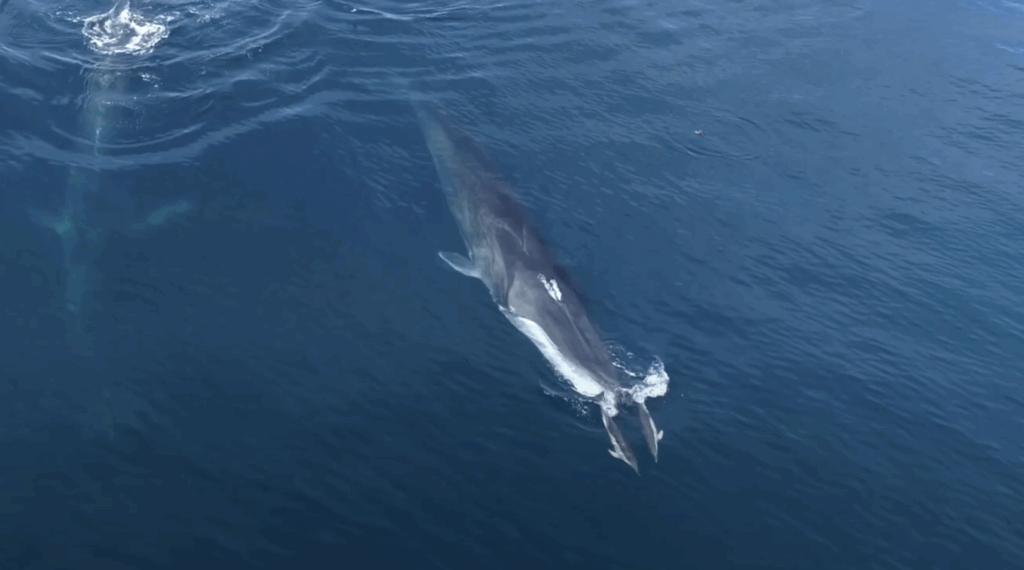
The most common whale-dolphin interaction involved dolphins swimming near the whale’s rostrum, akin to bow riding, which could indicate an energy-efficient mode of locomotion and a form of one-sided play by dolphins.
In total the documented interactions included 425 baleen whales from six different species, with humpback whales dominating (68%) then grey whales (16%) and fin whales (7%).
An estimated 1570 dolphins were observed, with bottlenose dolphins (51%), common dolphin (17%) and pacific wide-sided dolphins (15%) dominating.
Adults formed the largest number of documented interactions, however a whale calf was present in 44 events, and dolphin calf in 53 events. Both whale and dolphin calves were present in 21 occasions.
A fin whale with bow-riding dolphins off the coast of England. Credit: Dan Abbott
The whale species responded differently to the dolphin behaviour; humpback whales moved their pectoral fin toward the dolphins (172 counts) while grey whales were often rolling (56 counts) and southern right whales displayed pectoral slaps (5 counts out of 10 separate events).
Physical percussive behaviours that could indicate aggressive responses toward dolphins such as tail slaps (18 counts) or head slaps (none) were least observed for humpback whales.
Two videos from suction camera tags on humpback whales also showed bottlenose dolphins following humpback whales not only on the surface but also to the ocean floor where they continued engaging in close approaches including possible touching and social play.
“While social play is cooperative and reciprocal, there is also one-sided play or interaction, with only one participant perceiving the interaction as playful, as seen in cases of teasing or harassment by dolphins during feeding events,” Dr Meynecke said.
“Behavioural studies of marine mammals such as these provide insight into their complex social structures, play a crucial role in enhancing our understanding of marine ecosystems and the interactions among marine species.”
Research Fellow from the Griffith Centre for Work, Organisation and Wellbeing Dr Charlotte Brakenridge.
Workplace health programs often fail, and Griffith University research uncovered it is not due to lack of staff interest, but because of entrenched organisational barriers that limit staff participation.
Researchers investigated the barriers to engagement with critical wellness initiatives in call centres, which are a major global industry and include call operators in insurance and banking, health and abuse hotline workers, and emergency dispatchers.
Lead author from the Centre for Work, Organisation and Wellbeing Dr Charlotte Brakenridge said while wellness programs were available, employees often lacked the time, space, and support required to engage meaningfully.
“Staff need dedicated time and organisational support to participate in wellness initiatives in office-based environments,” Dr Brakenridge said.
Despite strong motivation among workers to adopt healthier behaviours, the research identified persistent barriers including:
Excessive workloads and long hours
Unsupportive or controlling management
Poor job security
Pressure to avoid breaks or sick leave
Inadequate facilities, equipment, or sit-stand desks
Noisy or unsupportive work environments
Low energy and preference to rest after work
These factors contributed to negative health outcomes such as weight gain, depression, musculoskeletal discomfort, and unhealthy coping mechanisms including poor nutrition, physical inactivity, and alcohol use.
The findings highlighted successful health promotion strategies needed to address the broader organisational context and not just individual behaviours.
“A whole-of-workplace approach is essential,” Dr Brakenridge said.
“This includes fostering a supportive culture, active manager involvement, peer encouragement, and allocating time for staff to engage in wellness activities.
“Workplaces should include diverse and engaging communication strategies, such as posters, events, presentations, and social media, rather than relying solely on email.
“Supportive co-workers consistently emerged as a key positive influence which helped staff to manage stress and encouraged participation in health initiatives.”