Griffith University researchers have identified a new phosphorescence fingerprinting technique that reveals previously hidden details in fingerprints, helping in the fight against crime.
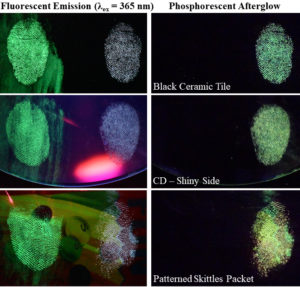
Dr William Gee from the Queensland Micro and Nanotechnology Centre found that imaging the phosphorescent afterglow from a newly developed environmentally-friendly fingerprint powder outperformed traditional commercial fluorescent powder by eliminating background interference.
Dr William Gee from the Queensland Micro and Nanotechnology Centre
“Our work developed an improved fingerprint powder by exploiting visible and longer-lived phosphorescent light,” Dr Gee said.
“Current fingerprint powders emit short-lived fluorescence that needs constant illumination with a powerful light for the fingerprint to be visible.
“Constantly shining a bright light to trigger fluorescence can swamp the weaker emissions, obliging the use of filters to view the fluorescence and goggles to protect sensitive eyes.”
These factors can lower the quality of fingerprint images and some challenging surfaces can produce their own fluorescence under these conditions, which interferes with fluorescent fingerprint powders.
“We showcased our phosphorescent fingerprint powder on challenging surfaces with inbuilt fluorescent security features, such as passports and banknotes, and found that it outperformed a commercial fluorescent fingerprint powder.”
Comparison of fingerprinting techniques on a ceramic tile, CD, and skittle packet
Previous efforts to utilise visible phosphorescence have required impractical imaging equipment and powerful laser setups, both of which are beyond the scope of typical forensic laboratories.
“Our work overcomes these drawbacks by eliminating the need for specialist scientific equipment to capture the phosphorescent afterglow image.
“Our phosphorescent technique just needs a commercial digital camera and forensic light sources, equipment that’s readily available as it is routinely used by police and forensic practitioners.”
Dr Gee points out that the 4-tpt phosphorescent powder they have chosen contains no heavy metals, which is beneficial for both safety and environmental reasons.
“From a forensic perspective, metal-containing powders have been implicated in DNA degradation, which hampers the collection of touch DNA evidence from treated fingerprints, which can be crucial in solving a crime.
“This new phosphorescent powder technique for fingerprinting will be of great interest to both laboratory and field-based forensic practitioners/police and has the potential to trigger transformative changes within the fingerprint community.
The research has been published in the journalAnalyst.
They pitched, wrote, shot, edited and screened a short film in just one week — a challenge that put their skills to the test.
Each year, Griffith Film School partners with the festival to run the Vision Splendid Film Institute — a two-week program of film projects, workshops and masterclasses.
Film alumnus Jacquelynn Auger. Photo: Jamie Findley
This year, the diverse group included filmmakers, animators, actors and composers.
Among them was Griffith Film School alumnus Jacquelynn Auger, who came back this year for a special bootcamp.
Her 15-minute film, The Pause, won the Audience Award at the festival and she spent time collaborating with and mentoring students.
“This was my third trip out to Winton for the film festival, and it’s been absolutely life changing,” she said.
“I went back this year to shoot a short film and was asked to be a mentor to the current students.
“I could see they were quite inspired by having a recent graduate there to bounce things off and turn to for support.
“For me, the whole experience ignited a passion for teaching.”
Jacquelynn said the trip had forged a network of creative collaborators.
“The best part about Winton is the relationships you build — from the Koa elders that go out with us, to all of the amazing locals and the students you work with to get your projects across the finish line,” she said.
“A big part of any film education is the connections that you make – I definitely wouldn’t be the person or filmmaker I am today if it wasn’t for these trips.”
Student filmmakers on a shoot in Winton
Queensland Conservatorium composition student Cole Forfang Phan wants to pursue film scoring after graduation.
“Getting to work with university filmmakers and seeing the professional process was a real eye-opener for me,” he said.
“When it came to scoring the films, we were on such tight deadlines, I had to develop new ways of working.
Acting student Natalie Ferris
“It really pushed us out of our comfort zones — I ended up doing sound design which I’d never tried before.”
Queensland Conservatorium Bachelor of Acting student Natalie Ferris said the trip had provided valuable insights into the screen industry.
“At Griffith we’ve got a film school and an acting program, so it makes sense to combine forces,” she said.
“The film students were so accommodating and taught me so many things about the technical side of filmmaking.
“I feel like my eyes have been opened to a whole other world, and one that allows me to do my job better as an actor.”
“You have to be talented to be in this industry, but it’s also about creating a network.
“I’ve made some wonderful connections and friendships on this trip — people have offered to shoot my show reel and roles in their graduate films.
“It gave us a taste of that professional environment and was a stepping stone between uni and the industry.”
Film student Lawrence Greene
Lawrence Greene is a mature-age student at Griffith Film School who said the trip had given him a new perspective on filmmaking.
“Winton is the kind of pressure cooker environment that seems to be constructed to force people to learn about themselves,” he said.
“You can never pull off something perfect in a week. But if things had gone more smoothly, I wouldn’t have learned as much.
“It taught me to trust my own decisions and gave me the confidence to take on film projects outside university.
“It made me realise that film school isn’t about what you can make, it’s about what you can learn.”
Mr Burgess said the immersive experience in the outback was transformative for the emerging creatives.
“It’s about finding an authentic creative voice, building relationships and developing the confidence to have a go,” he said.
The prestigious program enables Australia’s brightest minds to share their expertise with the nation.
The Griffith Law School senior lecturer is a human rights expert and was chosen to share his recent research into war crimes in the Australian military.
Dr Dana was among 15 early-career scholars and practitioners chosen from almost 400 applicants across the arts, humanities and sciences, with five winners chosen in each discipline.
He will undertake a two-week online residency with some of the country’s best broadcasters at ABC Radio National, learning how to communicate with a wide audience and develop content across radio and digital platforms.
Dr Dana said it was a privilege to be named among the top humanities experts in Australia.
“This residency provides a fantastic opportunity to disseminate your research and scholarship more widely,” he said.
Dr Dana said he looked forward to sharing his research with audiences and contributing to informed public discourse.
“I’ve always felt it’s important as a researcher to be able to engage with the broader Australian public about what you’re doing and why.”
“My research investigates the law’s capacity to shape the behaviour of very powerful individuals or elites and disrupt violence.
“I’m looking at Australia’s response to allegations of war crimes being committed by Australian soldiers in Afghanistan.
“I think this is a very important public issue and one that a lot of Australians have an interest in.
“I’m very happy that I can be a part of that conversation.
“There were hundreds of applications, so just to be selected as one of the top five is a really exciting honour.”
Dr Dana started his career as a journalist and worked across print, radio and broadcast media in the United States before deciding to study law.
In a career spanning stints with the United Nations to special adviser roles, criminal law practice and academia, he has worked around the globe to further human rights.
“Journalism allowed me to shine a light on issues like social injustice and discrimination, and I’ve continued that work as a lawyer and academic,” he said.
“Of course, the media landscape has changed dramatically since then — we didn’t have Twitter and Facebook.
“The core values, such as presenting information in a way that is accessible to a large audience, is the same, but the skills and the tactics to do it have changed.
“I’m excited to find new ways to present my research findings across various platforms.”
Dr Dana said lessons from the residency would also inform his teaching at Griffith University.
“As a lecturer, you learn to distill information in a way that is engaging for people who are new to the subject matter,” he said.
“This experience will give me a fresh perspective on my own research and discover which aspects resonate with the public, and by extension, my students.”
ABC Radio National Manager Cath Dwyer said the media residencies were an opportunity for the ABC to access the nation’s top talent.
“The university and arts sectors fulfil a vital role in Australian society and have faced difficult times over the past 18 months,” she said.
“We’ve been very pleased to see the passion of our best and brightest for bringing their knowledge and research to a broader audience.”
A pilot program aims to revolutionise rehabilitation for people living with a brain injury by using ballet.
Ballet for Brain Injury, a 10-week program launched by Queensland Ballet (QB), is supported by a review of existing research on dance for brain injury and related conditions by Griffith University researchers Joel Spence, Associate Professor Naomi Sunderland and Adjunct Research FellowBelinda Adams.
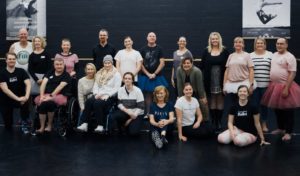
The first of its kind and developed in partnership with The Hopkins Centre, the Queensland Conservatorium Research Centre and Citrine Sun Entertainment, Ballet for Brain Injury aims to develop a new evidence-informed approach to engaging people living with brain injuries. Ten participants have been attending weekly classes along with their carer.
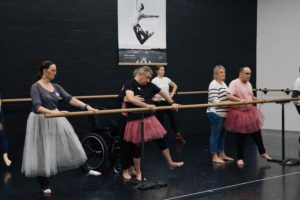
Image supplied by Queensland Ballet.
The program uses ballet-based movement, music and artistry to enable participants to experience the enjoyment, creative expression and wellbeing benefits dance can bring.
Griffith University program director and research co-lead Professor Elizabeth Kendall commended QB’s pilot for its inclusivity and the opportunity it provided to further the world of rehabilitation.
“We know exercise is healthy for our brains, and for people with brain injuries the opportunity to engage in physical activity is limited, but it could really improve their rehabilitation outcomes,” Professor Kendall said.
“QB is providing a fun way for people with brain injuries to keep healthy and could revolutionise the way we do rehabilitation in future.”
The program follows the format of a standard ballet class, with participants starting at the barre with smaller movements before learning sequences, choreography and partnering work.
Beyond the ballet movement, the class has an inherent focus on creativity and social expression.
Associate Professor Sunderland said accessing arts and culture was a fundamental human right for all people, but particularly those with disabilities.
“Opportunities to engage in arts and cultural activities as an active participant can be limited for people who experience traumatic injury and their carers due to limits in the way programs are designed,” Professor Sunderland said.
Image supplied by Queensland Ballet.
“Ballet for Brain Injury has been developed to offer evidence-informed and flexible dance opportunities for people who have experienced brain injury and their carers.
“It is an incredible step forward to systematically include arts and cultural activities such as this in community rehabilitation and care.”
Queensland Ballet Education Manager Martha Godber said QB was deeply committed to creative health and exploring ways dance can be a vehicle to improve the lives of people living with injury, illness or disease.
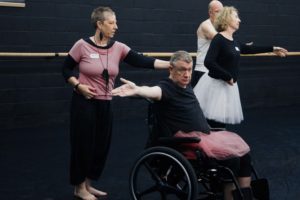
“QB Teaching Artists have consulted with physiotherapist Kerry Read and occupational therapist Peter Irving to develop a program that is tailored to the needs of the participants and ensures the class is inclusive, enhances wellbeing and provides an authentic ballet experience,” Ms Godber said.
Also Citrine Sun Entertainment’s director, Belinda Adams initiated the program after experiencing first-hand the impacts of people living with a brain injury.
Image supplied by Queensland Ballet.
Her son, Dylan, sustained life-threatening injuries in a car accident in March 2012 and was transferred to a brain injury rehabilitation unit after spending two weeks in a coma.
“Being my son’s carer, I’ve learned first-hand the lack of rehabilitation options and resources for people affected and the ongoing barriers they face such as loss of identity, neurofatigue and feelings of isolation,” Ms Adams said.
Citrine Sun Entertainment is producing a documentary on the program, looking to raise awareness of the invisible barriers people with a brain injury face and offer participants a platform to share their experiences.
It is hoped the pilot program will lead to further research in the area, with a commitment to continue delivering the classes at QB studios in West End.
To find out more or register interest, head online.
Akeygroup of Sri Lankan health and nutrition professionals willtake part in a six-monthnutrition and food security award program led by Griffith University in collaboration withthe Australian Government andlocal university partners.
Dr Thomas Davis, First Secretary, Development Cooperation, Australian High Commission in Sri Lanka,said the short course was an important step in thecurrent climate.
“The pandemic is acting as a significant stress test of local and global food systems and supply chains,” he told participants at a preliminary workshop held recently.
“This is a critical area for Sri Lanka for its economy and in terms of human development.”
Professor Sarah Todd,Vice President (Global)at Griffith University,said the University wascommitted to supporting capacity development across the Asia Pacific region, and contributing to the achievement globally of the Sustainable Development Goals.
“Short courses such as this are a critical component of Griffith’s internationalisation activities,” she said.
Participants include23 emerging and middle management leaders representing government, non-governmentand private sector organisations,with existing responsibility for the formulation and implementation of nutrition and food security.
Joshepkumar Thamilini
JoshepkumarThamilini, a Nutritionist and Manager of the Education and Awareness Program atthe Sri LankanDiabetes Associationishopingto “gain the practical knowledge to reduce the impact of food insecurity and to actively participate in advocacy activities to formulate policy actions in Sri Lanka.”
Joshepkumarand others will take part in a range of live (online) interactive sessions consisting of presentations,workshopsand discussions along with mentoring by Griffith and Sri Lankan experts and an online symposium.
“Colleagues from across the University have responded to the challenges posed by ongoing travel restrictions,” Professor Todd said of efforts to deliver the course online, given COVID-19.
“While I look forward to the day that we can again welcome short course participants onshore, I am delighted that we can support the development of Sri Lanka’s health and nutrition professionals in this way.”
Interviews with relevant community and government stakeholders and the filming of additional resources will be added to the online learning material.
The purpose of thesix-month course, which runs until November,is to promote an understanding of the benefits of how an integrated multi-sectoral approach, combined with gender-sensitive programming, can improve nutritional and food security outcomes.
The development of inter-sectoral relationships/networks and appropriately resourced platforms to achieve greater impact for better nutrition and food security, will be important themes.
InNovember participants will meet again online to present their ‘ReturnToWork’ plans for future implementation in their work places.
Australia Awards Short Course opportunities build valuable people-to-people links both within Australia and within the Indo-Pacific region, enabling mid-career professionals and emerging leaders to tap into Australian expertise, gaining valuable skills and knowledge.
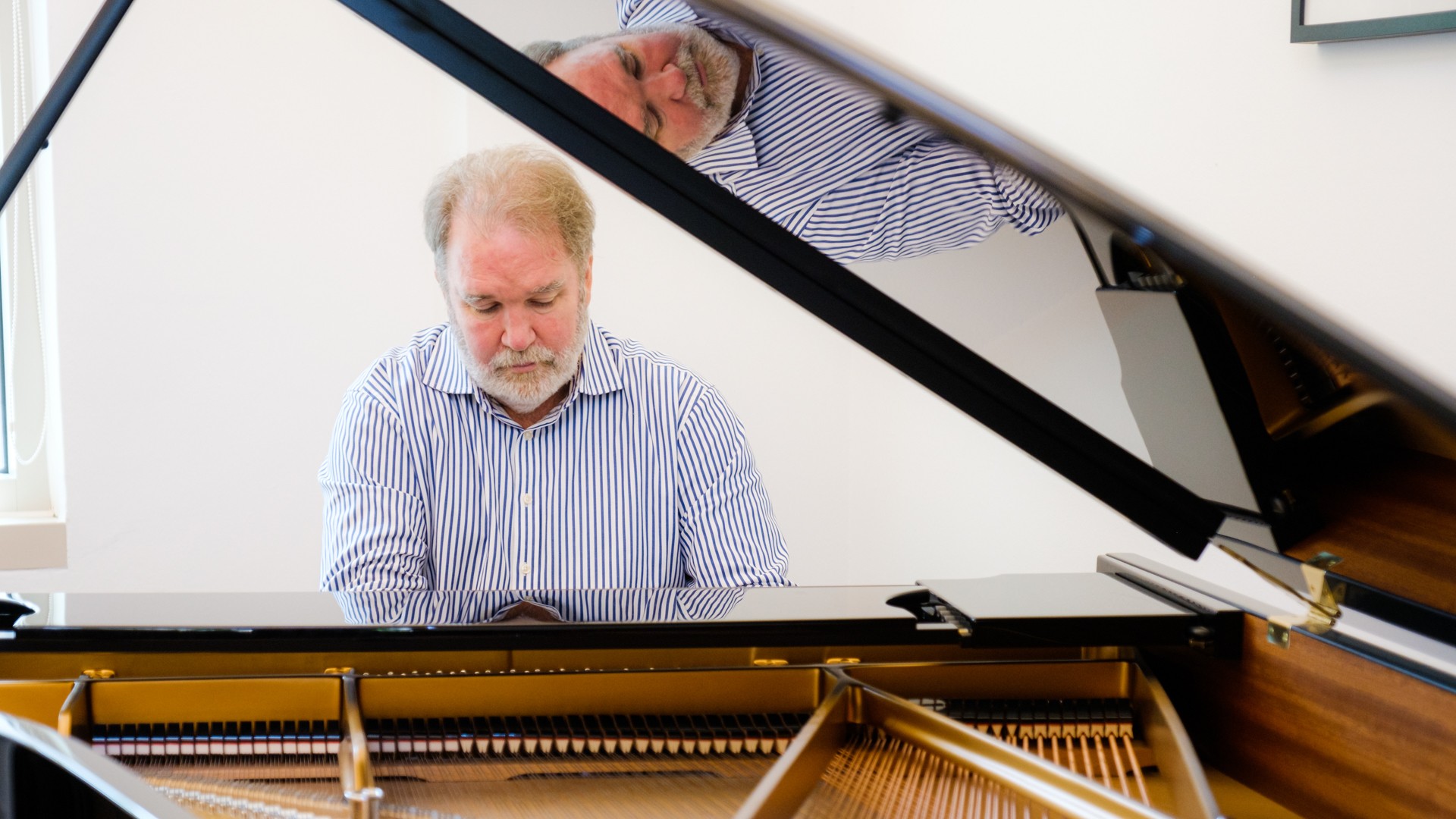
His appointment to the top post at the Queensland Conservatorium reflects a lifelong connection with music, which has seen him perform in more than 40 countries and nurture generations of musicians across two continents.
Professor Lanskey said the Queensland Conservatorium had played a central role in the cultural life of Queensland for more than 60 years.
“The Conservatorium has an amazing roll call of alumni, truly inspiring faculty, incredibly committed staff and a fantastic reputation across the state, nationwide and globally.”
“It is clearly a beacon for music in Queensland and beyond. It’s exciting to come back to Queensland to contribute to such a vibrant creative ecosystem.”
Professor Lanskey grew up in Cairns, where, as a young pianist, he played the cathedral organ and took part in musicals, concert hall recitals and gigs with local pop and jazz bands.
He said music was his passport to the world. His studies took him to Paris and London, and he has worked throughout Australia, Southeast Asia, China, the United Kingdom and Europe as a pianist, festival director, recording producer and educator.
As head of the Queensland Conservatorium, Professor Lanskey wants to raise awareness of the potential of the creative arts. Beyond creating and performing, this embraces production, entrepreneurship and interdisciplinary collaboration, with a focus on social impact and industry connections.
“I love the fact that the Conservatorium is a part of a university like Griffith — it creates opportunities for collaboration across disciplines and into diverse communities,” he said.
“It’s about focusing on the student and on their evolution, and on what is next in music.”
The Beacon will translate knowledge into effective prevention and interventions and help build institutions and systems that improve people’s access to justice.
“We want to translate that understanding and ensure that our justice system can cater for the most marginalised in society,’’ Professor Marchetti said.
“We are very excited that the University is enabling research groups from multi-disciplinary areas to tackle violence from multiple positions and incubate innovative projects that attract major investment from investors and partners.”
Professor Patrick O’Leary
Professor O’Leary said the Beacon was consistent with the University’s commitment to social justice.
“This Beacon is different because it has a broad focus. It will look at violence across interpersonal, family, community, state and global levels and examine the ways the cycle of violence impacts and interacts with factors such structural disadvantage and discrimination,’’ he said.
“We’re seeking participation from people at all levels of society and raise the voices of minority groups so it’s not things being done to them but doing with them so they are agents of change.”
The Disrupting Violence Beacon has three main themes — understanding violence, translation and access to justice which together will focus on how justice institutions in domestic and international contexts address issues of gender, race, conflict and human security.
Vice Chancellor and President Professor Carolyn Evans said the significant long-term investment in the Disrupting Violence Beacon was part of the University’s commitment to using research to address critical societal problems and translating research outcomes into practical solutions.
“It builds upon Griffith’s extensive research, particularly in sustainability and social justice, which are pivotal to addressing the wicked problems of society. Our investment in this Beacon aligns with the University’s strategic plan which strives to create a better future for all.
Two respected Griffith Business and Law academics have received Vice Chancellor’s awards as thousands of students celebrate their own success at graduation ceremonies being held in Brisbane and the Gold Coast.
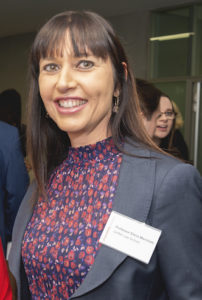
A grateful Associate Professor Burns said that central to her teaching innovations and educational leadership was a profound commitment to the transformative power of human connection and human experience in education.
Associate Professor Kylie Burns
“Given the high rate of mental health issues in lawyers and law students, my goal has been to ensure that students develop as legal professionals who are self-compassionateand understand that engagement in the human context of legal problems is essential to being an authentic, ethical and empathetic professional,” she said.
“I recognise the many Griffith staff who have persevered during COVID-19 to continue to support, engage and encourage our students and our amazing students who persevered to achieve their dreams in difficult circumstances.
“I was blessed to receive my award at the graduation ceremony for the Griffith Law graduates who continue to inspire us, their teachers.”
Associate Professor Burns has had a sustained impact on learning and teaching at Griffith and her efforts have been recognised through a range of learning and teaching citations and awards within the University, along with an Office of Learning and Teaching (OLT) Citation for Outstanding Contributions to Student Learning and recognition as a Senior Fellow of the Higher Education Academy (SFHEA).
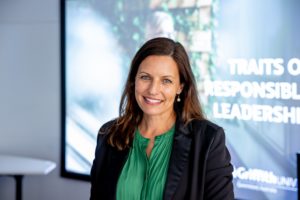
Griffith MBA Director Associate Professor Stephanie Schleimer
Associate Professor Schleimer is the Program Director of the Griffith Business School’s MBA Program and led a recent refresh of the program to embed a values-based approach.
Associate Professor Schleimer said she was extremely humbled to receive the 2020 Teacher of the Year award but there were also others to thank.
“It takes a village to make this a world-leading, value-based program focused on teaching excellence,” she said.
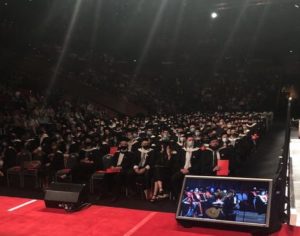
Masks didn’t dampen the enthusiasm of graduates at mid-year ceremonies. Image courtesy of @GriffithUniVC.
“I would like to recognise the many outstanding professional and academic staff members, my wonderful colleagues, who continue to work tirelessly with me on all aspects of the program and who devote so much passion and love to the program and its courses,” she said.
“Equally, I would like to celebrate our Griffith MBA students and alumni who never cease to amaze me.
“I am immensely proud of their dedication to learn despite having such busy lives, their honest feedback that pushes us to strive for excellence and most importantly, for believing in and embracing a postgraduate business education based on responsibility and sustainability.
“To receive my award at the graduation ceremony of my remarkable student cohort meant a lot, especially listening to the student speaker and recent MBA graduate Melanie Arnost give such a brave and touching speech about her journey throughout the program.”
The Griffith University Teacher of the Year is awarded to the most outstanding recipient of the winners of the Group Excellence in Teaching Awards. The Education Leader of the Year award is given to the strongest recipient amongst the winners of the Group Awards for Education Leadership.
Mid-year graduation ceremonies continue, with more than three thousand students conferred in July across Griffith campuses.
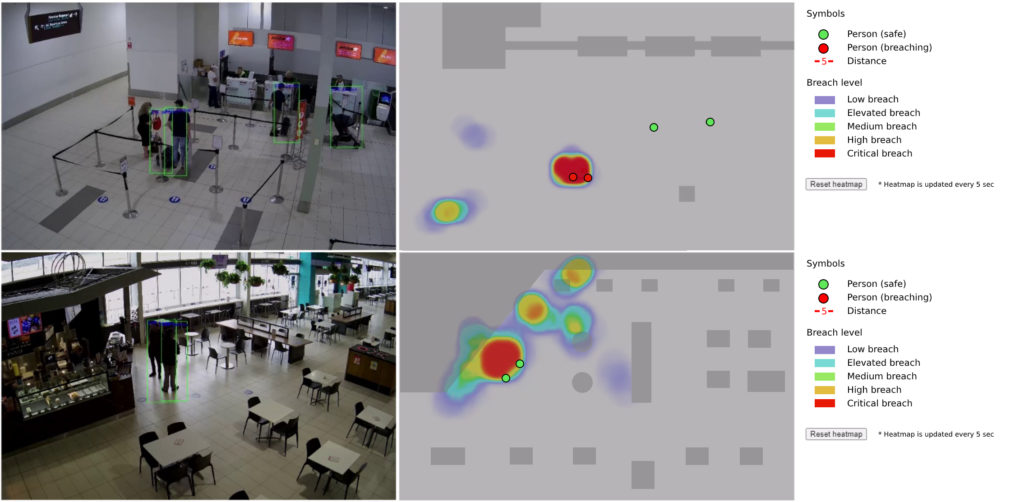
Griffith University researchers have developed an AI video surveillance system to detect social distancing breaches in an airport without compromising privacy.
By keeping image processing gated to a local network of cameras, the team bypassed the traditional need to store sensitive data on a central system.
AI detection in action monitoring the check-in and departure area cafe, it can also generate a heat map of cumulative breaches.
Professor Dian Tjondronegoro from Griffith Business School says data privacy is one of the biggest concerns with this technology because the system has to constantly observe people’s activities to be effective.
“With our system, the central machine only needs to periodically call on local nodes to send updates they’ve made to their decision-making models without needing to see the images they’ve captured.”
“These adjustments are added to the central decision-making model to improve accuracy.”
Professor Dian Tjondronegoro, Head of Business Strategy and Innovation.
Published in Information, Technology & People, the case study was completed at an airport which, pre-COVID-19 had 6.5 million passengers annually with 17,000 passengers on-site daily. Hundreds of cameras cover 290,000 square metres with hundreds of shops and more than 40 check-in points.
Researchers tested several cutting-edge algorithms, lightweight enough for local computation, across nine cameras in three related case studies testing automatic people detection, automatic crowd counting and social distance breach detection to find the best balance of performance without sacrificing accuracy and reliability.
“Our goal was to create a system capable of real-time analysis with the ability to detect and automatically notify airport staff of social distancing breaches,” Professor Tjondronegoro said.
Three cameras were used for the automatic social distance breach detection testing covering the check-in area, food court and waiting area. Two people were employed to compare live video feeds and the AI analysis results to determine if people marked as red were in breach.
“Our AI system performed in real-time giving accurate and reliable results. It can also generate heat maps to show cumulative breaches highlighting spaces which may need to be re-designed for public safety.”
Researchers found camera angles affect the ability of AI to detect and track people’s movements in a public area and recommend angling cameras between 45 to 60 degrees.
Professor Tjondronegoro said their AI-enabled system design was flexible enough to allow humans to double check results reducing data bias and improving transparency in how the system works.
“The system can scale up in the future by adding new cameras and be adjusted for other purposes. Our study shows responsible AI design can and should be useful for future developments of this application of technology.”
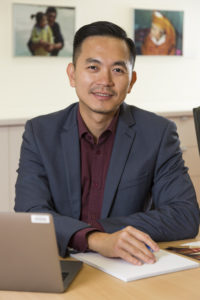
A graduate of Griffith University’s Bachelor of International Tourism and Hotel Management has been accepted into one of the world’s most exclusive hotel concierge programs, Les Clefs d’Or.
Wing Yi (Wisky) Lai completed her Griffith study in 2018 and currently works as a Concierge Supervisor at The Star Gold Coast.
She becomes the only current female member in Queensland in Les Clefs d’Or, an elite global organisation that started in Paris in 1929.
“I spent almost two years trying to get invited into Les Clefs d’Or and finally this year I got in, flying down to Sydney to have my interview,” she said.
“It’s about exceeding the guest’s expectationsand making memorable moments for them. It’s not just carrying out their requests, it’s so much more than that.”
Acting Head of Department for Tourism, Sport and Hotel Management, Professor Charles Arcodia,congratulated Wisky on her acceptance into Les Clefs d’Or.
“The association has welcomed just seven Queenslanders in 40 years, making this an exceptional achievement for Wisky.
“This recognition is regarded as the highest honour in the profession and a Les Clefs d’Or Concierge can be distinguished by the ‘Golden Keys’ worn on the two lapels of their uniform.
“Before being admitted into this Association, prospective members must demonstrate several years of experience as a Hotel Concierge, pass extensive tests and prove their unmistakable ability to provide superior customer service.”
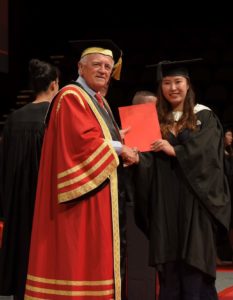
Wisky graduated from Griffith in 2018.
Wisky’s appointment is all the more impressive given she isn’t a Gold Coast local.
She chose to study at Griffith’s Gold Coast campus because of its reputation and relocated from her home in Hong Kong.
“I’d already done a diploma in Hong Kong in Hotel Management and I also worked in a hotel there, but I decided to go to Australia and see what the hotel industry looked like there.
“I did some research and realised Griffith University was basically number one (in Australia) in hotel management.”
“I love the way Griffith also focuses on the people side, not just the hierarchy, because in Hong Kong it is a totally different culture and your boss is your boss.
“Here, management teams listen. Even within my team, we have 50 members in conversation, working closely together.”
Wisky says she looks forward to being awarded her Les Clefs d’Or ‘golden keys’ shortly.
The exclusive club has just 60 Australian members (4000 internationally) and she has big plans for her time in the fold.
“In the next two years, I will look to get a role like Chief Concierge in a five-star hotel and within five years, I want to become Les Clefs d’Or President (in Australia).”