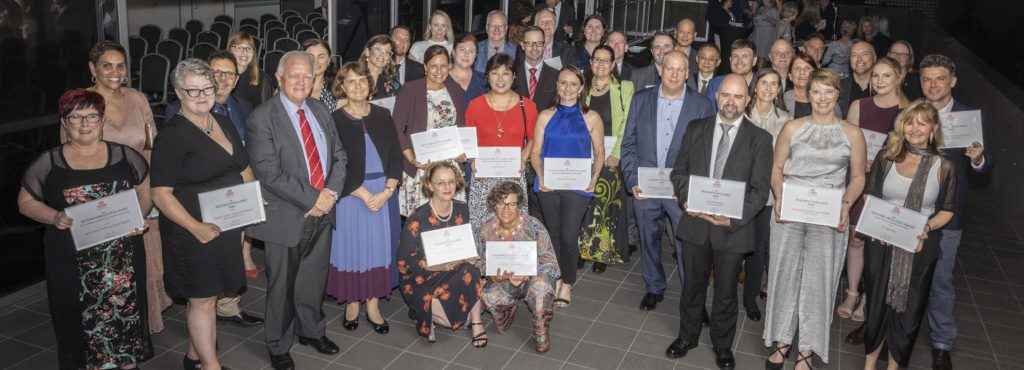
Griffith University has recognised its best and brightest researchers, professional and support staff and teaching excellence at a gala event in Brisbane on 25 November.
The Vice Chancellor’s Gala Awards brought together three existing awards ceremonies for the first time — Research Excellence Awards, Professional and Support Staff Awards and Griffith Awards for Excellence in Teaching.
“These awards celebrate many of our hard working and talented staff who, despite the challenges of the past 18 months, have continued to innovate, make discoveries and to go above and beyond to help build a brighter future,” Professor Evans said.
“I am very proud of our award recipients and all our colleagues in the Griffith community who work hard every day to make a difference and enhance the experience of our students.”
Research Excellence Awards
Research Leadership
Director at the Griffith Institute for Drug Discovery, Professor Katherine Andrews was recognised for her ground-breaking malaria research and work to raise the profile of women in STEM.
Outstanding Research Excellence
A team including Professor Maxime Aubert from Griffith Centre for Social and Cultural Research and Professor Adam Brumm, from the Australian Research Centre for Human Evolution has been recognised for the discovery and dating of the oldest known rock art on Earth, a scene depicting a Sulawesi pig in an Indonesian limestone cave, which is 45,000 years old.
Research Engagement
Associate Professor Matthew Burke from the Cities Research Institute was awarded for his work partnering with government and industry around best practice public transport infrastructure.
Promoting Industry Engagement for Graduate Students
Professor Yongsheng Gao accepted the award on behalf of the ARC Research Hub for Driving Farming Productivity and Disease Prevention, which facilitates on-site research and development work for HDR students.
Supervision
Associate Professor Lauren Ball from the School of Health Sciences and Social Work and ndMenzies Health InstituteQueensland was recognised for her suite of strategies to support researchers, including a co-designed handbook, knowledge database, media training, professional development workshops, weekly ‘huddles’ and a YouTube series, How to Research.
Professor Catherine Pickering from the School of Environment and Science and andCentre for Planetary Health and FoodSecurity, whose successful Quantitative Literature Review Method has supported the publication for more than 300 HDR students. These reviews are cited seven and a half times the rate of other publications.
Group or Team
Professor Nam-Trung Nguyen and the Micro Systems Team from Queensland Micro- and Nanotechnology Centre. He led the team to multiple breakthroughs in cutting edge technology for environmental and biological applications.
Mid-Career Researcher
Professor Tanya Smith from Griffith’s Centre for Social and Cultural Research was recognised for her outstanding contribution to anthropological research, including the publication of The Tales Teeth Tell, a book about surprising ways in which teeth illuminate ancient human development.
Early Career Researcher
Dr Jamie Ranse from Menzies Health Institute Queensland for his timely contribution to emergency healthcare in highly visible, large-scale events, including emergencies. Dr Ranse helped to shape Queensland’s COVID-safe events guidelines.
Professional and Support Staff Awards
Excellence in Enhancing Research
Research Development Manager Dr Brit Winnen, from the Office for Research, has been acknowledged for her tireless work identifying interdisciplinary research opportunities that are strategically aligned.
Excellence in Enhancing Student Experience
The Health, Counselling and Wellbeing Team. Ms Emma Morgan, Director, and Dr Jonathan Munro, Head of Counselling and Wellbeing, lead the 40-strong team, which has been recognised for always being there for students, including remote and offshore, during unprecedented work and study conditions.
Excellence in Community Engagement and Service Award
The Facilities Management Northern Campuses, Campus Life Team was acknowledged for its tireless work during COVID-19 to remain adaptable in the face of evolving rules and regulation. The team, led by Facilities Manager Craig Shannon, was also recognised for its conservation efforts.
Excellence in Equity, Diversity and Inclusion Award
Griffith Business School First Peoples Working Learning and Teaching Committee, for its work developing and embedding the framework for teaching First Peoples inclusion content and cultural competency in the Bachelor of Business.
Excellence in Innovation Award
Robotic Processing Automation Team. Senior Manager, Experience Design and Improvement, Rod Netterfield accepted the award for their dedication to empowering colleagues with technological skills to creatively problem solve and create efficiencies.
Excellence in Enhancing Teaching
Mrs Jessica Yuen, Senior Executive Officer in Pro Vice Chancellor Business accepted the award on behalf of a project team that revamped the Bachelor of Business to ensure cutting edge curriculum, including interdisciplinary foundation.
Excellence in Client Partnership Award for HEW 6-10
Student Connect Manager Mark L’Estrange was awarded for his coordination of the retention and progression exercise for offshore students throughout COVID-19 and recognised for his tenacity, patience and dedication.
Excellence in Client Partnership Award for HEW 1-5
Administrative Support Officer in the School of Information and Technology Mel Gilbert was recognised for her proactive commitment, hard work and reliability.
Griffith Awards for Excellence in Teaching
Vice Chancellor’s Award for Griffith University Teacher of the Year
Associate Professor Stephanie Schleimer from Griffith Business School. She refreshed the MBA program to ensure it had a values-based, sustainability focus and it was subsequently ranked Number 1 worldwide in the Corporate Knights Better World MBA Rankings.
Vice Chancellor’s Award for Griffith University Education Leader of the Year
Associate Professor Kylie Burns, Griffith Law School. As Deputy Head of the School, Kylie uses analytics to inform coordinated support for first year students, provides professional development in student support and led a university working group on retention.
Group Excellence in Teaching Award
Associate Professor Stephanie Schleimer, MBA Director, Griffith Business School, for her award-winning reinvigoration of the MBA program.
Senior Lecturer Lise Johns, Senior Lecturer, School of Human Services and Social Work in Griffith Health, for her constructive ‘students as partners’ approach ensuring students are ready to enter social work with confidence.
Group Education Leadership Award
Associate Professor Kylie Burns from Griffith Law School, recognised for establishing a learning and teaching community of practice in the School, leading its response to COVID-19 and continued improvement of program and courses.
Dr Kirsten MacDonald, Senior Lecturer in the Department of Accounting, Finance and Economics, awarded for over 10 years of sustained leadership in learning and teaching at Griffith Business School, enhancing program quality and student graduate employment outcomes, through design and delivery of Financial Planning programs from 2010-2020.
Professor Jane Evans from the School of Medicine and Dentistry was recognised for her evidence-based teaching and leadership for dual bachelors of Dental Technology and Dental Prosthetics. As inaugural program director, Jane led design and benchmarked internationally, creating transportable qualifications.
Professor Caryl Bosnan from the School of Engineering and Built Environment was awarded for leadership, including in her current role as Discipline Head, Architecture and Design. Caryl led the accreditation of the Master of Architecture, building on her significant contribution in the Planning discipline.
Higher Education Academy Principal Fellows
Professor Elizabeth Cardell, Deputy Head, School of Medicine and Dentistry, recognised for her contribution to allied health assessment and quality as an accreditor, review assessor and expert. She pioneered simulated learning activities with far-reaching impact on health students that led to a change in national policy for speech pathology clinical education.
Professor Roianne West from the School of Nursing and Midwifery was recognised for her impact on Aboriginal and Torres Strait Islander Health. Roianne is foundation Professor of First Peoples Health and established the First Peoples Health Unit. She designed, development and implemented Australia’s first Aboriginal and Torres Strait Islander Health Curriculum Framework.
Australian Awards for University Teaching
2020 Citation for Outstanding Contributions to Student Learning
Associate Professor Gary Grant and lecturer, Ms Denise Hope from the School of Pharmacy and Medical Sciences, on behalf of the Pharmacy Innovation team. They were recognised for the design and delivery of a Bachelor of Pharmacy capstone activity, PharmG, an authentic, gamified pharmacy simulation, which emulates community pharmacy practice.
Dr Leanne Kenway from the School of Pharmacy and Medical Sciences was recognised for her approach to teaching anatomy and physiology. Through a range of active learning strategies, including a 3D digital cadaver, Skeletal Scrabble and weekly Who Am I? quizzes, Dr Kenway enhances retention and improves grades.
2019 Award for Teaching Excellence
Professor Richard John, Discipline Head, School of Environment and Science, for his leadership in STEM education in Australia from pre-K to university. A passionate advocate for students from disadvantaged backgrounds, Richard is a mentor and coach as well as Dean, Learning and Teaching, with a focus on first year chemistry courses designed to retain students from diverse backgrounds.
2019 Citation for Outstanding Contributions to Student Learning
Dr Sarah-Jane Gregory, Lecturer in the School of Environment and Science, for the holistic and innovative curriculum for undergraduate science programs, including co-curricular activities. She uses technology to cater for diverse learning needs.
Associate Professor Brooke Harris-Reeves, a Senior Lecturer in the School of Health Sciences and Social Work, for employability-focused curriculum, which create experiences for Bachelor of Sport Development students that help to establish a professional identity and career purpose.
Dr Taeko Imura, Senior Lecturer from the School of Humanities, Languages and Social Science, for her commitment to innovation and engaging, transformative education. Taeko contributes to student employment outcomes through establishment of an annual career event with the Consulate General Japan.
Associate Professor Christopher Love, Senior Lecturer in the School of Environment and Science, for active learning and student-staff partnerships that contribute to engagement and learning success in biochemistry and molecular biology. Students are helped to think scientifically, rather than learning facts about science.
Internationalisation Awards
Outstanding contribution to overall internationalisation
Professor Stuart Bunn, Director of the Australian Rivers Institute, for his contribution to Griffith’s international reputation for excellence in water science, through the development of a network of international collaborators and strategic partnerships.
Associate Professor Jane Fowler from the School of Human Services and Social Work, for exemplary leadership of a DFAT-funded Papua New Guinea Program resulting in a Graduate Certificate in Counselling for participants which has the potential to be extended across the Pacific.
Most outstanding contribution to the development of short term global mobility programs
The Tourism Study Tour team. Professor Charles Arcodia and Dr Margardia Abreu Novais from the Department of Tourism, Sport and Hotel Management in Griffith Business School accepted the award on behalf of the team, recognised for a tour which invites multinational participants to apply international industry and community knowledge to analyse sustainability, authenticity and competitiveness of destinations.
All award winners in attendance at the event on Thursday 25 November, along with Vice Chancellor and President Professor Carolyn Evans and Chancellor Henry Smerdon AM DUniv.
The link between consuming violent media and the propensity for aggression has long been a controversial topic. Now new research from Griffith University has found that personality and frustration are better predictors of anger and aggression in the context of media exposure.
“We found no difference in both anger and aggression following exposure to a book, violent video game, television and non-violent video game,’’ says Professor Grant Devilly from the School of Applied Psychology and Griffith Criminology Institute.
“What we did find was that people with high levels of impulsivity, increased emotional reactivity to the media, and frustration with the content of the media are more likely to have a higher anger response to media exposure.
“These results are in direct opposition to traditional models of aggression which suggest a causal link between trials of violence and aggression risk.”
The researchers analysed the responses of 151 participants who completed a questionnaire and then either watched a short video designed to induce anger or neutrality, before being exposed to one of four conditions: reading a sexually violent passage from a book (American Psycho); viewing a violent, sexualised video game (Duke Nukum Forever); playing a non-violent, non-sexualised video game (Portal 2); or watching a violent and sexualised television episode (the first episode of Game of Thrones).
“Behavioural aggression (physically acting more aggressive) was higher for those participants less disturbed by the media and with higher trait anger than those who were more disturbed by the media and with low levels of trait anger,’’ Professor Devilly said.
“Trait anger is how susceptible people are to anger as a personality trait compared episodes of anger caused by a situation.
“Results from this study suggest that media habits do not appear to influence response to media once personality variables are considered, but this doesn’t discount the possibility that years of media consumption have previously influenced these dispositions.”
He said the study’s varied use of media reduced the likelihood of biased conclusions regarding violent video games.
“Despite the book (American Psycho) being rated as the most immersive media type, it did not vary significantly in post media anger or behavioural aggression.”
“It seems it is what we bring to the game that matters rather than what the game brings to us.”
Papua New Guinean born,Sean Jacobs currently works as aPrincipal Advocacy and Major Projects Advisor at Moreton Bay Regional Councilwhere he ishelping todeliverthe Council’sadvocacy agenda and provideexpert advice and project co-ordinationforstrategic interestsincluding the2032 Olympic and Paralympic Games and other major infrastructure projects.
“The Games offer co-benefit opportunities for Asia-Pacific nations, and this is a relatively underexplored approach that I hope to use Griffith MBA skills to inform,” Sean explained.
Inspired by a masterclass which all scholarship applicants attended, he added that Griffith academicsgot him thinking about developing a ‘social license to operate’.
“The 2032 Games offer clear benefits in terms of positive local infrastructure and economic impacts.
“I’minspired to think about how the Games, through careful planningand responsibleleadership, can be a vehicle forbuilding trust in all levels of governmentandrealising broadersocial, economicand cultural legacy benefits.”
Seanholds a BA (International Relations) from Griffith and a PostgraduateCertificate in Policing, Intelligence and Counter Terrorism from Macquarie University, qualifications from the Australian National Security College, the Australian Institute of Management and the University of New England.
Heis a former Brisbane City Council election candidate, ministerial adviser, United Nations worker, international youth volunteer and national water polo champion, also authoring two booksin the last three years.
Alex Bowen-Rotsaert. Image credit: John Hatfield for Space Design Competitions Australia
Rachelladmits she’d already had her eye onGriffith’s MBA well before the scholarship opportunityarose.
Rachell Hansen
“I(was)searching for an MBA scholarship and admiredGriffith for its strong focus on sustainability and close collaboration with the Queensland Government (Queensland Climate Risk Symposium),” she wrote in herscholarshipapplication.
“This aligns well to my career goals to become a Chief Climate Action Officer, or a DG or Minister in this space within the next 10 years.”
“I’m currently working remotely for theForward Institutewith theUniversity of Oxfordon aresearch project onCharacter & Responsible Leadership in Business,” she said.
Shelley Hartland. Image credit: Rahil Ahmad.
“Speaking to CEOs and senior leaders for the UK’s major businesses has reinforced for me how responsible leadership and good character have the ability to significantly transform organisations and ultimately society.”
In hisscholarshipapplication, Alexander shared how a seemingly incredible job offermade him questionwhat he came to realise was a ‘narrow-minded focus on careerprogression’.
“Businesses suffer from the same myopic focus on balance sheetsat the cost of wider stakeholder considerations,” he said.
“In almost accepting a job offer that didn’t truly alignmywithmygoals, Irealised that ‘purpose before profit’…..should drive decisionmaking, both personallyandwithinbusiness.”
MBA Director Associate Professor Stephanie Schleimercongratulated all scholarship winners and said Griffith’s MBA was different to traditional offerings because it was built on core values crucial to business leaders in the 21st century.
“Achieving the number one ranking in the world two years in a row shows the value of a business education that is focused on sustainability and responsibility,”Associate Professor Schleimer said.
“The program develops critical thinking skills and supports students to identify creative and future-ready strategies to improve the world around us.”
The 2021 scholarship competition offered a total prize package of up to $130,000.
For Griffith University’s A Better Future For All series, in partnership with HOTA, Home of the Arts, Kerry O’Brien welcomed renowned dancers Li Cunxin AO and Mary Li.
A talented boy from rural poverty in China, Li Cunxin is catapulted to stardom when, at just 11, he is selected from millions to become a dancer. But then, at the height of his prominence, he makes the extraordinary decision to defect to the USA. On the other side of the world, Australia’s Mary McKendry is also destined for international ballet stardom. From a chance meeting in London a romance blossoms and Mary and Li Cunxin go from dance partners to life partners.
This conversation traversed each of their incredible careers, their success against the odds and Mary’s heart-breaking decision to sacrifice her career for the love of their child.
Li Cunxin
Li Cunxin AO is Queensland Ballet’s Artistic Director. Having led a long and diverse career as a dancer, Li brings his passion for ballet, devotion to artistic excellence and international reputation and networks to Queensland Ballet’s rich 60-year history.
At the age of eleven, Li was selected by Madame Mao’s cultural advisors to attend the Beijing Dance Academy. In 1979 he joined Ben Stevenson’s Houston Ballet company as an exchange student and later went on to achieve the top rank of Principal in 1982. He moved to Melbourne in 1995 with his wife, dancer Mary McKendry, to join The Australian Ballet as a Principal Artist. Li retired from dancing in 1999, at the age of 38, but maintained his strong ties to the ballet community. Before taking on the role of Artistic Director at Queensland Ballet, Li worked in Melbourne as a senior manager at Bell Potter, one of the largest stockbroking firms in Australia. He is currently on the board of the Bionics Institute, and until his appointment as the Artistic Director of Queensland Ballet, he sat on the board of The Australian ballet, which he joined in 2005.
In 2003 Li published his international best-selling autobiography Mao’s Last Dancer, which has received numerous awards. The book was adapted as a feature film in 2009.
Li received an Order of Australia (AO) in the Queens Birthday Honours List 2019 for his distinguished service to the performing arts, particularly to ballet, as a dancer and as an Artistic Director.
Mary Li
Mary Li (formerly Mary McKendry) started her dance training in Queensland at the age of eight. She successfully completed the RAD Solo Seal Award in Australia and continued her training at the Royal Ballet School in London.
Mary joined the London Festival Ballet (English National Ballet) in 1977 and was promoted through the ranks to Principal Dancer in 1981. In 1985, Mary joined Houston Ballet as a Principal Dancer.
During her performing career, Mary danced principal roles in all the major classical ballets, such as Swan Lake, The Sleeping Beauty, Giselle, Romeo and Juliet, The Nutcracker, Cinderella, Don Quixote, Onegin, Les Sylphides and La Sylphide. She also danced leading roles in contemporary ballets and many new ballets were created on her. She has worked with legendary teachers, choreographers, artistic directors and artists, including Rudolf Nureyev, Glen Tetley, Christopher Bruce, Margot Fonteyn, Ben Stevenson and many others. Mary and her husband Li Cunxin have danced together all over the world.
Since retiring from dancing in 1992, Mary has been invited to teach and coach in many international ballet companies. She has been a teacher and coach at The Australian Ballet for the past 10 years, and joined Queensland Ballet’s Artistic Staff as Ballet Mistress in January 2013.
Mega-events cause extremes of excitement and anxiety for urban planners. Among mega-events, the Olympics is the rarest opportunity – most planners will never get to take it on. Those that do enter a rarefied space, where energy, money and ambition demand planning at a grand scale. Much like athletes winning gold, planners who deliver a successful Olympics secure a permanent professional legacy.
https://youtu.be/KaAgHevxYkI
Planning for success
Planning for the Olympics requires extra action across all the main areas of urban planning: infrastructure provision, transport, environment, housing, urban design, open space management and development control. The challenges of planning a mega-event across these domains are complex, time sensitive and supplementary to the core business of planning.
The most obvious and recognisable role for urban planning is designing and designating Olympic venues. Delivering flagship venues is not only a design objective. Planners must also ensure venues are accessible and have larger, integrated visions supporting them to ensure future use.
The best facilities – the ones that truly leave a legacy – combine high quality designs with adaptable functionality. Good urban planning, backed by strategic vision, is key to success. The venues must be fit for purpose, while having a legacy plan to ensure they will remain active and in demand after the Olympics.
Planners in Sydney did an excellent job with the Sydney Olympic Stadium. An ambitious project, the stadium performed very well for the Olympics and has thrived since, hosting many high-profile sporting and cultural events every year. It is the centrepiece of a multi-use commercial and residential district. A simple legacy plan that did not try to change core use of the venue was a wise strategy.
Contrast Sydney with Beijing, where the famed ‘Bird’s Nest’ stadium wowed during the Games but failed to thrive afterwards. The plan to convert it to a shopping and entertainment complex never eventuated. The stadium is maintained at great cost but rarely used for anything. Worse again are examples of Olympic venues in Athens, which had no legacy plans at all, practically guaranteeing they would fall into ruin.
Best practice requires an overarching strategic plan that addresses the full breadth of priorities and requirements for hosting the Olympics. It should detail how land will be found, how the infrastructure will be provided, transport connectivity, post-occupancy visions and budgeted implementation strategies. Individual precinct plans for new and existing venues and their surrounding areas can branch off from the main plan.
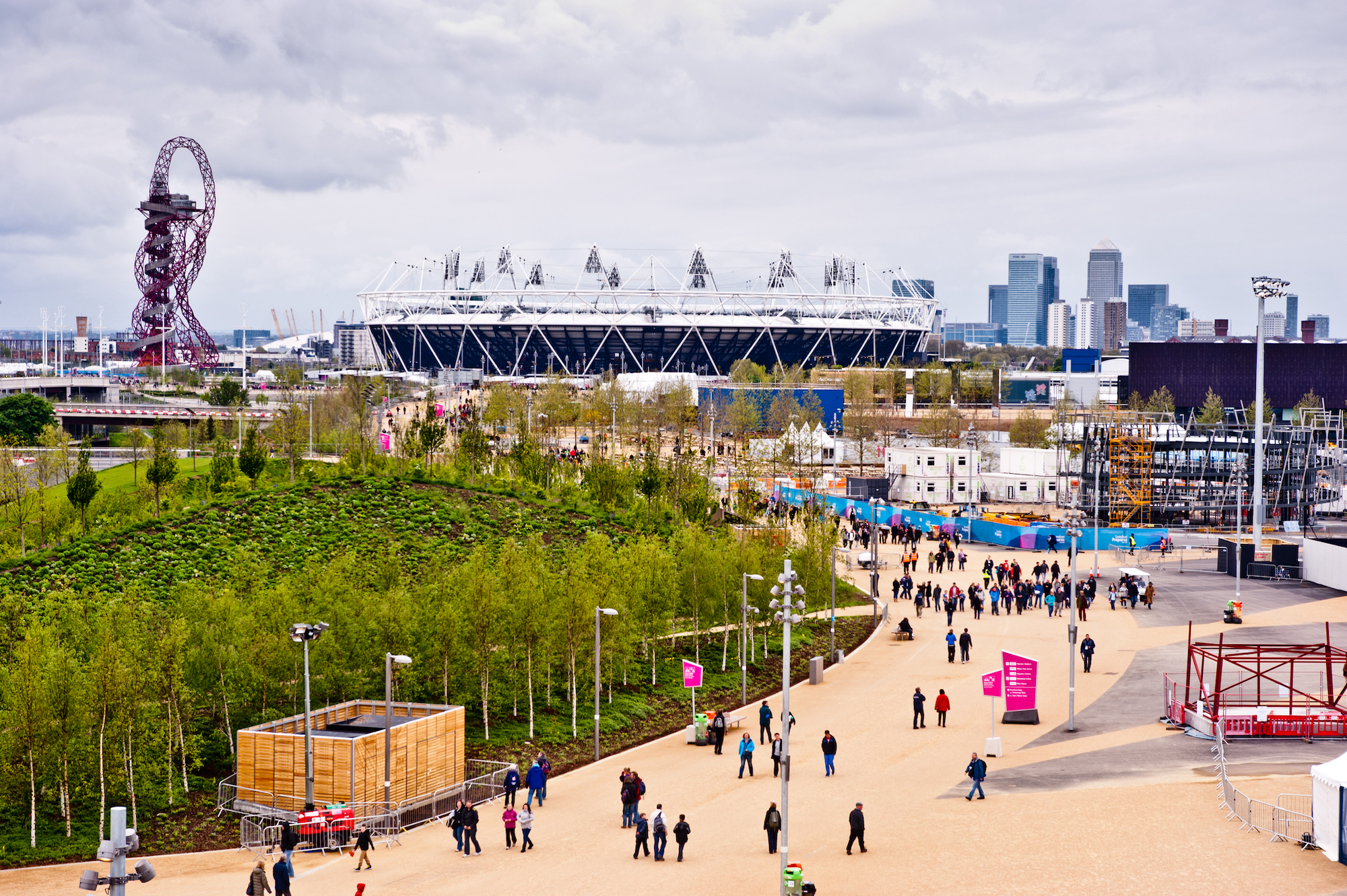
Having a strategic and visionary approach also helps increase the potential for a city-wide uplift, including through urban regeneration projects. London leveraged the 2012 games for massive redevelopment of the post-industrial Lower Lea Valley. Sydney created 430ha of parkland, 40km of cycle paths and water recycling infrastructure. Barcelona delivered extensive inner-city brownfield redevelopment and other urban improvement projects. Remarkably, only 17% of expenditure for the 1992 Barcelona Games went towards sports, while 83% was allocated to urban improvement.
Having a strategic and visionary approach helped increase the potential for a city-wide uplift, including through urban regeneration projects. London leveraged the 2012 Olympics for massive redevelopment of the post-industrial Lower Lea Valley, U.K.
Avoiding bad outcomes
Urban planning can only deliver a successful Olympics and generate long-term benefits if wider forces align. Planning for a mega-event is rife with politics, community expectations and competition for resources. Despite their good intentions, planners may struggle to deliver their best work if they are not given sufficient scope, resourcing and political support.
In order to build arenas and infrastructure, governments invest hundreds of millions of dollars. Planners working with appropriate budgets find it easier to deliver successful events. A particular hazard is funding being cut during the development cycle, as it concentrates budgets into sporting infrastructure and away from other areas. This poses serious challenges for the wider city, especially when existing plans were created on the basis of higher budgets than those ultimately provided.
Maintaining good relations with communities is vital when planning for a mega-event. Planning for the Olympics can take 10 or more years, so planners need to build long-term rapport with local communities through stakeholder workshops and other participation media. The influence of politics is considerable in this space; sometimes communities can be engaged or alienated by political decisions taken without regard to planning. In such cases planners may struggle to rebuild community trust, or they may have to gently reduce community expectations if politicians have over-promised.
“… funding being cut during the development cycle … concentrates budgets into sporting infrastructure and away from other areas …”
Maintaining good relations with communities is vital when planning for a mega-event. Planners need to build and maintain rapport with local communities through stakeholder workshops to ensure a sustainable legacy beyond 2032.
Lessons for South East Queensland
Southeast Queensland (SEQ) has a long and proud history of staging sporting mega-events. It also has a well-established, statutory regional planning system. Regional development in SEQ has been coordinated across levels of government since the early-1990s. Planners in the region will be able to leverage this unique system and its institutional capacity to deliver an outstanding Olympics, with quality infrastructure, integration and connectivity.
The biggest hazard to planning a successful 2032 Olympics will not come from a lack of professional capacity. If things go awry, it will likely be due to politics getting in the way of planners being able to properly plan. If governments at all levels are supportive of good planning and make sufficient resources available, there should be no good reason why planners will not deliver an outstanding event. Assuming that happens, Queensland will secure its Olympics legacy while its urban planners will secure their own professional legacy.
Author
Dr Tony Matthews MRTPI is an award-winning Urban and Environmental Planner, with portfolios in academia, practice and the media. He is a faculty member at Griffith University, where he is a Senior Lecturer in the School of Environment & Science and the Cities Research Institute.
In addition to a Masters and PhD in Planning, Tony holds the professional designation of Chartered Town Planner, earned through the Royal Town Planning Institute. While primarily based in planning academia and research, Tony maintains an active practice portfolio. He has led and participated in a wide variety of planning and sustainability projects in collaboration with government, the private sector and community organisations. Tony is also an in-demand public speaker and regularly delivers invited keynotes and speeches at academic and industry events.
Three Griffith University researchers have been awarded Advance Queensland Industry Research Fellowships announced by Minister for Tourism, Innovation and Sport and Minister Assisting the Premier on Olympics and Paralympics Sport and Engagement Stirling Hinchliffe MP.
Deputy Vice Chancellor (Research) Professor Sheena Reilly said the University was delighted to receive the fellowships.
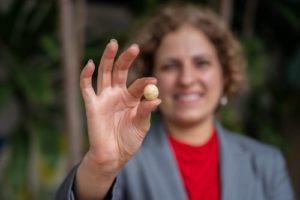
“Each adopts new technology and novel approaches, whether that be in finding new ways to recycle fire extinguishers in an environmentally-friendly way, improving connectivity to enhance tourism via micro-transport or adopting new technology to enhance macadamia nut quality,’’ she said.
He led the development of a new technology using waste chemicals from fire extinguishers and by-products from the tyre recycling process that can draw out toxic substances from wastewater on mining sites.
“The fellowship is about scaling up the technology and working with industry partners to find practical applications and solve ongoing environmental challenges.”
The new technology also addresses the growing problems from stockpiling waste fire extinguishers and tyres by turning them into activated carbon for waste-water treatment.
“Once the mine tailings are treated with our technology, the remaining water can be returned into waterways rather than sitting in a dam forever. By addressing several problems in waste management, we’re turning waste by-products into a solution.”
Dr Abraham Leung, a Transport Academic Partnership (TAP) and Transport Innovation and Research Hub (TIRH) Postdoctoral Research Fellow at Cities Research Institute, received $240,000 for Transforming Queensland Tourism with Micro-Transport with additional industry funding of almost $815,000 in project value.
Dr Leung says the new project brings together tourism and government stakeholders with transport industry partners to create a seamless and user-centric travelling experience for a new generation of tourists.
“Tourists increasingly want more control over their travel and easy access to all the information they need on their smart devices,’’ he said.
“They don’t want 15 different apps for local buses, scooters, e-bikes and island ferries and the attractions they visit. They want one app that connects it all.”
He said Queensland could become a world leader in offering flexible, on-demand transport services creating a seamless travel experience for visitors.
“Tourism events could be linked to these ‘Mobility as a Service (MaaS)’ apps and that is the approach we’ll likely see at the 2032 Brisbane Olympic Games.”
“These apps are like a knowledgeable concierge that goes with you wherever you are, suggesting nearby events and experiences, but also telling you the most convenient ways to get there.”
Dr Leung said prototyping a ‘mini-MaaS’ in Brisbane and Townsville with and for tourists would be a world-first.
Integrating infrastructure, precincts and their impacts
Hosting a major or even mega-sporting event like the Olympic and Paralympic Games is regarded by many (but certainly not all) as a great honour for the host city or country, but it presents some major challenges as well. Until recently there was a significant risk of being left with huge public debt after building new sporting facilities big enough to accommodate large Olympic crowds that would rarely be fully occupied after that occasion. Looking around recent host cities, some facilities have been abandoned, some repurposed and some, like the famous National Stadium in Beijing, better known as The Birdsnest, will be used again when they host the opening and closing ceremonies of the 2022 Winter Olympics and Paralympics.
The abandoned bobsled and luge track from the 1984 Winter Olympics in Sarajevo, Bosnia and Herzegovina.
London’s bid to host the 2012 Olympics was one of the first to focus on sustainability through the planned repurposing and reuse of facilities after the event, and it was an ambitious attempt to use investment in Games infrastructure to underpin the regeneration of a substantial part of East London, Stratford, that had suffered decades of deindustrialisation and lack of investment in public services and facilities. The new processes for identifying future hosts are concerned now with delivering a major sporting event in a sustainable manner, in ways that don’t saddle the host city with crippling debt and leave a legacy of ‘white elephant’ facilities.
There is also greater recognition now that events and facilities can sensibly be distributed around a larger area, perhaps the metropolitan region rather than concentrating mostly within a single city. This can present problems of identity though if the host is not a single city, but a metropolitan region or even a State: the International Olympic Comittee (IOC) speaks of ‘Brisbane and Queensland’ being ready to welcome the world to the 2032 Olympic and Paralympic Games while recognising that ‘Australia has a love affair with the Olympic Games’. In Australia it is often a challenge to reconcile local, State and Commonwealth interests, not least when it comes to agreeing what share of the total bill is to be paid by each.
Bidding to host a major sporting event like the Olympics reflects a desire to be recognised as a globally significant place and a city of renown, acknowledged as a member of the global club of world cities. And the capacity to deliver a successful event is almost taken for granted now, although that should never be taken as downplaying the technical challenge of organising a major event that passes without disruption and is experienced as an enjoyable occasion by visitors, officials, athletes and their entourages.
“Bidding to host a major sporting event like the Olympics reflects a desire to be recognised as a globally significant place and a city of renown, acknowledged as a member of the global club of world cities.”
But, beyond its successful delivery and opportunity to increase one’s global reputation, hosting the event also gives the chance to achieve some more parochial objectives. These often relate to infrastructure projects that address some long-standing urban challenges: deindustrialisation and economic growth, housing supply or traffic congestion. The fact that new facilities and infrastructure must be designed, built and open for business by the time of the Games brings a focus to planning and financial commitments that might otherwise be lacking. There may have been talk of new metro-rail systems or stadia for years, but in our case, whatever is planned and committed to must be ready by the last week of July 2032.
It is sometimes said that winning the right to host a major sporting event has three possible impacts on investment in facilities and other infrastructure: it secures investment that might not otherwise have occurred at all; it brings it forward in time to meet the deadlines mentioned above; and it enlarges or amplifies investment commitments already made.
Of course, all of this investment occurs in particular places and presents opportunities for place-making and place enhancement. In some cases, these enhancements will be very localised: a stadium might be rebuilt and served by a new metro-station, creating a new destination, accessible by public transport and a substantially improved public realm. In others, a cluster of facilities might be built, again served by improved public transport that helps create a precinct with a new identity and significance within the city as a whole.
Photo: Dan Stowell, CC BY NC SA 2.0 https://www.flickr.com/photos/danstowell
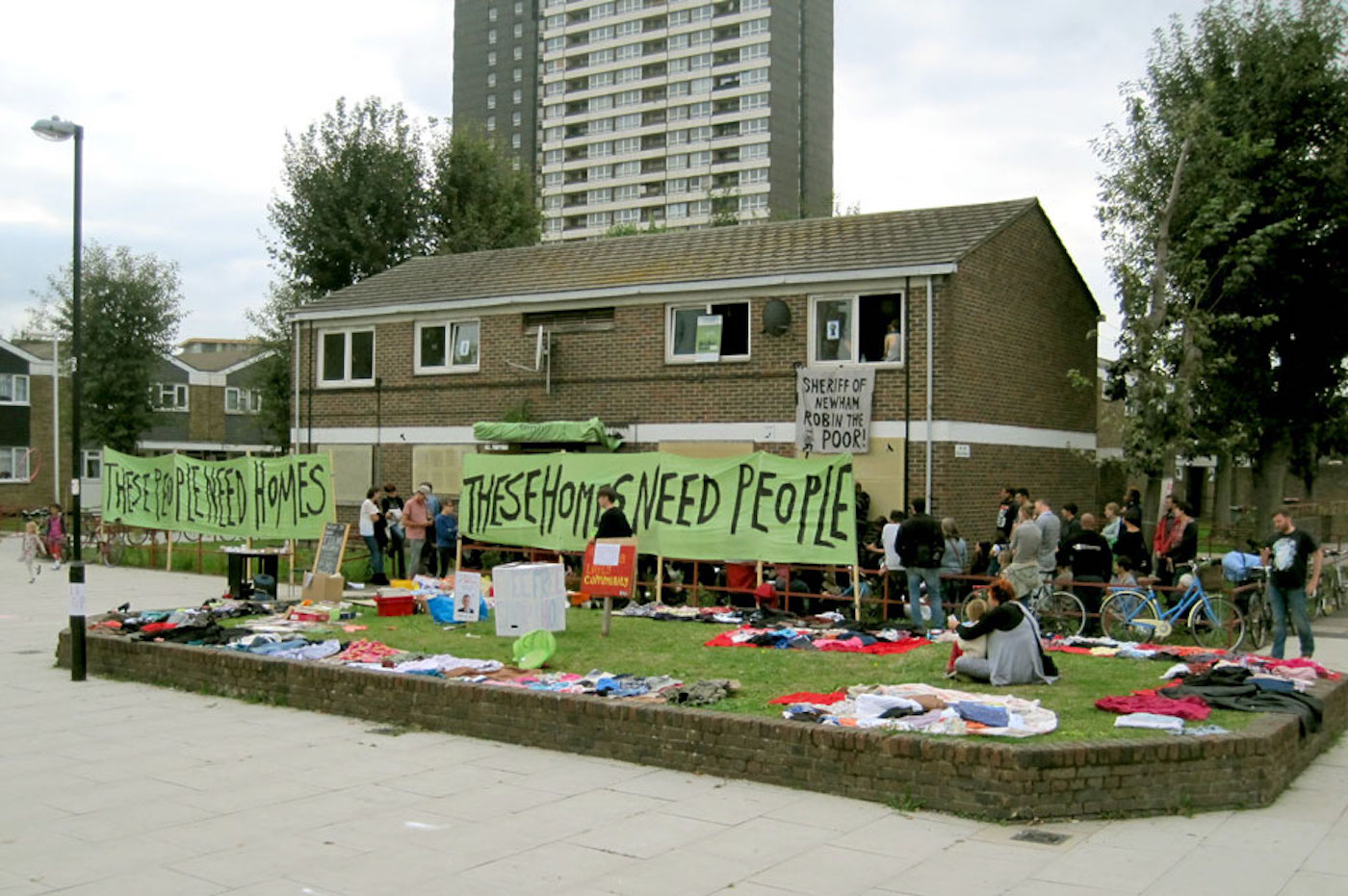
A fairly commonplace and valid criticism of these types of urban transformation is that they have displaced existing residents or businesses, typically poorer residents and smaller businesses, as part of a process of urban gentrification. This criticism cannot be dismissed lightly and good planners have long asked of developments: who gains and who loses? It would be beyond irony for a major sporting event that claims and prides itself on leaving a legacy of sustainable development does so at the expense of some of the most vulnerable and marginalised residents of our host cities.
Critics of investment in major sports events point also to the opportunity cost of that investment, arguing it could and should be used to better effect in solving some of the most pressing problems faced by host cities or countries. While this can be a powerful argument, if we are able to use that investment to help make many places better, and not just places that are the focal points of the main sporting events, around the host city or region then legacy claims will carry more weight with the majority of residents. Just as those who eventually go on to win Olympic medals start at their local playing field, track or pool, so modest investment in small scale places serving very local communities can pay big dividends in the future.
Many planners will now tell you that in the Olympics of the 1930s and 40s, town planning was a recognised event! While I wouldn’t necessarily advocate for its return in 2032, good planning will see Brisbane and other parts of Queensland become better places than they would otherwise have been and a notional medal would be most welcome.
Author
Professor Paul Burton trained and worked as a Town Planner in London in the 1970s before joining the School for Advanced Urban Studies at the University of Bristol in 1980 to carry out research for my PhD on the redevelopment of London’s Docklands. I worked at the University until 2007 when I left my position as Head of the School for Policy Studies to join Griffith University as Professor of Urban Management and Planning. I am currently Director of the Cities Research Institute at Griffith University. I was a founding member of Regional Development Australia, Gold Coast and currently serve as Vice President of the Queensland division of the Planning Institute of Australia.
Share on facebook
Share
Share on twitter
Share
Share on linkedin
Share
You might also like
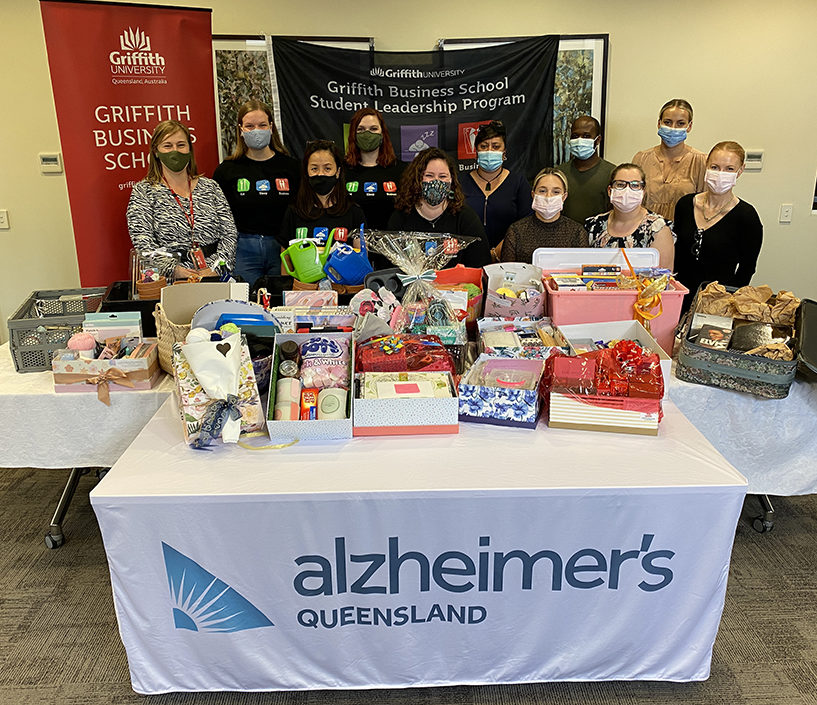
Student leaders from Griffith Business School (GBS) have sparked joy with deliveries of care packages for members of the Brisbane community suffering from alzheimers and dementia.
Final year dual degree Business and International Tourism student Georgia Lambert said participating in the Little Spark project, one of her last university activities before graduating next month, was both rewarding and fulfilling.
“The Little Spark project was an opportunity for us to get together in teams and give back to some of the different facilities associated with Alzheimer’s Queensland,” she explained.
“I think it was definitely a great chance for us to have a think about how we could help out a group that was struggling, especially with Covid and also a great way to break away from our studies and have a bigger impact on the community.”
“I helped put together a collection of brain therapy books, which were different puzzles and games and activities that could help to stimulate the minds of residents and provide them with some fun activities to do.”
Professor Rosemary Stockdale, Dean of Engagement at GBS, said the packages ranged from goodie bags for residents without family or visitors, through to gardening club kits, cooking club, memory bags, sensory bags, happy hour trolley and care packages for the staff of the facilities.
“Some of the teams delivered incredible packages, for instance, a male memory bag was designed to assist residents with memory recall, for that the team sourced ties, an old hat, Elvis merchandise, an old cassette tape and photos of Brisbane in the 50s/60s, and they brought along an old suitcase with no wheels to put it all into,” she said.
“The GBS Student Leadership Program offers our students the opportunityto broaden and develop their leadership skills and also instil in our university students theimportanceof giving back.”
The packages have now been delivered to three different facilities based at Rosalie, Ipswich and Garden City.
Griffith Business School Student Leaders delivered care packages from their ‘Little Spark’ Project to Alzheimers Queensland
Researchers from Griffith University will have a key role in a new national research network known as Healthy Environments And Lives (HEAL).
The network will comprise 100 researchers tasked with creating a national risk assessment of current and future health burdens driven by environmental change in Australia.
Professor Cordia Chu AM, Director of Griffith’s Centre for Environment and Population Health (CEPH), said the University was proud of its involvement in the new $10 million national research partnership, which was launched by Health Minister, the Hon Greg Hunt MP and brings together Aboriginal and Torres Strait Islander knowledge, sustainable development, environmental epidemiology, and data science and communication to address climate change and its impacts on health.
Centre for Environment and Population Health Director Professor Cordia Chu
“This important and urgently needed national network will bring researchers and the community together to co-develop innovative solutions to protect the health of Australians from environmental and climate change, and to build a resilient and responsive health system,” she said.
“HEAL proposes to catalyse transformative action through inter-disciplinary research, capacity and capability strengthening, cross-sectoral engagement, and effective research translation and communication.
“The scale and genuine collaboration by so many people in the network is unprecedented. The world will be watching how we develop this partnership to deal with what presents as the world’s greatest challenge.”
“HEAL’s aim is to strengthen the Australian community and health system’s resilience, preparedness and responsiveness to changing environmental conditions and extreme weather events.
“The goals of the network align closely with Griffith’s principles and strategic priorities and offer the opportunity for involvement by our experts across a range of disciplines.
“Collaboratively across Griffith we will drive real-time surveillance, data integration, and risk assessment programs for the early-detection and rapid response to disease outbreaks, and adaptation plans to tackle urban health issues including overheating, air pollution, and climate-related disasters such as floods, heatwaves, One Heath approach to infectious diseases outbreak and biodiversity loss, and science communication to bring about the whole of society approach.
“I am most excited about the opportunity to break down disciplinary silos and integrate quantitative and qualitative methodological approaches, while involving academics and decision-makers from around the country.”
HEAL will be funded over five years through the National Health and Medical Research Council (NHMRC) Special Initiative in Human Health and Environmental Change and operate across all Australian states and territories. It will be led by the Australian National University.
Four Griffith experts will speak on a research panel to be held on the second day of the conference, which focuses on regional concerns and priorities.
Professor Hamish McCallum, Dr Darrel Strauss, Noore Alam, and Elena Schak will speak to topics including One health, zoonotic disease and responses to Covid, as well as coastal management and using film as a tool for science communication.
Greater engagement and involvement with cultural events, ceremonies, and Indigenous languages is associated with lower suicide mortality rates for Aboriginal and Torres Strait Islander young people in Queensland according to new Griffith University research.
Researchers from the Australian Institute of Suicide Research and Prevention analysed suicide rates of the average yearly number of suicide deaths per 100,000 persons among Aboriginal and Torres Strait Islander young people aged 15-24 from 2001 to 2015.
They found that Aboriginal and Torres Strait Islander young peoples’ deaths by suicide were 46.91 per 100,000 persons, a rate nearly four times higher than non-Indigenous young people during this period.
Mandy Gibson – PhD scholar – Australian Institute for Suicide Research and Prevention
Lead researcher Ms Mandy Gibson said the study showed that Indigenous languages, cultural practices and engagement with community may buffer or mitigate the impacts of Indigenous disadvantage, most notably on experiences of racism and discrimination.
“Even in areas with the leastsocioeconomic resources and where First Nations People experienced more discrimination, community cultural connectionwas associated with 36% and 47% lower suicide rates respectively,’’ she said.
“In remote regional areas, and again in areas with the most discrimination, higher Indigenous language use was associated with 26% and 34% lower suicide rates.
“This research provides initial evidence for using cultural practices and engagement as a treatment mechanism or part of suicide prevention strategies.”
First Peoples die by suicide at more than twice the rate of other people in Australia, with young people particularly overrepresented. Aboriginal and Torres Strait Islander young people are more likely to reside in communities that experience known risk factors for youth suicide generally, includingpoverty, socioeconomic disadvantage and limited access to opportunities and services as the social and environmental legacies of colonisation.
“Therefore, in terms of suicide prevention specifically, understanding protective factors that promote resilience against suicide or buffer the influence of contextual risk factors is key to developing effective intervention models,’’ Ms Gibson said.
“This research reflects what Elders have long advised, that cultural strengths have a unique protective role in addressing the harms caused by colonisation.”